System Failure Analysis in Laser Engineered Net Shaping Workflow
APR 1, 20269 MIN READ
Generate Your Research Report Instantly with AI Agent
Patsnap Eureka helps you evaluate technical feasibility & market potential.
LENS System Failure Background and Analysis Goals
Laser Engineered Net Shaping (LENS) technology has emerged as a revolutionary additive manufacturing process that enables direct fabrication of complex three-dimensional components from metal powders. Since its inception in the 1990s at Sandia National Laboratories, LENS has evolved from a research curiosity to a commercially viable manufacturing solution for aerospace, automotive, and medical industries. The technology utilizes a high-power laser beam to create a molten pool on a substrate, into which metal powder is simultaneously injected and fused layer by layer.
The historical development of LENS technology has been marked by significant milestones in laser power optimization, powder delivery system refinement, and process control enhancement. Early systems struggled with inconsistent powder flow, thermal management issues, and limited material compatibility. However, continuous technological advancement has expanded the process capabilities to include a wide range of materials including titanium alloys, stainless steels, nickel-based superalloys, and tool steels.
Despite these advances, LENS systems remain susceptible to various failure modes that can compromise part quality, system reliability, and operational efficiency. System failures in LENS workflows represent a critical challenge that directly impacts manufacturing productivity, cost-effectiveness, and product integrity. These failures can manifest at multiple levels, from component-level malfunctions to process-induced defects that affect final part performance.
The complexity of LENS systems, involving precise coordination between laser optics, powder delivery mechanisms, motion control systems, and environmental controls, creates numerous potential failure points. Understanding and mitigating these failure modes has become increasingly important as LENS technology transitions from prototyping applications to production environments where reliability and consistency are paramount.
Current industry trends indicate a growing demand for predictive maintenance strategies, real-time monitoring systems, and failure analysis methodologies specifically tailored to LENS operations. The integration of Industry 4.0 concepts, including IoT sensors, machine learning algorithms, and digital twin technologies, presents new opportunities for proactive failure prevention and system optimization.
The primary objective of comprehensive system failure analysis in LENS workflows is to establish a systematic framework for identifying, categorizing, and mitigating potential failure modes throughout the entire manufacturing process. This includes developing robust diagnostic capabilities, implementing preventive maintenance protocols, and creating adaptive control strategies that can respond to emerging failure conditions in real-time, ultimately ensuring consistent production quality and maximizing system uptime.
The historical development of LENS technology has been marked by significant milestones in laser power optimization, powder delivery system refinement, and process control enhancement. Early systems struggled with inconsistent powder flow, thermal management issues, and limited material compatibility. However, continuous technological advancement has expanded the process capabilities to include a wide range of materials including titanium alloys, stainless steels, nickel-based superalloys, and tool steels.
Despite these advances, LENS systems remain susceptible to various failure modes that can compromise part quality, system reliability, and operational efficiency. System failures in LENS workflows represent a critical challenge that directly impacts manufacturing productivity, cost-effectiveness, and product integrity. These failures can manifest at multiple levels, from component-level malfunctions to process-induced defects that affect final part performance.
The complexity of LENS systems, involving precise coordination between laser optics, powder delivery mechanisms, motion control systems, and environmental controls, creates numerous potential failure points. Understanding and mitigating these failure modes has become increasingly important as LENS technology transitions from prototyping applications to production environments where reliability and consistency are paramount.
Current industry trends indicate a growing demand for predictive maintenance strategies, real-time monitoring systems, and failure analysis methodologies specifically tailored to LENS operations. The integration of Industry 4.0 concepts, including IoT sensors, machine learning algorithms, and digital twin technologies, presents new opportunities for proactive failure prevention and system optimization.
The primary objective of comprehensive system failure analysis in LENS workflows is to establish a systematic framework for identifying, categorizing, and mitigating potential failure modes throughout the entire manufacturing process. This includes developing robust diagnostic capabilities, implementing preventive maintenance protocols, and creating adaptive control strategies that can respond to emerging failure conditions in real-time, ultimately ensuring consistent production quality and maximizing system uptime.
Market Demand for Reliable LENS Manufacturing Systems
The aerospace and defense sectors represent the primary driving force behind the demand for reliable LENS manufacturing systems, particularly for mission-critical components where system failures can result in catastrophic consequences. These industries require additive manufacturing solutions capable of producing complex geometries with exceptional material properties, including turbine blades, structural components, and specialized tooling. The stringent certification requirements and zero-tolerance approach to defects in these sectors necessitate LENS systems with robust failure analysis capabilities and predictive maintenance features.
Medical device manufacturing constitutes another significant market segment demanding highly reliable LENS systems. The production of patient-specific implants, surgical instruments, and biocompatible components requires consistent quality and traceability throughout the manufacturing process. Regulatory compliance with FDA and ISO standards mandates comprehensive documentation of system performance and failure prevention measures, driving demand for LENS systems equipped with advanced monitoring and diagnostic capabilities.
The automotive industry's transition toward lightweight, high-performance components has created substantial market opportunities for reliable LENS manufacturing systems. Applications include rapid prototyping of complex engine components, production of low-volume specialty parts, and repair of high-value tooling. The industry's emphasis on lean manufacturing and just-in-time production requires LENS systems with minimal downtime and predictable performance characteristics.
Energy sector applications, particularly in oil and gas exploration and renewable energy infrastructure, demand LENS systems capable of producing components that withstand extreme operating conditions. The remote locations and harsh environments where these components operate make reliability paramount, as system failures can result in significant operational disruptions and safety hazards.
The growing adoption of Industry 4.0 principles across manufacturing sectors has intensified demand for LENS systems with integrated failure analysis capabilities. Manufacturers seek systems that provide real-time monitoring, predictive analytics, and automated quality control to minimize production risks and optimize operational efficiency. This trend is particularly pronounced in high-value manufacturing applications where the cost of failure far exceeds the investment in reliable manufacturing systems.
Market demand is further amplified by the increasing complexity of additive manufacturing applications and the need for consistent repeatability in production environments. Organizations require LENS systems that can maintain performance standards across extended operating periods while providing comprehensive data for process optimization and failure prevention.
Medical device manufacturing constitutes another significant market segment demanding highly reliable LENS systems. The production of patient-specific implants, surgical instruments, and biocompatible components requires consistent quality and traceability throughout the manufacturing process. Regulatory compliance with FDA and ISO standards mandates comprehensive documentation of system performance and failure prevention measures, driving demand for LENS systems equipped with advanced monitoring and diagnostic capabilities.
The automotive industry's transition toward lightweight, high-performance components has created substantial market opportunities for reliable LENS manufacturing systems. Applications include rapid prototyping of complex engine components, production of low-volume specialty parts, and repair of high-value tooling. The industry's emphasis on lean manufacturing and just-in-time production requires LENS systems with minimal downtime and predictable performance characteristics.
Energy sector applications, particularly in oil and gas exploration and renewable energy infrastructure, demand LENS systems capable of producing components that withstand extreme operating conditions. The remote locations and harsh environments where these components operate make reliability paramount, as system failures can result in significant operational disruptions and safety hazards.
The growing adoption of Industry 4.0 principles across manufacturing sectors has intensified demand for LENS systems with integrated failure analysis capabilities. Manufacturers seek systems that provide real-time monitoring, predictive analytics, and automated quality control to minimize production risks and optimize operational efficiency. This trend is particularly pronounced in high-value manufacturing applications where the cost of failure far exceeds the investment in reliable manufacturing systems.
Market demand is further amplified by the increasing complexity of additive manufacturing applications and the need for consistent repeatability in production environments. Organizations require LENS systems that can maintain performance standards across extended operating periods while providing comprehensive data for process optimization and failure prevention.
Current LENS Failure Modes and Technical Challenges
Laser Engineered Net Shaping (LENS) technology faces several critical failure modes that significantly impact manufacturing reliability and product quality. Powder flow inconsistencies represent one of the most prevalent challenges, where irregular material delivery leads to dimensional variations and surface defects. These inconsistencies stem from powder agglomeration, moisture absorption, and mechanical wear in delivery systems, resulting in incomplete fusion and porosity formation.
Thermal management failures constitute another major challenge category. Excessive heat accumulation during the deposition process causes thermal distortion, residual stress buildup, and microstructural irregularities. Inadequate cooling strategies often lead to grain coarsening and reduced mechanical properties, while thermal gradients create internal stresses that manifest as cracking or delamination between layers.
Laser system instabilities present significant technical hurdles in maintaining consistent energy delivery. Power fluctuations, beam quality degradation, and focal point drift directly impact melt pool characteristics and bonding quality. These variations result in incomplete fusion, lack of penetration, and inconsistent layer adhesion, ultimately compromising structural integrity of manufactured components.
Process parameter optimization remains a complex challenge due to the interdependent nature of multiple variables. The delicate balance between laser power, scanning speed, powder feed rate, and substrate temperature requires precise control to prevent defects such as balling, cracking, and dimensional inaccuracy. Deviation from optimal parameters often triggers cascading failures throughout the manufacturing workflow.
Material-related challenges encompass powder quality degradation, contamination issues, and feedstock variability. Oxidation during processing, particle size distribution changes, and chemical composition variations significantly affect processability and final part properties. These material inconsistencies create unpredictable processing conditions that are difficult to compensate through parameter adjustments alone.
Monitoring and control system limitations represent a critical gap in current LENS implementations. Insufficient real-time feedback mechanisms prevent immediate detection and correction of process deviations. The lack of integrated sensing systems for temperature monitoring, melt pool observation, and geometric verification allows defects to propagate undetected, resulting in part rejection and material waste.
Thermal management failures constitute another major challenge category. Excessive heat accumulation during the deposition process causes thermal distortion, residual stress buildup, and microstructural irregularities. Inadequate cooling strategies often lead to grain coarsening and reduced mechanical properties, while thermal gradients create internal stresses that manifest as cracking or delamination between layers.
Laser system instabilities present significant technical hurdles in maintaining consistent energy delivery. Power fluctuations, beam quality degradation, and focal point drift directly impact melt pool characteristics and bonding quality. These variations result in incomplete fusion, lack of penetration, and inconsistent layer adhesion, ultimately compromising structural integrity of manufactured components.
Process parameter optimization remains a complex challenge due to the interdependent nature of multiple variables. The delicate balance between laser power, scanning speed, powder feed rate, and substrate temperature requires precise control to prevent defects such as balling, cracking, and dimensional inaccuracy. Deviation from optimal parameters often triggers cascading failures throughout the manufacturing workflow.
Material-related challenges encompass powder quality degradation, contamination issues, and feedstock variability. Oxidation during processing, particle size distribution changes, and chemical composition variations significantly affect processability and final part properties. These material inconsistencies create unpredictable processing conditions that are difficult to compensate through parameter adjustments alone.
Monitoring and control system limitations represent a critical gap in current LENS implementations. Insufficient real-time feedback mechanisms prevent immediate detection and correction of process deviations. The lack of integrated sensing systems for temperature monitoring, melt pool observation, and geometric verification allows defects to propagate undetected, resulting in part rejection and material waste.
Existing LENS System Failure Detection Solutions
01 Monitoring and detection systems for laser processing failures
Implementation of real-time monitoring systems to detect anomalies and failures during laser engineered net shaping processes. These systems utilize sensors and imaging technologies to track process parameters such as temperature, powder flow, and laser beam quality. Detection mechanisms can identify deviations from normal operating conditions, enabling early warning of potential system failures and process interruptions.- Monitoring and detection systems for laser processing failures: Implementation of real-time monitoring systems to detect anomalies during laser engineered net shaping processes. These systems utilize sensors and imaging technologies to identify defects, irregularities in powder flow, or deviations in laser parameters. Early detection mechanisms enable immediate intervention to prevent system failures and ensure process stability.
- Powder delivery and feeding system optimization: Techniques for improving powder delivery mechanisms to prevent clogging, inconsistent flow rates, and material distribution issues that can lead to system failures. Solutions include advanced nozzle designs, flow control systems, and powder conditioning methods to ensure uniform material deposition and reduce operational interruptions.
- Laser beam control and calibration methods: Systems and methods for maintaining precise laser beam control, including focus adjustment, power regulation, and beam path alignment. These approaches address failures caused by laser parameter drift, optical component degradation, or thermal effects that compromise the quality of the net shaping process.
- Thermal management and cooling systems: Solutions for managing heat accumulation and thermal stress during laser engineered net shaping operations. Effective cooling strategies prevent substrate warping, residual stress buildup, and thermal-induced failures. These include active cooling systems, heat dissipation structures, and temperature monitoring protocols.
- Process control and automation for failure prevention: Automated control systems that integrate feedback mechanisms, adaptive parameter adjustment, and predictive maintenance algorithms to minimize system failures. These technologies enable self-correction during processing, optimize operational parameters in real-time, and provide diagnostic capabilities for preventive maintenance.
02 Powder delivery system failure prevention and control
Methods and apparatus for preventing and addressing powder delivery system failures in laser net shaping processes. This includes mechanisms for ensuring consistent powder flow rates, preventing clogging, and maintaining proper powder distribution. Control systems monitor powder feeder performance and can automatically adjust parameters or alert operators when delivery issues are detected that could lead to build failures.Expand Specific Solutions03 Laser beam quality control and optical system maintenance
Techniques for maintaining laser beam quality and preventing optical system failures that can compromise the net shaping process. This includes methods for monitoring laser power stability, beam focus, and optical component degradation. Systems may incorporate automatic calibration routines, protective measures against contamination, and diagnostic tools to identify optical misalignment or component wear before catastrophic failure occurs.Expand Specific Solutions04 Substrate and build platform failure mitigation
Solutions for preventing failures related to substrate preparation, build platform positioning, and thermal management during laser net shaping. This includes methods for ensuring proper substrate adhesion, controlling thermal gradients that can cause warping or cracking, and maintaining accurate platform positioning throughout the build process. Systems may incorporate feedback control for platform leveling and temperature regulation to prevent build failures.Expand Specific Solutions05 Process parameter optimization and failure recovery protocols
Strategies for optimizing process parameters to minimize failure risks and implementing recovery protocols when failures occur. This includes adaptive control systems that adjust laser power, scan speed, and other parameters based on real-time feedback. Recovery methods may involve automated pause-and-resume capabilities, defect repair procedures, and data logging systems that facilitate post-failure analysis and process improvement.Expand Specific Solutions
Key Players in LENS Equipment and Failure Analysis
The Laser Engineered Net Shaping (LENS) system failure analysis field represents an emerging segment within the broader additive manufacturing industry, currently in its growth phase with significant technological advancement opportunities. The market demonstrates substantial potential as industries increasingly adopt metal 3D printing for complex component production, particularly in aerospace, automotive, and medical sectors. Technology maturity varies considerably across market participants, with established industrial giants like Siemens AG, FANUC Corp., and Mitsubishi Electric Corp. leveraging decades of automation and precision manufacturing expertise to develop sophisticated failure detection systems. Advanced research organizations including Fraunhofer-Gesellschaft and National Research Council of Canada are pioneering next-generation analytical methodologies, while specialized companies like VulcanForms and Prima Industrie SpA focus on integrated digital manufacturing solutions with embedded monitoring capabilities. The competitive landscape shows a convergence of traditional manufacturing leaders, semiconductor equipment providers like ASML Netherlands BV, and innovative startups, indicating robust technological development and increasing market validation for comprehensive LENS workflow analysis systems.
FANUC Corp.
Technical Solution: FANUC has developed comprehensive system failure analysis solutions for Laser Engineered Net Shaping (LENS) workflows through their advanced CNC control systems and AI-driven monitoring technologies. Their approach integrates real-time process monitoring with predictive analytics to identify potential failure modes before they occur. The system utilizes multi-sensor data fusion including thermal imaging, acoustic emission monitoring, and laser power feedback to detect anomalies in the deposition process. FANUC's failure analysis framework employs machine learning algorithms to correlate process parameters with defect formation, enabling automated adjustment of laser power, feed rate, and powder flow to maintain optimal build quality. Their diagnostic system can identify issues such as powder flow irregularities, substrate heating problems, and layer adhesion failures through continuous monitoring of melt pool characteristics and geometric accuracy.
Strengths: Industry-leading CNC integration and robust AI-driven predictive maintenance capabilities. Weaknesses: High implementation costs and complexity requiring specialized training for operators.
Siemens AG
Technical Solution: Siemens has developed an integrated digital twin approach for system failure analysis in LENS workflows, combining their NX software suite with advanced simulation capabilities and IoT-enabled monitoring systems. Their solution provides comprehensive failure mode and effects analysis (FMEA) through physics-based modeling of the laser deposition process, enabling prediction of thermal distortion, residual stress accumulation, and microstructural variations that could lead to part failure. The system incorporates real-time data acquisition from multiple sensors including pyrometers, high-speed cameras, and force sensors to continuously validate simulation predictions against actual process conditions. Siemens' MindSphere platform enables cloud-based analytics for pattern recognition in failure modes across multiple LENS systems, facilitating continuous improvement of process parameters and quality control protocols.
Strengths: Comprehensive digital twin integration and cloud-based analytics platform for multi-system learning. Weaknesses: Requires significant computational resources and may have slower real-time response compared to dedicated hardware solutions.
Core Innovations in LENS Failure Prediction Methods
Failure mode identification
PatentWO2024088664A1
Innovation
- A computer-implemented method using an artificial neural network with hidden layers and an output layer processes performance indicator measurements and parameter values from sensors to determine failure modes in individual modules, allowing for efficient identification of system-wide failures.


Laser net shape manufacturing and repair using a medial axis toolpath deposition method
PatentInactiveUS20080182017A1
Innovation
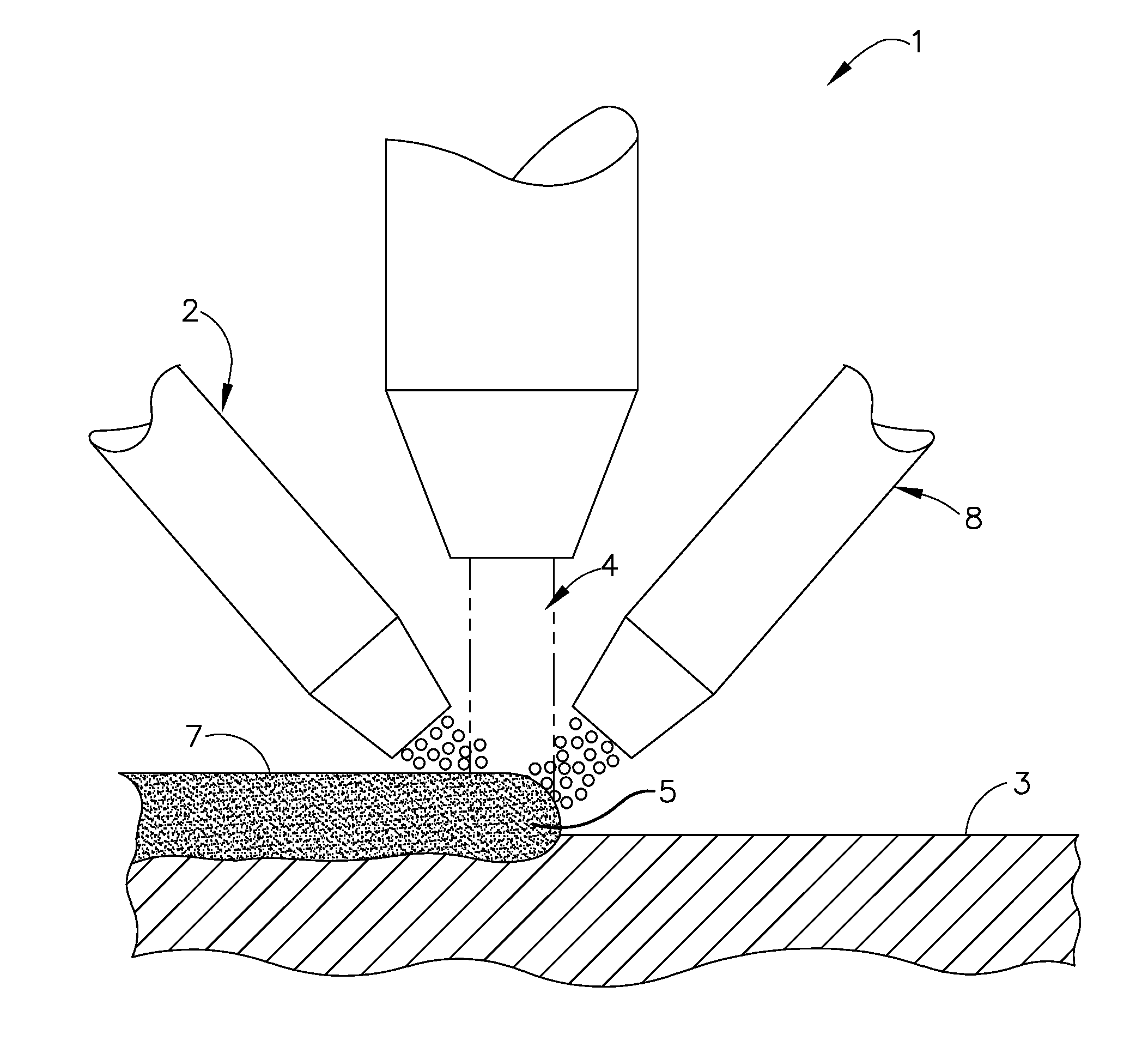
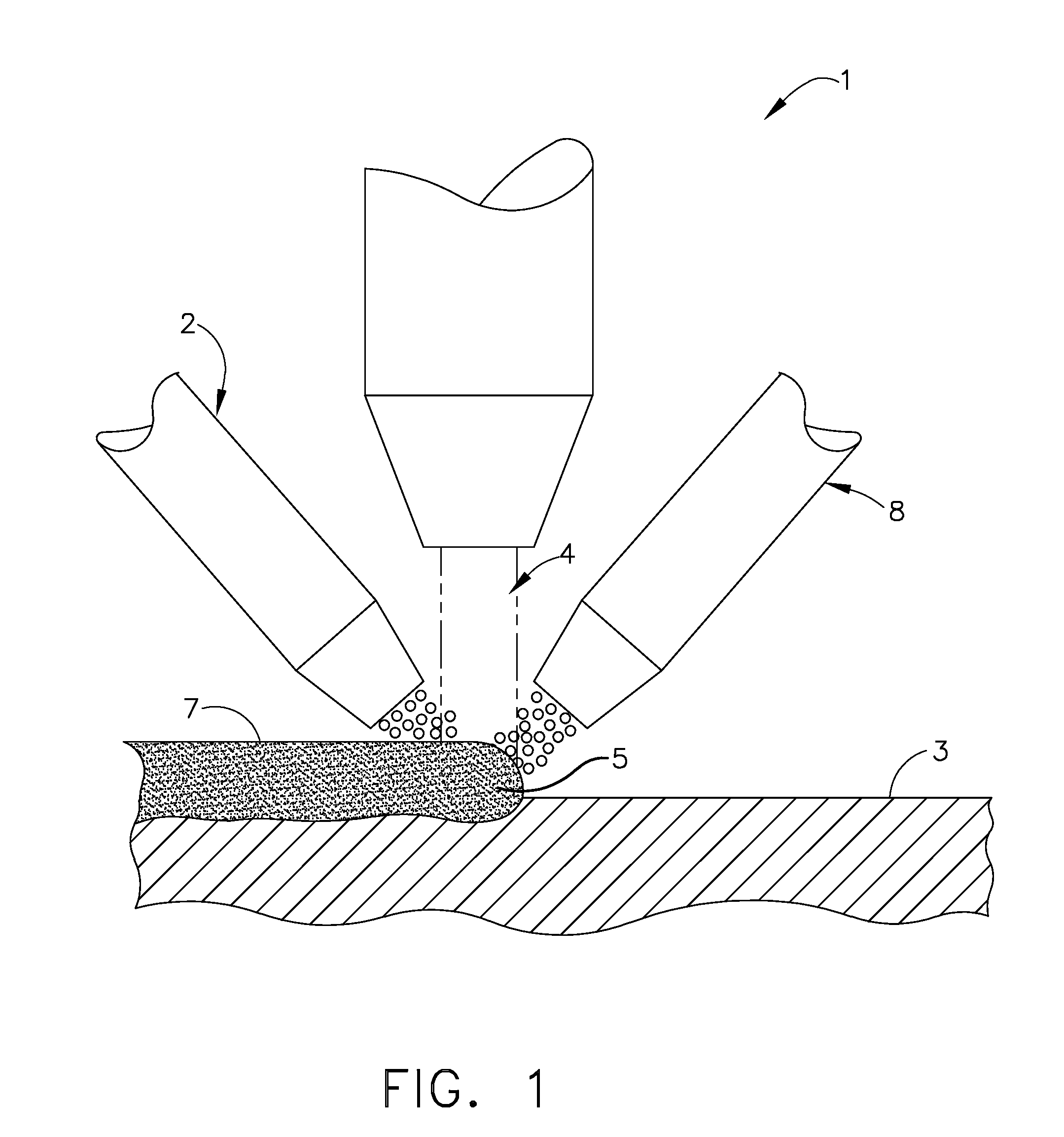
- The method involves digitally slicing a CAD model into deposition layers, determining a medial axis for each layer, and depositing material in a pattern centered on the medial axis to build up layers, reducing fusion imperfections by stabilizing the deposition process with a continuous zigzag toolpath and varying laser power and speed.

Quality Standards for Additive Manufacturing Systems
Quality standards for additive manufacturing systems, particularly in Laser Engineered Net Shaping (LENS) workflows, represent a critical framework for ensuring consistent production outcomes and minimizing system failures. These standards encompass multiple dimensions of manufacturing excellence, from material specifications to process control parameters and final product validation criteria.
The foundation of quality standards in LENS systems begins with material qualification protocols. Raw powder materials must meet stringent specifications regarding particle size distribution, chemical composition, flowability characteristics, and moisture content. These parameters directly influence the laser-material interaction dynamics and subsequent layer formation quality. Standardized testing procedures ensure that feedstock materials maintain consistent properties throughout the manufacturing process.
Process parameter standardization forms another crucial component of quality frameworks. Critical variables including laser power density, scanning velocity, powder feed rate, and substrate temperature require precise control within defined tolerance ranges. Quality standards establish acceptable parameter windows that balance productivity with part integrity, preventing common failure modes such as incomplete fusion, excessive porosity, or thermal stress accumulation.
Real-time monitoring and control systems represent an emerging area of quality standardization. Advanced sensor integration enables continuous assessment of melt pool characteristics, thermal gradients, and deposition uniformity. Quality standards increasingly incorporate requirements for in-situ monitoring capabilities that can detect process deviations before they manifest as part defects or system failures.
Post-process quality assessment protocols complete the comprehensive quality framework. These standards define mandatory inspection procedures including dimensional verification, surface roughness measurement, microstructural analysis, and mechanical property validation. Non-destructive testing methods such as computed tomography and ultrasonic inspection are becoming standard requirements for critical applications.
Certification and traceability requirements ensure that quality standards maintain their effectiveness across different manufacturing environments. Documentation protocols track material provenance, process parameters, and quality metrics throughout the entire production workflow, enabling rapid identification of failure root causes and implementation of corrective measures.
The foundation of quality standards in LENS systems begins with material qualification protocols. Raw powder materials must meet stringent specifications regarding particle size distribution, chemical composition, flowability characteristics, and moisture content. These parameters directly influence the laser-material interaction dynamics and subsequent layer formation quality. Standardized testing procedures ensure that feedstock materials maintain consistent properties throughout the manufacturing process.
Process parameter standardization forms another crucial component of quality frameworks. Critical variables including laser power density, scanning velocity, powder feed rate, and substrate temperature require precise control within defined tolerance ranges. Quality standards establish acceptable parameter windows that balance productivity with part integrity, preventing common failure modes such as incomplete fusion, excessive porosity, or thermal stress accumulation.
Real-time monitoring and control systems represent an emerging area of quality standardization. Advanced sensor integration enables continuous assessment of melt pool characteristics, thermal gradients, and deposition uniformity. Quality standards increasingly incorporate requirements for in-situ monitoring capabilities that can detect process deviations before they manifest as part defects or system failures.
Post-process quality assessment protocols complete the comprehensive quality framework. These standards define mandatory inspection procedures including dimensional verification, surface roughness measurement, microstructural analysis, and mechanical property validation. Non-destructive testing methods such as computed tomography and ultrasonic inspection are becoming standard requirements for critical applications.
Certification and traceability requirements ensure that quality standards maintain their effectiveness across different manufacturing environments. Documentation protocols track material provenance, process parameters, and quality metrics throughout the entire production workflow, enabling rapid identification of failure root causes and implementation of corrective measures.
Risk Management in LENS Production Environments
Risk management in LENS production environments requires a comprehensive approach that addresses both technical vulnerabilities and operational hazards inherent to the additive manufacturing process. The high-energy laser systems, metal powder handling, and complex thermal dynamics create multiple risk vectors that demand systematic identification, assessment, and mitigation strategies.
The primary risk categories in LENS operations encompass equipment-related hazards, material handling risks, environmental safety concerns, and process-specific vulnerabilities. Laser safety represents the most critical concern, requiring strict protocols for beam containment, operator protection, and emergency shutdown procedures. The high-power laser systems used in LENS can cause severe injury or equipment damage if proper safety measures are not implemented.
Metal powder management constitutes another significant risk area, particularly regarding fire and explosion hazards. Fine metal powders used in LENS processes are highly combustible and require specialized storage, handling, and disposal protocols. Inert gas systems must be properly maintained to prevent oxidation and reduce fire risk, while powder recycling procedures need careful monitoring to prevent contamination buildup.
Process monitoring and control systems play crucial roles in risk mitigation by providing real-time feedback on critical parameters such as laser power, powder flow rates, substrate temperature, and atmospheric conditions. Advanced sensor networks can detect anomalies before they escalate into system failures, enabling proactive intervention and preventing costly production interruptions.
Personnel training and certification programs are essential components of effective risk management strategies. Operators must be thoroughly trained in laser safety protocols, emergency procedures, material handling best practices, and equipment maintenance requirements. Regular safety audits and compliance assessments ensure that risk management protocols remain current and effective.
Emergency response planning must address various scenarios including laser exposure incidents, powder fires, equipment malfunctions, and atmospheric contamination events. Clear evacuation procedures, emergency contact protocols, and incident reporting systems help minimize the impact of adverse events and facilitate rapid recovery operations.
The primary risk categories in LENS operations encompass equipment-related hazards, material handling risks, environmental safety concerns, and process-specific vulnerabilities. Laser safety represents the most critical concern, requiring strict protocols for beam containment, operator protection, and emergency shutdown procedures. The high-power laser systems used in LENS can cause severe injury or equipment damage if proper safety measures are not implemented.
Metal powder management constitutes another significant risk area, particularly regarding fire and explosion hazards. Fine metal powders used in LENS processes are highly combustible and require specialized storage, handling, and disposal protocols. Inert gas systems must be properly maintained to prevent oxidation and reduce fire risk, while powder recycling procedures need careful monitoring to prevent contamination buildup.
Process monitoring and control systems play crucial roles in risk mitigation by providing real-time feedback on critical parameters such as laser power, powder flow rates, substrate temperature, and atmospheric conditions. Advanced sensor networks can detect anomalies before they escalate into system failures, enabling proactive intervention and preventing costly production interruptions.
Personnel training and certification programs are essential components of effective risk management strategies. Operators must be thoroughly trained in laser safety protocols, emergency procedures, material handling best practices, and equipment maintenance requirements. Regular safety audits and compliance assessments ensure that risk management protocols remain current and effective.
Emergency response planning must address various scenarios including laser exposure incidents, powder fires, equipment malfunctions, and atmospheric contamination events. Clear evacuation procedures, emergency contact protocols, and incident reporting systems help minimize the impact of adverse events and facilitate rapid recovery operations.
Unlock deeper insights with Patsnap Eureka Quick Research — get a full tech report to explore trends and direct your research. Try now!
Generate Your Research Report Instantly with AI Agent
Supercharge your innovation with Patsnap Eureka AI Agent Platform!