

Wafer Thinning: Analyzing Structural Integrity Post Reduction
APR 7, 202610 MIN READ
Generate Your Research Report Instantly with AI Agent
PatSnap Eureka helps you evaluate technical feasibility & market potential.
Wafer Thinning Technology Background and Objectives
Wafer thinning technology has emerged as a critical process in semiconductor manufacturing, driven by the relentless pursuit of miniaturization and enhanced device performance. This technology involves the systematic reduction of silicon wafer thickness from standard dimensions of 725-775 micrometers to ultra-thin profiles ranging from 25 to 200 micrometers, depending on application requirements. The evolution of this technology traces back to the early 2000s when the semiconductor industry began recognizing the need for thinner substrates to enable advanced packaging solutions and improve electrical performance.
The historical development of wafer thinning has been closely intertwined with the advancement of semiconductor packaging technologies. Initially, wafer thinning was primarily employed for memory devices and power semiconductors where thermal management and form factor considerations were paramount. As mobile electronics proliferated, the demand for thinner wafers intensified, leading to significant technological breakthroughs in grinding, polishing, and handling techniques.
The primary objective of modern wafer thinning technology extends beyond mere thickness reduction to encompass comprehensive structural integrity preservation. This involves maintaining the mechanical strength, electrical properties, and surface quality of the wafer throughout the thinning process. Key technical goals include achieving uniform thickness distribution across the entire wafer surface, minimizing subsurface damage, and controlling stress-induced warpage that can compromise subsequent processing steps.
Contemporary wafer thinning processes aim to achieve thickness variation tolerances of less than 2 micrometers across 300mm wafers while maintaining total thickness variation below 1 micrometer. These stringent requirements necessitate advanced process control systems and real-time monitoring capabilities to ensure consistent results. The technology must also address the challenge of handling increasingly fragile substrates without introducing defects or contamination.
The strategic importance of wafer thinning technology has expanded significantly with the emergence of 3D packaging architectures, through-silicon via implementations, and advanced system-in-package solutions. These applications demand not only precise thickness control but also exceptional surface quality and structural integrity to support subsequent processing steps such as via drilling, metallization, and die bonding.
Future technological objectives focus on extending thinning capabilities to sub-25 micrometer thicknesses while maintaining yield and reliability standards. This includes developing novel approaches to stress management, advanced metrology systems for real-time process monitoring, and innovative handling solutions for ultra-thin wafers. The integration of artificial intelligence and machine learning algorithms for predictive process control represents another key objective in advancing wafer thinning technology toward next-generation semiconductor manufacturing requirements.
The historical development of wafer thinning has been closely intertwined with the advancement of semiconductor packaging technologies. Initially, wafer thinning was primarily employed for memory devices and power semiconductors where thermal management and form factor considerations were paramount. As mobile electronics proliferated, the demand for thinner wafers intensified, leading to significant technological breakthroughs in grinding, polishing, and handling techniques.
The primary objective of modern wafer thinning technology extends beyond mere thickness reduction to encompass comprehensive structural integrity preservation. This involves maintaining the mechanical strength, electrical properties, and surface quality of the wafer throughout the thinning process. Key technical goals include achieving uniform thickness distribution across the entire wafer surface, minimizing subsurface damage, and controlling stress-induced warpage that can compromise subsequent processing steps.
Contemporary wafer thinning processes aim to achieve thickness variation tolerances of less than 2 micrometers across 300mm wafers while maintaining total thickness variation below 1 micrometer. These stringent requirements necessitate advanced process control systems and real-time monitoring capabilities to ensure consistent results. The technology must also address the challenge of handling increasingly fragile substrates without introducing defects or contamination.
The strategic importance of wafer thinning technology has expanded significantly with the emergence of 3D packaging architectures, through-silicon via implementations, and advanced system-in-package solutions. These applications demand not only precise thickness control but also exceptional surface quality and structural integrity to support subsequent processing steps such as via drilling, metallization, and die bonding.
Future technological objectives focus on extending thinning capabilities to sub-25 micrometer thicknesses while maintaining yield and reliability standards. This includes developing novel approaches to stress management, advanced metrology systems for real-time process monitoring, and innovative handling solutions for ultra-thin wafers. The integration of artificial intelligence and machine learning algorithms for predictive process control represents another key objective in advancing wafer thinning technology toward next-generation semiconductor manufacturing requirements.
Market Demand for Ultra-Thin Semiconductor Wafers
The semiconductor industry is experiencing unprecedented demand for ultra-thin wafers driven by the relentless miniaturization of electronic devices and the emergence of advanced packaging technologies. Consumer electronics manufacturers are pushing for thinner form factors in smartphones, tablets, wearables, and IoT devices, creating substantial market pressure for wafers with thickness below 50 micrometers. This trend is particularly pronounced in the mobile device sector, where every micrometer reduction in component thickness translates to valuable space for additional features or battery capacity.
Advanced packaging applications represent the fastest-growing segment of ultra-thin wafer demand. Three-dimensional integrated circuits, through-silicon via technology, and wafer-level chip-scale packaging all require extremely thin substrates to achieve optimal electrical performance and thermal management. The automotive electronics sector is also driving significant demand as vehicles incorporate more sophisticated semiconductor components for autonomous driving, electric powertrains, and advanced driver assistance systems.
Memory device manufacturers constitute another major demand driver, particularly for NAND flash and DRAM applications where stacking multiple dies requires ultra-thin wafers to maintain acceptable package heights. The proliferation of data centers and cloud computing infrastructure has intensified this demand as storage density requirements continue escalating.
Emerging applications in flexible electronics and biomedical devices are creating new market segments for ultra-thin wafers. Flexible displays, electronic skin sensors, and implantable medical devices require substrates that can bend without compromising electrical functionality, necessitating wafer thicknesses well below traditional manufacturing standards.
The 5G telecommunications rollout is generating substantial demand for ultra-thin wafers in radio frequency components and power amplifiers. These applications require precise thickness control to achieve optimal signal propagation characteristics and minimize insertion losses.
Market dynamics indicate strong growth momentum across all application segments, with particular acceleration in automotive and industrial IoT applications. Supply chain constraints and the technical challenges associated with maintaining structural integrity during extreme thinning processes are creating supply-demand imbalances that favor companies capable of delivering reliable ultra-thin wafer solutions.
Regional demand patterns show concentrated growth in Asia-Pacific markets, driven by major electronics manufacturing hubs and increasing local semiconductor production capabilities.
Advanced packaging applications represent the fastest-growing segment of ultra-thin wafer demand. Three-dimensional integrated circuits, through-silicon via technology, and wafer-level chip-scale packaging all require extremely thin substrates to achieve optimal electrical performance and thermal management. The automotive electronics sector is also driving significant demand as vehicles incorporate more sophisticated semiconductor components for autonomous driving, electric powertrains, and advanced driver assistance systems.
Memory device manufacturers constitute another major demand driver, particularly for NAND flash and DRAM applications where stacking multiple dies requires ultra-thin wafers to maintain acceptable package heights. The proliferation of data centers and cloud computing infrastructure has intensified this demand as storage density requirements continue escalating.
Emerging applications in flexible electronics and biomedical devices are creating new market segments for ultra-thin wafers. Flexible displays, electronic skin sensors, and implantable medical devices require substrates that can bend without compromising electrical functionality, necessitating wafer thicknesses well below traditional manufacturing standards.
The 5G telecommunications rollout is generating substantial demand for ultra-thin wafers in radio frequency components and power amplifiers. These applications require precise thickness control to achieve optimal signal propagation characteristics and minimize insertion losses.
Market dynamics indicate strong growth momentum across all application segments, with particular acceleration in automotive and industrial IoT applications. Supply chain constraints and the technical challenges associated with maintaining structural integrity during extreme thinning processes are creating supply-demand imbalances that favor companies capable of delivering reliable ultra-thin wafer solutions.
Regional demand patterns show concentrated growth in Asia-Pacific markets, driven by major electronics manufacturing hubs and increasing local semiconductor production capabilities.
Current Wafer Thinning Challenges and Structural Issues
Wafer thinning processes face significant structural integrity challenges that directly impact semiconductor device performance and manufacturing yield. The primary concern lies in maintaining mechanical stability while achieving ultra-thin profiles required for advanced packaging applications. Current industry standards demand wafer thickness reductions from standard 775μm to as low as 25-50μm, creating unprecedented stress concentrations and vulnerability to mechanical failure.
Mechanical stress distribution represents one of the most critical challenges in post-thinning structural analysis. During grinding and chemical mechanical polishing processes, non-uniform material removal creates localized stress fields that can propagate into crack formation. These residual stresses often manifest as bow and warp deformations, with typical values exceeding 50μm for 300mm wafers thinned below 100μm thickness. The stress concentration becomes particularly problematic at die edges and scribe lines, where geometric discontinuities amplify mechanical vulnerabilities.
Surface damage and subsurface defects constitute another major structural concern following wafer thinning operations. Grinding processes inherently introduce microcracks extending 10-20μm below the surface, while chemical etching can create non-uniform surface topography. These defects serve as stress concentration points and potential failure initiation sites during subsequent handling and assembly processes. Advanced characterization techniques reveal that subsurface damage layers can significantly reduce the effective mechanical strength of thinned wafers.
Thermal stress management presents additional complexity in maintaining structural integrity post-reduction. Thinned wafers exhibit altered thermal expansion coefficients and reduced thermal mass, leading to rapid temperature fluctuations during processing. The coefficient of thermal expansion mismatch between silicon substrate and metallization layers becomes more pronounced in ultra-thin configurations, potentially causing delamination and interconnect failure under thermal cycling conditions.
Handling and transportation challenges emerge as critical factors affecting structural integrity after wafer thinning. Reduced mechanical stiffness makes thinned wafers extremely susceptible to handling-induced damage, requiring specialized vacuum chuck systems and carrier substrates. The flexural strength decreases exponentially with thickness reduction, making conventional wafer handling equipment inadequate for ultra-thin applications.
Edge chipping and die strength degradation represent persistent issues in current wafer thinning workflows. Dicing processes on thinned wafers often result in increased edge defects and reduced die strength, particularly affecting corner regions where stress concentrations are highest. Statistical analysis shows that die strength can decrease by 40-60% following aggressive thinning processes, directly impacting device reliability and assembly yield.
Current metrology limitations hinder comprehensive structural integrity assessment of thinned wafers. Existing measurement techniques struggle to provide real-time, non-destructive evaluation of subsurface damage and stress distribution across entire wafer surfaces. This measurement gap creates challenges in process optimization and quality control, limiting the industry's ability to predict and prevent structural failures in thinned wafer applications.
Mechanical stress distribution represents one of the most critical challenges in post-thinning structural analysis. During grinding and chemical mechanical polishing processes, non-uniform material removal creates localized stress fields that can propagate into crack formation. These residual stresses often manifest as bow and warp deformations, with typical values exceeding 50μm for 300mm wafers thinned below 100μm thickness. The stress concentration becomes particularly problematic at die edges and scribe lines, where geometric discontinuities amplify mechanical vulnerabilities.
Surface damage and subsurface defects constitute another major structural concern following wafer thinning operations. Grinding processes inherently introduce microcracks extending 10-20μm below the surface, while chemical etching can create non-uniform surface topography. These defects serve as stress concentration points and potential failure initiation sites during subsequent handling and assembly processes. Advanced characterization techniques reveal that subsurface damage layers can significantly reduce the effective mechanical strength of thinned wafers.
Thermal stress management presents additional complexity in maintaining structural integrity post-reduction. Thinned wafers exhibit altered thermal expansion coefficients and reduced thermal mass, leading to rapid temperature fluctuations during processing. The coefficient of thermal expansion mismatch between silicon substrate and metallization layers becomes more pronounced in ultra-thin configurations, potentially causing delamination and interconnect failure under thermal cycling conditions.
Handling and transportation challenges emerge as critical factors affecting structural integrity after wafer thinning. Reduced mechanical stiffness makes thinned wafers extremely susceptible to handling-induced damage, requiring specialized vacuum chuck systems and carrier substrates. The flexural strength decreases exponentially with thickness reduction, making conventional wafer handling equipment inadequate for ultra-thin applications.
Edge chipping and die strength degradation represent persistent issues in current wafer thinning workflows. Dicing processes on thinned wafers often result in increased edge defects and reduced die strength, particularly affecting corner regions where stress concentrations are highest. Statistical analysis shows that die strength can decrease by 40-60% following aggressive thinning processes, directly impacting device reliability and assembly yield.
Current metrology limitations hinder comprehensive structural integrity assessment of thinned wafers. Existing measurement techniques struggle to provide real-time, non-destructive evaluation of subsurface damage and stress distribution across entire wafer surfaces. This measurement gap creates challenges in process optimization and quality control, limiting the industry's ability to predict and prevent structural failures in thinned wafer applications.
Current Solutions for Post-Thinning Structural Analysis
01 Wafer bonding and layer transfer techniques
Methods for bonding wafers together and transferring thin layers while maintaining structural integrity are critical. These techniques involve controlled bonding processes, interface preparation, and layer separation methods that preserve the mechanical strength and electrical properties of the wafer structure. Advanced bonding approaches ensure minimal defects and stress at bonding interfaces, which is essential for maintaining wafer integrity during subsequent processing steps.- Wafer bonding and layer transfer techniques: Methods for bonding wafers together and transferring thin layers while maintaining structural integrity are critical. These techniques involve controlled bonding processes, interface preparation, and layer separation methods that preserve the mechanical strength and electrical properties of the wafer structure. Advanced bonding approaches ensure minimal defects and stress at bonding interfaces, which is essential for maintaining wafer integrity during subsequent processing steps.
- Wafer thinning and grinding processes: Techniques for reducing wafer thickness through grinding, polishing, and chemical-mechanical processes while preserving structural integrity. These methods control stress distribution, prevent cracking, and maintain uniform thickness across the wafer surface. Proper thinning processes are essential for advanced packaging applications and ensuring the wafer can withstand subsequent handling and processing without mechanical failure.
- Defect detection and inspection methods: Systems and methods for detecting structural defects, cracks, voids, and delamination in wafers using optical, acoustic, or electrical inspection techniques. These approaches enable early identification of integrity issues that could compromise device performance or yield. Advanced inspection methods can detect subsurface defects and provide real-time monitoring during manufacturing processes to ensure wafer quality.
- Stress management and reinforcement structures: Approaches for managing mechanical stress in wafers through the use of support structures, carrier wafers, reinforcement layers, and stress-relief patterns. These techniques prevent warping, bowing, and cracking during processing and handling. Proper stress management is crucial for maintaining wafer flatness and preventing damage during high-temperature processes, dicing, and packaging operations.
- Edge protection and handling techniques: Methods for protecting wafer edges and implementing safe handling procedures to prevent chipping, cracking, and contamination. Edge treatment processes, protective coatings, and specialized handling equipment minimize mechanical damage during transport and processing. These techniques are particularly important for thin wafers and large-diameter wafers that are more susceptible to edge damage and breakage.
02 Wafer thinning and grinding processes
Techniques for reducing wafer thickness through grinding, polishing, and chemical-mechanical processes while preserving structural integrity. These methods control stress distribution, prevent cracking, and maintain uniform thickness across the wafer surface. Proper thinning processes are essential for advanced packaging applications and improving device performance without compromising mechanical stability.Expand Specific Solutions03 Wafer inspection and defect detection methods
Systems and methods for detecting structural defects, cracks, voids, and delamination in wafers using optical, acoustic, or electrical inspection techniques. These approaches enable early identification of integrity issues before they lead to device failure. Advanced inspection methods can detect subsurface defects and measure stress distribution to ensure wafer quality throughout manufacturing processes.Expand Specific Solutions04 Stress management and reinforcement structures
Techniques for managing mechanical stress in wafers through the use of reinforcement layers, stress-relief structures, and optimized material compositions. These approaches prevent warping, cracking, and delamination during thermal cycling and mechanical handling. Stress management is particularly important for thin wafers and multi-layer structures where differential thermal expansion can compromise integrity.Expand Specific Solutions05 Wafer handling and support systems
Equipment and methods for handling, transporting, and supporting wafers during processing to prevent mechanical damage and maintain structural integrity. These systems include specialized carriers, vacuum chucks, and robotic handling mechanisms designed to minimize stress and prevent contamination. Proper handling techniques are essential for preventing edge chipping, surface scratches, and breakage during manufacturing operations.Expand Specific Solutions
Key Players in Wafer Processing and Thinning Equipment
The wafer thinning technology sector is experiencing rapid growth driven by increasing demand for miniaturized electronics and advanced packaging solutions. The industry has reached a mature development stage with established players like Taiwan Semiconductor Manufacturing Co., Tokyo Electron Ltd., and Tokyo Seimitsu Co. providing comprehensive equipment solutions. Market leaders including TSMC, SMIC, and Micron Technology demonstrate strong technical capabilities in maintaining structural integrity during wafer reduction processes. Chinese companies such as ChangXin Memory Technologies and Shanghai Huahong Grace Semiconductor are rapidly advancing their capabilities, intensifying global competition. The technology maturity varies across regions, with established foundries like X-FAB and Advanced Semiconductor Engineering offering specialized thinning services, while research institutions like Caltech and CEA continue pushing technological boundaries. Equipment manufacturers including Hwatsing Technology and Nanda Technologies are developing next-generation solutions to address structural integrity challenges in ultra-thin wafer applications.
Taiwan Semiconductor Manufacturing Co., Ltd.
Technical Solution: TSMC employs advanced wafer thinning processes using precision grinding and chemical mechanical polishing (CMP) techniques to achieve ultra-thin wafers down to 25-50 micrometers for advanced packaging applications. Their structural integrity analysis involves comprehensive stress mapping using X-ray diffraction and micro-Raman spectroscopy to detect crystalline defects and residual stress patterns. The company utilizes proprietary backside grinding processes with optimized grinding wheel specifications and feed rates to minimize subsurface damage. Post-thinning structural assessment includes bow and warp measurements using laser interferometry, ensuring wafer flatness within ±10 micrometers across 300mm wafers. Their integrated approach combines real-time monitoring during thinning with post-process metrology to maintain structural integrity for high-yield production.
Strengths: Industry-leading precision in ultra-thin wafer processing, comprehensive metrology capabilities, high-volume manufacturing expertise. Weaknesses: High capital investment requirements, complex process control parameters.
International Business Machines Corp.
Technical Solution: IBM has developed innovative wafer thinning methodologies focusing on temporary bonding and debonding processes to maintain structural integrity during extreme thickness reduction. Their approach utilizes specialized adhesive materials and controlled thermal processing to support ultra-thin wafers during handling and processing. Structural integrity assessment employs advanced finite element modeling combined with experimental validation using nanoindentation and atomic force microscopy to characterize mechanical properties at reduced thicknesses. The company's research includes development of stress-engineered substrates and compensation techniques to counteract warpage and maintain planarity. Their analytical framework incorporates machine learning algorithms to predict structural failure modes based on process parameters and material properties, enabling proactive process optimization for maintaining wafer integrity during aggressive thinning operations.
Strengths: Research-driven innovation, advanced modeling capabilities, comprehensive material characterization. Weaknesses: Limited commercial manufacturing scale, research-focused rather than production-oriented.
Core Technologies in Wafer Integrity Assessment
Wafer thinning method having feedback control
PatentPendingUS20230360919A1
Innovation
- A wafer thinning apparatus with feedback control, utilizing a controller to measure and adjust polishing and etching times based on initial and polished thicknesses, and updating material removal rates to maintain uniformity, thereby reducing total thickness variation to less than 0.15 μm.


Thickness Indicators for Wafer Thinning
PatentInactiveUS20090008794A1
Innovation
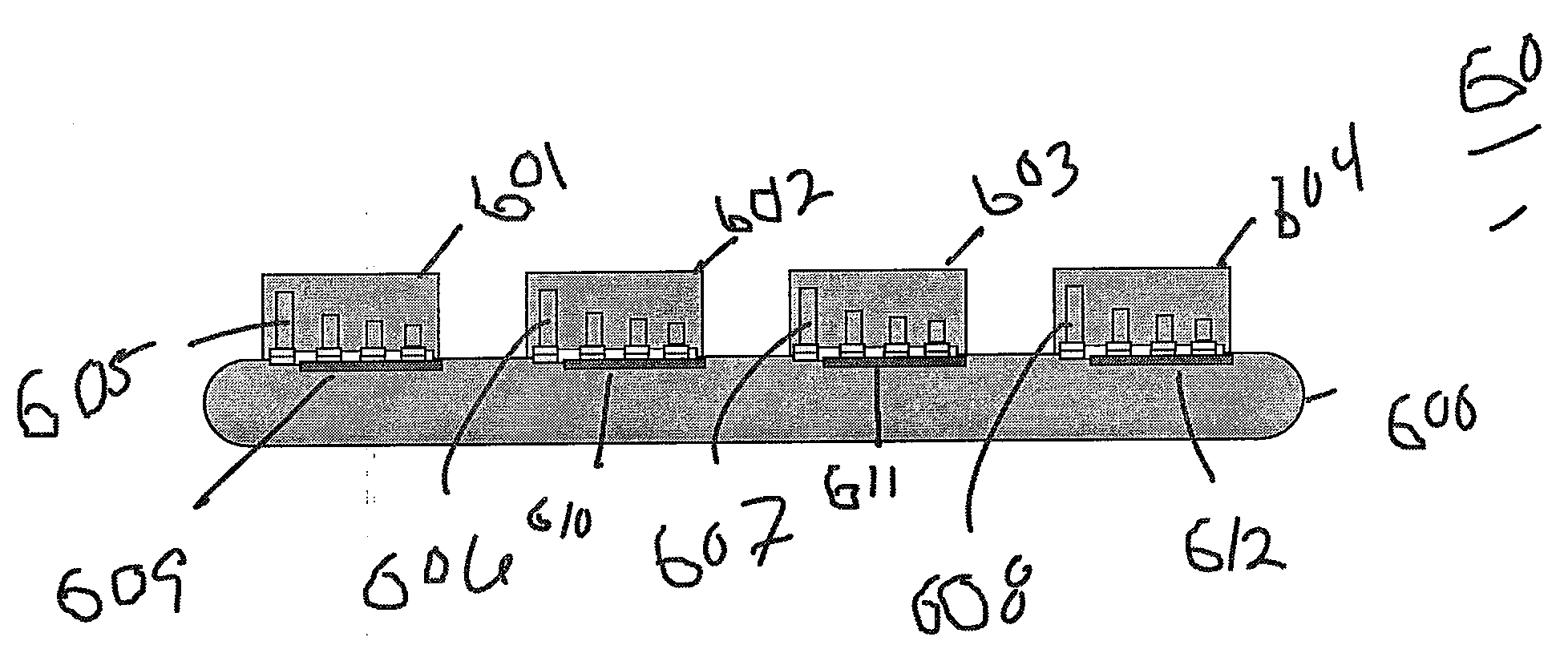
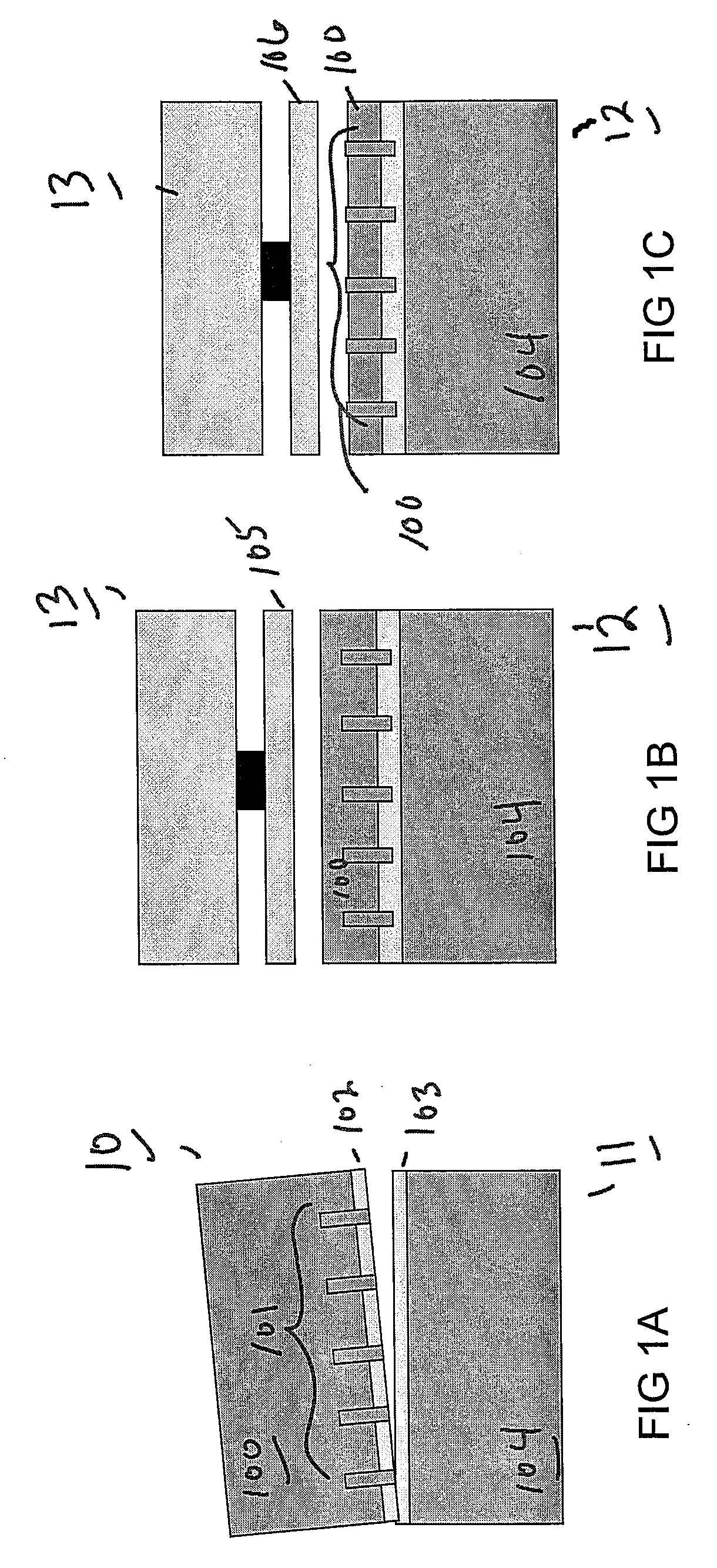
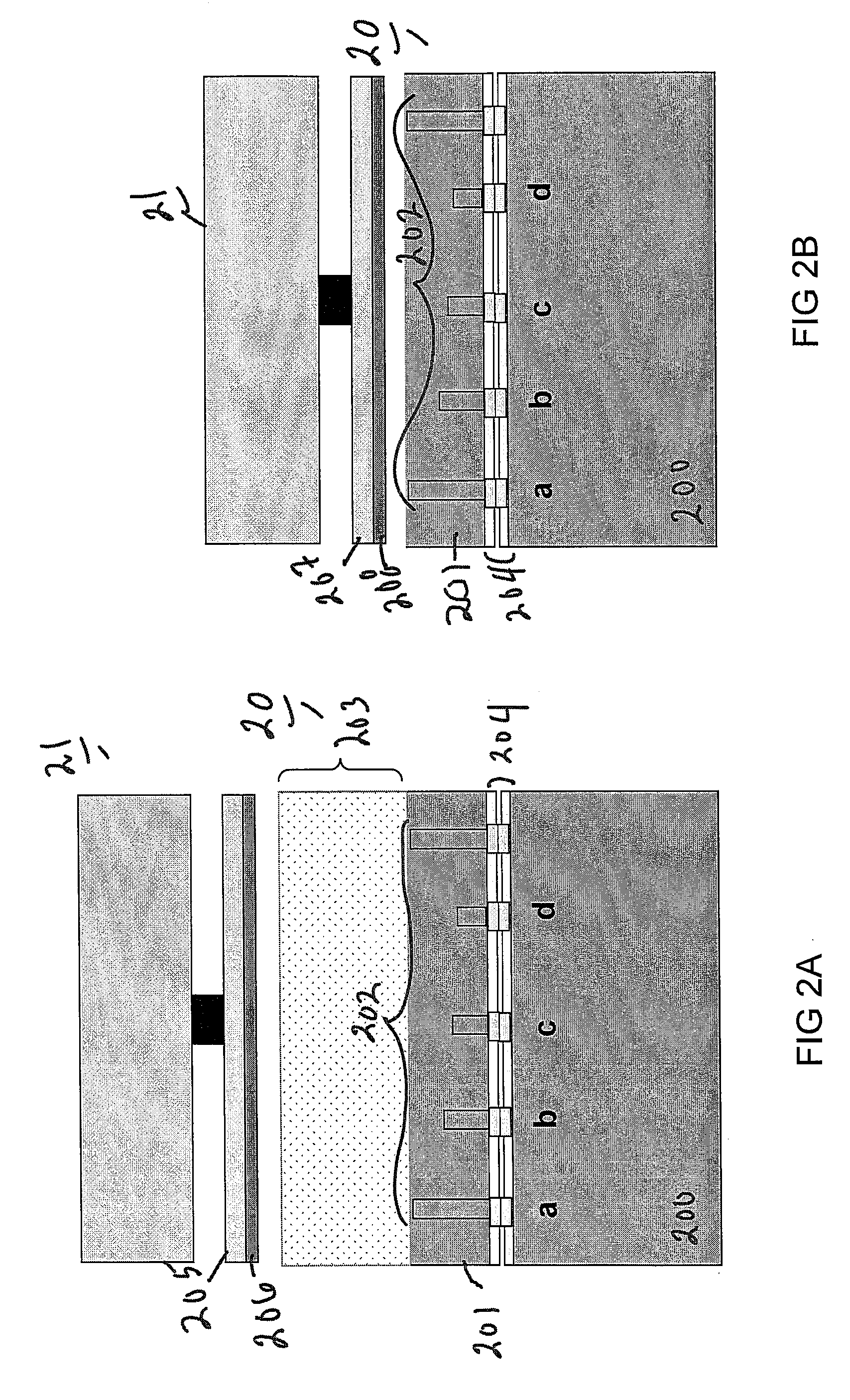
- Incorporating multiple sets of device structures, such as via or trenches, at specific known depths across the wafer, which are detected by current sensors to control the grinding and polishing processes, allowing for precise thickness control without mechanical dials and enabling continuous monitoring during grinding.

Quality Standards for Thinned Wafer Manufacturing
The establishment of comprehensive quality standards for thinned wafer manufacturing represents a critical framework for ensuring consistent performance and reliability in semiconductor applications. These standards encompass dimensional tolerances, surface quality specifications, and mechanical integrity requirements that must be maintained throughout the thinning process. Industry-leading organizations such as SEMI and JEDEC have developed standardized testing protocols that define acceptable parameters for wafer thickness variation, total thickness variation (TTV), and bow and warp measurements.
Thickness uniformity standards typically require TTV values below 2 micrometers for advanced applications, with some high-performance devices demanding even tighter tolerances of less than 1 micrometer. Surface roughness specifications mandate Ra values typically below 0.5 nanometers for the active surface, while the backside surface may allow slightly higher roughness depending on the application requirements. These parameters directly impact device performance and yield rates in subsequent processing steps.
Mechanical strength validation protocols form another cornerstone of quality standards, incorporating standardized bend tests, thermal cycling assessments, and stress analysis procedures. The three-point bend test methodology, following modified ASTM standards, establishes minimum flexural strength requirements typically exceeding 300 MPa for silicon wafers thinned below 100 micrometers. Temperature cycling tests evaluate structural stability across operational temperature ranges, ensuring wafers maintain integrity under thermal stress conditions.
Contamination control standards address both particulate and metallic contamination limits, with specifications often requiring particle counts below 0.1 particles per square centimeter for particles larger than 0.2 micrometers. Metal contamination levels must remain below detection limits for critical elements such as iron, copper, and sodium, which can significantly impact device performance and reliability.
Process monitoring and statistical process control requirements mandate continuous tracking of key quality metrics throughout production. Real-time thickness mapping, automated optical inspection systems, and in-line stress measurement capabilities ensure immediate detection of deviations from established quality parameters, enabling rapid corrective actions to maintain production consistency and minimize yield losses.
Thickness uniformity standards typically require TTV values below 2 micrometers for advanced applications, with some high-performance devices demanding even tighter tolerances of less than 1 micrometer. Surface roughness specifications mandate Ra values typically below 0.5 nanometers for the active surface, while the backside surface may allow slightly higher roughness depending on the application requirements. These parameters directly impact device performance and yield rates in subsequent processing steps.
Mechanical strength validation protocols form another cornerstone of quality standards, incorporating standardized bend tests, thermal cycling assessments, and stress analysis procedures. The three-point bend test methodology, following modified ASTM standards, establishes minimum flexural strength requirements typically exceeding 300 MPa for silicon wafers thinned below 100 micrometers. Temperature cycling tests evaluate structural stability across operational temperature ranges, ensuring wafers maintain integrity under thermal stress conditions.
Contamination control standards address both particulate and metallic contamination limits, with specifications often requiring particle counts below 0.1 particles per square centimeter for particles larger than 0.2 micrometers. Metal contamination levels must remain below detection limits for critical elements such as iron, copper, and sodium, which can significantly impact device performance and reliability.
Process monitoring and statistical process control requirements mandate continuous tracking of key quality metrics throughout production. Real-time thickness mapping, automated optical inspection systems, and in-line stress measurement capabilities ensure immediate detection of deviations from established quality parameters, enabling rapid corrective actions to maintain production consistency and minimize yield losses.
Risk Management in Ultra-Thin Wafer Production
Ultra-thin wafer production presents unprecedented challenges in semiconductor manufacturing, where wafer thickness reductions to below 50 micrometers significantly amplify structural vulnerabilities and process risks. The inherent fragility of these substrates demands comprehensive risk management frameworks that address mechanical, thermal, and handling-related failure modes throughout the production lifecycle.
Mechanical stress concentration represents the primary risk category in ultra-thin wafer processing. Microscopic defects, edge chipping, and surface irregularities become critical failure initiation points when substrate thickness approaches the scale of typical surface roughness. Statistical analysis indicates that crack propagation rates increase exponentially as wafer thickness decreases below 75 micrometers, necessitating enhanced defect detection protocols and stress-minimized handling procedures.
Thermal management emerges as a critical risk factor due to the reduced thermal mass and increased temperature sensitivity of ultra-thin substrates. Rapid temperature fluctuations during processing can induce thermal shock, leading to catastrophic wafer fracture. Process temperature gradients exceeding 2°C per millimeter pose significant warpage risks, requiring precise thermal control systems and gradual temperature ramping protocols to maintain structural integrity.
Handling and transportation risks escalate dramatically with reduced wafer thickness, as conventional vacuum chuck systems and robotic handling mechanisms may generate excessive localized stress concentrations. Electrostatic discharge events, previously manageable in standard thickness wafers, can cause immediate structural damage in ultra-thin substrates due to reduced dielectric strength and increased susceptibility to electrical stress.
Contamination control assumes heightened importance in ultra-thin wafer production, as particle-induced stress concentrations can propagate through the entire substrate thickness. Particles exceeding 10% of the wafer thickness create significant topographical variations that compromise subsequent processing steps and increase fracture probability during handling operations.
Process-induced stress management requires sophisticated monitoring and control systems to detect early indicators of structural compromise. Real-time stress measurement techniques, including optical interferometry and acoustic emission monitoring, enable proactive intervention before catastrophic failure occurs. Implementation of predictive maintenance algorithms and statistical process control methodologies helps identify process drift conditions that could compromise wafer integrity.
Quality assurance protocols must incorporate enhanced inspection frequencies and more sensitive detection thresholds to account for the reduced margin of error in ultra-thin wafer processing. Non-destructive testing methodologies, including high-resolution optical inspection and ultrasonic scanning, become essential tools for identifying potential failure sites before they propagate into production-limiting defects.
Mechanical stress concentration represents the primary risk category in ultra-thin wafer processing. Microscopic defects, edge chipping, and surface irregularities become critical failure initiation points when substrate thickness approaches the scale of typical surface roughness. Statistical analysis indicates that crack propagation rates increase exponentially as wafer thickness decreases below 75 micrometers, necessitating enhanced defect detection protocols and stress-minimized handling procedures.
Thermal management emerges as a critical risk factor due to the reduced thermal mass and increased temperature sensitivity of ultra-thin substrates. Rapid temperature fluctuations during processing can induce thermal shock, leading to catastrophic wafer fracture. Process temperature gradients exceeding 2°C per millimeter pose significant warpage risks, requiring precise thermal control systems and gradual temperature ramping protocols to maintain structural integrity.
Handling and transportation risks escalate dramatically with reduced wafer thickness, as conventional vacuum chuck systems and robotic handling mechanisms may generate excessive localized stress concentrations. Electrostatic discharge events, previously manageable in standard thickness wafers, can cause immediate structural damage in ultra-thin substrates due to reduced dielectric strength and increased susceptibility to electrical stress.
Contamination control assumes heightened importance in ultra-thin wafer production, as particle-induced stress concentrations can propagate through the entire substrate thickness. Particles exceeding 10% of the wafer thickness create significant topographical variations that compromise subsequent processing steps and increase fracture probability during handling operations.
Process-induced stress management requires sophisticated monitoring and control systems to detect early indicators of structural compromise. Real-time stress measurement techniques, including optical interferometry and acoustic emission monitoring, enable proactive intervention before catastrophic failure occurs. Implementation of predictive maintenance algorithms and statistical process control methodologies helps identify process drift conditions that could compromise wafer integrity.
Quality assurance protocols must incorporate enhanced inspection frequencies and more sensitive detection thresholds to account for the reduced margin of error in ultra-thin wafer processing. Non-destructive testing methodologies, including high-resolution optical inspection and ultrasonic scanning, become essential tools for identifying potential failure sites before they propagate into production-limiting defects.
Unlock deeper insights with PatSnap Eureka Quick Research — get a full tech report to explore trends and direct your research. Try now!
Generate Your Research Report Instantly with AI Agent
Supercharge your innovation with PatSnap Eureka AI Agent Platform!