
Earphone noise reduction method and device and earphone system
A headphone, noise reduction technology, applied in the field of acoustic signal processing, can solve problems such as useful signal interference
Patent Information
- Authority / Receiving Office
- CN · China
- Patent Type
- Applications(China)
- Current Assignee / Owner
- Publication Date
- 2021-09-17
Smart Images
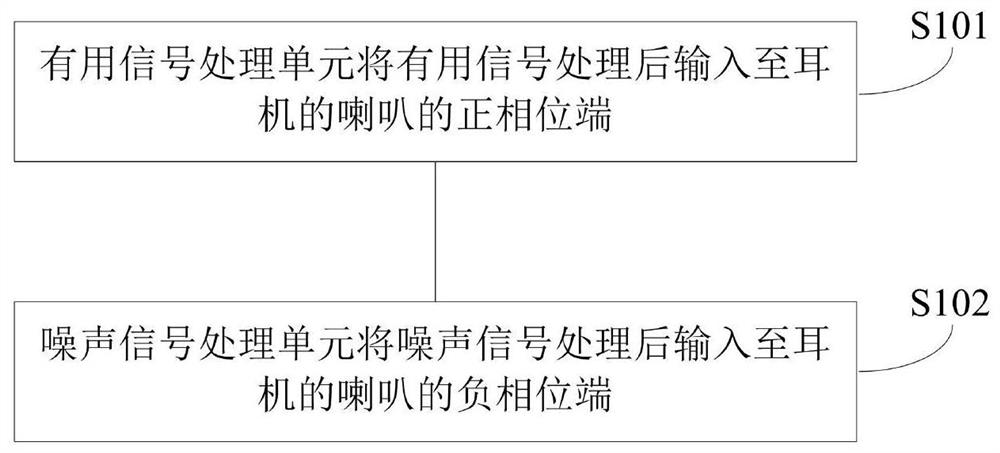
Figure 1 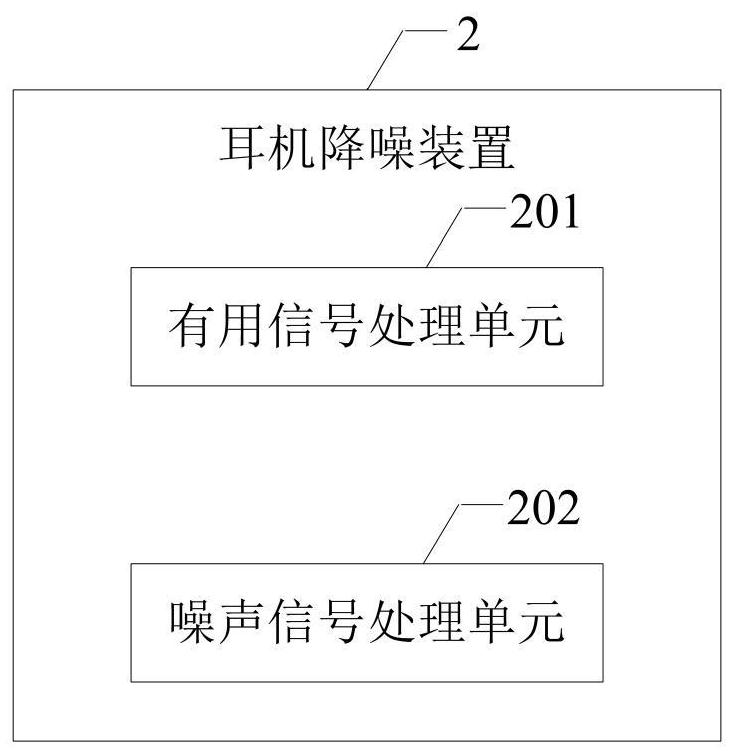
Figure 2 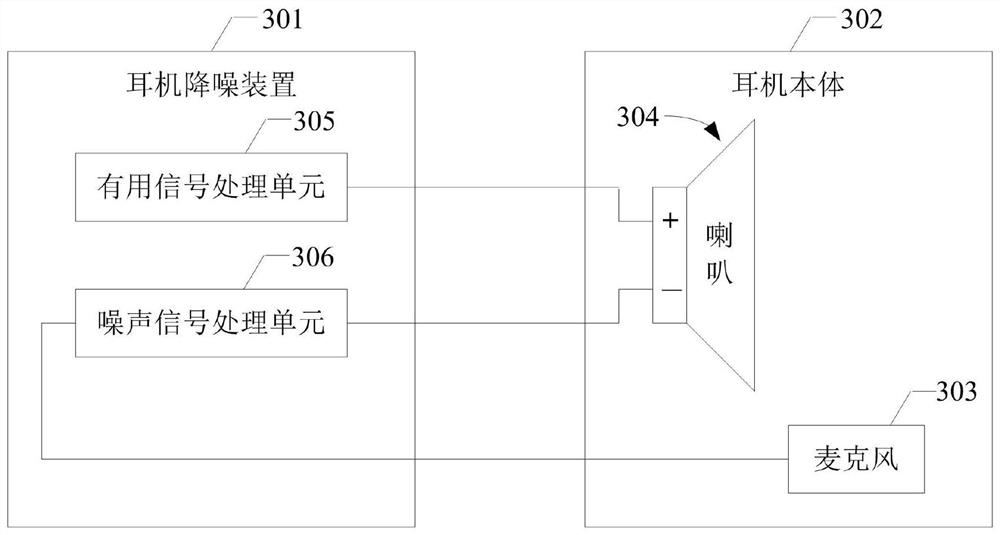
Figure 3
Abstract
Description
technical field
[0001] The invention relates to the field of acoustic signal processing, in particular to an earphone noise reduction method, device and earphone system. Background technique
[0002] Earphones are the sound signal output components of many electronic devices, and their function is to receive the sound signals output by the electronic devices and transmit them to the user's ears without causing the sound signals output by the electronic devices to be released. One of the parameters to measure the quality of headphones is the noise reduction performance, so the selection of noise reduction methods is particularly important. Existing earphone noise reduction methods include active noise reduction schemes, specifically mixing at least two noise signals out of phase with useful signals, and then amplifying the mixed signals from the positive phase of the driver unit of the earphone, that is, the speaker. terminal input. However, since the noise signals may not ...
Examples
Embodiment Construction
[0021] The technical solutions in the embodiments of the present application will be clearly and completely described below in conjunction with the accompanying drawings in the embodiments of the present application. Obviously, the described embodiments are only some of the embodiments of the present application, not all of them. Based on the embodiments in this application, all other embodiments obtained by persons of ordinary skill in the art without making creative efforts belong to the scope of protection of this application.
[0022] In this specification, qualifiers such as first and second may only be used to distinguish one element or act from another without necessarily requiring or implying any actual such relationship or order. Reference to an element or component or step (etc.) should not be construed as being limited to only one of the element, component, or step, but may be one or more of the element, component, or step, etc., where the circumstances permit.
[0...