
Text-to-speech user interface control
a text-to-speech and user interface technology, applied in the field of text-to-speech systems, can solve the problems of difficult control of difficulty in finding or controlling a starting position for the text-to-speech conversion process, and difficulty in speech analysis and the rate at which the text-to-speech conversion should occur, etc., to achieve good control over what actually will be read and find such a starting position
- Summary
- Abstract
- Description
- Claims
- Application Information
AI Technical Summary
Problems solved by technology
Method used
Image

Examples
Embodiment Construction
(s)
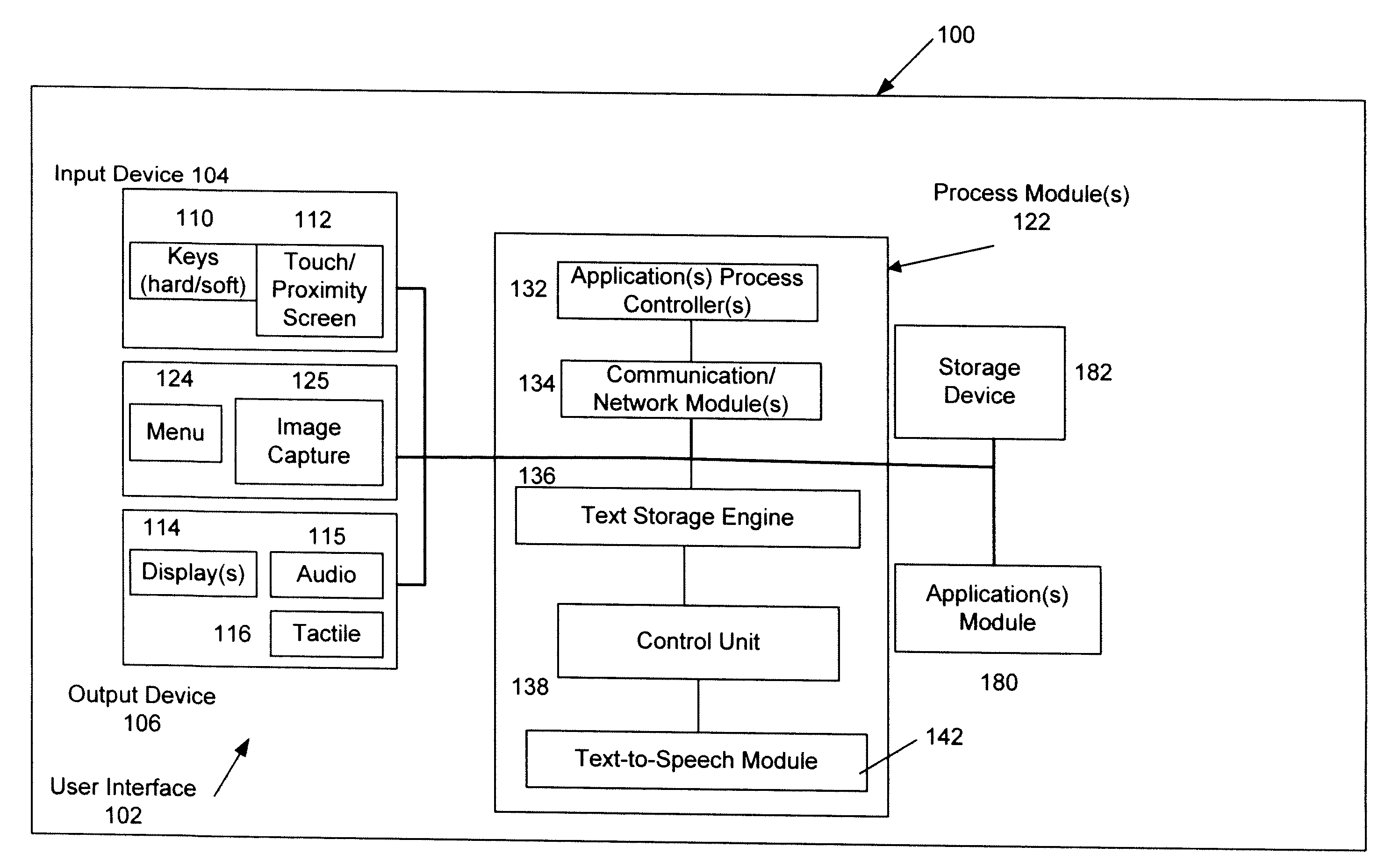
[0017]FIG. 1 illustrates one embodiment of a system 100 in which aspects of the disclosed embodiments can be applied. Although the disclosed embodiments will be described with reference to the embodiments shown in the drawings and described below, it should be understood that these could be embodied in many alternate forms. In addition, any suitable size, shape or type of elements or materials could be used.
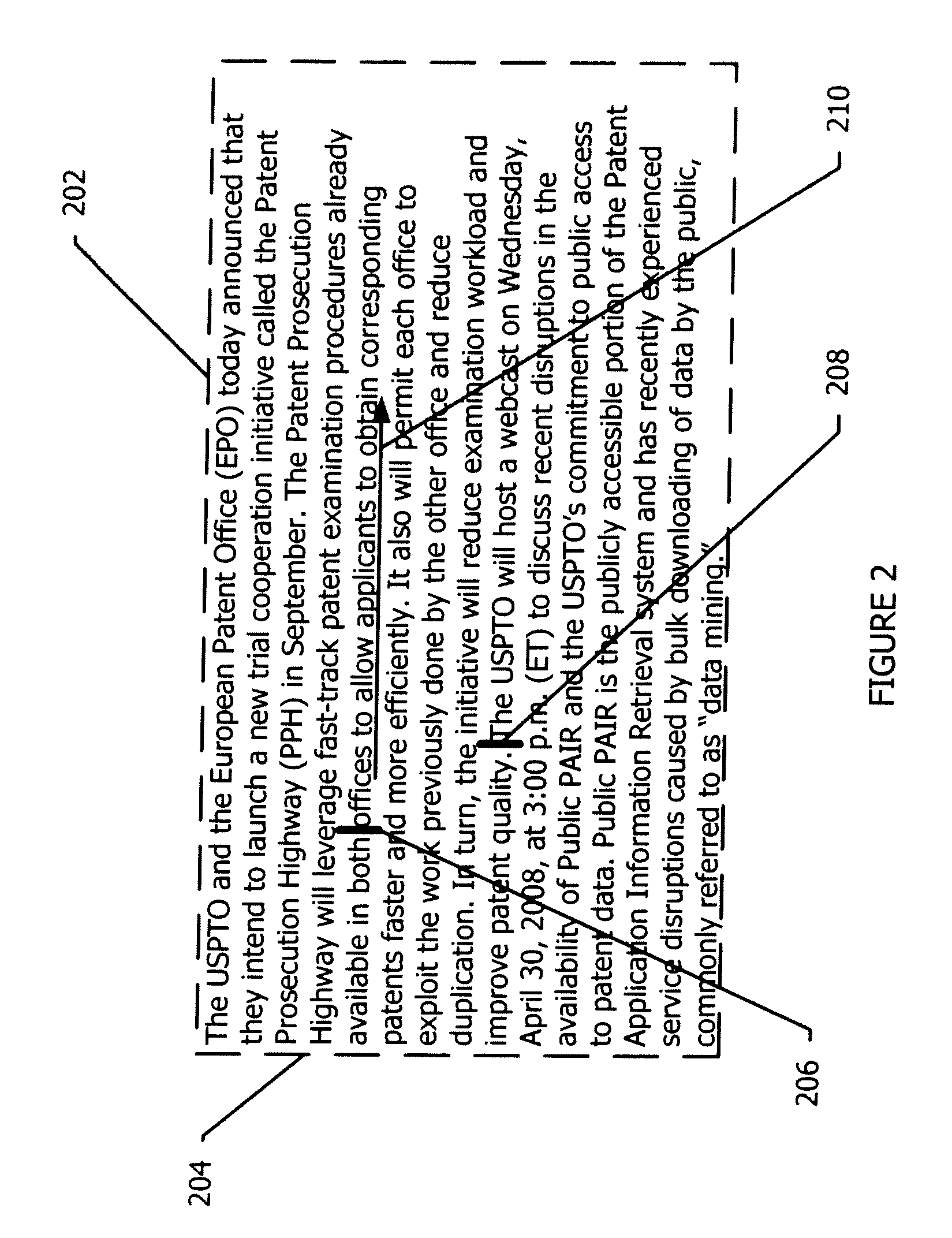
[0018]The aspects of the disclosed embodiments generally allow a user to select a precise point from which to begin a text-to-speech conversion process in order to generate automated speech from computer readable or understandable text. While computer readable text is displayed on a screen of a device the user can select any point within the text portion or area from which to start the text-to-speech conversion process. Although the aspects of the disclosed embodiments will generally be described herein with relation to text displayed on a screen of a device, the scope of the ...
PUM
 Login to View More
 Abstract
Description
Claims
Application Information
 Login to View More