
Food age organization system
a technology of food age organization and food age, applied in the direction of identification means, instruments, measurement devices, etc., can solve the problems of food being particularly susceptible to deterioration and contamination, difficult to keep track, and devices neither anticipate nor disclose any embodimen
- Summary
- Abstract
- Description
- Claims
- Application Information
AI Technical Summary
Benefits of technology
Problems solved by technology
Method used
Image

Examples
Embodiment Construction
of the Figures
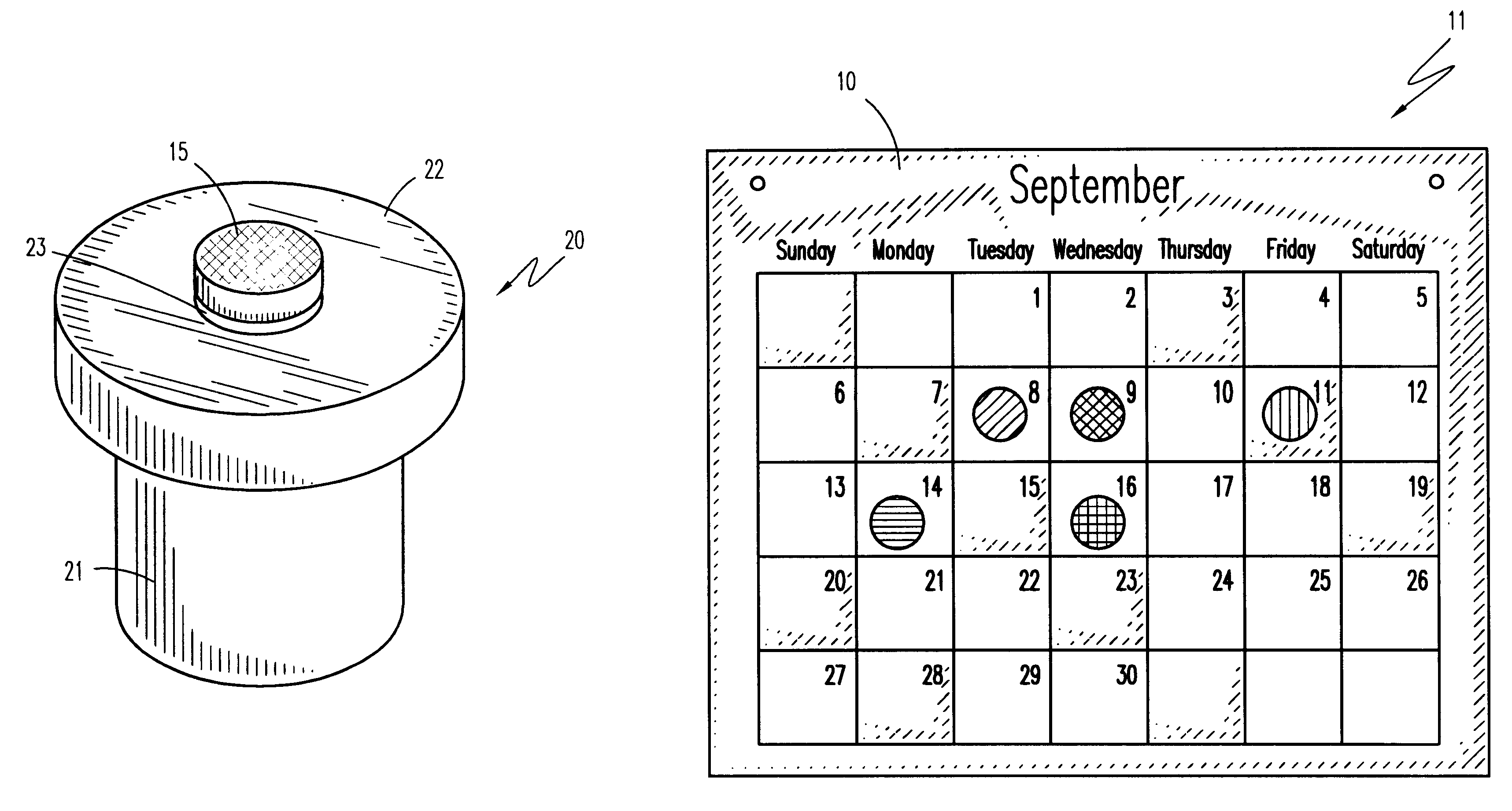
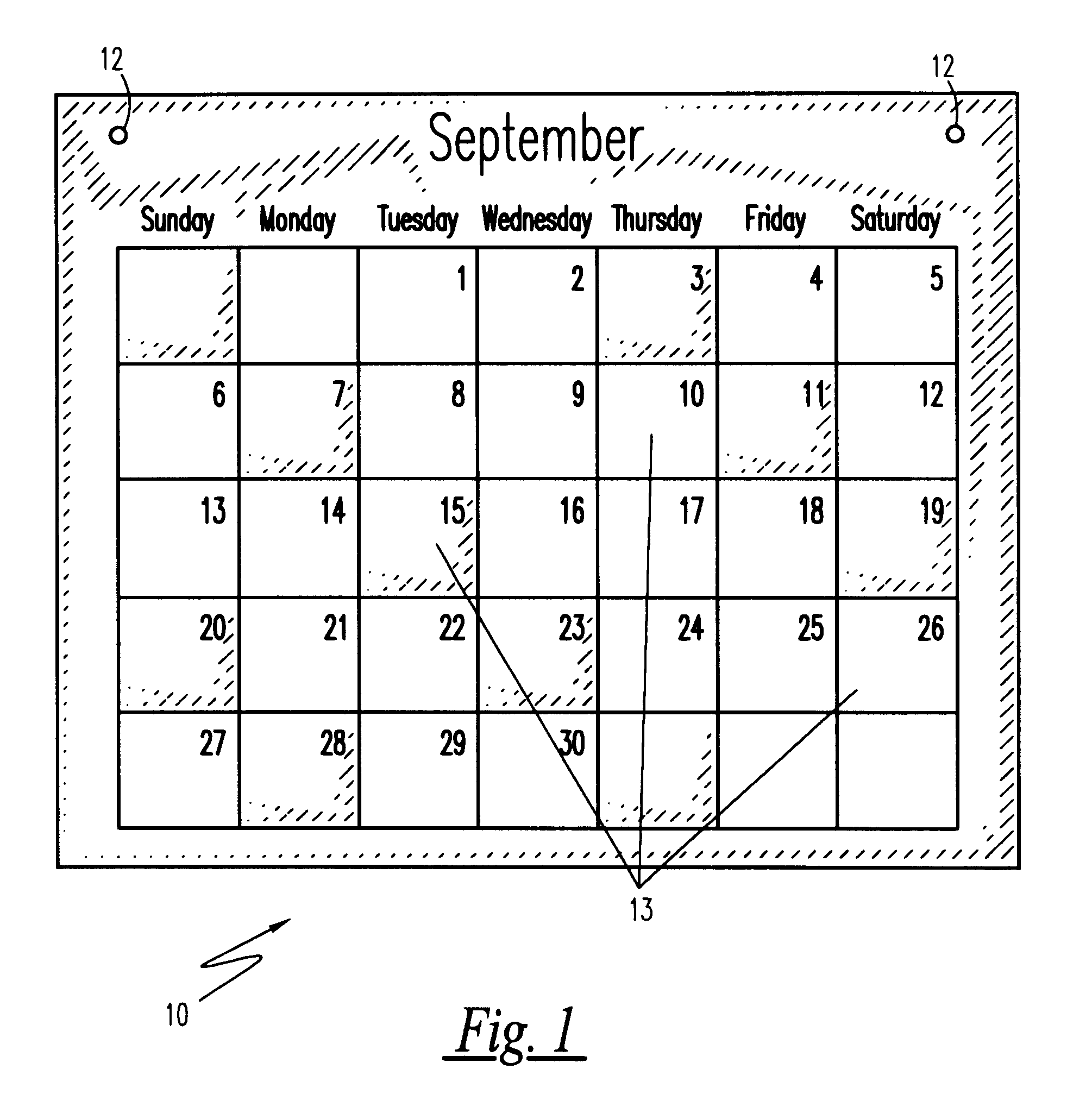
Referring now to FIG. 1, depicted is a calendar 10 used in conjunction with the food age organization system 11, according to the preferred embodiment of the present invention. It should be understood that, although a single month is depicted on the calendar 10, it has been done solely for demonstration purposes and the appropriate month / year combination is to be used, depending upon the date of use. The calendar 10 is designed to be secured to a conventional refrigerator door (not shown) and is constructed having either a ferromagnetic backing material (not shown) or of a non-magnetic material of a weight and thickness such that conventional refrigerator-type magnets can secure it in place on the refrigerator surface. The calendar 10 also includes a pair of hook apertures 12 that provide an alternative securing means. The calendar 10 includes a plurality of large date squares 13 that correspond to the days of the month / year.
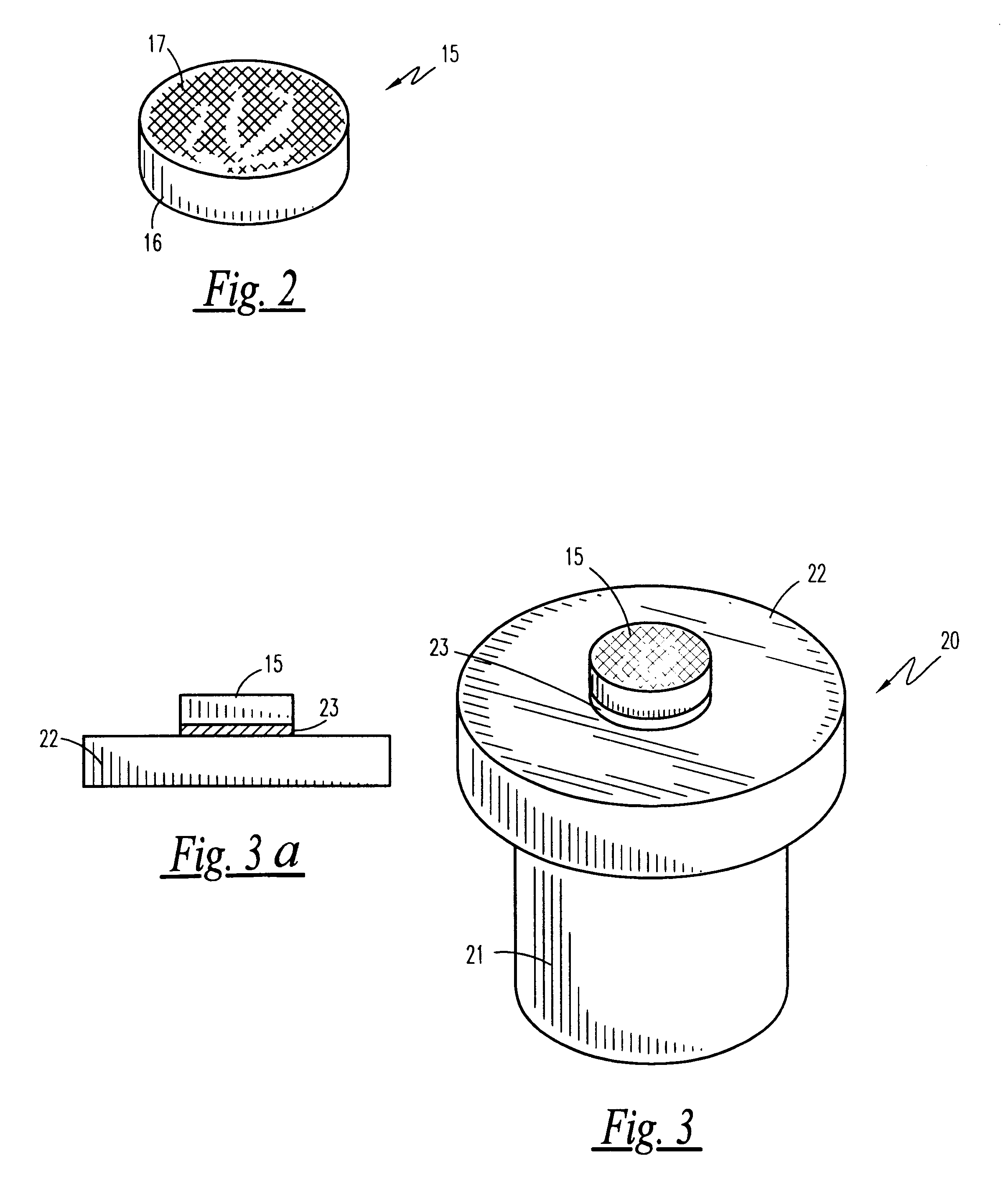
Referring now to FIG. 2, depicted is a magne...
PUM
 Login to View More
 Abstract
Description
Claims
Application Information
 Login to View More