
Method for terminal to obtain attribute of neighboring region with same frequency and measuring method
A technology of co-frequency adjacent cells and adjacent cells, applied in the field of wireless communication, to achieve the effect of reducing invalid PCCPCH measurements
Patent Information
- Authority / Receiving Office
- CN · China
- Current Assignee / Owner
- Publication Date
- 2009-12-09
- Estimated Expiration
- Not applicable · inactive patent
Smart Images
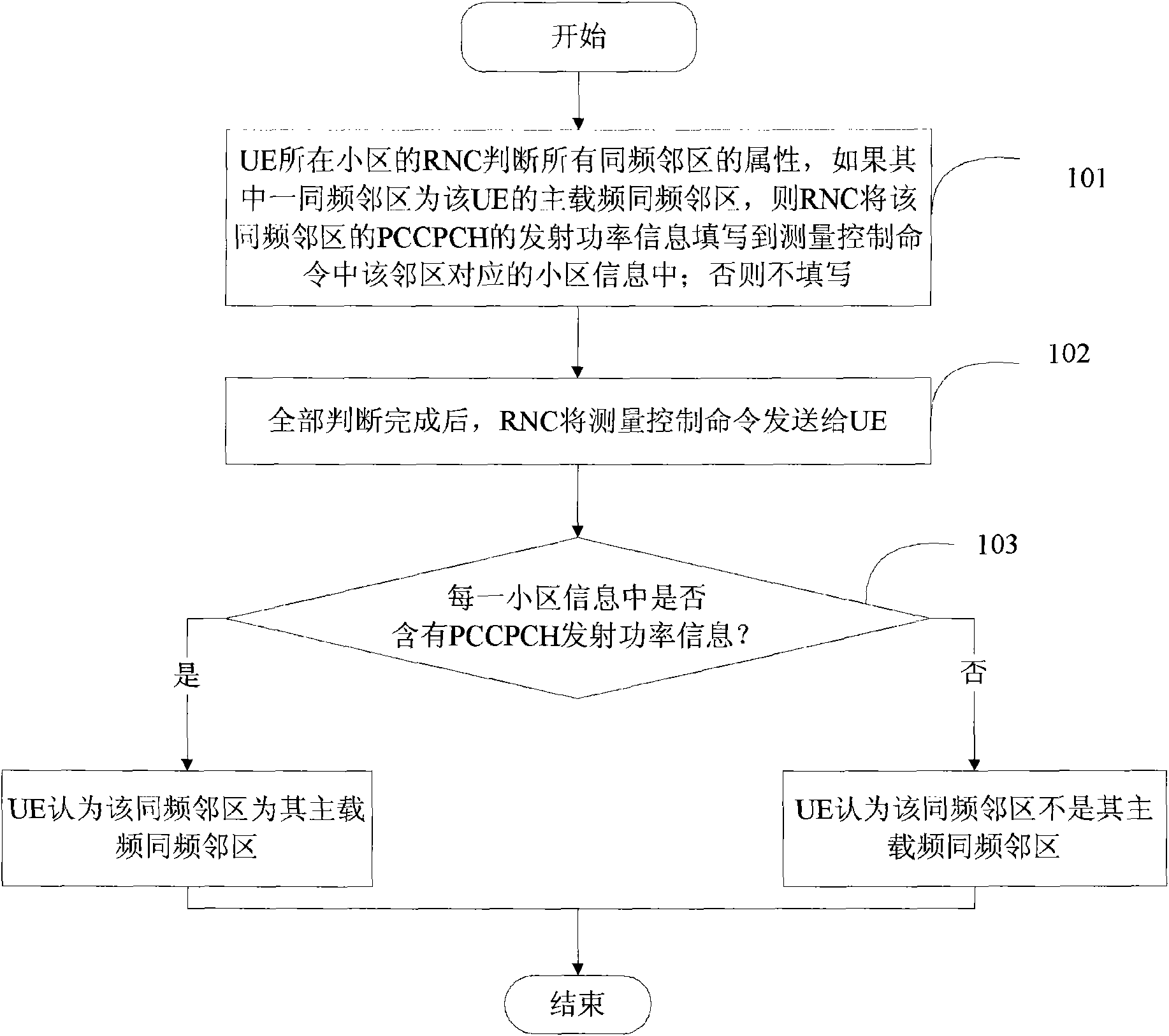
Figure 1 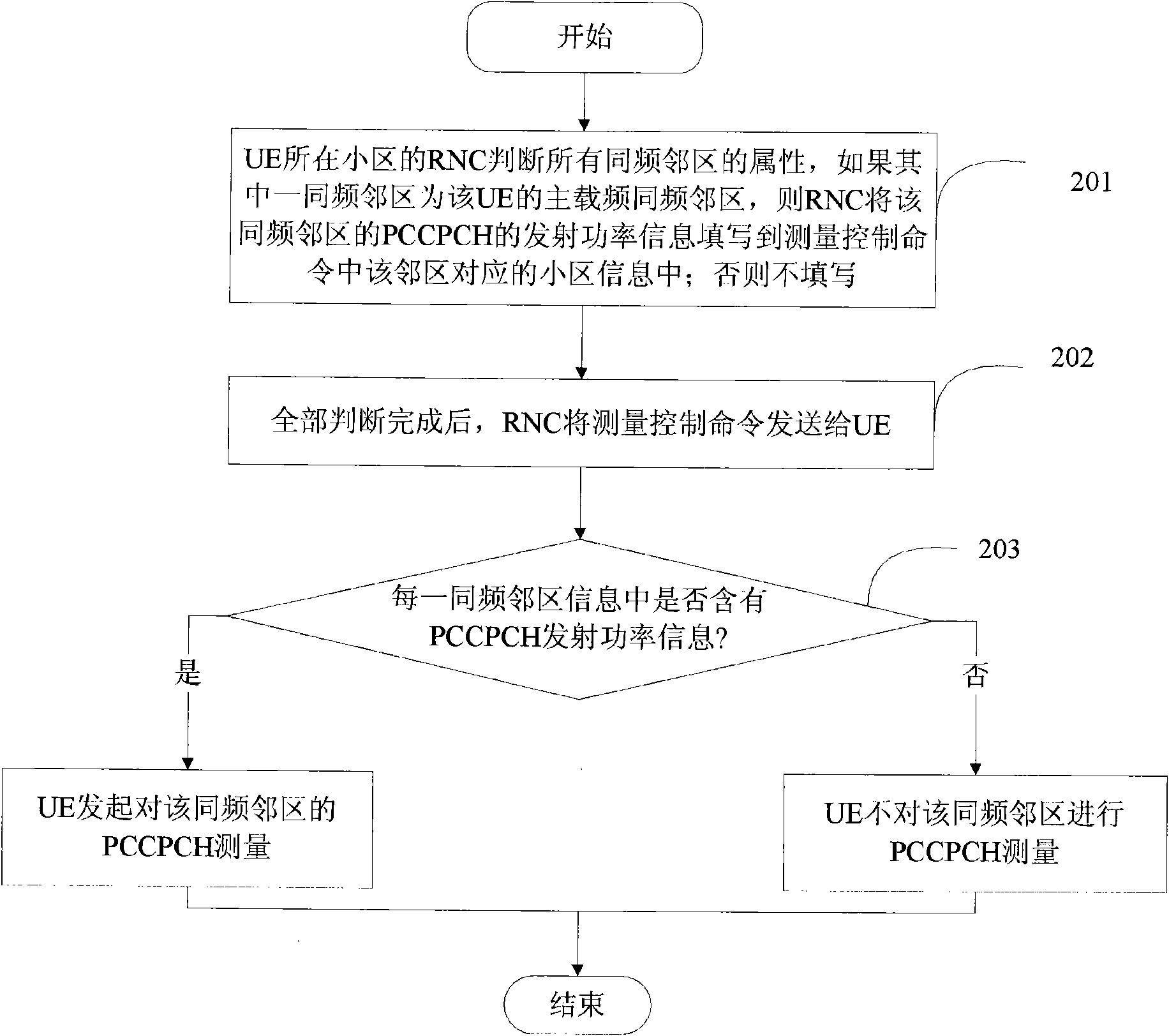
Figure 2
Abstract
Description
technical field
[0001] The invention relates to the field of wireless communication, and mainly provides a method for a terminal in a multi-carrier frequency TD-SCDMA (Time Division-Synchronous Code Division Multiple Access) system to acquire attributes of co-frequency adjacent cells and a method for measuring it. Background technique
[0002] The terminal of the TD-SCDMA system can remove the same-frequency interference of adjacent cells through the method of joint detection. At present, the terminal can obtain the information of the interfering cell by reading the same-frequency neighbor cell list in the measurement control command. Otherwise, the terminal (UE) needs to traverse all the possible parameters configured at this frequency point to search for possible interfering cells, and such computation is basically impossible for the terminal. Therefore, the most effective way is for the terminal to obtain a list of all possible interfering cells from the network side. ...
Examples
Embodiment Construction
[0038]The basic concept of the present invention is: when the network side constructs the same-frequency neighbor cell list, if it is judged that a certain neighbor cell is the main carrier frequency same-frequency neighbor cell of the UE, then fill in the PCCPCH transmit power information of the neighbor cell into the measurement control command Otherwise, do not fill it in; after receiving the measurement control command, the UE judges whether the adjacent cell is the main carrier frequency of the UE by judging whether the corresponding cell information in the same-frequency adjacent cell list contains PCCPCH transmit power information The same-frequency neighbor cell, and then decide whether to initiate PCCPCH measurement for the neighbor cell. If the cell information contains PCCPCH transmission power information, the UE considers that the same-frequency neighbor cell is the same-frequency primary carrier, and needs to perform PCCPCH measurement on it; otherwise, the UE con...