
A heat treatment process for low-alloy structural steel and low-carbon structural steel
A technology of structural steel and low alloy, applied in the field of heat treatment of iron and steel materials, can solve problems such as not meeting the requirements of use, and achieve the effects of improving toughness, refining grain size, and large elastic-plastic deformation delay interval
Patent Information
- Authority / Receiving Office
- CN · China
- Patent Type
- Patents(China)
- Current Assignee / Owner
- Publication Date
- 2016-08-10
Smart Images
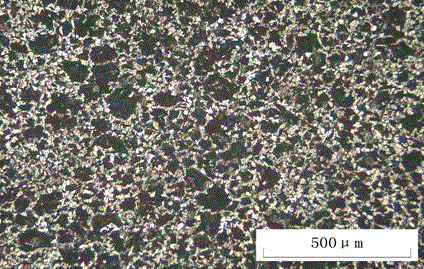
Figure 1 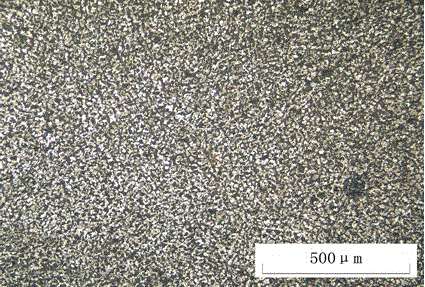
Figure 2 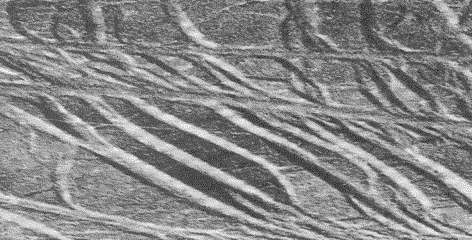
Figure 3
Abstract
Description
technical field
[0001] The invention belongs to the technical field of heat treatment of iron and steel materials, and in particular relates to a heat treatment process of low-alloy structural steel and low-carbon structural steel. Background technique
[0002] The seismic isolation of bridges and buildings has become the main content of modern seismic isolation design, and the selection and treatment of seismic isolation materials have become the most core content. In particular, large bridges require large displacement changes and high requirements for shock absorption and isolation, and the requirements for shock absorption and isolation are extremely special. At present, some countries in the world have carried out systematic research on shock-absorbing and isolating materials, and have also achieved some results. However, most of them are used in the shock absorption and isolation of buildings, and the shock absorption effect is not obvious. The shock-absorbing and is...
Examples
Embodiment 1
[0030] Taking the low-alloy structural steel Q345B sample as an example, the composition (weight%) of the sample is: 0.18%C, 0.45%Si, 1.65%Mn, 0.03%P, 0.03%S, 0.01%N, 0.15%V , 0.25%Cr, 0.45%Ni, 0.20%Cu. The sample diameter d is 10mm, and the original gauge length Lo is 50mm.
[0031] After preparing the sample, set the process parameters of the heating furnace and tempering furnace: the normalizing temperature is 910°C, and the holding time is 90 minutes; the tempering temperature is 480°C, and the holding time is 120 minutes.
[0032] Then put the samples into the material frame, the samples are evenly arranged and the intervals are neat, put the material frame into the heating furnace, make sure the material frame is reliable, close the furnace door, call out the microcomputer process program, press "Start", the process will start automatically , and turn on the temperature recorder at the same time; after the heating and heat preservation program is over, close the normali...
Embodiment 2
[0041] Taking the low-carbon structural steel Q235 sample as an example, the composition (weight %) of the sample is: 0.20%C, 0.32%Si, 1.38%Mn, 0.043%P, 0.04%S, 0.006%N, 0.25%Cr , 0.28%Ni, 0.25%Cu. The sample diameter d is 10mm, and the original gauge length Lo is 50mm.
[0042] After preparing the sample, set the process parameters of the heating furnace and tempering furnace: the normalizing temperature is 920°C, and the holding time is 90 minutes; the tempering temperature is 650°C, and the holding time is 120 minutes.
[0043] Then put the samples into the material frame, the samples are evenly arranged and the intervals are neat, put the material frame into the normalizing furnace, make sure the material frame is reliable, close the furnace door, call out the microcomputer process program, press "Start", the process will start automatically , and turn on the temperature recorder at the same time; after the heating and heat preservation program is over, close the normaliz...