
Method for preventing steam from entering into rubber cable
A rubber sheath and cable technology, applied in the manufacture of cables/conductors, insulation of conductors/cables, circuits, etc., can solve the problems of gaps in the coating layer, increasing the risk of water seepage, and large infiltrating area. Small penetration area, wide application effect
Patent Information
- Authority / Receiving Office
- CN · China
- Patent Type
- Applications(China)
- Current Assignee / Owner
- Publication Date
- 2015-11-11
Smart Images
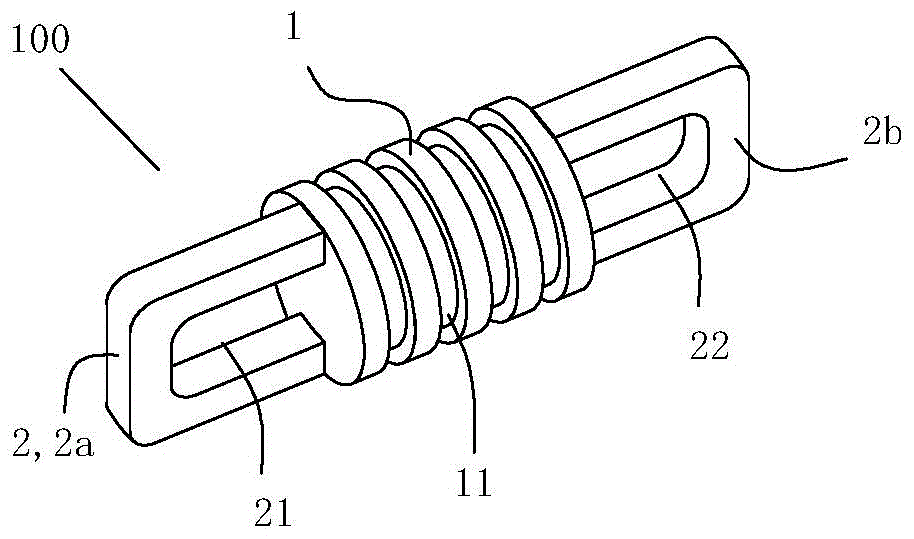
Figure 1 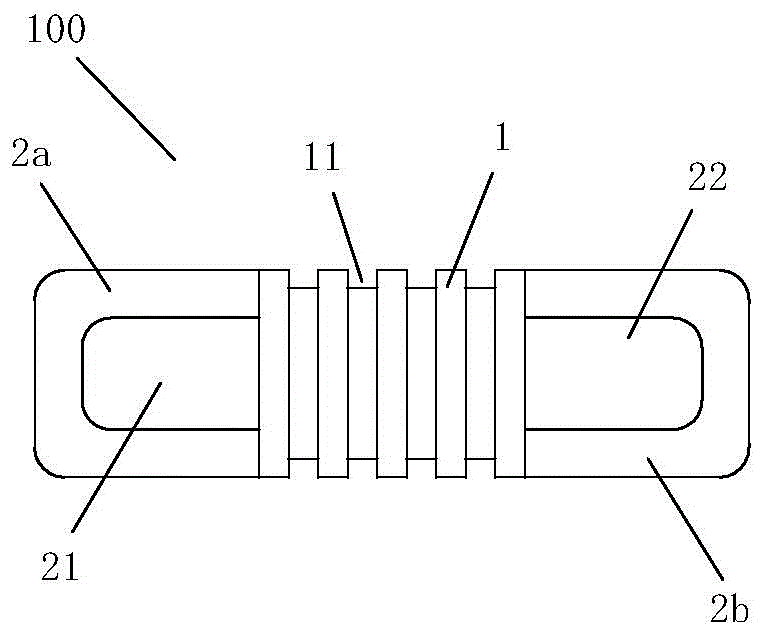
Figure 2 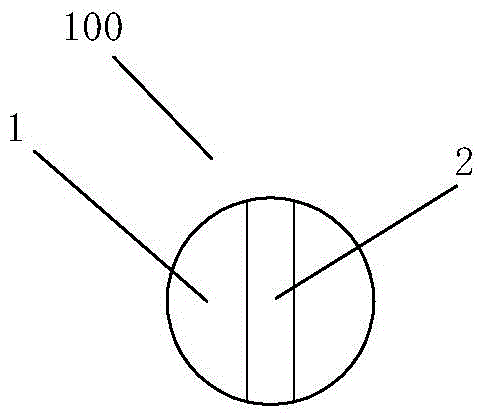
Figure 3
Abstract
Description
[0001] The present invention is a divisional application of the invention patent application with the application number 201210590685.0, the application date is December 29, 2012, and the invention name is "traction joint". technical field
[0002] The invention relates to the field of cable processing and production, in particular to a method for preventing steam from entering a rubber-sheathed cable when a traction joint is used to connect a traction line and an extrusion line. Background technique
[0003] Compared with plastic-coated cables, rubber-sheathed cables (rubber-coated cables) have many advantages: good flexibility, oil resistance, torsion resistance, wear resistance, etc. During the production of rubber-coated cables, the conductor is extruded and covered with a rubber sleeve through the mold core, and then the rubber is vulcanized through a pipeline filled with high-pressure steam. The existing vulcanization equipment is in the water-vapor balance mode, so tha...
Examples
Embodiment 1)
[0032] See Figure 1 to Figure 4, the traction joint 100 of the present invention is a steel integral piece, including a main body 1 and connecting parts 2 located on the left and right sides of the main body 1 . The main body 1 is in the shape of a cylinder whose axis is arranged along the left and right directions. The diameter of the main body 1 is 1 to 12 mm smaller than the diameter of the wire to be extruded. When the wire diameter of the outgoing line is 12 to 15 mm, the diameter of the main body 1 is 1 to 2 mm smaller than the wire diameter of the wire to be extruded; when the wire diameter of the wire to be extruded is 15 to 20 mm, the diameter of the main body 1 1 to 3 millimeters less than the diameter of the line to be extruded; when the diameter of the line to be extruded is 20 to 25 millimeters, the diameter of the main body 1 is 1 to 5 millimeters less than the diameter of the line to be extruded; When the wire diameter of the wire is 25 to 35 mm, the diameter ...