
Heart failure detection and risk stratification system
A detector and feature detection technology, applied in diagnostic recording/measurement, measuring pulse rate/heart rate, applications, etc., can solve problems such as reducing heart pumping efficiency, improve prognosis and patient outcomes, avoid medical intervention, and prevent deterioration Effect
Patent Information
- Authority / Receiving Office
- CN · China
- Current Assignee / Owner
- Publication Date
- 2016-08-17
- Estimated Expiration
- Not applicable · inactive patent
Smart Images
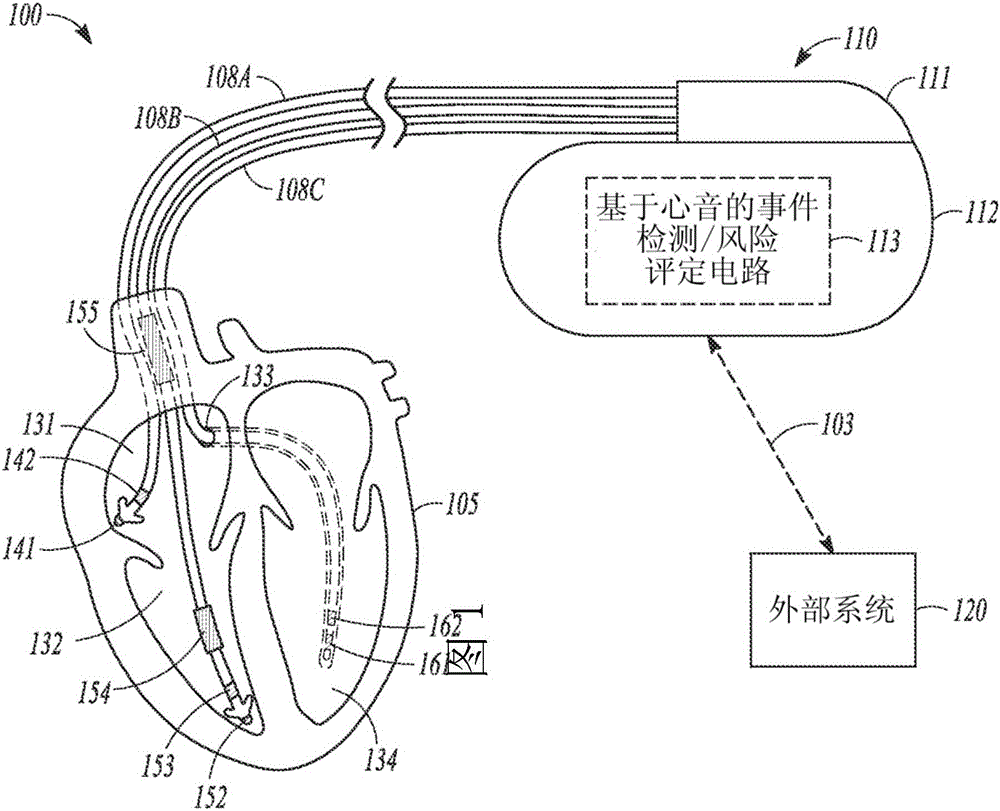
Figure 1 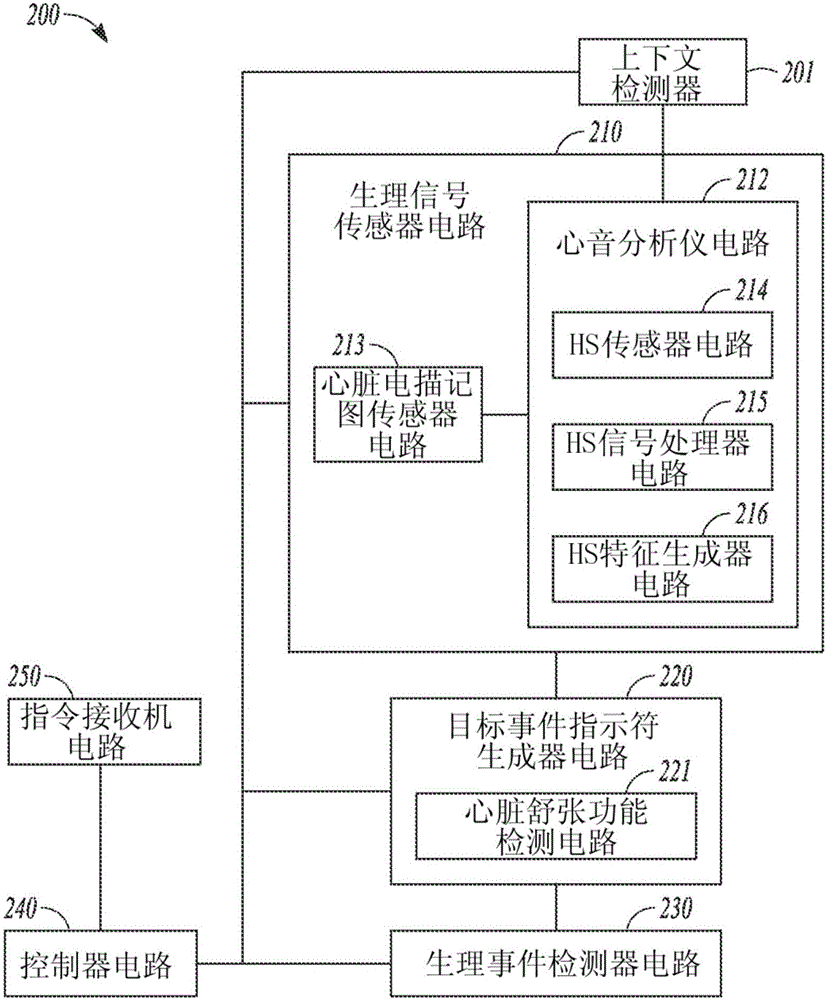
Figure 2 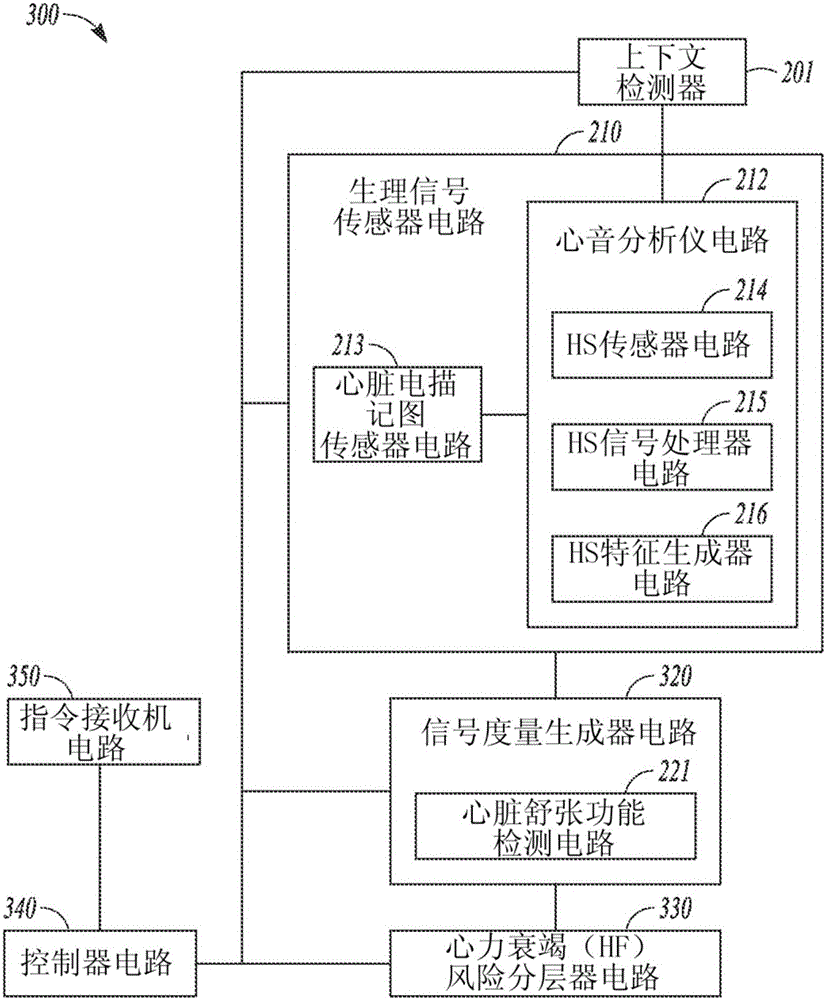
Figure 3
Abstract
Description
[0001] Cross References to Related Applications
[0002] This application claims the benefit of priority under 35 U.S.C § 119(e) of U.S. Provisional Patent Application Serial No. 61 / 899,653, filed May 20, 2013, which is hereby incorporated by reference in its entirety. technical field
[0003] The present invention relates to medical devices and, more particularly, to systems, devices and methods for detecting and monitoring heart failure decompensation. Background technique
[0004] Congestive heart failure (CHF) is a major health problem and affects more than five million people in the United States alone. CHF is the loss of the heart's pumping energy, resulting in an inability to deliver enough blood to meet the demands of surrounding tissues. CHF patients typically have an enlarged heart due to weakened heart muscle, resulting in reduced contractility and poor blood output from the heart.
[0005] CHF is usually a chronic state, but can occur suddenly. It can affect t...
Examples
Embodiment Construction
[0037] Disclosed herein are systems, devices, and methods for detecting events indicative of exacerbation of HF, such as HF decompensation events, and / or for identifying patients at elevated risk of developing future events associated with exacerbation of HF . HF event detection or HF risk stratification may be performed using physiological signals, such as sensed from physiological sensors associated with an ambulatory medical device, such as an implanted cardiac device. The present inventors have recognized that contextual conditions, including environmental context and patient physiological context, can affect certain types of sensor signals in HF patients, including those indicative of the diastolic function of the heart. Thus, by selectively acquiring sensor signals according to patient context and analyzing signal metrics derived from the selectively acquired sensor signals, the present invention may provide methods for detecting HF events indicative of exacerbation of H...