
Electrothermal grouping regeneration device of metal particle trap of diesel car
A technology of metal particles and regeneration device, applied in the direction of muffler device, exhaust device, electric control of exhaust treatment device, etc., can solve the problems of high process requirements, high fuel consumption, difficult particle combustion, etc., and achieve a simple regeneration control system , energy saving and emission reduction effect, the effect of simple structure
Patent Information
- Authority / Receiving Office
- CN · China
- Patent Type
- Applications(China)
- Current Assignee / Owner
- Publication Date
- 2017-02-08
- Estimated Expiration
- Not applicable · inactive patent
Smart Images
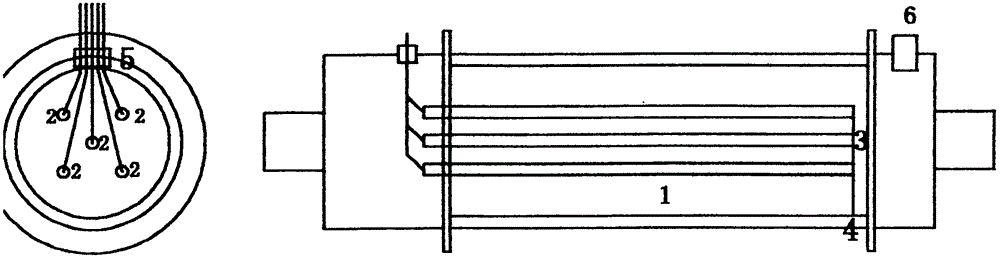
Figure 1
Abstract
Description
Technical field
[0001] The invention relates to a regeneration method of a metal filter, in particular to a grouped electrothermal regeneration device of a metal particle trap for diesel engines and diesel automobiles. Background technique
[0002] For many years, the particle traps of diesel vehicles have always adopted a honeycomb ceramic filter, which uses the honeycomb tube wall of the honeycomb ceramic to filter and store particles. This is called a wall-flow filter. When the particles of the filter move along with the vehicle The mileage of the filter gradually accumulates, and the resistance of the filter gradually increases. It is necessary to burn the particles inside the filter to restore the initial resistance of the filter. This method is called filter regeneration. The regeneration method generally adopts the active regeneration method of injecting diesel fuel to burn the particles. Due to the poor thermal conductivity of ceramics, and the small and long honeycomb tu...
Examples
Embodiment Construction
[0009] As shown in Figure 1, a grouped electrothermal regeneration device for a diesel automobile metal particle trap according to an embodiment of the present invention includes five pre-installed groups balanced in the metal filter 1 of the diesel automobile metal particle trap. A linear electric heater 2 made of multiple round core wires. Use stainless steel wire as a wire to weld one end of each group of electric heaters in parallel to form a common end 3. The other end of the stainless steel wire leads to the metal filter and welds the shell of the trap. 4. The housing of the trap is used as the negative electrode of the power supply, and the other end of the electric heater group. Each group of electric heaters is welded with a stainless steel wire to lead out the filter. Each stainless steel wire is fixed to the gas inlet assembly shell of the trap. The ceramic body terminal row posts 5 are connected in order, and one end of the terminal post extends out of the shell, and...