
Online Realization Method of Dialogue Policy Based on Multi-task Learning
A multi-task learning and strategy technology, applied in speech analysis, speech recognition, instruments, etc., can solve the problems of unstable learning rate, difficult to expand rules, and labor-intensive, etc., to achieve improved maintainability, stable training process, and strong construction The effect of modeling ability
Patent Information
- Authority / Receiving Office
- CN · China
- Patent Type
- Patents(China)
- Current Assignee / Owner
- Publication Date
- 2020-09-01
Smart Images
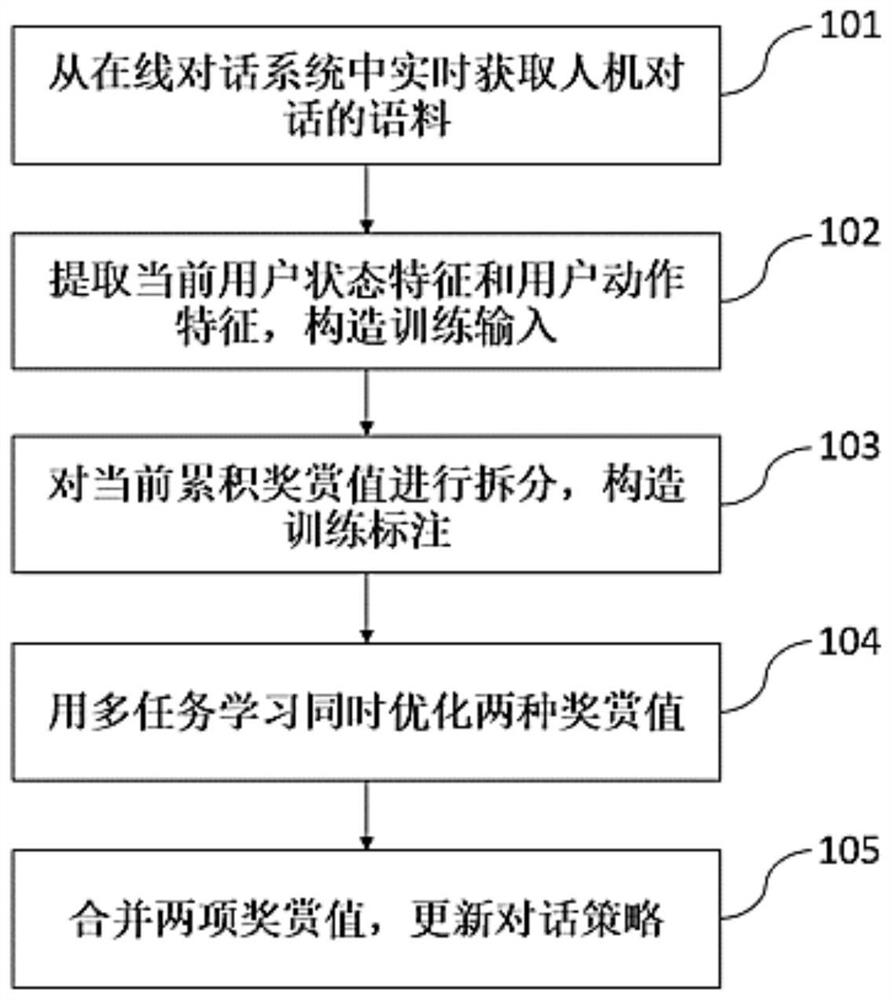
Figure 1 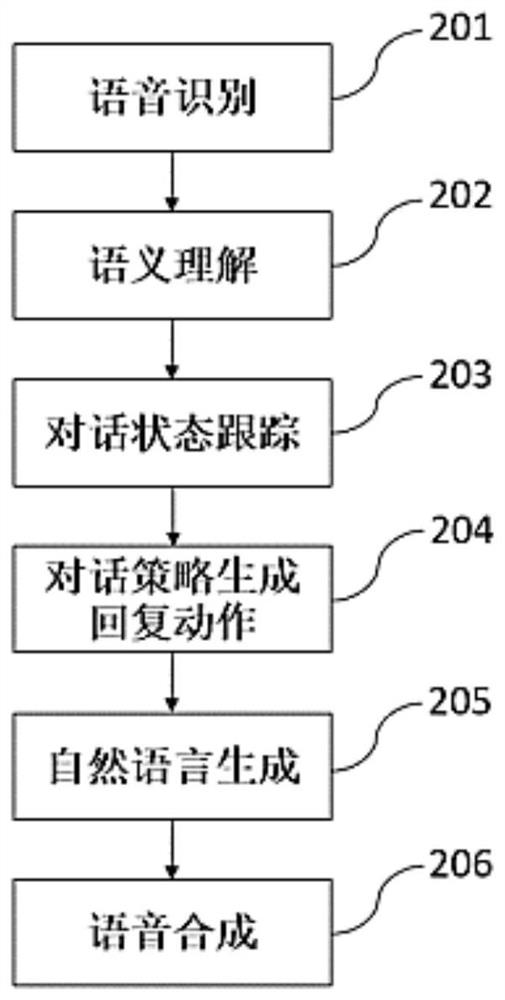
Figure 2 
Figure 3
Abstract
Description
technical field
[0001] The invention relates to a technology in the field of speech input, in particular to an online implementation method of a dialogue strategy based on multi-task learning for task-based dialogue systems. Background technique
[0002] With the development of artificial intelligence technology, dialogue system, as a system that can communicate with humans naturally, has gradually become a research hotspot with its good application prospects. At present, this technology has been widely used in automatic customer service, voice assistants, chat robots and other scenarios, which greatly improves the human-computer interaction experience. A typical dialogue system includes five modules: speech recognition, semantic understanding, dialogue management, natural language generation and speech synthesis. In terms of functions, dialogue systems can be divided into chat-based dialogue systems and task-based dialogue systems. The former aims to chat with users unint...
Examples
Embodiment Construction
[0032] Such as figure 1 As shown, the present embodiment follows the steps:
[0033] Step 101, acquire the corpus of the man-machine dialogue in real time from the online dialogue system.
[0034] In this embodiment, the process flow of the online spoken dialogue system for real-time acquisition of man-machine dialogue materials is as follows: figure 2 As shown, the steps of a complete dialogue flow include:
[0035] Step 201: Speech recognition, converting the user's voice into a text format;
[0036] Step 202: Semantic understanding, parsing the user voice text into semantics in the form of "slot-value pair";
[0037] Step 203: dialogue state tracking, updating current user state according to current information and historical information;
[0038] Step 204: the dialog strategy generates a reply action, taking the user's current state and user action as input, and generating a system reply action according to the dialog strategy;
[0039] Step 205: generating natural lan...