
Calculation method of importance coefficient of structural component based on P-M bearing capacity curve
A bearing capacity and important technology, applied in the direction of calculation, electrical digital data processing, special data processing applications, etc., can solve problems such as response increase, component instability and damage, and favorable impact of structure, achieving clear physical meaning and scope of application The effect of wide and reasonable calculation results
Patent Information
- Authority / Receiving Office
- CN · China
- Current Assignee / Owner
- Publication Date
- 2018-09-07
Smart Images
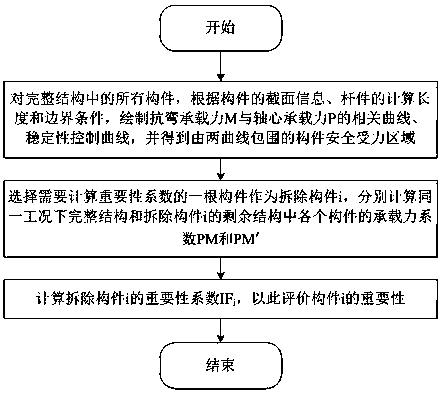
Figure 1 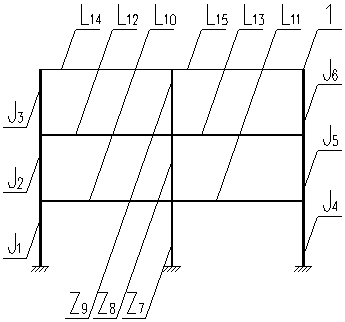
Figure 2 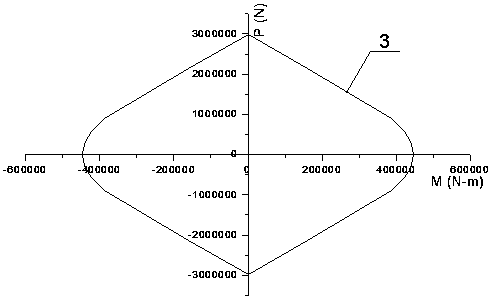
Figure 3
Abstract
Description
technical field
[0001] The invention relates to the technical field of structure anti-collapse design, in particular to a method for calculating the importance coefficient of structural parts based on the component P-M bearing capacity curve. Background technique
[0002] The safety of the structure is the primary issue of structural design, and the collapse and damage of buildings has always been the main source of casualties and equipment damage. When carrying out structural design of actual projects, it is often necessary to carry out anti-continuous collapse design to avoid structural damage. Cascading failures occur after local failures under accidental loads, resulting in large-scale collapses. There are many reasons for accidental loads, such as explosions, impacts, fires, human errors, etc., and the location, time, and degree of their occurrence are highly random. At present, the anti-progressive collapse design mainly adopts the method of demolishing components, th...
Examples
Embodiment 1
[0034] See attached figure 1 , the present invention calculates the importance coefficient of the component according to the following steps:
[0035] Step 1: For all components in the complete structure, according to the section information of the component, calculate the relationship between the bending capacity M and the axial bearing capacity P when the material of the component section is damaged, and draw the P-M correlation curve; according to the section information of the component Information, calculated length and boundary conditions of members, combined with the current design codes, calculate the bearing capacity limit of the member under the conditions of compression, bending and bending, and draw the stability control curve to obtain the P-M correlation curve and the area surrounded by the stability control curve is the safe stress area of the component.
[0036] a. Draw P-M curve
[0037] See attached figure 2 , the complete structure 1 is a single steel ...