
Network node, user device and methods thereof
A technology of network nodes and user equipment, applied in the direction of electrical components, wireless communication, transmission path sub-channel allocation, etc., can solve the problems of not supporting multi-cluster PUSCH, achieve the effect of less overhead, reliable reception, and reduced risk
Patent Information
- Authority / Receiving Office
- CN · China
- Current Assignee / Owner
- Publication Date
- 2018-10-23
Smart Images
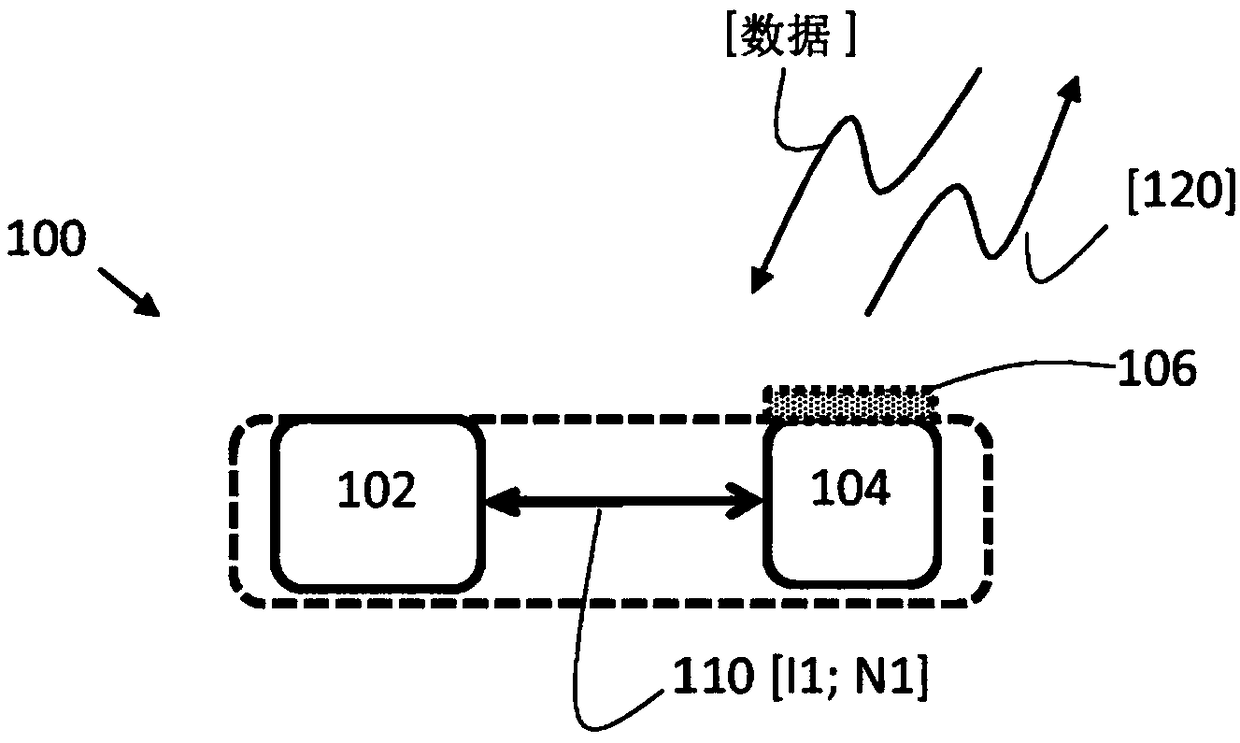
Figure 1 
Figure 2 
Figure 3
Abstract
Description
technical field
[0001] The invention relates to a network node and user equipment for a wireless communication system. Furthermore, the invention relates to corresponding methods, wireless communication systems, computer programs and computer program products. Background technique
[0002] In the Long Term Evolution (LTE) uplink, a Single Carrier-Frequency Division Multiple Access (Single Carrier-Frequency Division Multiple Access, SC-FDMA) waveform is used and is used for the Physical Uplink Shared Channel (Physical Uplink Shared Channel, PUSCH) time-frequency resources can be allocated by single-cluster or dual-cluster frequency resources, where each cluster (that is, frequency resource set) is positioned on a frequency within a time slot, and consists of several frequency-contiguous physical Resource block (Physical Resource Block, PRB) composition. A single Discrete Fourier Transform (DFT) precoder is applied to the one or two clusters. Thus, single-cluster achieves t...
Examples
Embodiment Construction
[0156] figure 1 A network node 100 according to an embodiment of the invention is shown. The network node 100 includes a processor 102 communicatively coupled to a transceiver 104 . further, figure 1 An optional antenna 106 is shown in . The antenna 106 is coupled to the transceiver 104 and is configured to transmit and / or receive wireless communication signals in the wireless communication system 500 .
[0157]The processor 102 of the network node 100 is configured to determine a resource indicator 110 comprising a first starting index I1 and a first number N1 of frequency resources. The first start index I1 and the first number N1 of frequency resources are used to allocate the first group of continuous frequency resources R1 in the first subband, and are also used to allocate the corresponding first group of continuous frequency resources in the second subband Resource R1'. The first subband and the second subband have no overlap and include the same number of frequenc...