
A robot-oriented multi-modal fusion emotion computing method and system
A kind of emotional computing, multi-modal technology, applied in the field of information, can solve the problem of no fusion, no multi-modal emotional computing for robots, no fusion method, etc.
Patent Information
- Authority / Receiving Office
- CN · China
- Patent Type
- Patents(China)
- Current Assignee / Owner
- Publication Date
- 2021-12-14
Smart Images
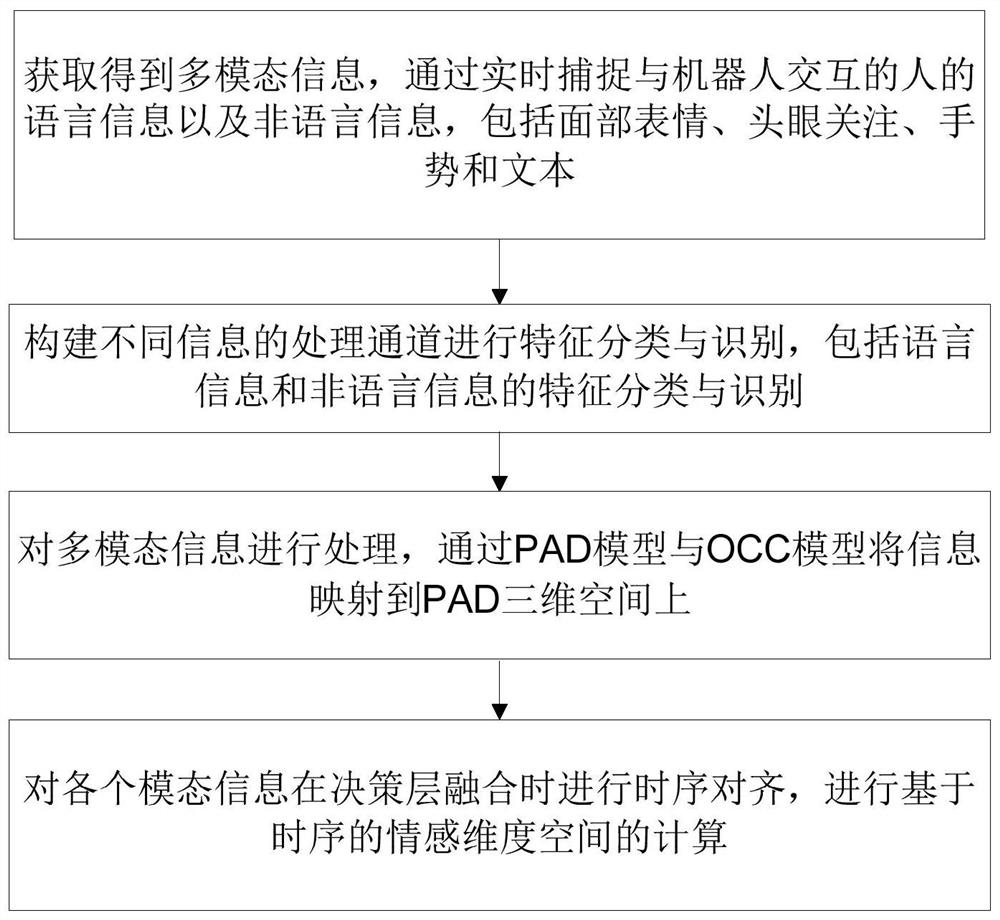
Figure 1 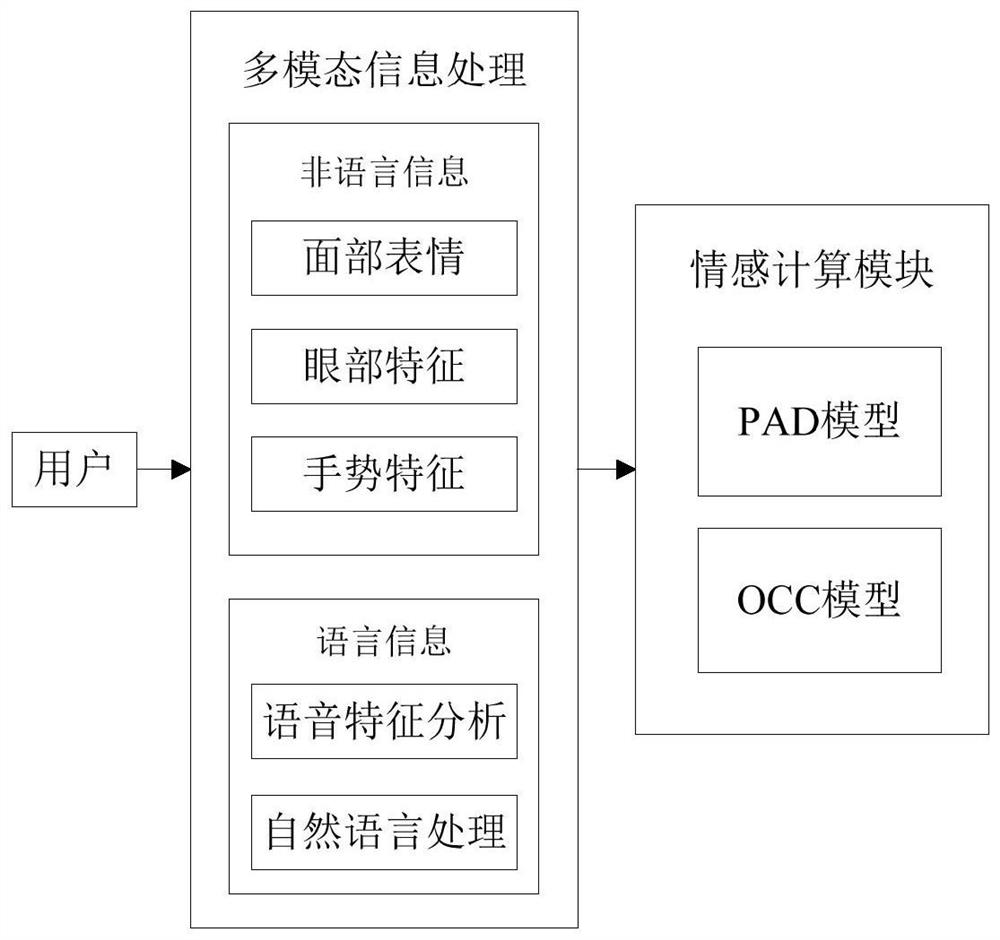
Figure 2
Abstract
Description
technical field
[0001] The invention relates to the field of information technology, in particular to a robot-oriented multimodal fusion emotion computing method and system. Background technique
[0002] From the current point of view, there are few related studies on multi-modal fusion. The current methods have not achieved the fusion of multi-modal information, and most of them are language partial information. Most of the research has the following defects: 1. It is limited to the information collection and acquisition of a certain mode; 2. It only recognizes the language part, and cannot recognize the user's emotion well; 3. The non-language information part is only for the interaction object. Facial expressions are used for emotional computing, but various signals such as physiological information, facial expressions, body language, and visual information are not accurately integrated; 4. There is no fusion method of language and non-linguistic multimodal information, a...
Examples
Embodiment Construction
[0049] see figure 1 with figure 2 , the present invention is a kind of robot-oriented multimodal fusion emotion calculation method, comprising the following steps:
[0050] Step 1. Obtain multi-modal information, by capturing the language information and non-language information of people interacting with the robot in real time, including facial expressions, head and eye attention, gestures and text;
[0051] Step 2. Construct different information processing channels for feature classification and identification, including feature classification and identification of linguistic information and non-linguistic information;
[0052] Step 3, process the multimodal information, and map the information to the PAD three-dimensional space through the PAD model (P-pleasure, A-arousal, D-dominance) and the OCC model;
[0053]Step 4. Perform temporal alignment of each modal information when merging at the decision-making layer, and perform calculation of emotional dimension space bas...