

Feeding inlet guiding device and anti-static belt conveyor
A technology of belt conveyor and material guide device, applied in the direction of conveyor, conveyor objects, static electricity, etc., can solve the problems of difficult shell disassembly, waste of material transportation, long distance of belt conveyor, etc., and achieve non-static blanking operation , The overall structure design is reasonable, reducing the effect of relative movement
Patent Information
- Authority / Receiving Office
- CN · China
- Patent Type
- Applications(China)
- Current Assignee / Owner
- Publication Date
- 2019-03-26
Smart Images
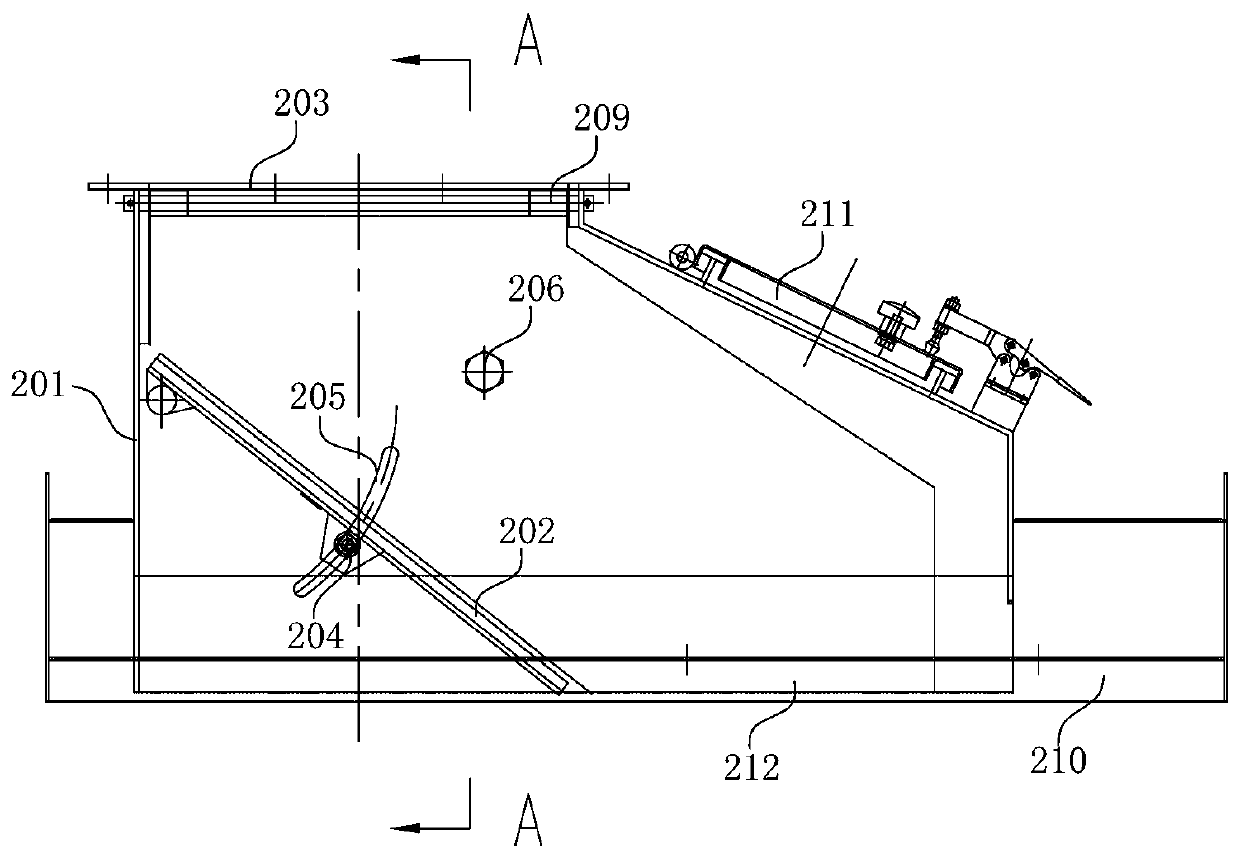
Figure 1 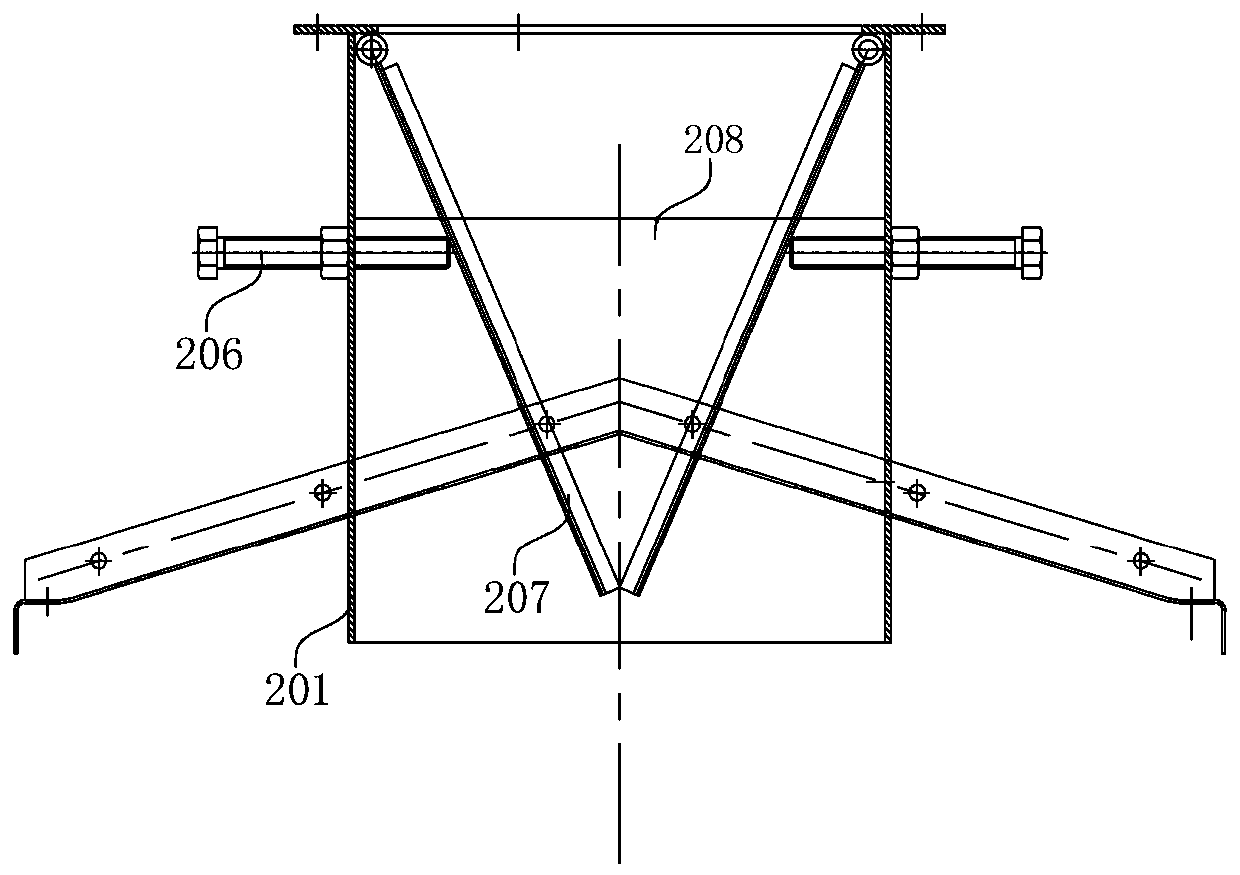
Figure 2 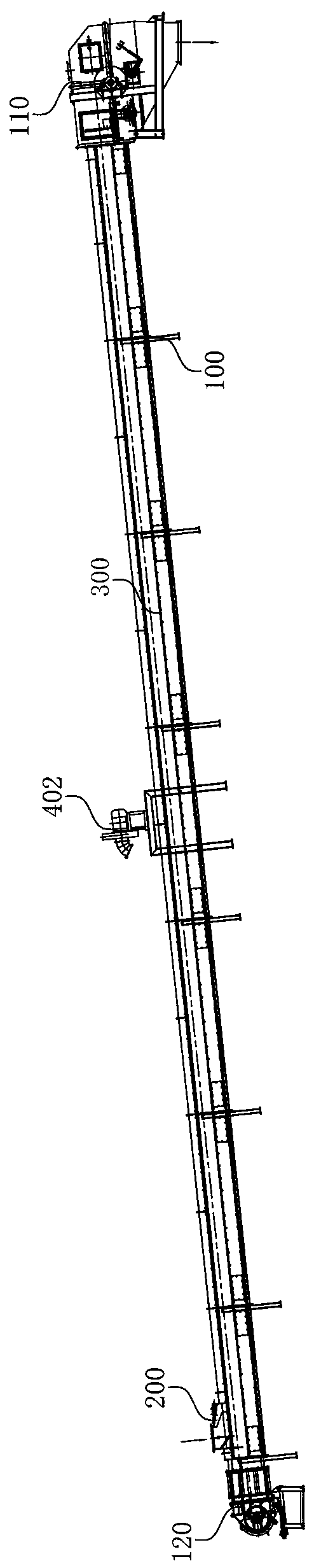
Figure 3
Abstract
Description
technical field
[0001] The invention belongs to the technical field of bulk material conveying, and in particular relates to a material guide device at a material inlet and an antistatic belt conveyor. Background technique
[0002] In ports, wharves, for bulk material (wheat, corn, soybean) transportation, belt conveyors are mainly used to transport materials. By moving the grab bucket, the bulk material is grabbed from the cabin and put into the hopper. The bulk material flows from the hopper to the conveyor belt of the belt conveyor through the chute, and is transported to the next process along with the belt.
[0003] But because the belt of the belt conveyor runs at a certain speed, when the material falls from the chute to the belt, the initial velocity of the material is inconsistent with the belt speed of the belt conveyor, resulting in a speed difference between the material and the belt when it reaches the belt, and the gap between the material and the belt Frictio...
Examples
Embodiment Construction
[0033] In order to make the purpose, technical features and technical effects of the technical solution of the present invention more clear, the exemplary solutions of the embodiments of the present invention will be clearly and completely described below in conjunction with the drawings of specific embodiments of the present invention.
[0034] see figure 1 with figure 2 , a material inlet guide device 200 of the present invention is used for feeding belt conveyors, including a hopper housing 201, a blanking bottom plate 202 and a first adjustment assembly, and the top of the hopper housing 201 is provided with a material inlet 203 , the bottom of the hopper shell 201 is open, and a hopper cover 210 is provided; the blanking bottom plate 202 is pivotally arranged on the inner side wall of the hopper shell 201, and on the blanking bottom plate 202 A discharge opening 212 is formed between the bottom of the hopper housing 201; the first adjustment component drives the dischar...