
Mobile phone lithium ion battery suitable for low-temperature environment
A lithium-ion battery, low-temperature environment technology, applied in the mechanical field, can solve problems such as touch screen failure, failure, circuit board short circuit, etc., to avoid battery damage, avoid damage, and improve the effect of environmental temperature
Patent Information
- Authority / Receiving Office
- CN · China
- Patent Type
- Applications(China)
- Current Assignee / Owner
- Publication Date
- 2020-01-17
Smart Images
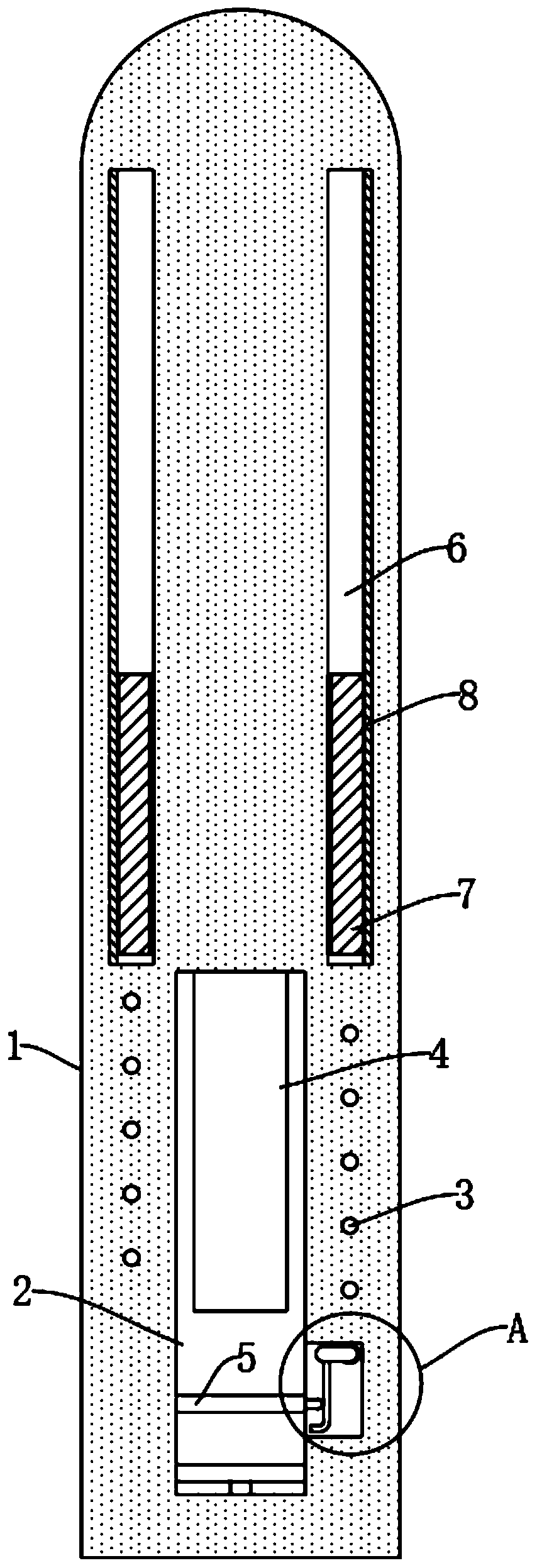
Figure 1 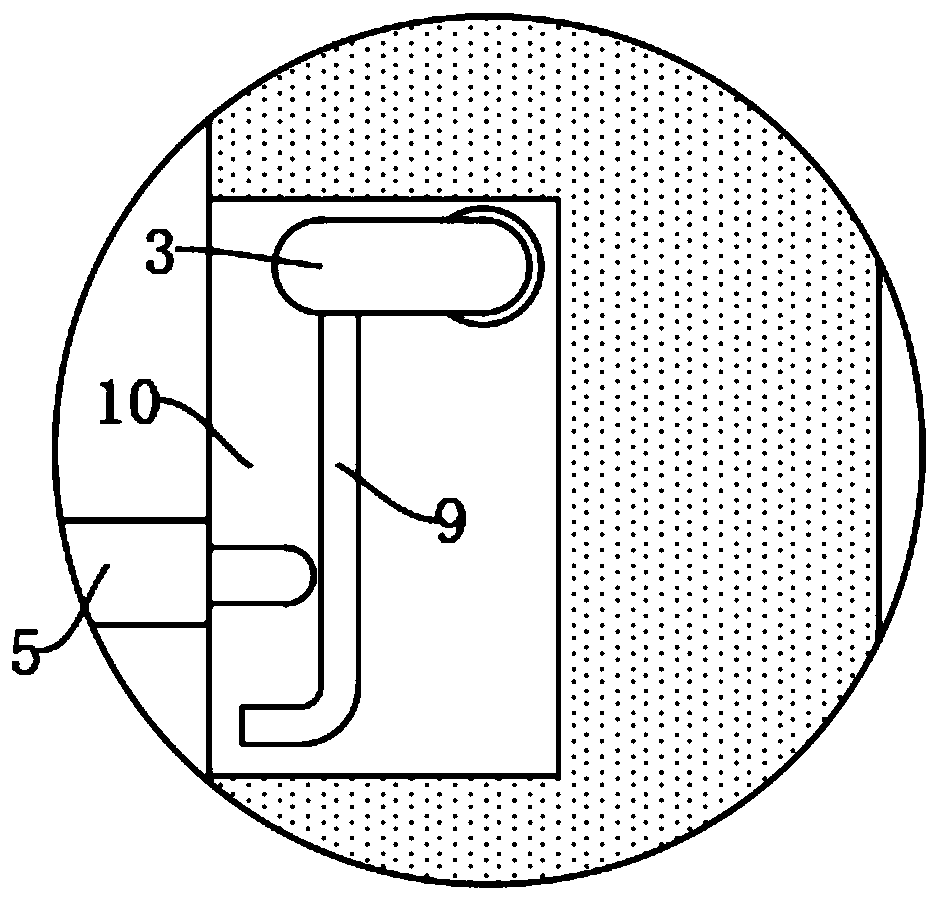
Figure 2
Abstract
Description
technical field
[0001] The invention relates to the technical field of machinery, in particular to a mobile phone lithium ion battery suitable for low-temperature environments. Background technique
[0002] The working principle of lithium-ion batteries is that the internal electrolyte changes through chemical reactions, and a potential difference appears between the positive and negative electrodes to generate current. At present, the batteries used in electronic products such as mobile phones are mostly lithium-ion batteries.
[0003] Among them, the ambient temperature of the battery is the key factor affecting the performance of the battery. In low-temperature areas such as northern my country, the outdoor temperature in winter can often reach about -30°C. In this low-temperature environment, the electrolyte moves quite slowly, thus Affect the transfer activity of lithium ions between the positive and negative electrodes, resulting in smaller battery discharge current an...
Examples
Embodiment Construction
[0016] The following will clearly and completely describe the technical solutions in the embodiments of the present invention with reference to the accompanying drawings in the embodiments of the present invention. Obviously, the described embodiments are only some, not all, embodiments of the present invention.
[0017] In describing the present invention, it should be understood that the terms "upper", "lower", "front", "rear", "left", "right", "top", "bottom", "inner", " The orientation or positional relationship indicated by "outside", etc. is based on the orientation or positional relationship shown in the drawings, and is only for the convenience of describing the present invention and simplifying the description, rather than indicating or implying that the referred device or element must have a specific orientation, so as to Specific orientation configurations and operations, therefore, are not to be construed as limitations on the invention.
[0018] refer to Figure ...