
Rubber vulcanization bonding performance test sample preparation mold and sample preparation method
A technology of adhesive performance and rubber vulcanization, applied in the preparation of test samples, etc., can solve the problems of inaccurate basis, inability to test the influence of adhesion performance, inability to simulate vulcanization pressure changes, etc., and achieve the effect of ensuring accuracy
Patent Information
- Authority / Receiving Office
- CN · China
- Patent Type
- Applications(China)
- Current Assignee / Owner
- Publication Date
- 2021-07-13
Smart Images
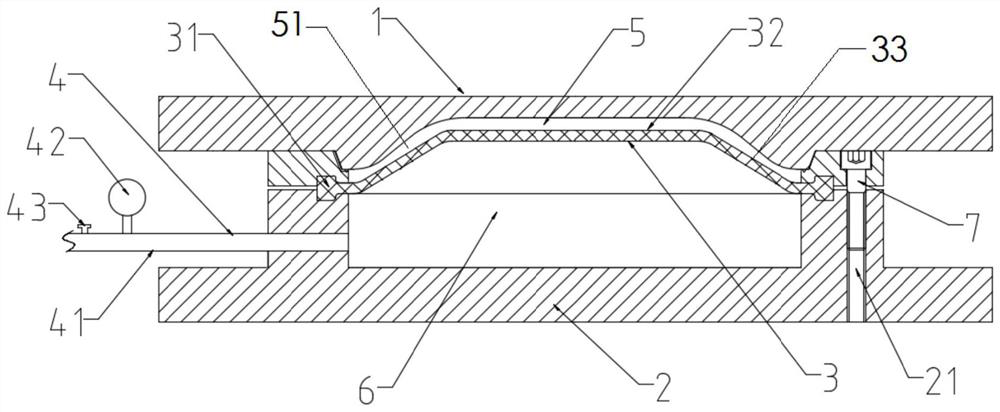
Figure 1 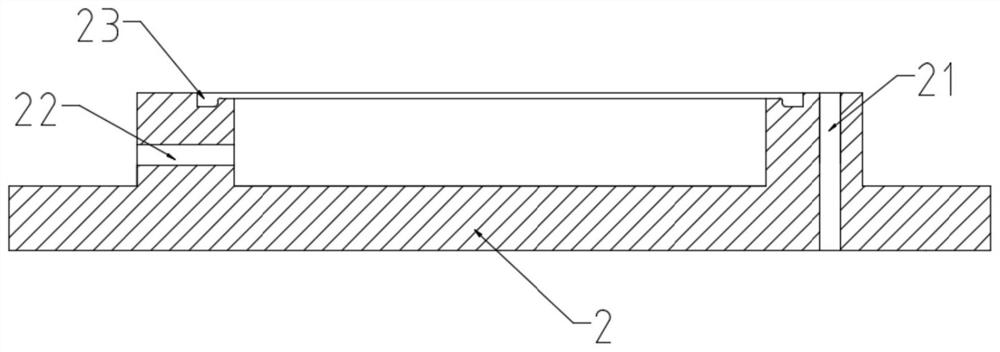
Figure 2 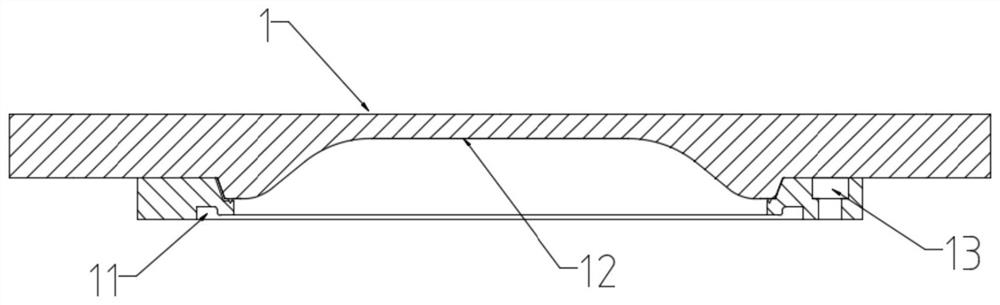
Figure 3
Abstract
Description
technical field
[0001] The invention belongs to the technical field of vulcanized rubber adhesion detection, and in particular relates to a mold and a sample preparation method for rubber vulcanization adhesion performance test samples. Background technique
[0002] In the production process of rubber products that need to be multi-layered, the adhesion between different rubber layers has a very important impact on its use, which directly affects the reliability of the product application. In order to ensure that the adhesion meets the production requirements, before the production of the product, it is usually necessary to trial-manufacture a test sample to test the rubber adhesion performance, so as to optimize the production process parameters of the product.
[0003] However, in the production of diaphragm vulcanized products such as tires, air spring airbags, etc., even if the tested and optimized process parameters are used for production, the resulting products are st...
Examples
Embodiment Construction
[0058] The technical solutions in the embodiments of the present invention will be clearly and completely described below in conjunction with the drawings in the embodiments of the present invention. Apparently, the described embodiments are only some, not all, embodiments of the present invention. Based on the embodiments of the present invention, all other embodiments obtained by persons of ordinary skill in the art without making creative efforts fall within the protection scope of the present invention.
[0059] In describing the present invention, it should be understood that the terms "center", "transverse", "longitudinal", "upper", "lower", "front", "rear", "left", "right", " The orientations or positional relationships indicated by "vertical", "horizontal", "top", "bottom", "inner" and "outer" are based on the orientations or positional relationships shown in the drawings, and are only for the convenience of describing the present invention and Simplified descriptions...