
Self-adaptive adjustment train auxiliary positioning method and system
An auxiliary positioning system and self-adaptive adjustment technology, applied in the field of rail transit, can solve problems such as inability to improve absolute positioning accuracy, dependence on GPS signals, accumulation of accumulated errors over time, etc., to improve positioning reliability, improve disposal efficiency, and improve positioning accuracy. high effect
Patent Information
- Authority / Receiving Office
- CN · China
- Patent Type
- Applications(China)
- Current Assignee / Owner
- Publication Date
- 2022-04-29
Smart Images
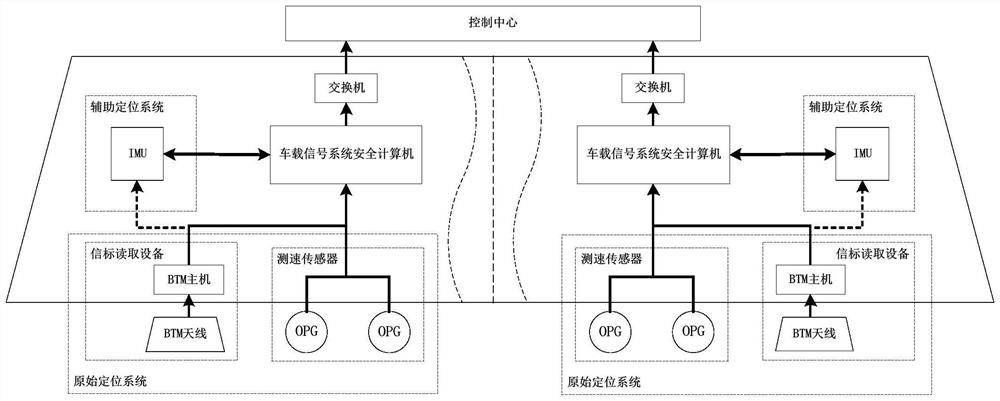
Figure 1 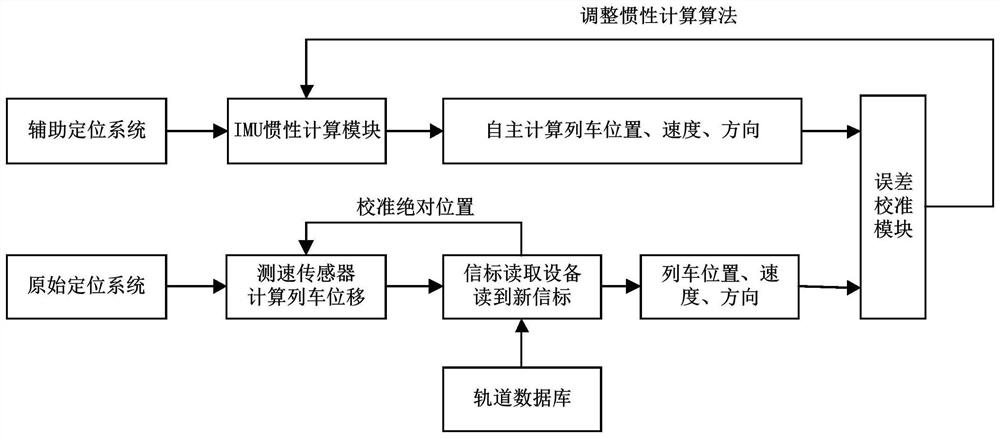
Figure 2 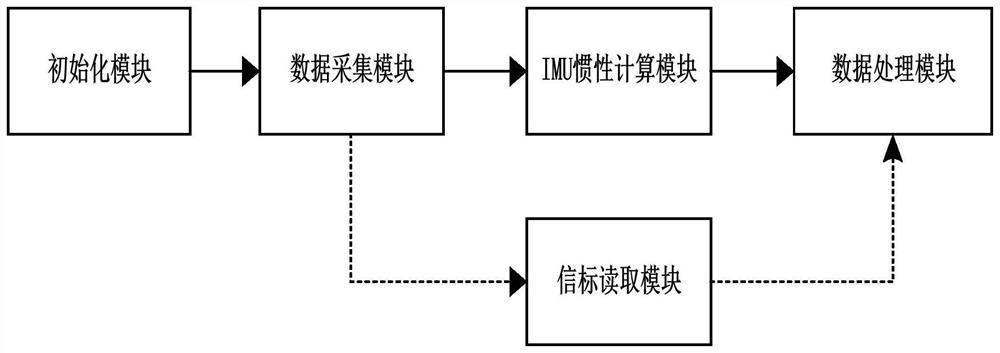
Figure 3
Abstract
Description
technical field
[0001] The invention belongs to the technical field of rail transit, and in particular relates to a train positioning technology. Background technique
[0002] For rail transit traffic organization and scheduling, real-time and accurate acquisition of the position of the train on the line is a prerequisite for ensuring traffic safety and improving traffic efficiency. At present, commonly used train positioning technologies include speed sensors, beacons, radar, GPS, etc. A single positioning technology has many limitations, for example, the speed sensor has accumulated errors and is easily affected by skidding and idling; the fixed-point characteristics of beacons cannot be realized Continuous positioning; radar has a large error in low-speed operation scenarios; GPS cannot be used in tunnels and other occluded scenarios due to the limitation of receiving satellites. Therefore, a combination of various sensors has gradually emerged, such as "speed sensor + b...
Examples
Embodiment 1
[0026] Such as figure 1 and figure 2 Shown, a kind of self-adaptive adjustment train combined positioning system, comprises original on-board positioning system and auxiliary positioning system, and described original on-board positioning system includes velocity sensor (OPG) and beacon reading equipment (BTM antenna and BTM main frame), on-board The safety computer of the signal system calculates the train position according to the information obtained from the speed measuring sensor and the beacon reading device. The auxiliary positioning system includes an inertial measurement module (IMU) and an error calibration module. The inertial measurement module uses an inertial calculation algorithm to calculate the train position calculation, the error calibration module compares the train positioning result of the inertial measurement module with the positioning result of the original train positioning system, and performs adaptive optimization and adjustment to the inertia calc...
Embodiment 2
[0030] An adaptive adjustment train positioning method, such as figure 2 As shown, when the original positioning system of the train is available, the IMU calculates the train position in real time, and performs error analysis with the precise position of the train calculated by the original positioning system. The inertia calculation algorithm is adaptively optimized and adjusted through the error calibration module to achieve higher Accurate train position reckoning.
[0031] Such as image 3 As shown, the auxiliary positioning system mainly includes an initialization module, a data acquisition module, an IMU inertia calculation module, and a data processing and calibration module. When used as a backup positioning solution, after the IMU is initialized, it collects the information of the line where the train is located, and independently calculates the position of the train. If the beacon reading module is available, it can be combined with the beacon module for secondary...