
Method and system for predicting service life of electromechanical equipment based on data driving
A technology for electromechanical equipment and life prediction, applied in computer-aided design, design optimization/simulation, calculation, etc., can solve problems such as high data dependence, achieve uniform distribution, increase proportion, and improve adaptability
Patent Information
- Authority / Receiving Office
- CN · China
- Patent Type
- Applications(China)
- Current Assignee / Owner
- Publication Date
- 2022-07-22
Smart Images
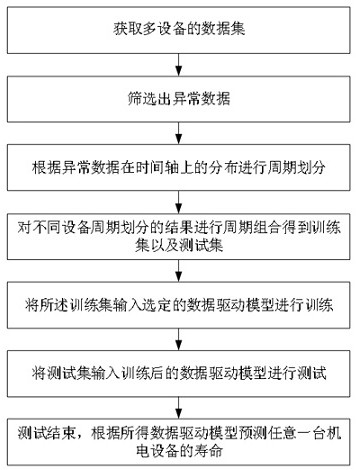
Figure 1 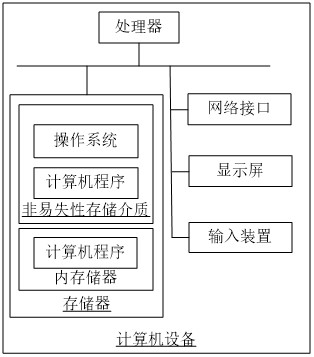
Figure 2 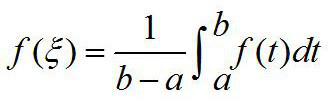
Figure 3
Abstract
Description
technical field
[0001] The invention relates to the technical field of life prediction of electromechanical equipment, in particular to a data-driven life prediction method and system of electromechanical equipment. Background technique
[0002] Data-driven is a data processing and analysis method relative to model-driven. The so-called model-driven refers to constructing a model, using the collected data, and analyzing the object according to the constructed model. This method depends on the accuracy of the constructed model. In contrast, under the data-driven analysis method, instead of constructing a fixed model, the collected data is used to train the model to fit the model to the data.
[0003] Data-driven analysis methods have a higher dependence on data information, but are also more adaptable to data. In some data analysis with obvious trends and regular fluctuations, data-driven analysis methods have obvious advantages.
[0004] Life prediction of electromechanica...
Examples
Embodiment Construction
[0020] In order to make the objectives, technical solutions and advantages of the present invention clearer, the present invention will be further described in detail below with reference to the accompanying drawings and embodiments. It should be understood that the specific embodiments described herein are only used to explain the present invention, but not to limit the present invention.
[0021] It will be understood that the terms "first", "second" and the like used in the present invention may be used herein to describe various elements, but these elements are not limited by these terms unless otherwise specified. These terms are only used to distinguish a first element from another element. For example, a first xx script could be referred to as a second xx script, and similarly, a second xx script could be referred to as a first xx script, without departing from the scope of the present invention.
[0022] like figure 1 As shown, in one embodiment, a data-driven electr...