
Synchronous motor rotor winding turn-to-turn short circuit fault diagnosis method based on multi-source information
A technology for inter-turn short-circuit fault and rotor winding, which is applied in electrical winding testing, short-circuit testing, neural learning methods, etc. Improve the accuracy of fault diagnosis and reduce the effect of noise interference
Patent Information
- Authority / Receiving Office
- CN · China
- Patent Type
- Applications(China)
- Current Assignee / Owner
- Publication Date
- 2022-08-09
Smart Images
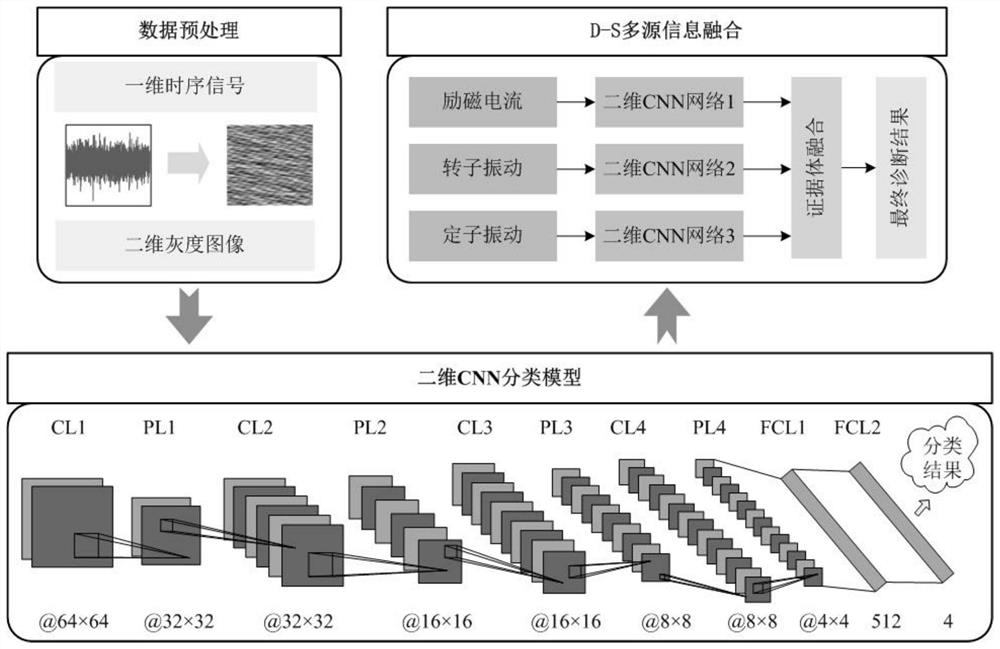
Figure 1 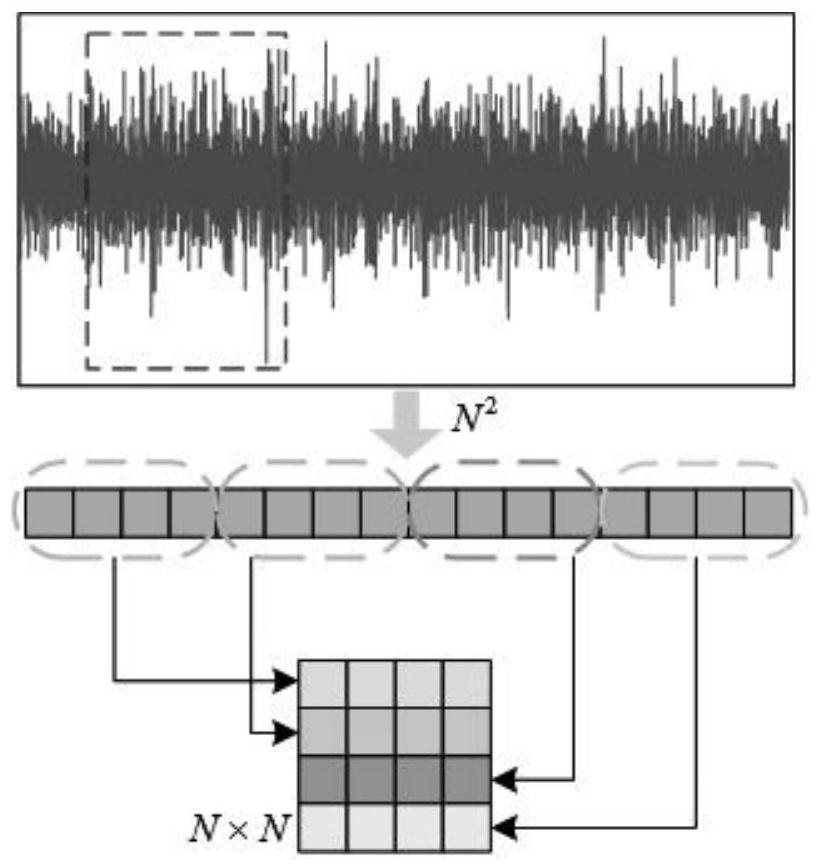
Figure 2 
Figure 3
Abstract
Description
technical field
[0001] The invention relates to the technical field of synchronous motor fault diagnosis, in particular to a method for diagnosing inter-turn short-circuit faults of synchronous motor rotor windings based on multi-source information. Background technique
[0002] Synchronous motors frequently fail due to their complex structure and changing operating environment. Turn-to-turn short circuit of rotor windings is one of the most common faults in synchronous motors. When such faults occur in synchronous motors, the excitation current will increase, the temperature at the short-circuit point will rise, and the vibration of the shaft system will increase. If the degree of expansion is enlarged, it may cause the magnetization of the large shaft and the forced shutdown of the generator set due to ground faults at one or two points of the rotor, posing a threat to the safe operation of the generator and the entire power grid. Therefore, it is of great practical signi...
Examples
Embodiment Construction
[0042]The technical solutions in the embodiments of the present invention will be clearly and completely described below with reference to the accompanying drawings in the embodiments of the present invention. Obviously, the described embodiments are only a part of the embodiments of the present invention, but not all of the embodiments. Based on the embodiments of the present invention, all other embodiments obtained by those of ordinary skill in the art without creative efforts shall fall within the protection scope of the present invention.
[0043] The purpose of the present invention is to provide a method for diagnosing inter-turn short-circuit faults of synchronous motor rotor windings based on multi-source information, which preserves the characteristics of the original signal to the greatest extent, eliminates the influence of manual extraction of characteristics, and avoids the failure of a single sensor when the fault occurs. The resulting phenomena such as missed ju...