
Diode array-based digitized miniature ultra-low-power-consumption impact monitoring system
a technology of impact monitoring and diode array, which is applied in the field of large-scale online continuous impact monitoring of aircraft structures, can solve the problems of large system size, high power consumption, and potential safety hazards to the normal operation of the aircraft, and achieve the effect of improving the safety and maintenance efficiency of the aircraft structur
Patent Information
- Authority / Receiving Office
- US · United States
- Patent Type
- Patents(United States)
- Current Assignee / Owner
- Publication Date
- 2018-12-04
Smart Images
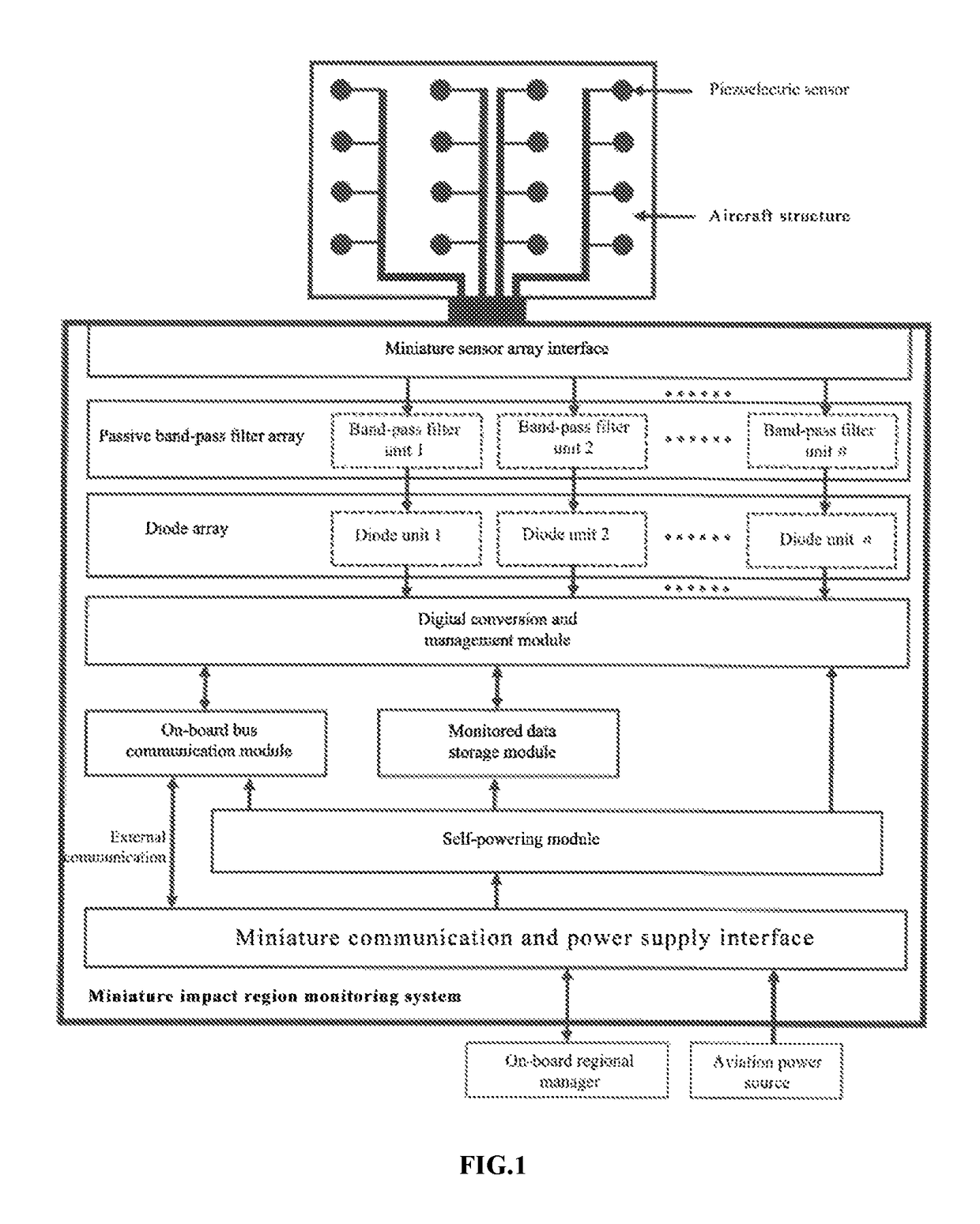
Figure 1 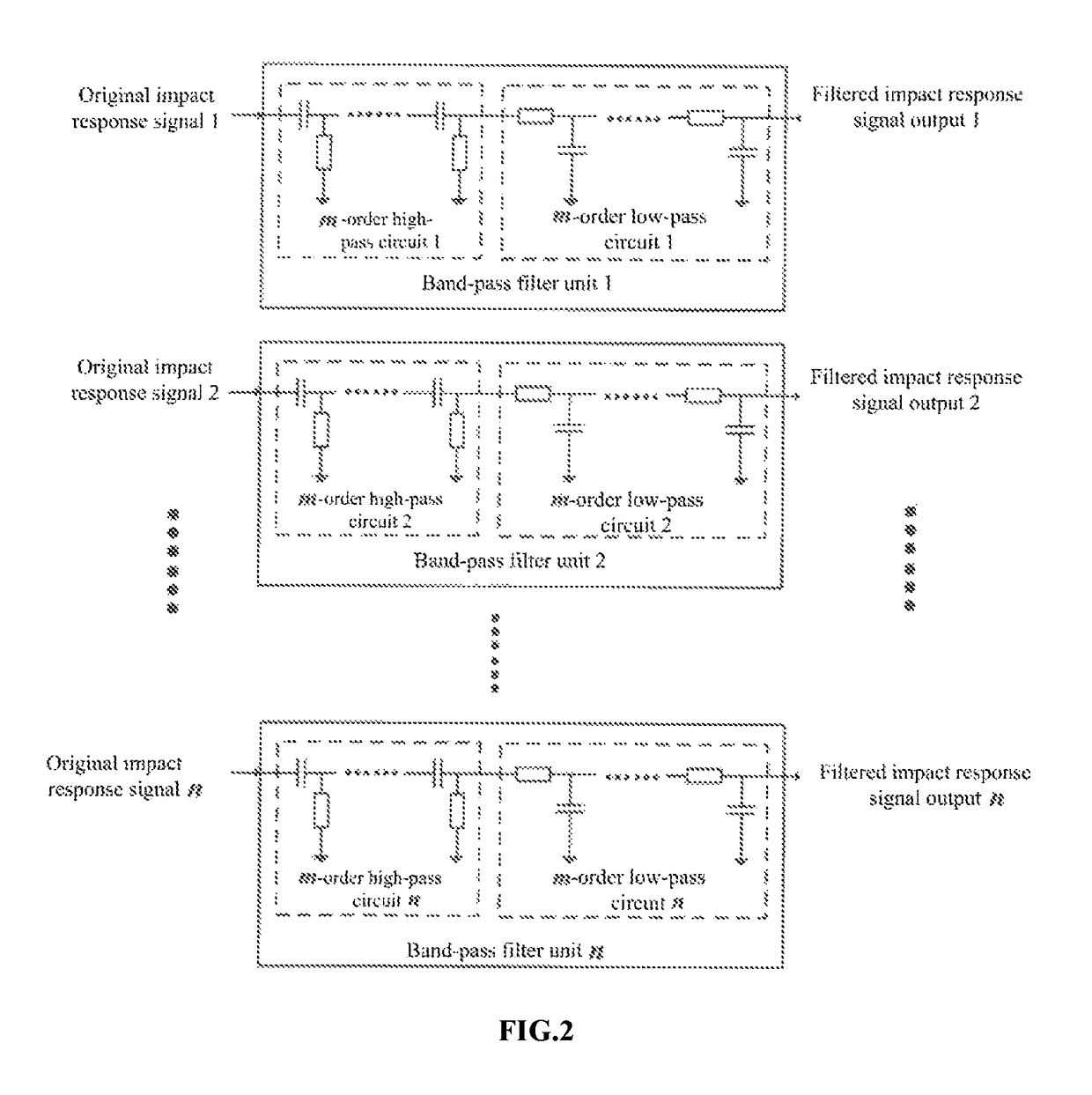
Figure 2 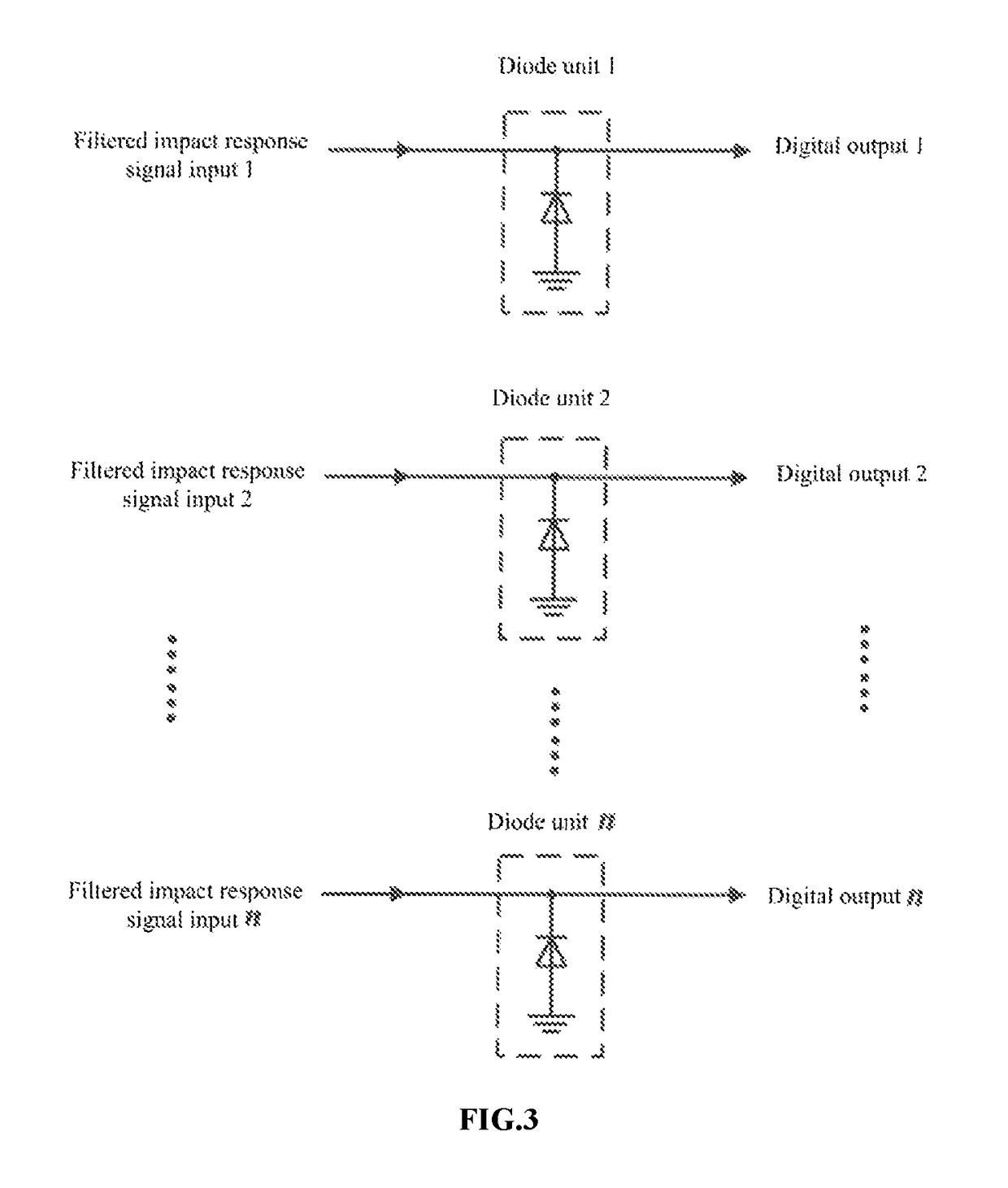
Figure 3
Abstract
Description
BACKGROUND OF THE INVENTIONField of the Invention
[0001] The present invention relates to the technical field of aircraft structural health monitoring, and more particularly, to the on-line continuous impact monitoring of large-scale aircraft structures.Description of Related Art
[0002] An aircraft inevitably endures energy impacts during service, for example, an airplane endures gravel collision during take-off, bird strike during flight, and fall-off of tools that causes damage during grounding for maintenance; or a spacecraft endures collision of space trash like orbital debris after entering the outer space. In recent years, with rapid development of aviation industrial technologies, composite structures have gradually become main the load-bearing structures of aircrafts; however, impacts on the composite structures can easily cause damages inside the structures that are invisible from the outside, and these damages may expand with the service of the structures, resulting in potenti...
Examples
Embodiment Construction
[0023]The present invention is further illustrated in detail below with reference to the accompanying drawings.
[0024]FIG. 1 shows hardware architecture of the impact monitoring system according to the present invention. The system consists of a miniature sensor array interface, a passive band-pass filter array, a diode array, a digital conversion and management module, an on-board bus communication module, a monitoring data storage module, a self-powering module, and a miniature communication and power supply interface. The miniature sensor array interface, the passive band-pass filter array, the diode array, and the digital conversion and management module are sequentially connected. The digital conversion and management module is bidirectionally connected to the on-board bus communication module. The digital conversion and management module is bidirectionally connected to the monitoring data storage module. The on-board bus communication module is bidirectionally connected to the ...