
Method of optimizing soft handover between radio network controllers
a radio network controller and soft handover technology, applied in the field of soft handover technology, can solve the problems of increasing the burden of network and handsets, easy failure of handover, complicated signaling procedure, etc., and achieves the effect of reducing the complexity of handover, increasing the success rate of handover, and expanding the area
Patent Information
- Authority / Receiving Office
- US · United States
- Current Assignee / Owner
- Publication Date
- 2005-06-02
- Estimated Expiration
- Not applicable · inactive patent
Smart Images
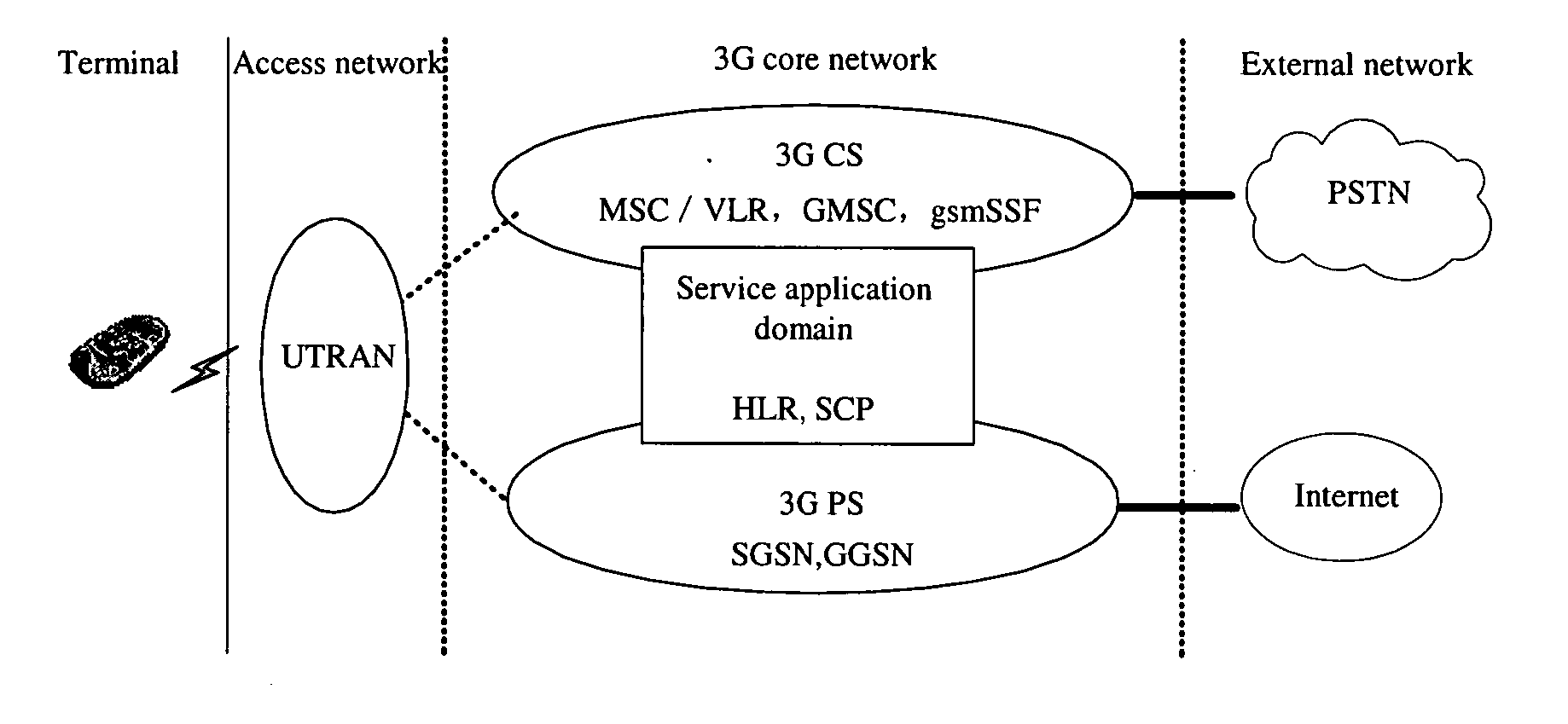
Figure 1 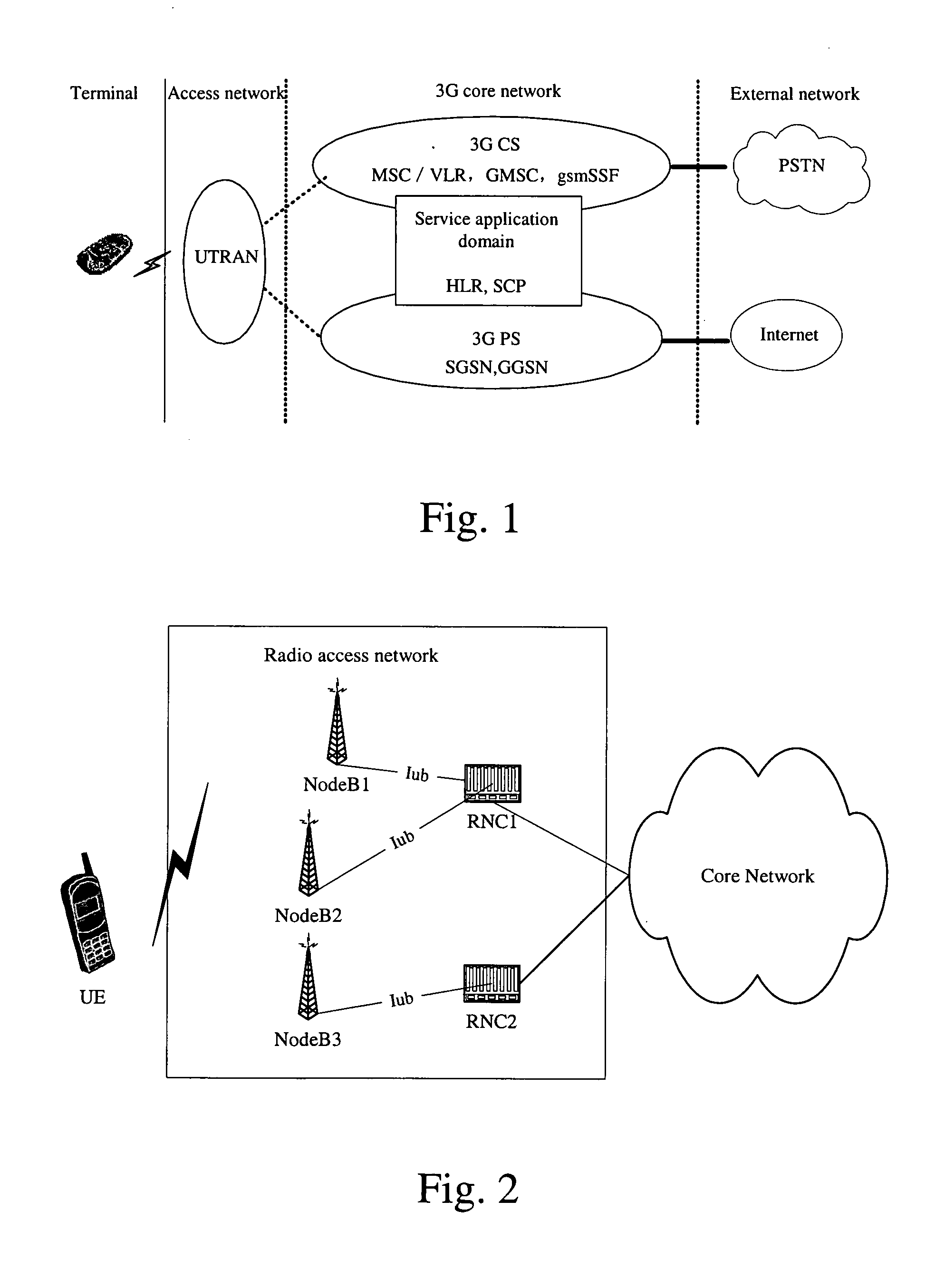
Figure 2 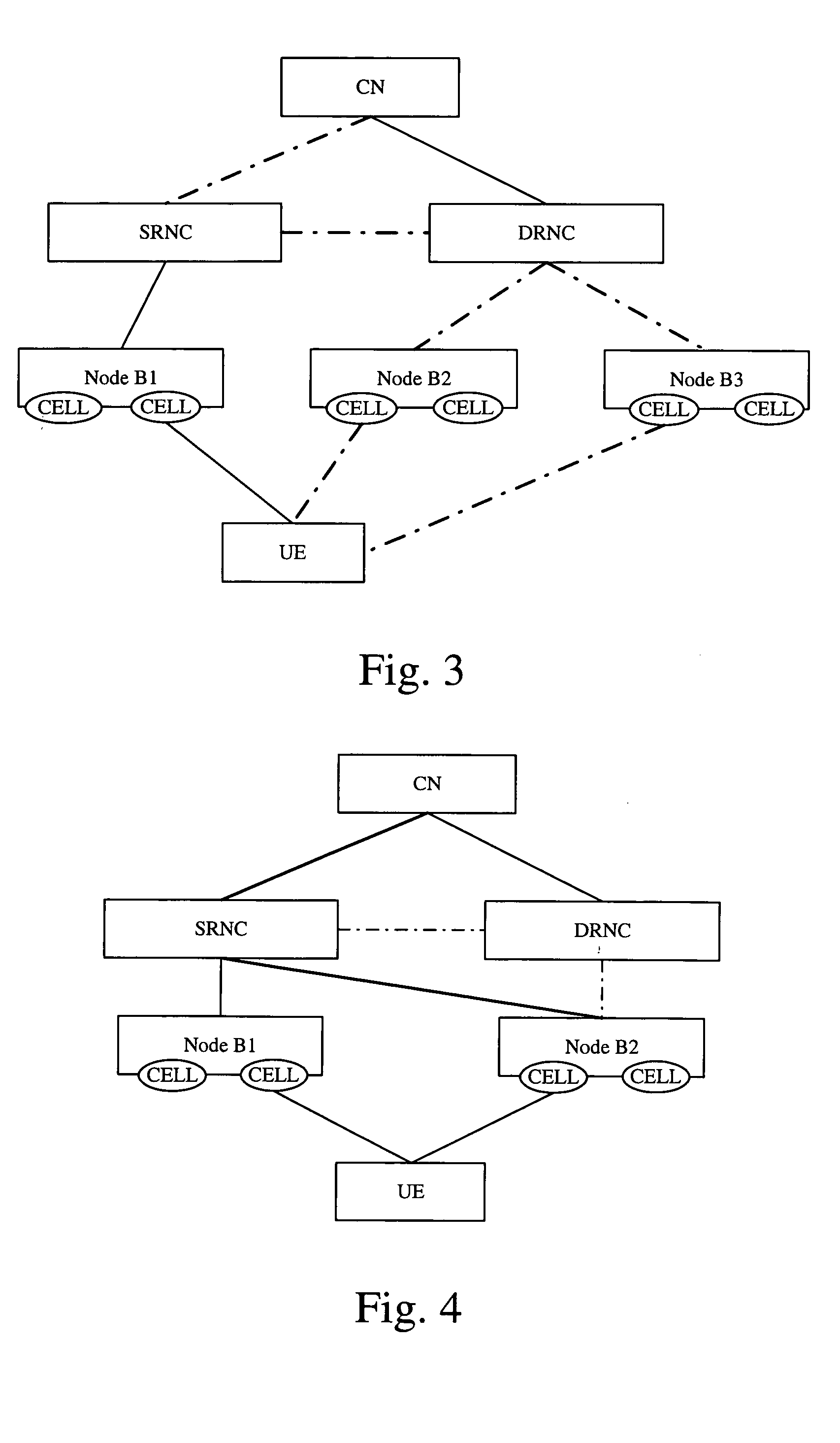
Figure 3
Abstract
Description
FIELD OF THE TECHNOLOGY
[0001] The present invention relates generally to soft handover technology in a radio communication system, and more particularly to an optimized method of a soft handover between RNCs (Radio Network Controllers) that has a shorter handover path. BACKGROUND OF THE INVENTION
[0002] A UMTS (Universal Mobile Telecommunication System) is a third generation mobile telecommunication system deploying W-CDMA (Wide-band CDMA) air interface, and in general it is known as W-CDMA telecommunication system. A UMTS includes several network elements that can be grouped based on their functions or the sub-network they belong to.
[0003] From the functional point of view, network elements can be divided into RAN (Radio Access Network) and CN (Core Network). The RAN includes two network elements: a RNC (Radio Network Controller) and a Node B to deal with the functions concerning about radio, and the CN mainly deals with the voice and data switching and routing functions to an ex...
Examples
embodiment 1
[0066] a soft handover is implemented when only a common resources indication is broadcast.
[0067] Reference to FIG. 6, in this embodiment the Node B controls and manages its own resources at Step 611. During initialization or its resources being changed, the Node B sends the dedicate resources information to the CRNC, and broadcast only an indication of its common resources available to the non-controlling RNC instead of the common resources information; said information includes that the latest resources information of the Node B that can be used by RNCs and the RNC authorization etc., as shown in Steps 612 and 613. In a general operation state, the CRNC controls and dispatches corresponding radio resources, manages and controls the Node B main resources through interaction, as shown in Steps 614 and 615.
[0068] When a non-controlling RNC applies for resources of the Node B for a soft handover, the non-controlling RNC is the SRNC, and the soft handover comprises the following step...
embodiment 2
[0073] Embodiment 2, a soft handover is implemented, when other server in the network controls the Node B resources.
[0074] As shown in FIG. 7, in this embodiment the Node B still manages its own resources at Step 711, but the resources is controlled and dispatched by a server in the network; the server is a logical functional entity that is integrated in a RNC or an O&M server, or it is an independent server.
[0075] After the system is put into operation, the following steps in FIG. 7 is comprised:
[0076] Step 712. The Node B and all RNCs send information about themselves to the server, wherein the Node B sends a resource available information includes its latest resources and the authorized RNCs etc, the RNCs sends resource information includes fixed resources information of the Node B and the RNC identifier etc
[0077] Step 713. According to the controlled resources of Node Bs and RNCs, the server allocates resources to each RNC based on a principle, which in general is whether res...