
Method of adapting in-vitro models to aid in noninvasive glucose determination
a glucose concentration and in-vitro model technology, applied in the field of non-invasive glucose concentration estimation, can solve the problems of current monitoring techniques that discourage regular use, diabetes is a leading cause of death and disability worldwide, and the production and use of insulin are abnormal, so as to achieve tighter control of experimental conditions and be easily controlled
Patent Information
- Authority / Receiving Office
- US · United States
- Patent Type
- Applications(United States)
- Current Assignee / Owner
- Publication Date
- 2005-06-02
- Estimated Expiration
- Not applicable · inactive patent
Smart Images
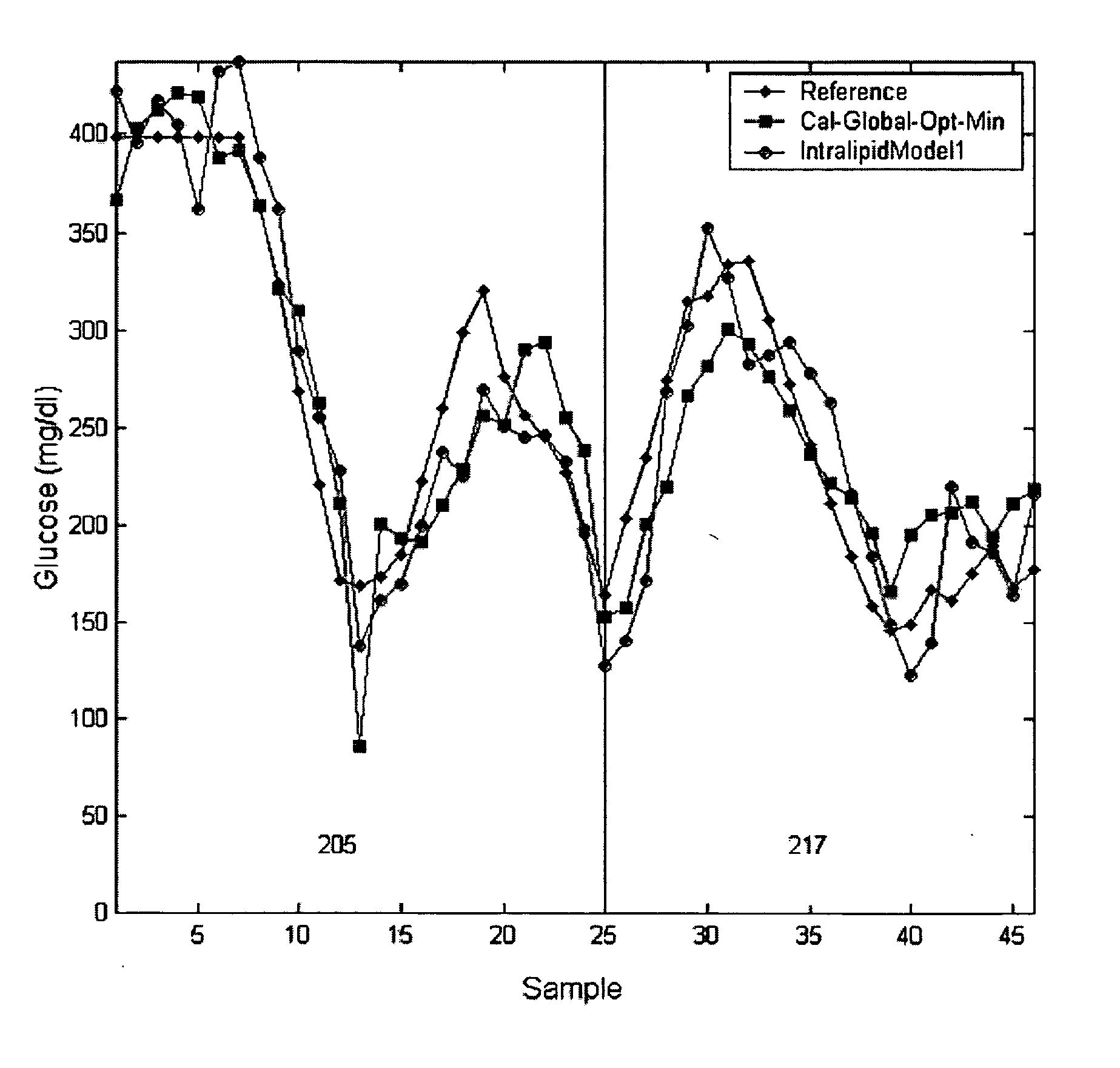
Figure 1 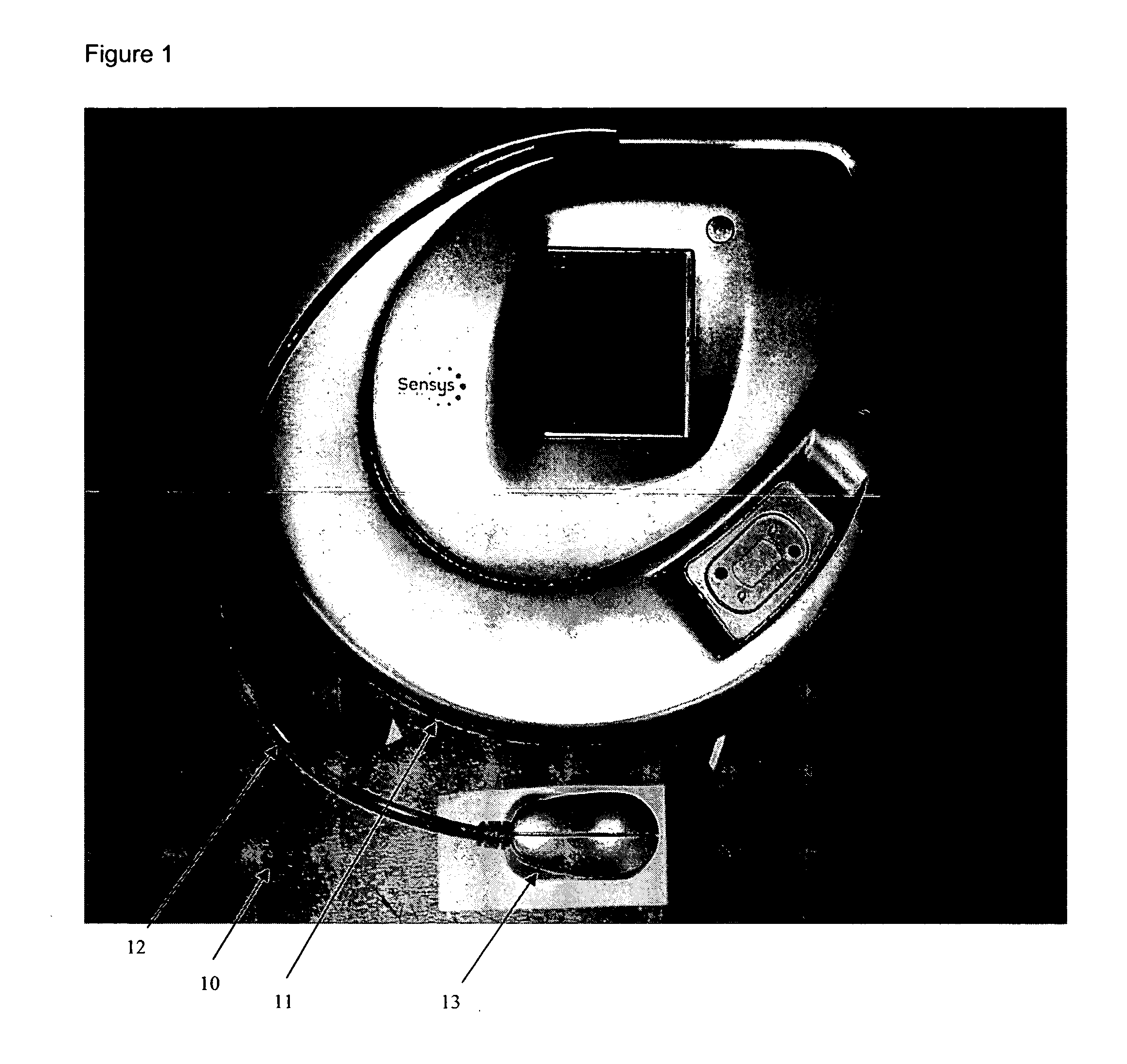
Figure 2 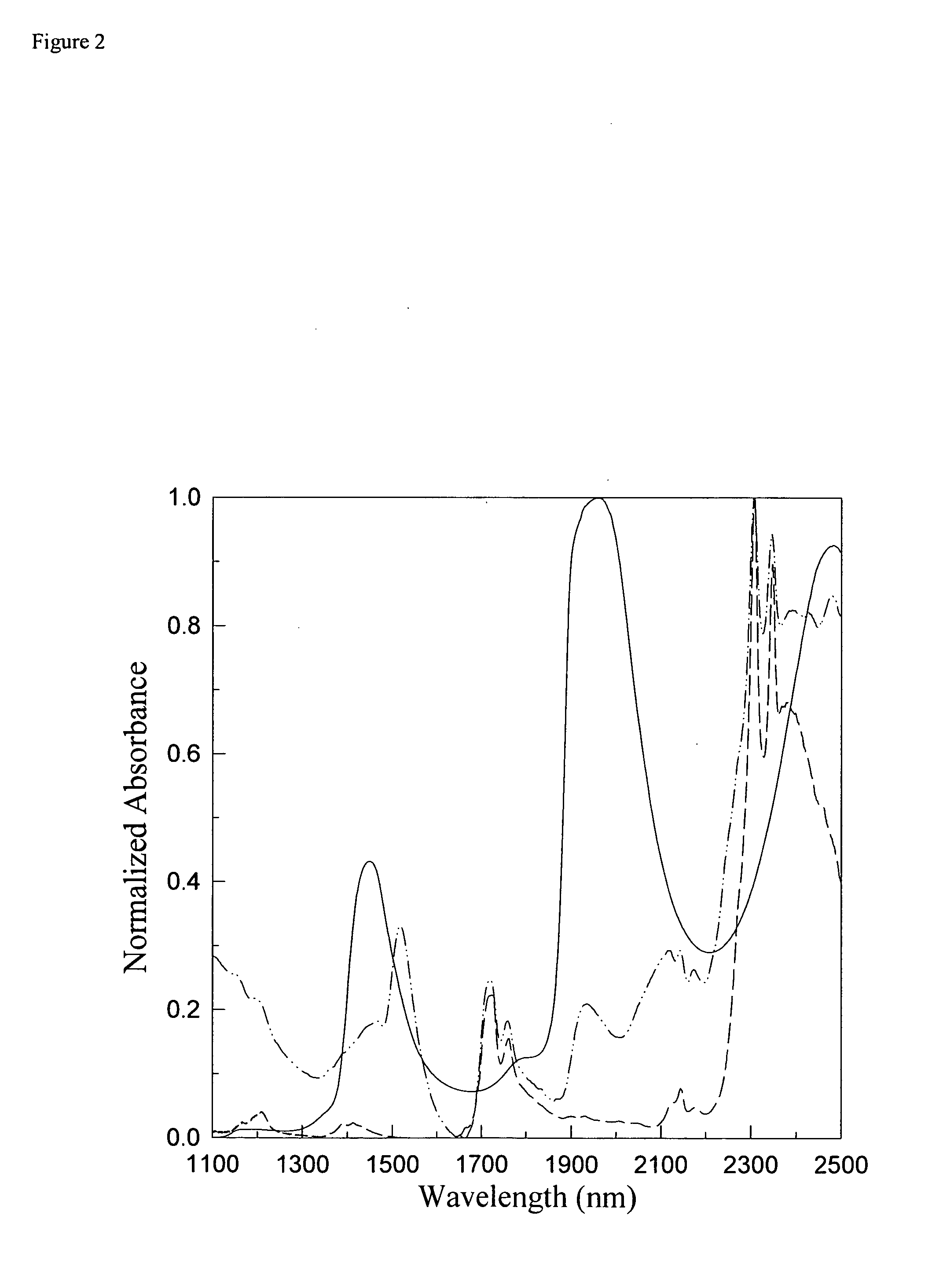
Figure 3
Abstract
Description
CROSS REFERENCE TO RELATED APPLICATIONS
[0001] This application claims benefit of U.S. Provisional Patent Application Ser. No. 60 / 518,136, filed Nov. 6, 2003, and claims priority from:
[0002] U.S. patent application Ser. No. ______ Unassigned yet, filed Oct. 21, 2004 (attorney docket no. SENS0044), which claims benefit of U.S. Provisional Patent Application Ser. No. 60 / 532,602, filed Dec. 23, 2003;
[0003] U.S. patent application Ser. No. 10 / 820,322, filed Apr. 7, 2004, which is a Continuation-in-part of U.S. patent application Ser. No. 09 / 877,529, filed Jun. 8, 2001, which is a Continuation-in-part of U.S. patent application Ser. No. 09 / 415,389, filed Oct. 8, 1999, now U.S. Pat. No. 6,411,373 (Jun. 25, 2002); and
[0004] U.S. patent application Ser. No. 10 / 472,856, filed Mar. 7, 2003, which claims priority from PCT Application No. PCT / US03 / 07065, filed Mar. 7, 2003, which claims benefit of U.S. Provisional Patent Application Ser. No. 60 / 362,885, filed Mar. 8, 2002, each of which is ...
Examples
example 1
[0138] The remainder of this specification provides an example of an in-vitro to in-vivo calibration transfer. A subset of this example has been presented in U.S. patent application Ser. No. 10 / 241,344, which is incorporated herein in its entirety by this reference thereto and in U.S. Pat. No. 6,475,800, which is incorporated herein in its entirety by this reference thereto. This example is illustrative of the invention and is not intended to limit the invention to the species presented.
Introduction
[0139] Diffuse-reflectance near-infrared spectroscopy is used to determine physiological concentrations of glucose in a novel tissue-simulating phantom. The tissue phantom, which is preferably composed of water and a modified form of Intralipid, is similar to skin of the human forearm in terms of its absorption coefficients and scattering properties. Additional key near-infrared absorbers of skin tissue in the 1000 to 2500 nm region are embodied in the phantom by the addition of glucos...