
Method and system for identifying an authorized individual by means of unpredictable single-use passwords
a single-use password and authorized individual technology, applied in the field of confidential information transfer, can solve the problems of inability to operate unlawful decoding, poor control of the security of insufficiently protected data, and inability to decode messages, etc., and achieve the effect of convenient insertion
Patent Information
- Authority / Receiving Office
- US · United States
- Current Assignee / Owner
- Publication Date
- 2006-03-23
- Estimated Expiration
- Not applicable · inactive patent
Smart Images
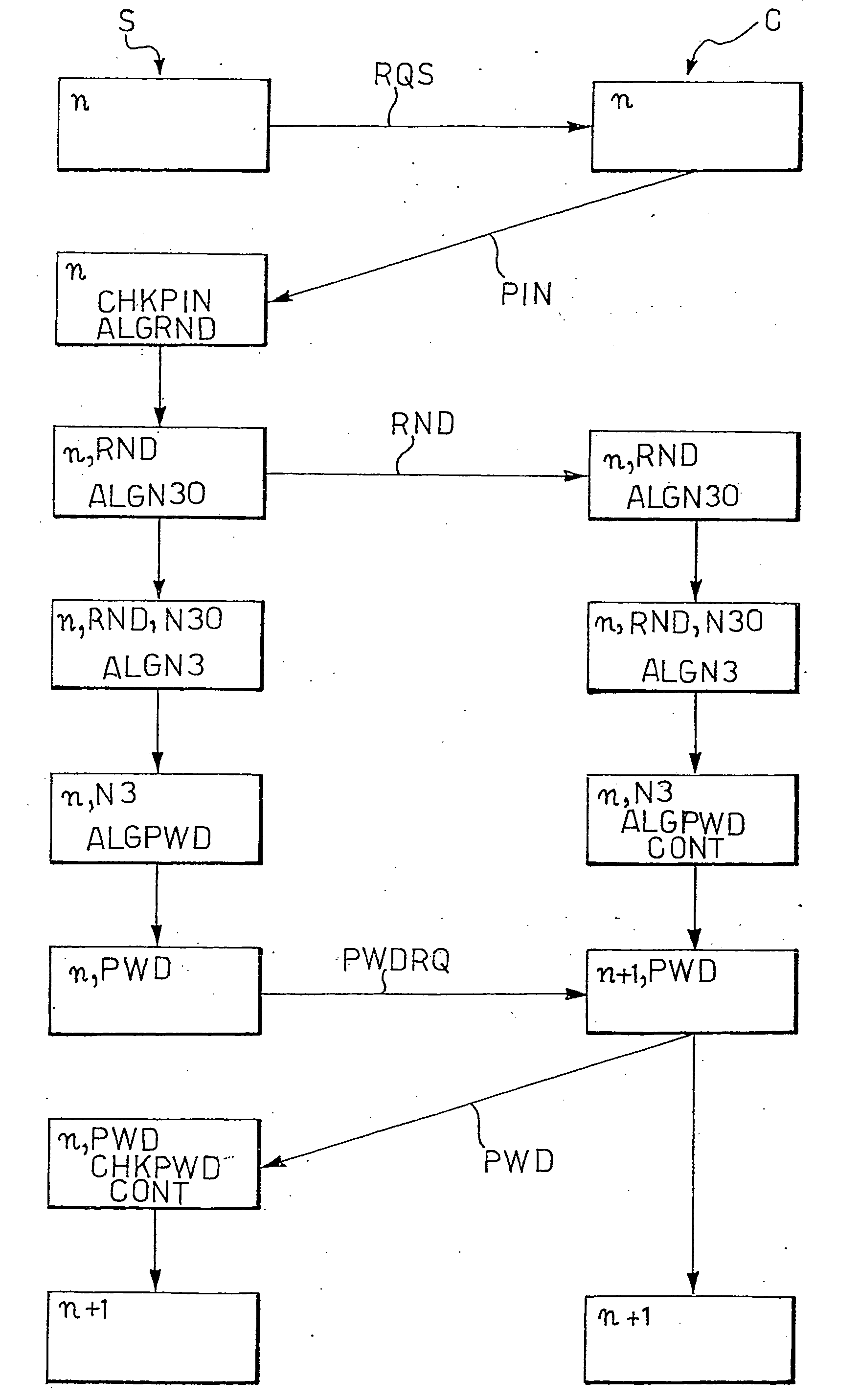
Figure 1 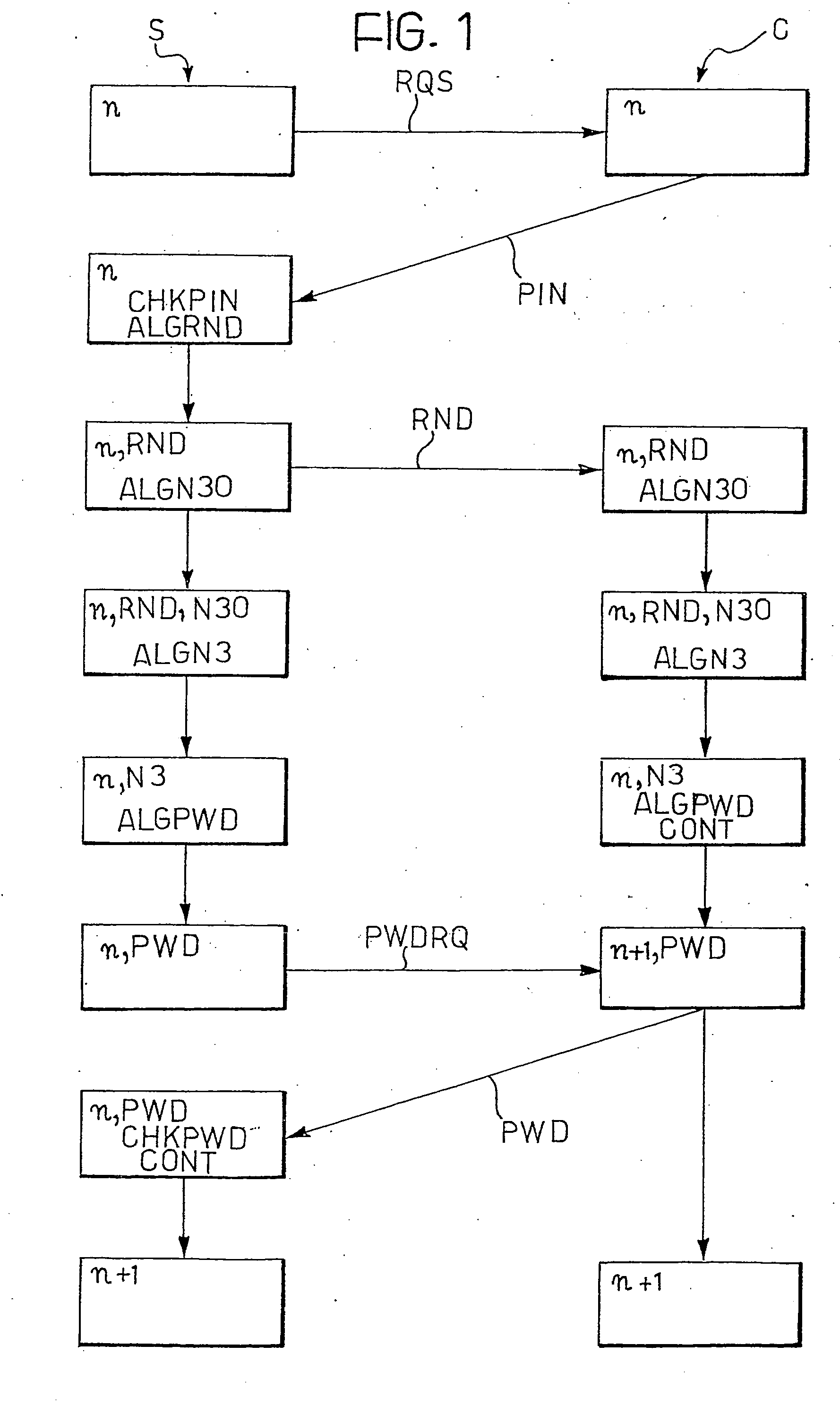
Figure 2 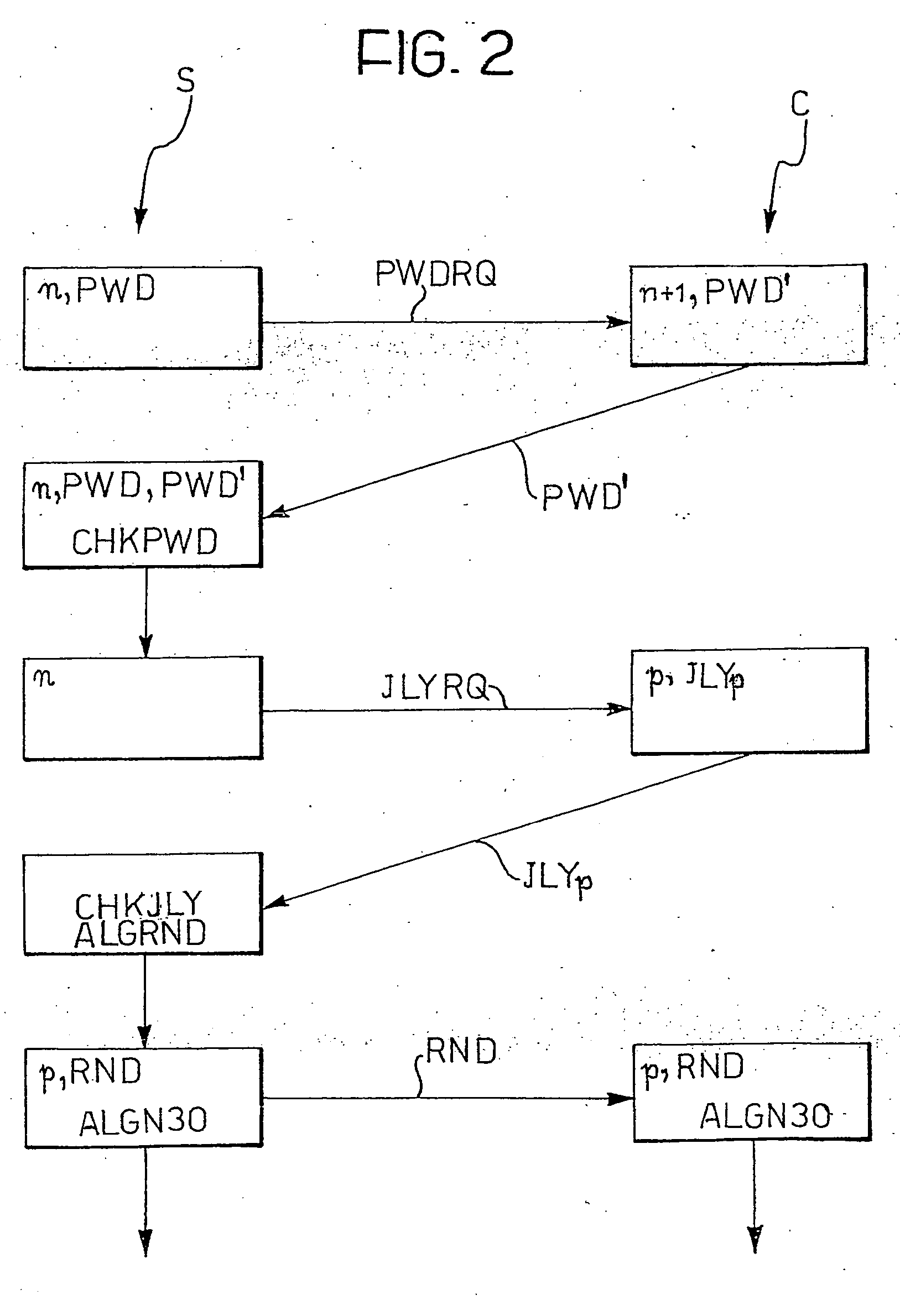
Figure 3
Abstract
Description
[0001] The present invention relates in general to the sector of computer security, and more specifically a method and a system for the identification of a party authorised to have the benefit of a service via a communications network.
[0002] The present invention is applicable to systems administering access to protected sites and / or managing commercial transactions, and in general for services which involve the communication of confidential data, in which a party having the benefit of goods / services, or client (user), communicates with a party delivering goods / services, or provider, and / or has the benefit of such goods / services, via a public communications network or other network, whether protected or unprotected from intrusions by third parties.
[0003] The present invention is also applicable in systems to control the access of a party to locations or areas, for example those restricted to authorised personnel.
[0004] In this connection it should be noted that the term “party” a...
Examples
Embodiment Construction
[0080] A generic telematics network architecture (LAN, MAN, WAN, up to the Internet world wide web) configured for access by a user to a service provided on the network makes provision for both the provider party and the user party to be each provided with respective electronic data / information communications and processing systems.
[0081] In particular, at the service provider there is located a processing system such as a server capable of managing a procedure for identification of a party authorised to operate with the provider and to define an encryption system, if any, to be used in the communication, and also to deliver the serviced requested once recognition has taken place. The user accesses the network via an interface device comprising a processing terminal or similar device designed to allow identification of the authorised party in order to obtain clearance to operate.
[0082] Description of the User Terminal
[0083] According to a preferred embodiment, the user's processi...