
System and method for controlling the speed of a tape drive
Patent Information
- Authority / Receiving Office
- US · United States
- Current Assignee / Owner
- Publication Date
- 2006-05-11
- Estimated Expiration
- Not applicable · inactive patent
Smart Images
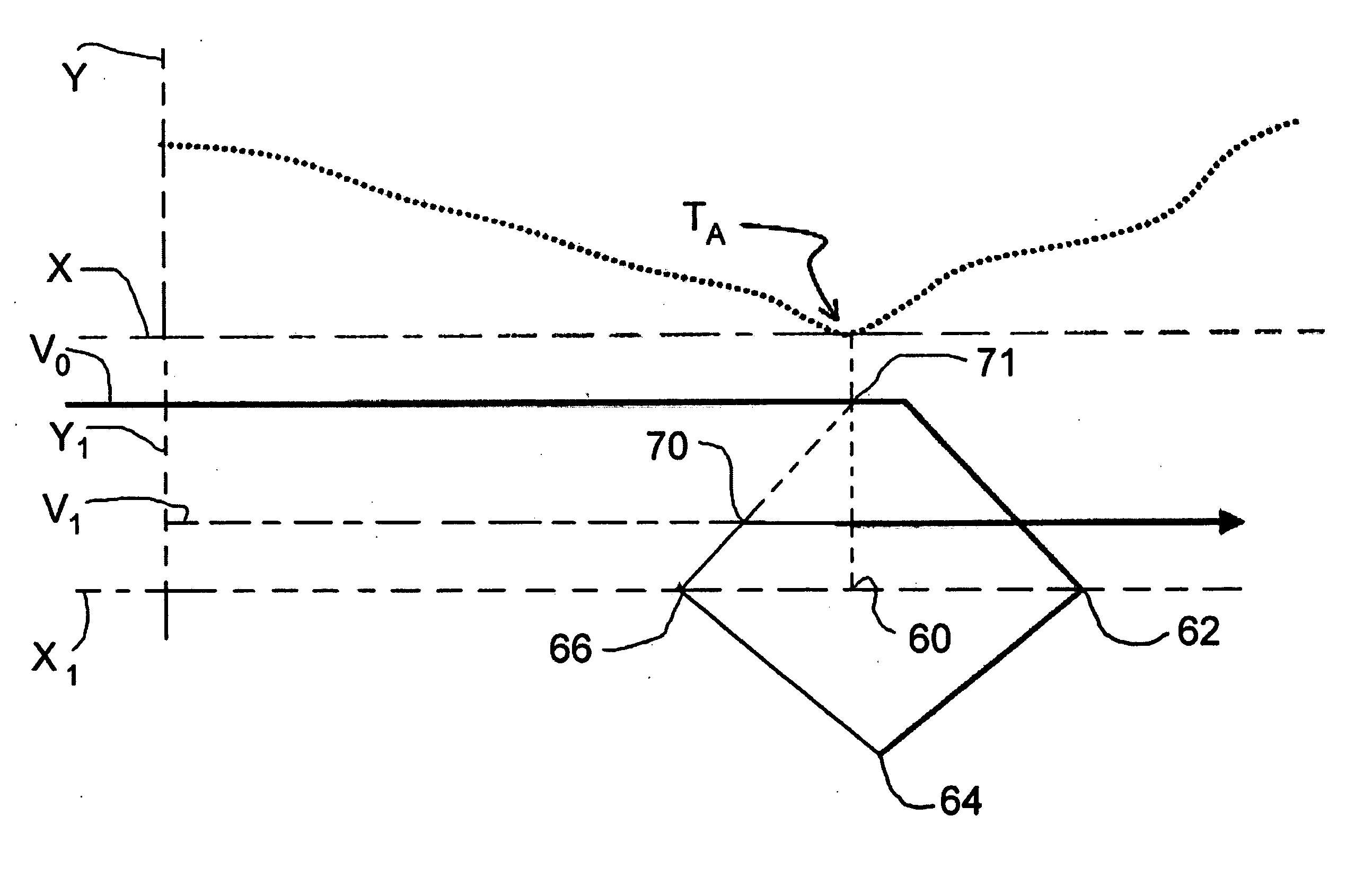
Figure 1 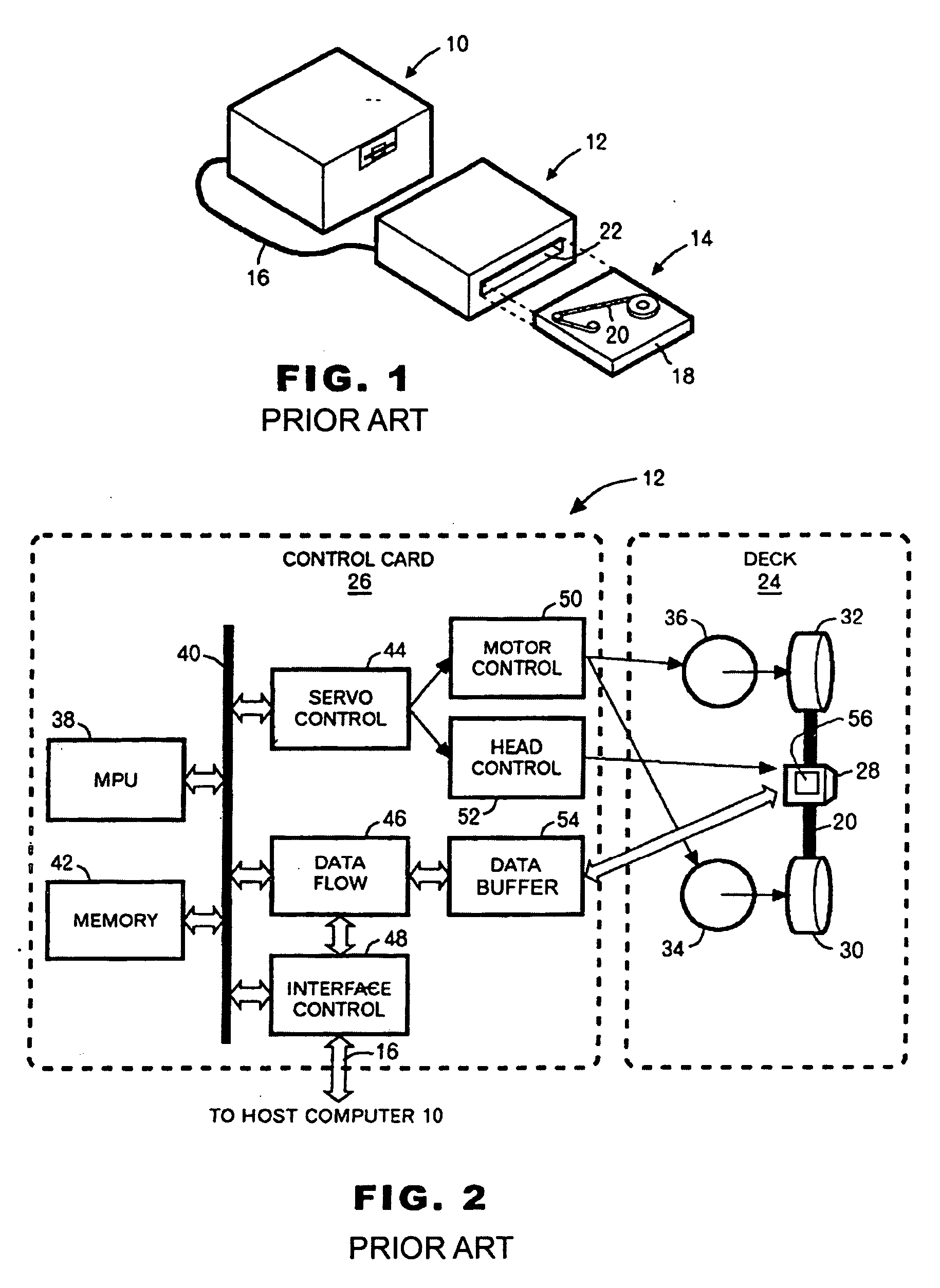
Figure 2 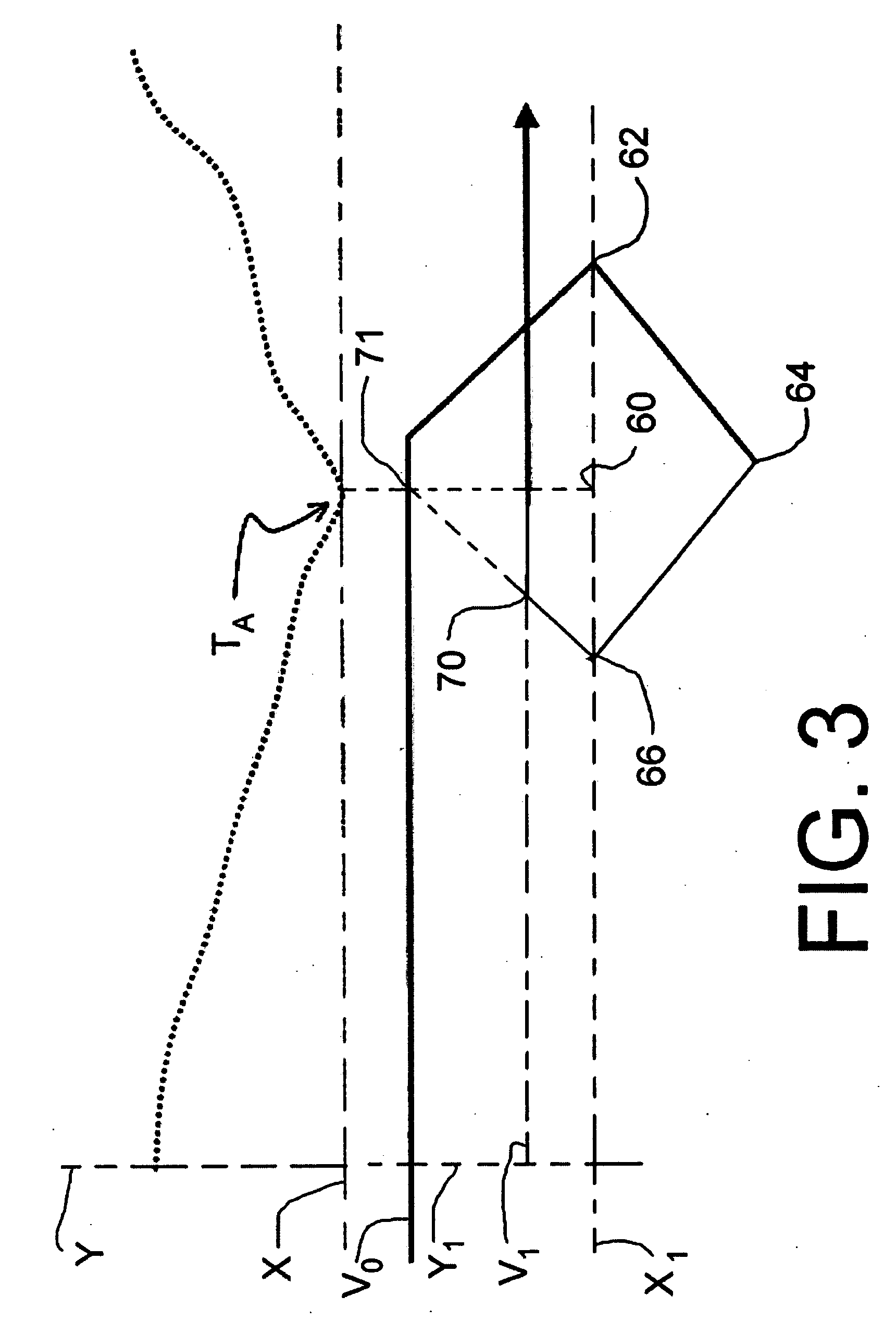
Figure 3
Abstract
Description
FIELD OF THE INVENTION
[0001] The present invention relates to tape drives. More particularly, the present invention relates to control of the speed of a tape drive. BACKGROUND OF THE INVENTION
[0002] High-density recording on multiple tracks of a magnetic tape is known. In certain arrangements, parallel tracks extend along a longitudinal direction of the magnetic tape. The magnetic tape is moved transversely across a read / write head and data is recorded or read.
[0003] Many conventional tape drives are used to back up data stored on the hard disc drive of a computer system. Generally the speed at which the hard disc system can deliver data differs from the speed at which the tape drive can record data and in such cases a data buffer is used. The data is read from the hard disc drive or “host” computer and stored on the data buffer and then the data is transmitted from the data buffer to be recorded on the tape drive.
[0004] When a data buffer is used, repositions and under runs of ...
Examples
Embodiment Construction
[0025] Embodiments of the present invention are described herein in the context of a system and method for tape drive control. Those of ordinary skill in the art will realize that the following detailed description of the present invention is illustrative only and is not intended to be in any way limiting. Other embodiments of the present invention will readily suggest themselves to such skilled persons having the benefit of this disclosure. Reference will now be made in detail to implementations of the present invention as illustrated in the accompanying drawings. The same reference indicators will be used throughout the drawings and the following detailed description to refer to the same or like parts.
[0026] In the interest of clarity, not all of the routine features of the implementations described herein are shown and described. It will, of course, be appreciated that in the development of any such actual implementation, numerous implementation-specific decisions must be made i...