
Method for treating glaucoma IV B
Patent Information
- Authority / Receiving Office
- US · United States
- Current Assignee / Owner
- Publication Date
- 2006-12-14
- Estimated Expiration
- Not applicable · inactive patent
Smart Images
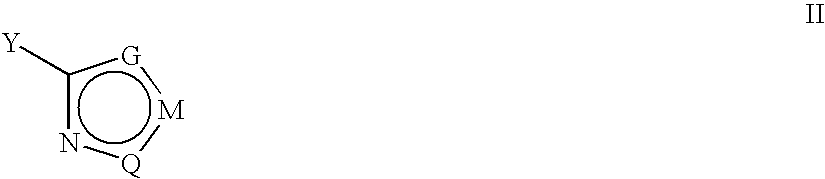
Figure 1 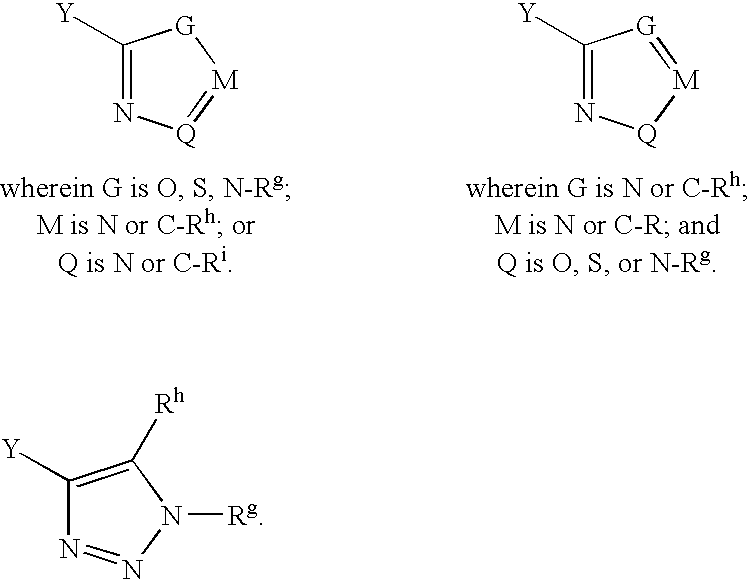
Figure 2 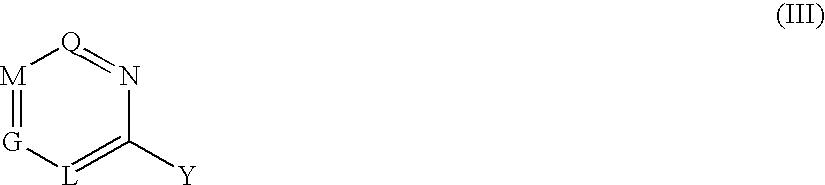
Figure 3
Abstract
Description
[0001] The present application is a continuation of U.S. Ser. No. 10 / 038,113, filed Dec. 31, 2001, which claims the benefit of and priority to U.S. Ser. No. 60 / 259,427, filed Dec. 29, 2000 and U.S. Ser. No. 60 / 296,434, filed Jun. 6, 2001. Each of these applications is incorporated herein by reference in their entirety.
[0002] The present invention relates to methods for treating glaucoma or improving accommodation (i.e. the process by which the eye adjusts for vision at different distances), and to compounds and compositions for use in such treating. In one aspect, the present invention relates to a method of decreasing the intraocular pressure caused by glaucoma.
[0003] Diabetes is the major determinant to the development of visual disability and blindness in parts of the world unencumbered by causes related to malnutrition or infectious diseases. Retinopathy is the leading cause of blindness in diabetics and is a progressive, degenerative disease. Of the many risk factors believed ...
Examples
Example
EXAMPLE 1
Cross-Linking Inhibition Assay
[0148] The following method was used to evaluate the ability of the compounds to inhibit the cross-linking of glycated bovine serum albumin (AGE-BSA) to rat tail tendon collagen-coated 96-well plates.
[0149] AGE-BSA was prepared by incubating BSA at a concentration of 200 mg per ml with 200 mM glucose in 0.4M sodium phosphate buffer, pH 7.4 at 37° C. for 12 weeks. The glycated BSA was then extensively dialyzed against phosphate buffer solution (PBS) for 48 hours with additional 5 times buffer exchanges. The rat tail tendon collagen coated plate was blocked first with 300 microliters of Superbloc blocking buffer (Pierce Chemical, Rockford, Ill.) for one hour. The blocking solution was removed from the wells by washing the plate twice with phosphate buffered saline (PBS)-Tween 20 solution (0.05% Tween 20) using a NUNC-multiprobe (Nalge Nunc, Rochester, N.Y.) or Dynatech ELISA-plate (Dynatech, Alexandria, Va.) washer. Cross-linking of AGE-BSA (1...
Example
EXAMPLE 2
Cross-Link Breaking Assay
[0151] To ascertain the ability of the compounds of the instant invention to break or reverse already formed advanced glycosylation endproducts, a sandwich enzyme immunoassay was applied. Generally, the assay utilizes collagen-coated 96 well microtiter plates that are obtained commercially. AGE-modified protein (AGE-BSA) is incubated on the collagen-coated wells for four hours, is washed off the wells with PBS-Tween and solutions of the test compounds are added. Following an incubation period of 16 hours (37° C.) cross-link-breaking is detected using an antibody raised against AGE-ribonuclease or with an antibody against BSA.
[0152] Preparation of Solutions and Buffers
[0153] Bovine Serum Albumin (Type V) (BSA) (from Calbiochem) solution was prepared as follows: 400 mg of Type V BSA (bovine serum albumin) was added for each ml of 0.4 M sodium phosphate buffer, pH 7.4. A 400 mM glucose solution was prepared by dissolving 7.2 grams of dextrose in 10...