
Multi-stack fluorescent information carrier with electrochromic materials
a fluorescent information carrier and fluorescent technology, applied in the field of multi-stack fluorescent optical information carriers, can solve the problems of deterioration of writing and reading, limited information layer number in such information carrier, and decrease in the luminous intensity of the optical beam, so as to reduce the possible number of layers, improve the interaction, and reduce the interaction
Patent Information
- Authority / Receiving Office
- US · United States
- Patent Type
- Applications(United States)
- Current Assignee / Owner
- Publication Date
- 2007-06-28
- Estimated Expiration
- Not applicable · inactive patent
Smart Images
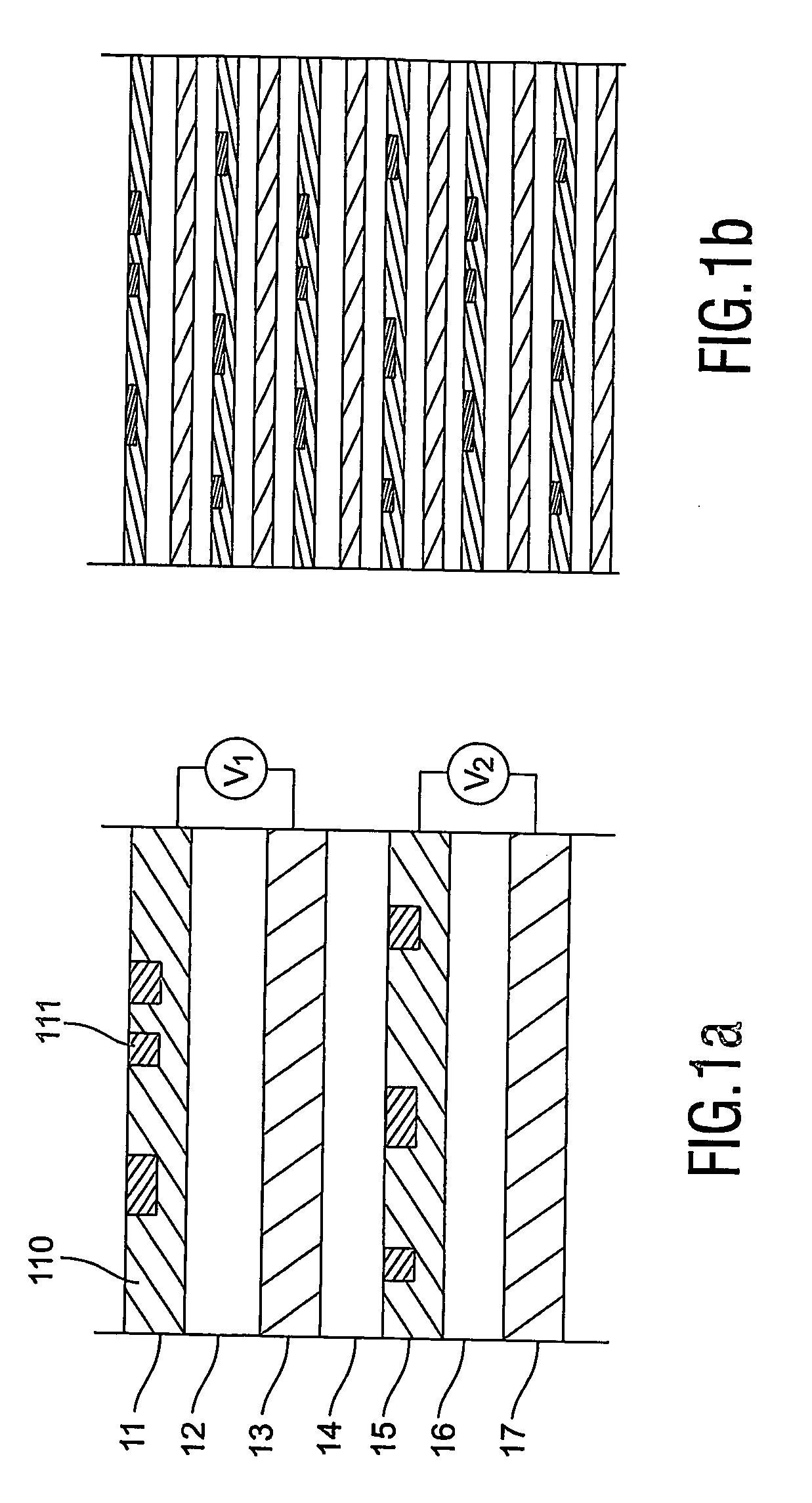
Figure 1 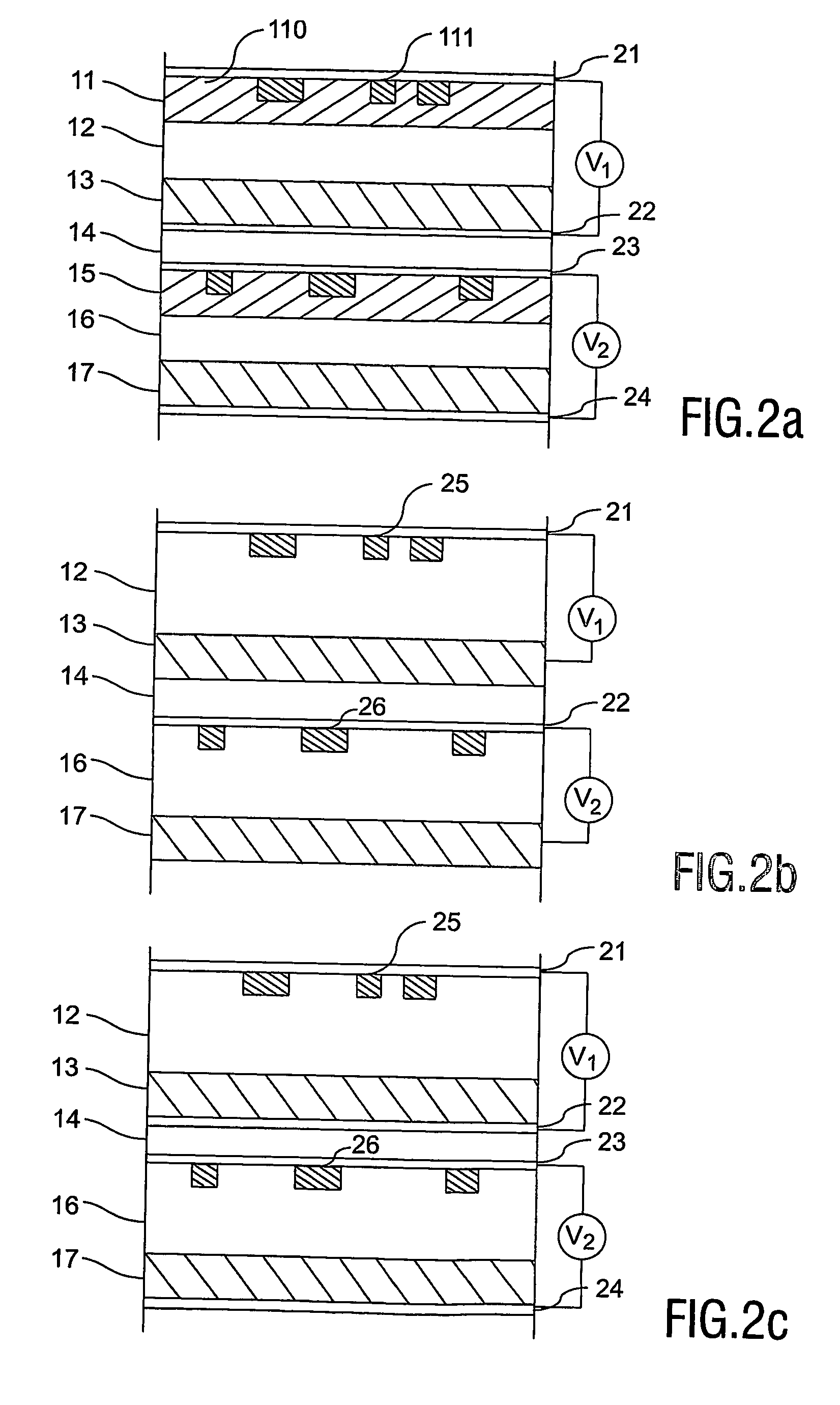
Figure 2 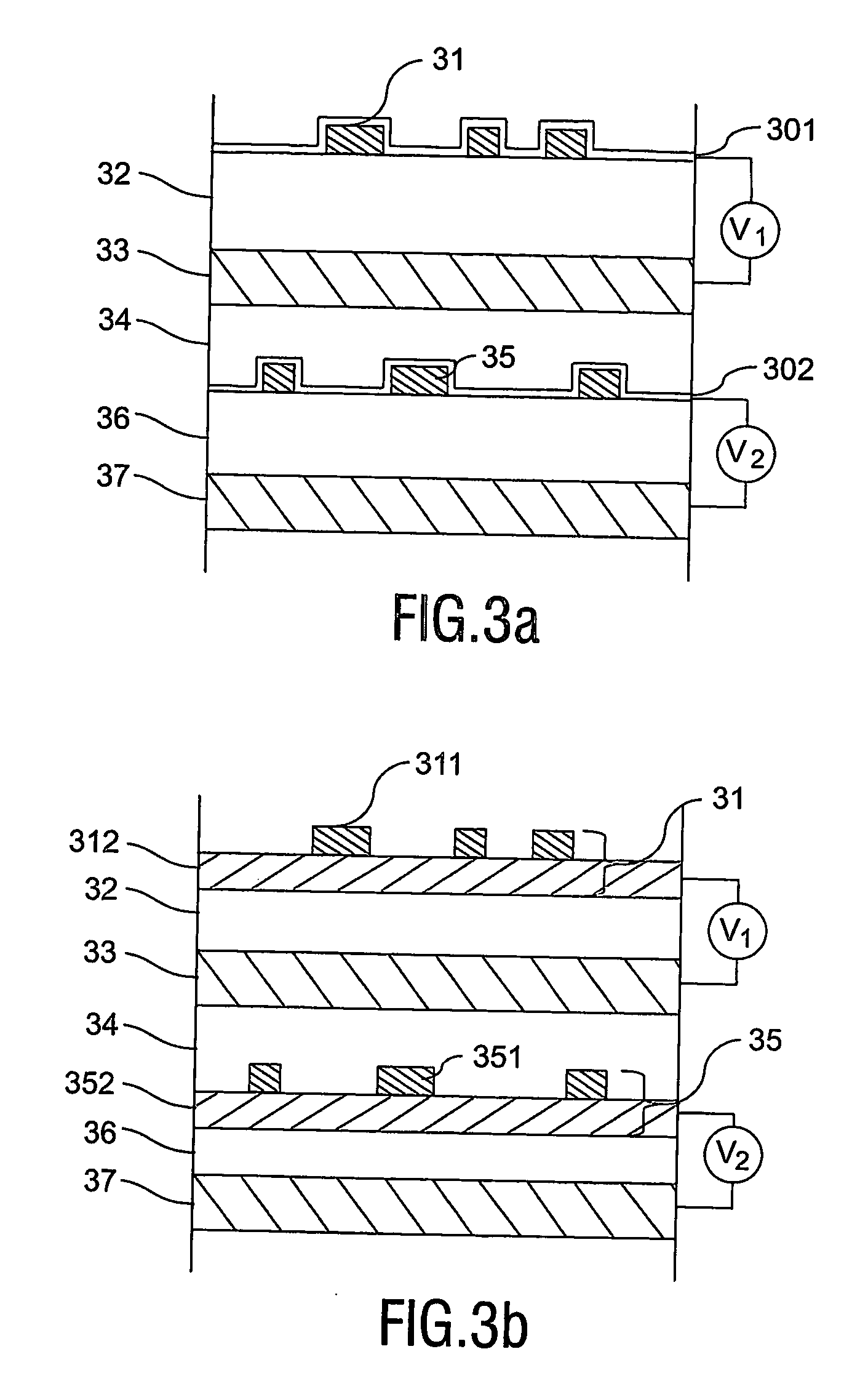
Figure 3
Abstract
Description
FIELD OF THE INVENTION
[0001] The present invention relates to a multi-stack fluorescent optical information carrier.
[0002] The present invention also relates to a scanning device for scanning a multi-stack fluorescent optical information carrier.
[0003] The present invention also relates to a method of reading from, a method of recording on and a method of erasing a multi-stack fluorescent optical information carrier.
[0004] The present invention is particularly relevant for optical data storage and optical disc apparatuses for reading and / or recording data from and / or on multi-stack fluorescent optical discs. BACKGROUND OF THE INVENTION
[0005] In the field of optical recording, increasing the capacity of the information carrier is the trend. An already investigated method of increasing the data capacity consists in using a plurality of information layers in the information carrier. For example, a DVD (Digital Video Disc) may comprise two information layers. Information is recorde...
Examples
first embodiment
[0090] In a first embodiment, the first and second information layers 51 and 55 comprise an electrochromic material having an ability to take up or release electrons which ability can be locally reduced by means of the optical beam at the wavelength 11. In order to locally reduce the ability to take up or release electrons of the electrochromic materials, a relatively high power of the optical beam is required. The high power is absorbed in the material and changes its material properties, for example by melting, annealing, photochemical reactions, thermal damaging or deterioration.
[0091] This relatively high power is used during writing of information on the information carrier, whereas a smaller lower is used during reading, the latter being incapable of reducing the ability to take up or release electrons of the electrochromic materials.
[0092] In order to write information on the first information layer 51, the optical beam having the relatively high power is focused on the firs...
second embodiment
[0097] In a second embodiment, the first and second information layers 51 and 55 comprise a fluorescent material having an ability to emit light by fluorescence, which ability can be locally reduced by means of the optical beam at the wavelength 11. In order to locally reduce the ability to emit light by fluorescence, a relatively high power of the optical beam is required. This relatively high power is used during writing of information on the information carrier, whereas a lower power is used during reading, which power is incapable of reducing the ability to emit light by fluorescence of the fluorescent materials.
[0098] In order to write information on the first information layer 51, the optical beam having the relatively high power is focused on the first information layer 51, in order to locally reduce the ability to emit light by fluorescence of the fluorescent material, for writing marks. The same process applies for writing information on the second information layer 55.
[00...