
Audio system with varying time delay and method for processing audio signals
a technology of audio signal and time delay, which is applied in the field of audio system with varying time delay and method for processing audio signals, can solve the problems of severely restricting the processing capabilities of a given audio system, poor sound quality, and the range of disturbing effects experienced by users, and achieves high background noise level, large throughput, and high demands on the anti-feedback system
Patent Information
- Authority / Receiving Office
- US · United States
- Patent Type
- Applications(United States)
- Current Assignee / Owner
- Publication Date
- 2007-07-26
Smart Images
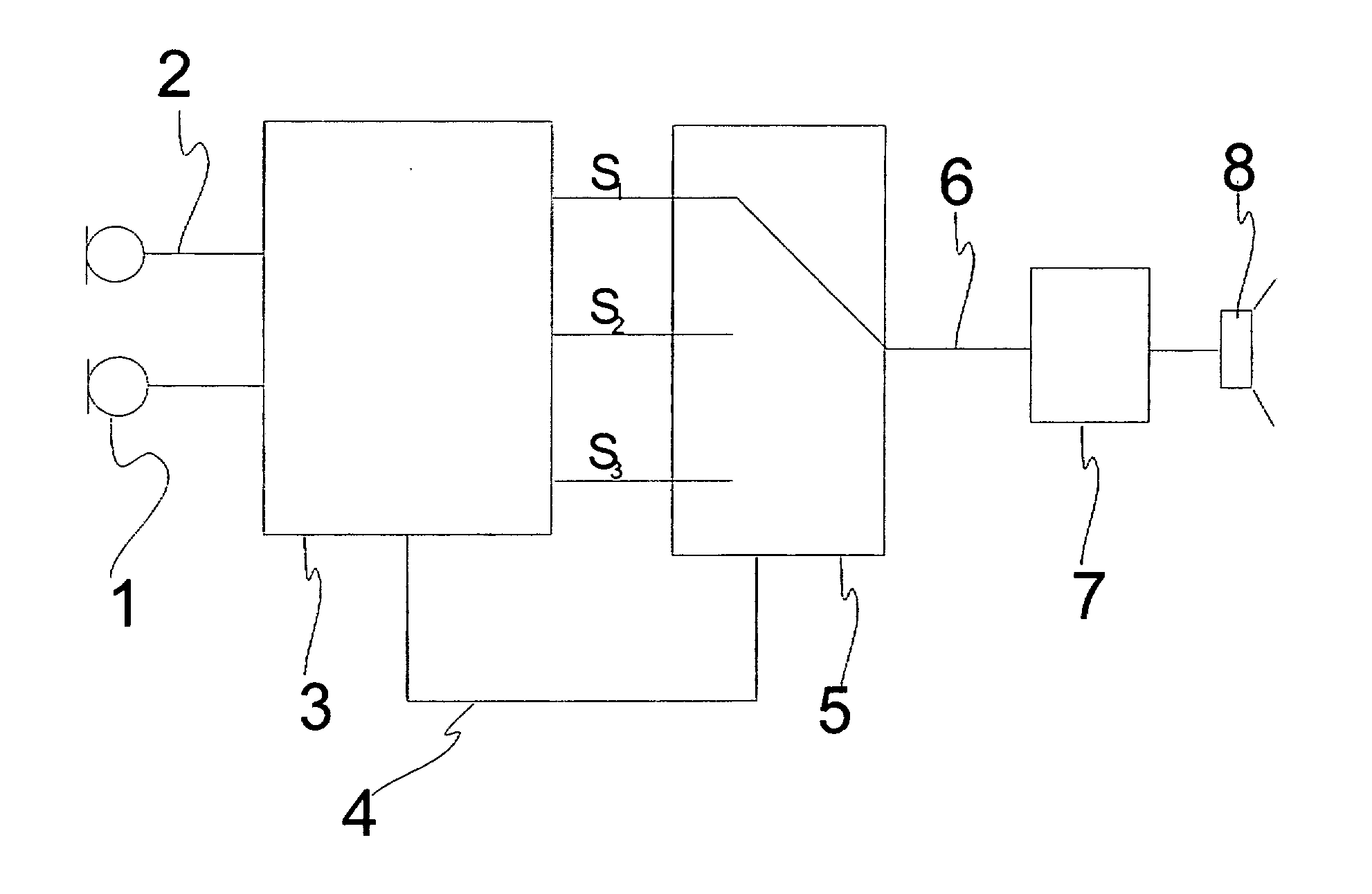
Figure 1 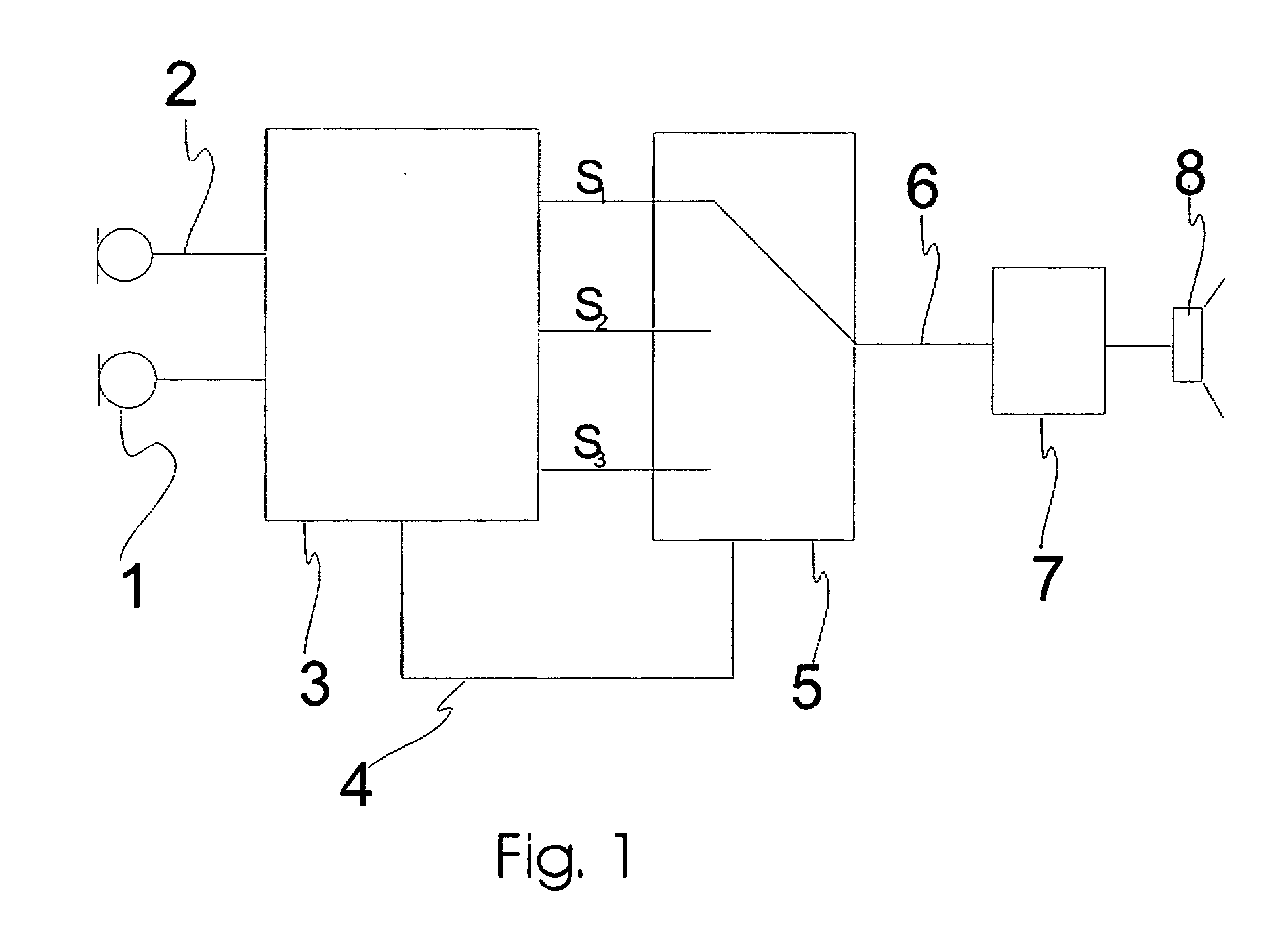
Figure 2 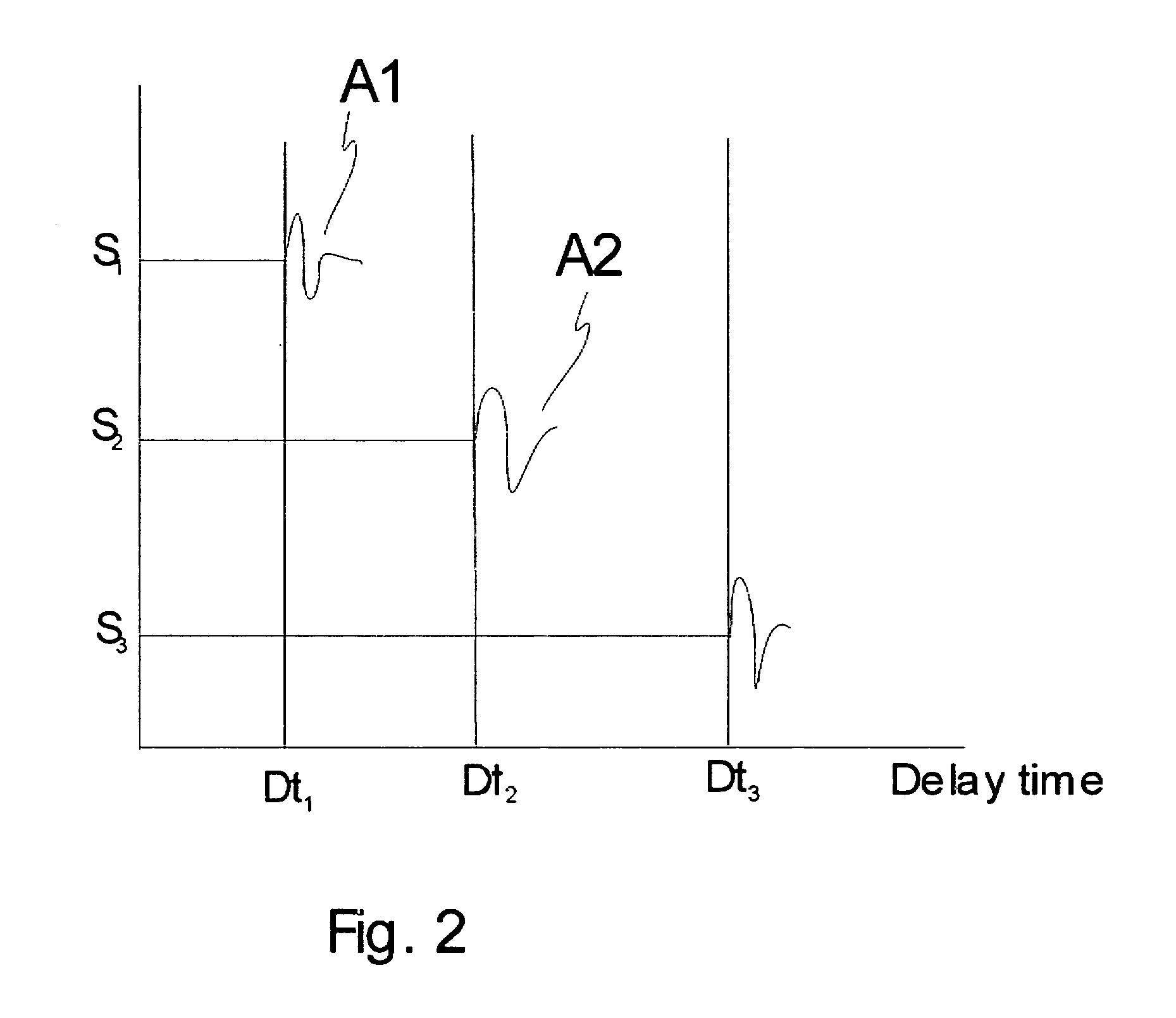
Figure 3
Abstract
Description
AREA OF THE INVENTION
[0001] The invention regards audio systems as used in hearing aids, headsets and other devices wherein an environmental audio signal is processed and continually served at one or more listeners. BACKGROUND OF THE INVENTION
[0002] It is well documented that the delay, introduced by digital processing in modern audio systems, can lead to a range of disturbing effects experienced by the user. The processing delay should in general be lower than 10 milliseconds. This time is based on average ratings and rather large deviations exist depending on degree of: amplification, incoming sound signal, type of sound processing and individual differences between people. The range of acceptable values may be roughly 3 to 40 milliseconds depending on such factors.
[0003] While a short delay is desirable in order to limit the disturbing effects experienced by the user, (poor sound quality, difficulty in locating direction of sound source) when a short delay is specified it seve...
Examples
Embodiment Construction
[0021]FIG. 1 illustrates a simplified example of a hearing aid which embodies an example of the method according to the invention. A diagram of the signal path in a hearing aid is shown, whereby one or more microphones 1 are arranged to pick up environmental sounds. In the hearing aid other sound signals may be transmitted through the signal path, such as telecoil signals or other wireless or wired audio signal as well known in conventional hearing aids. The incoming signals 2 are digitized in the usual way (not shown in the figure) and routed to a digital signal processing unit (DSP) 3. Here a usual amplification and noise damping process is performed on the incoming signal as is usual in hearing aids. The method according to the invention allows two or more different algorithms to be performed on the audio signal in the DSP unit and thus delivering two or more output signals, illustrated in FIG. 1 by S1, S2 and S3. The algorithms have each their time delay Dt1, Dt2 and Dt3 as disp...