
Diesel Particulate Filter Performance Using Sonic Particle Agglomeration
a technology of sonic particle agglomeration and diesel engine, which is applied in the direction of liquid degasification, auxillary pretreatment, separation process, etc., can solve the problems of low gaseous emissions of unburned hydrocarbon and carbon monoxide, the in-cylinder design changes have not been able to meet the emission limits of these engines, and the engine is currently subject to strict emission limits
Patent Information
- Authority / Receiving Office
- US · United States
- Current Assignee / Owner
- Publication Date
- 2007-10-04
Smart Images
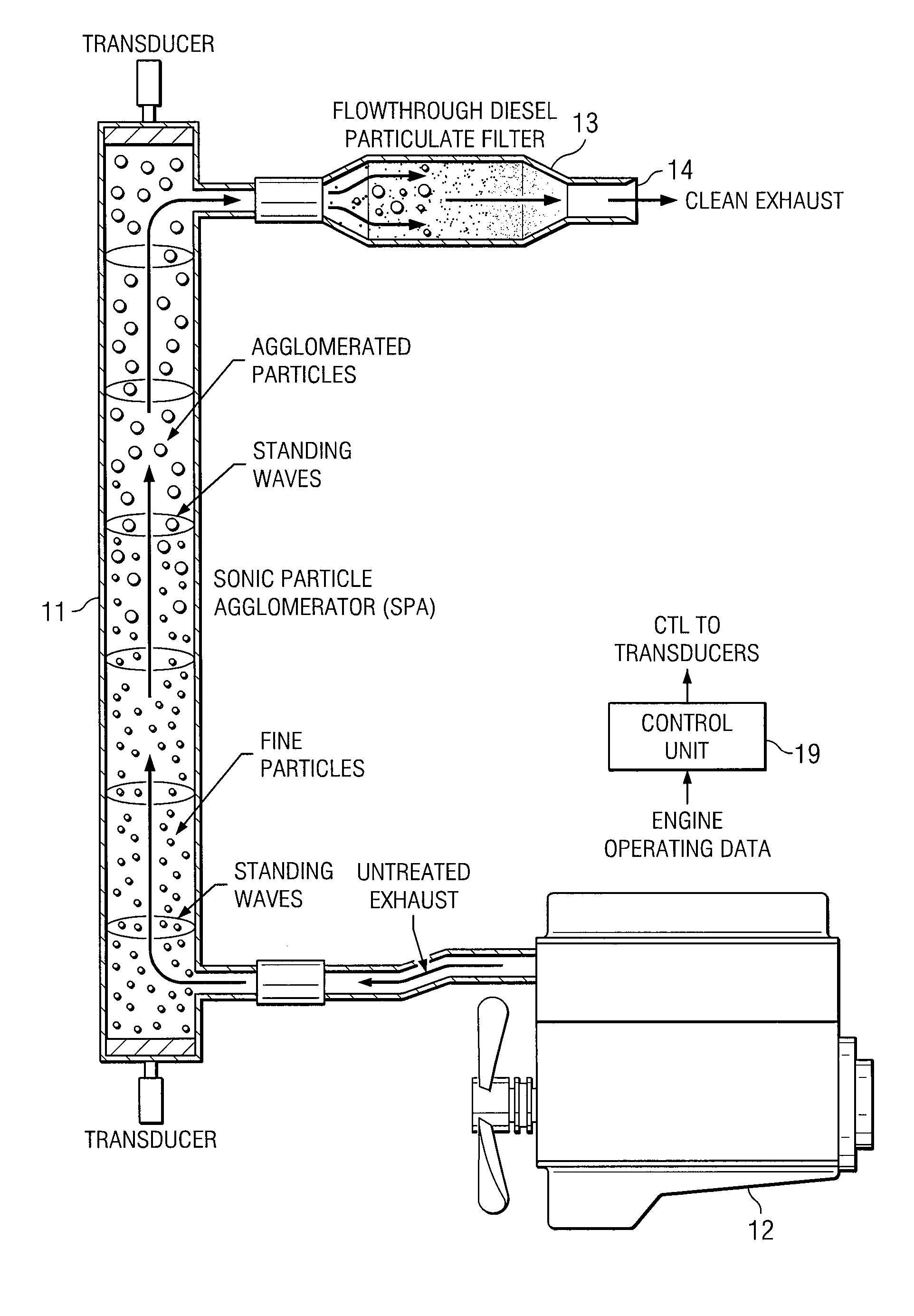
Figure 1 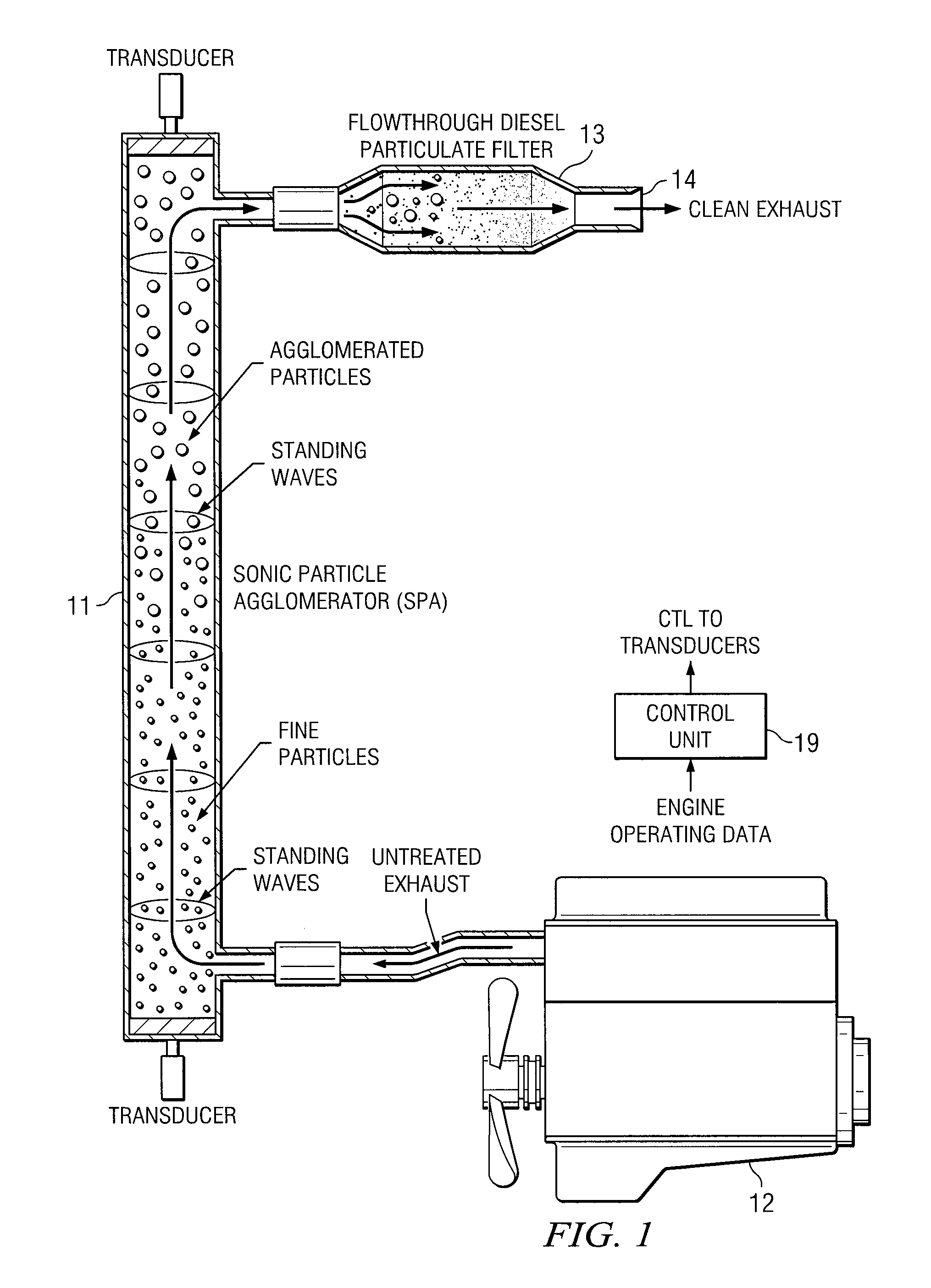
Figure 2 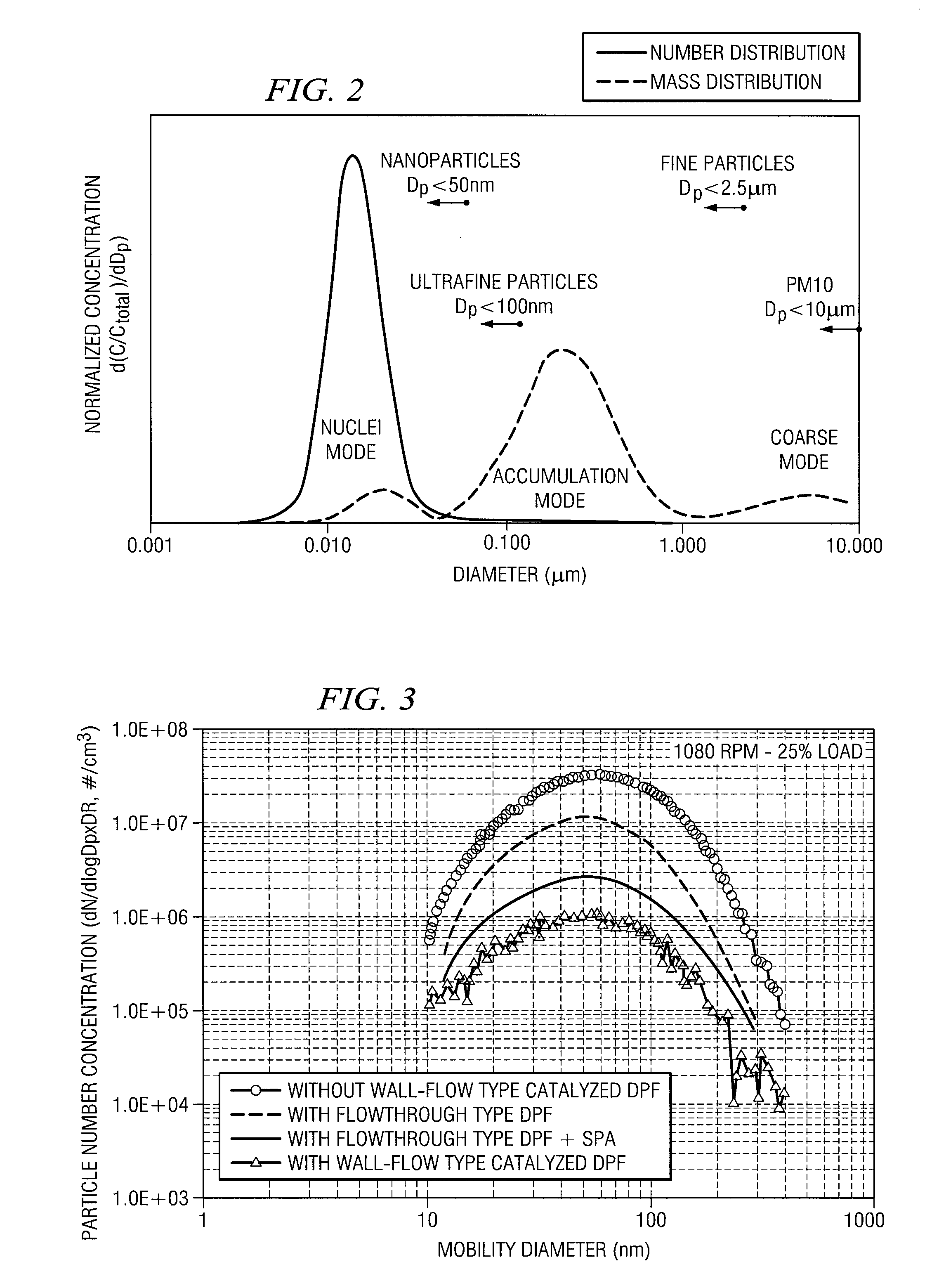
Figure 3
Abstract
Description
RELATED PATENT APPLICATION
[0001] This application claims the benefit of U.S. Provisional Application No. 60 / 777,600, filed Feb. 28, 2006 and entitled “Improved Diesel Particulate Filter Performance Using Sonic Particle Agglomeration.”TECHNICAL FIELD OF THE INVENTION
[0002] This invention relates to reduction of emissions from diesel engines, and more particularly to improving the performance of diesel particulate filters. BACKGROUND OF THE INVENTION
[0003] Internal combustion engines used for mobile or stationary applications are currently subject to strict emission limits. In-cylinder design changes have fallen short of allowing these engines to meet these emissions limits. Technology advances in the catalyst field have made it possible for integrated systems of engine and exhaust treatment to achieve extremely low emissions. Even so, more emission reduction efficiencies are sought from existing systems and new catalytic reduction solutions are needed to achieve even lower emissio...
Examples
Embodiment Construction
[0010] As stated in the Background, an advantage of flowthrough diesel particulate filters (DPF's) is their low back pressure characteristic. This characteristic is a result of the fact that DPF's cause less restriction to engine exhaust. It follows that they do not present the same adverse impact on engine performance or fuel economy as do wallflow DPF's.
[0011] On the other hand, the filtration efficiency of flowthrough DPF's is rather low (about 50 percent). This fact has limited the application of flowthrough DPF's to either retrofit applications or to vehicles that must meet only less stringent European particulate emissions standards.
[0012] To meet European standards, it is customary for engine manufacturers to advance injection timing. This increases engine-out nitric oxide emissions, but reduces engine-out particulate matter emissions. The reductions in particulate emissions are usually sufficient to allow the use of flowthrough DPF's despite their reduced efficiency. Incre...