

LED light source with integrated circuit and light guide
a technology of led light source and integrated circuit, applied in the field of elongated light source, can solve the problems of low cost, and achieve the effect of improving light source performance, simple circuitry and reducing cos
Patent Information
- Authority / Receiving Office
- US · United States
- Patent Type
- Applications(United States)
- Current Assignee / Owner
- Publication Date
- 2008-02-21
- Estimated Expiration
- Not applicable · inactive patent
Smart Images
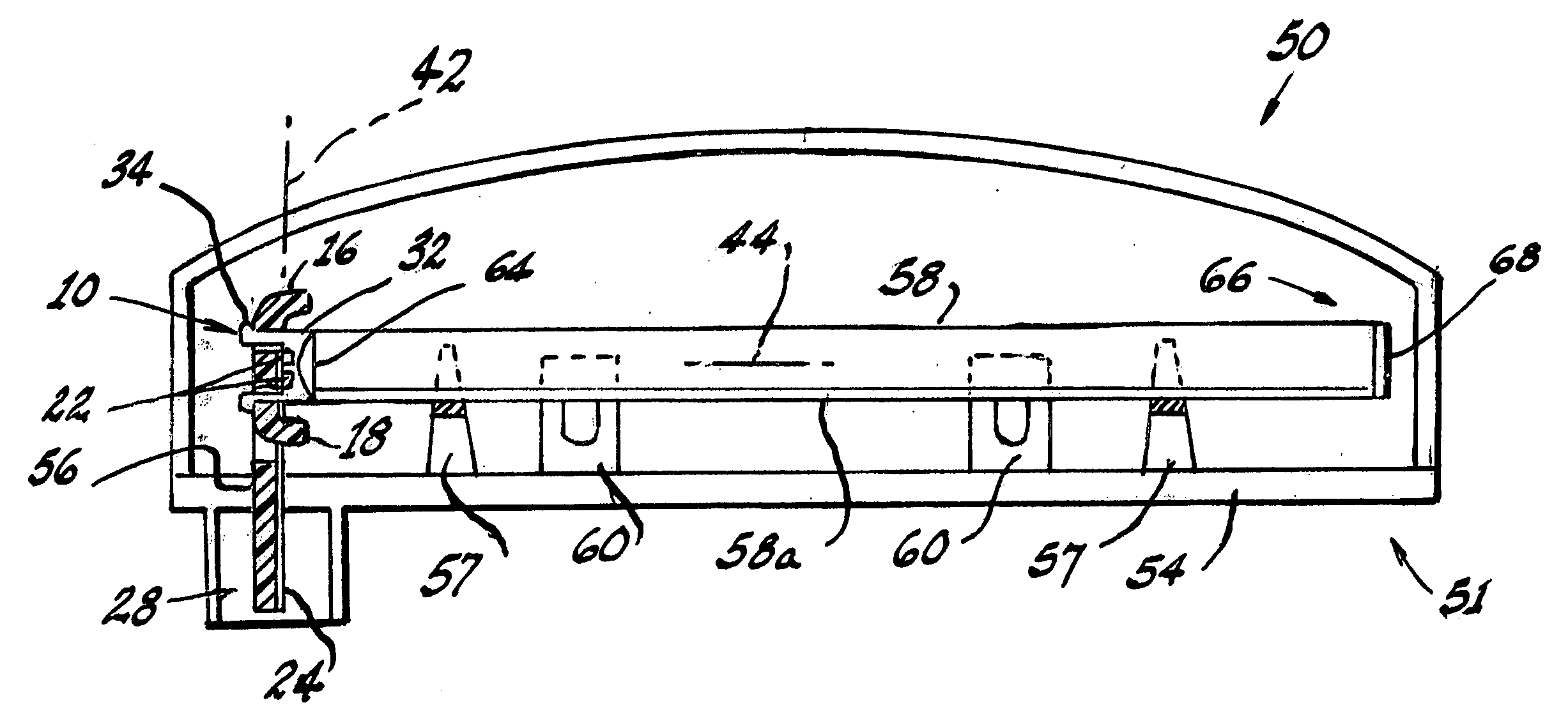
Figure 1 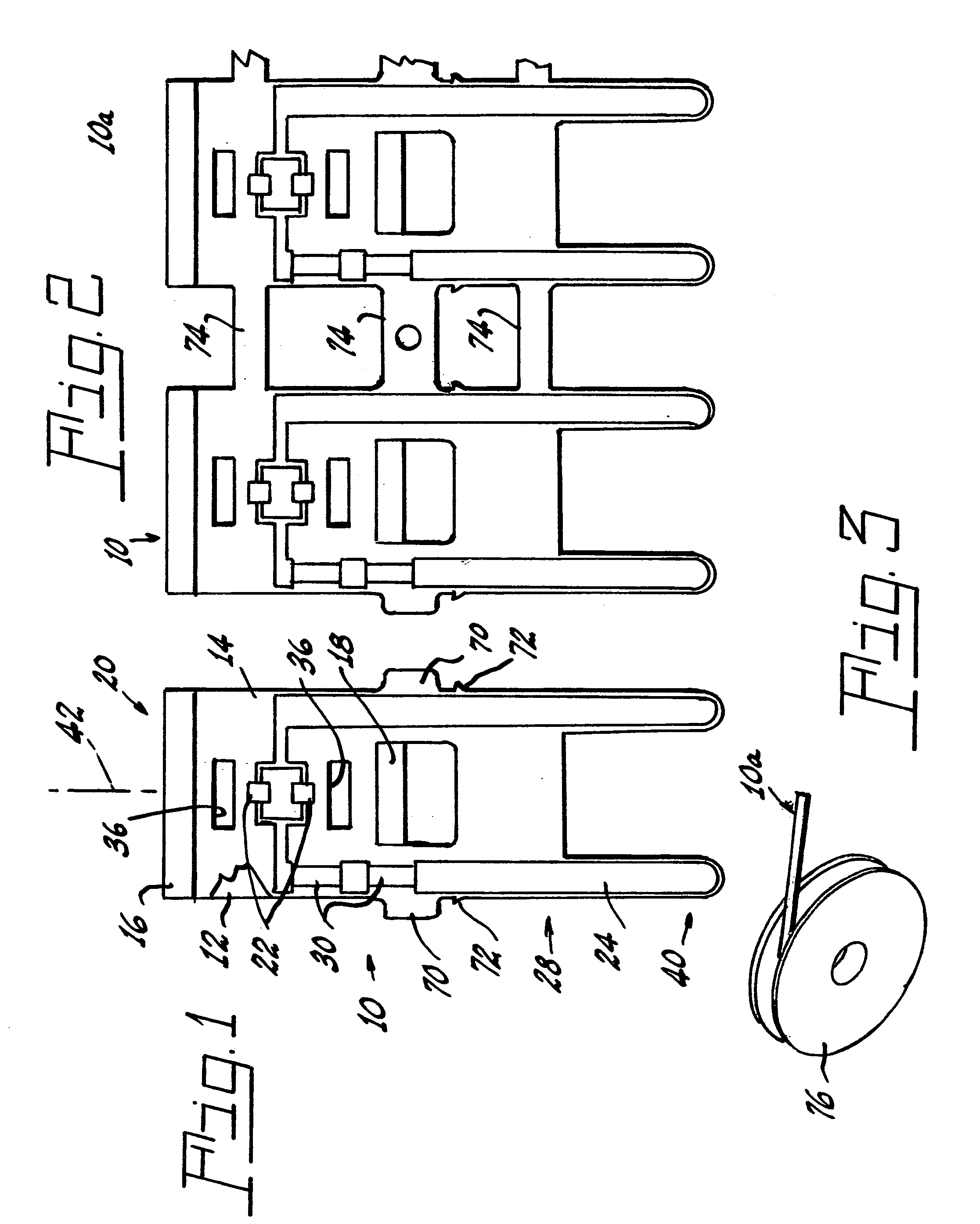
Figure 2 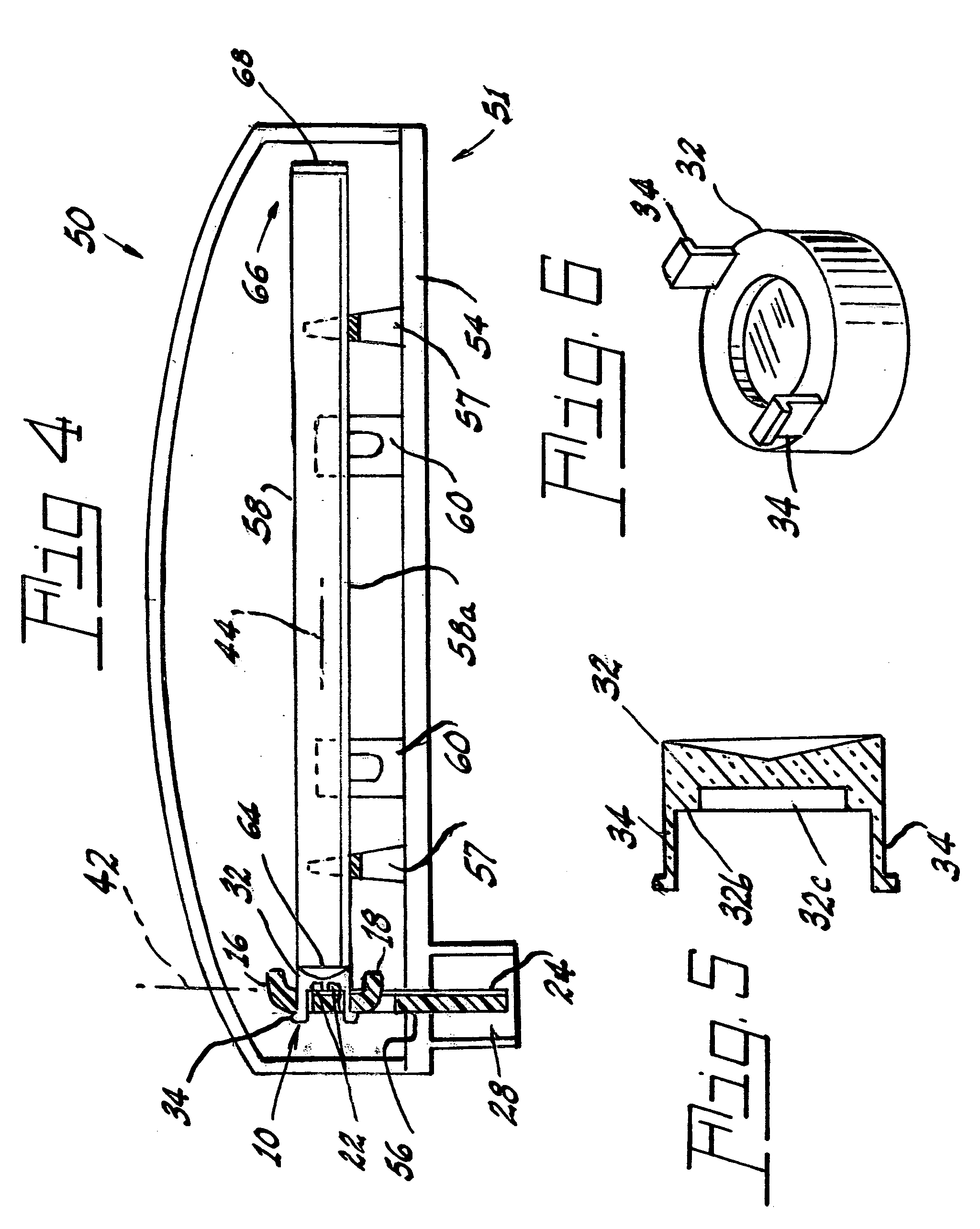
Figure 3
Abstract
Description
TECHNICAL FIELD
[0001] This invention relates to light sources and more particularly to elongated light sources. Still more particularly it relates to light sources employing light emitting diodes (LED or LEDs) for elongated light sources that can be used as the center high mount stop light (CHMSL) for automotive vehicles.BACKGROUND ART
[0002] The now ubiquitous CHMSL has utilized many varieties of light sources including incandescent, neon and LEDs. Because of their relatively long life and cool operating temperatures (when compared to incandescent light sources) LEDs have taken over the majority of these applications. However, their cost and complexity of manufacture have caused some concern in the industries using them. For example, most of the LED sources available for CHMSL use require a large printed circuit board and a large number of LEDs, each one usually associated with an individual lens. It is not uncommon for many brands of automobile to use six or more LEDs in this manner ...
Examples
Embodiment Construction
[0013]For a better understanding of the present invention, together with other and further objects, advantages and capabilities thereof, reference is made to the following disclosure and appended claims taken in conjunction with the above-described drawings.
[0014]Referring now to the drawings with greater particularity, there is shown in FIG. 1 a light engine 10 comprising: a thermally conductive substrate 12 fabricated of a suitable material, such as aluminum, having a thermally conductive dielectric 14, such as ceramic-filled silicone, on one side thereof. Employing the thermally conductive material for the substrate 12 allows the substrate to function both as the supporting element and a heat sink. The use of a heat sink is important because, even though the heat generated by operation of the LEDs is less than that that would be supplied by incandescent bulbs, it can be sufficient to damage the LEDs when they are driven at high power.
[0015]Upper and lower lens guards, 16, 18, res...