
Multi-Modal Active RFID Tag With Biometric Sensors, Systems and Methods of ITV Tracking
a multi-modal, active technology, applied in the field of active multi-modal radio frequency identification (rfid) tags and systems, can solve the problems of severe limitations dictated by physics, non-operational, and limited range of passive tags and readers, and achieve the effect of effective direction
Patent Information
- Authority / Receiving Office
- US · United States
- Current Assignee / Owner
- Publication Date
- 2008-03-13
Smart Images
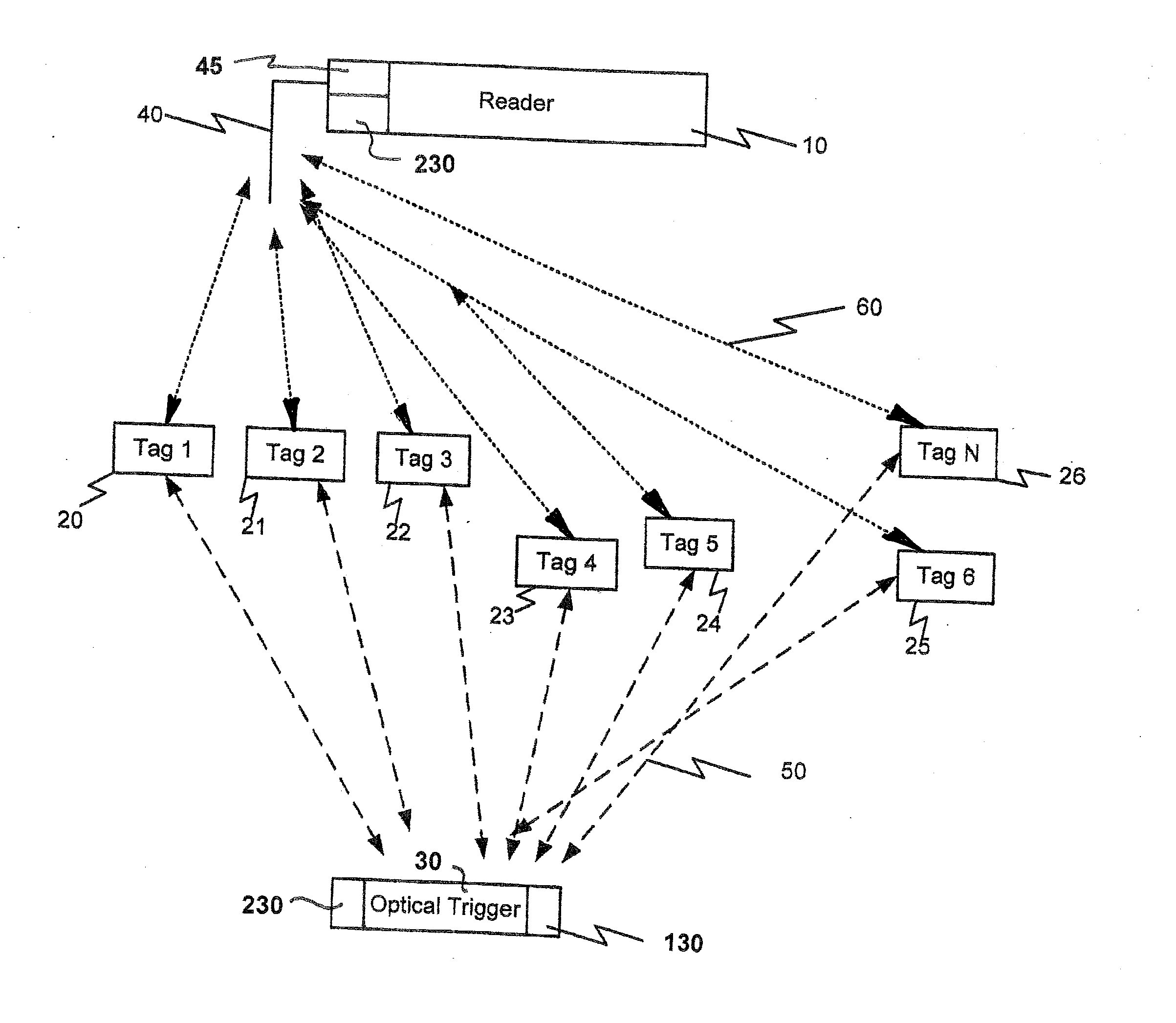
Figure 1 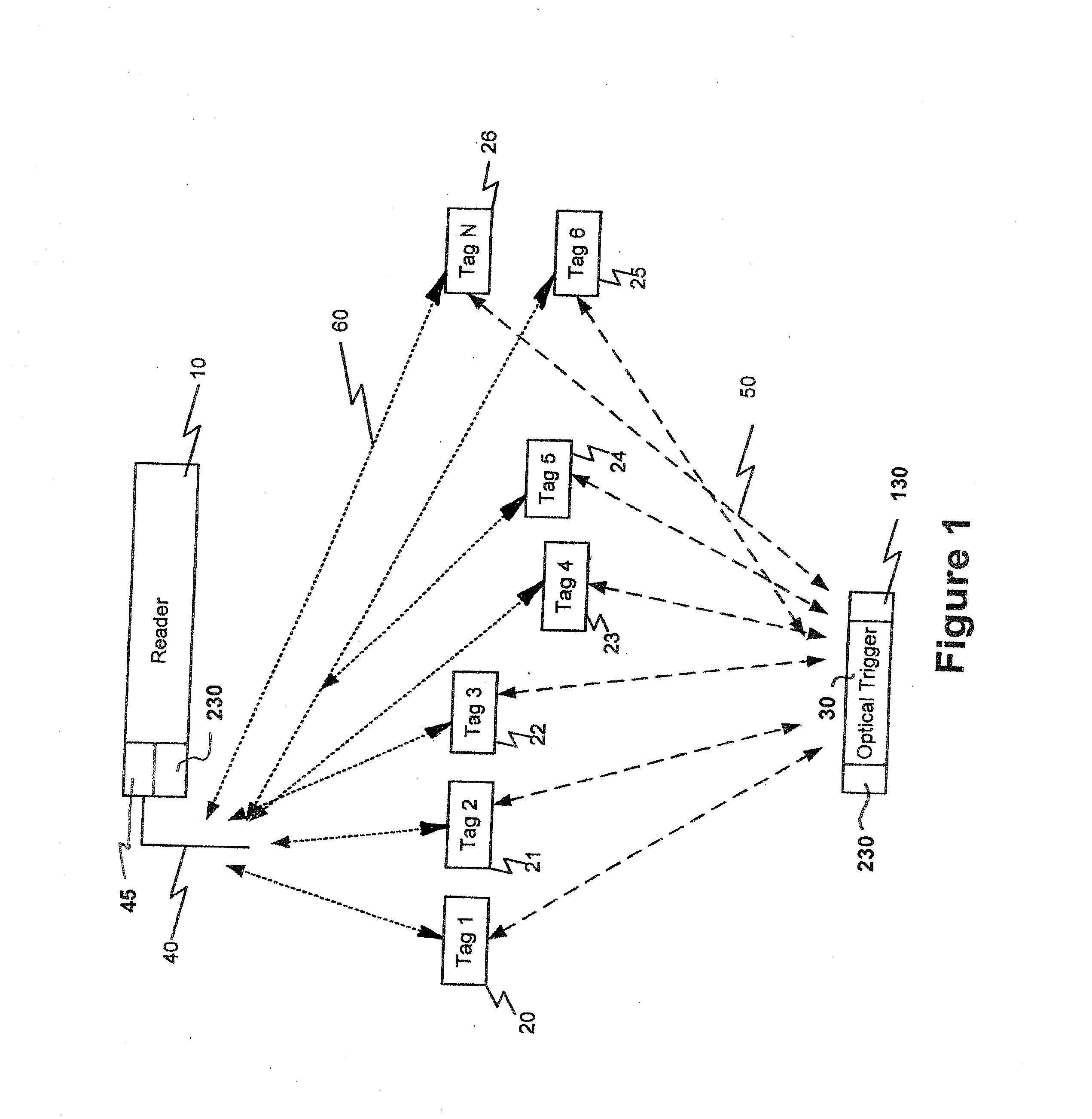
Figure 2 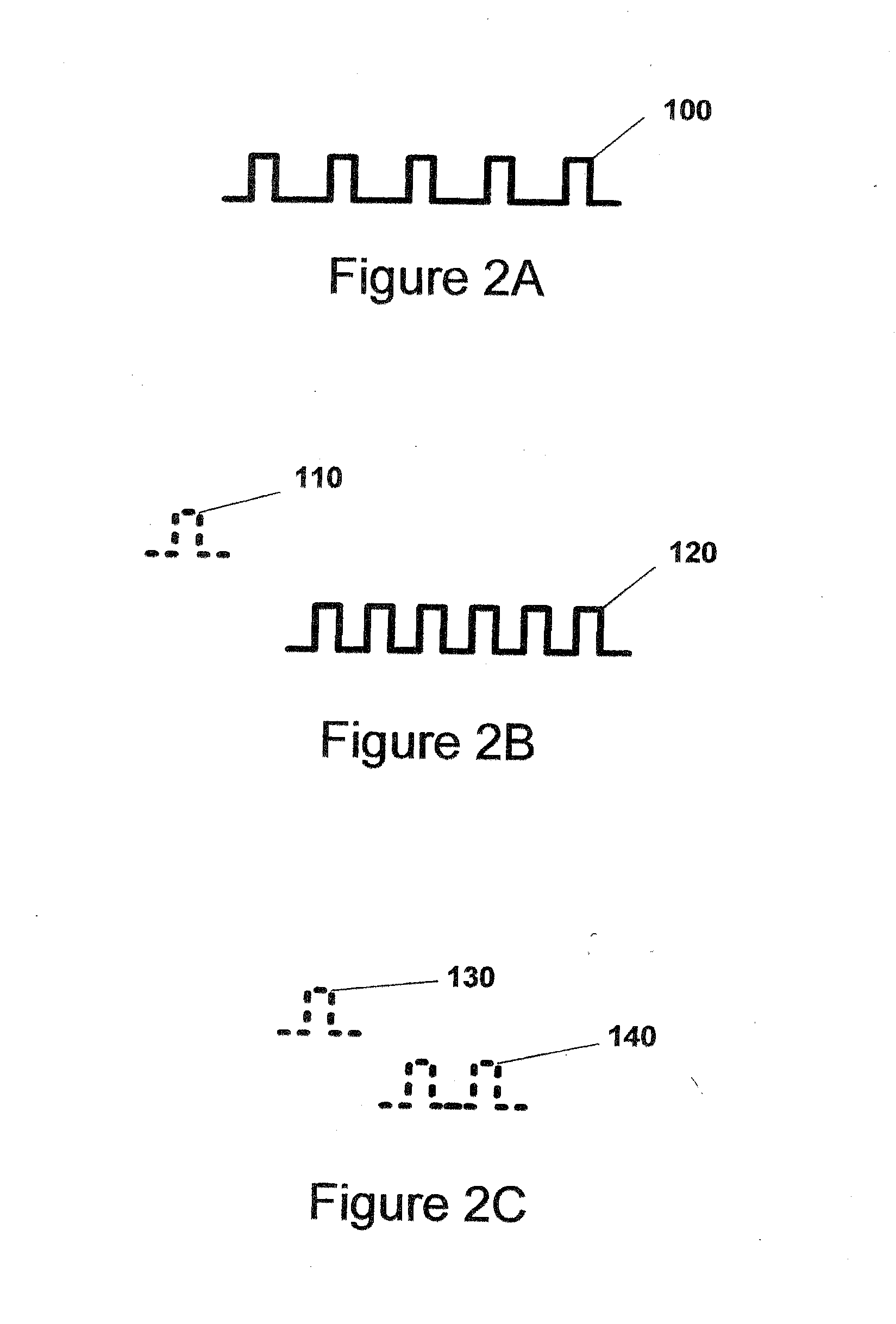
Figure 3
Abstract
Description
CROSS REFERENCE TO RELATED APPLICATIONS
[0001] This application is a continuation in part of parent U.S. Ser. No. 11 / 082,237, filed Mar. 17, 2005 by the same inventor, titled “Active RFID Tag Utilizing a Secondary Communication Mode”, now U.S. Pat. No. 7,295,108, Issued Nov. 13, 2007, which in turn is based on priority Provisional Application 60 / 555,153, filed Mar. 22, 2004 by the same inventor under the same title, the benefits of the filing dates of which are claimed under 35 US Code §§119 and 120ff, and the disclosures of which are incorporated herein by reference.FIELD OF THE INVENTION
[0002] The invention relates to the field of active multi-modal Radio Frequency Identification (RFID) tags and systems, and more particularly to bi-modal and tri-modal tags, systems of illuminators, readers and tags, and methods of In Transit Visibility (ITV) and Total Asset Management (TAM), including use of biometric sensors on or as part of the system in association with the tags More particula...
Examples
Embodiment Construction
[0051] The following detailed description illustrates the invention by way of example, not by way of limitation of the scope, equivalents or principles of the invention. This description will clearly enable one skilled in the art to make and use the invention, and describes several embodiments, adaptations, variations, alternatives and uses of the invention, including what is presently believed to be the best modes of carrying out the invention.
[0052] In this regard, the invention is illustrated in the several figures, and is of sufficient complexity that the many parts, interrelationships, and sub-combinations thereof simply cannot be fully illustrated in a single patent-type drawing. For clarity and conciseness, several of the drawings show in schematic, or omit, parts that are not essential in that drawing to a description of a particular feature, aspect or principle of the invention being disclosed. Thus, the best mode embodiment of one feature may be shown in one drawing, and ...