
Dispense volume monitor for arrays
a technology of arrays and volume monitors, which is applied in the field of array volume monitors, can solve the problems of inaccurate volume droplets, small amount of liquid lost, inaccurate volume determination, etc., and achieve the effect of accurate volume determination, low output impedance values, and low channel numbers
Patent Information
- Authority / Receiving Office
- US · United States
- Patent Type
- Applications(United States)
- Current Assignee / Owner
- Publication Date
- 2010-09-16
Smart Images
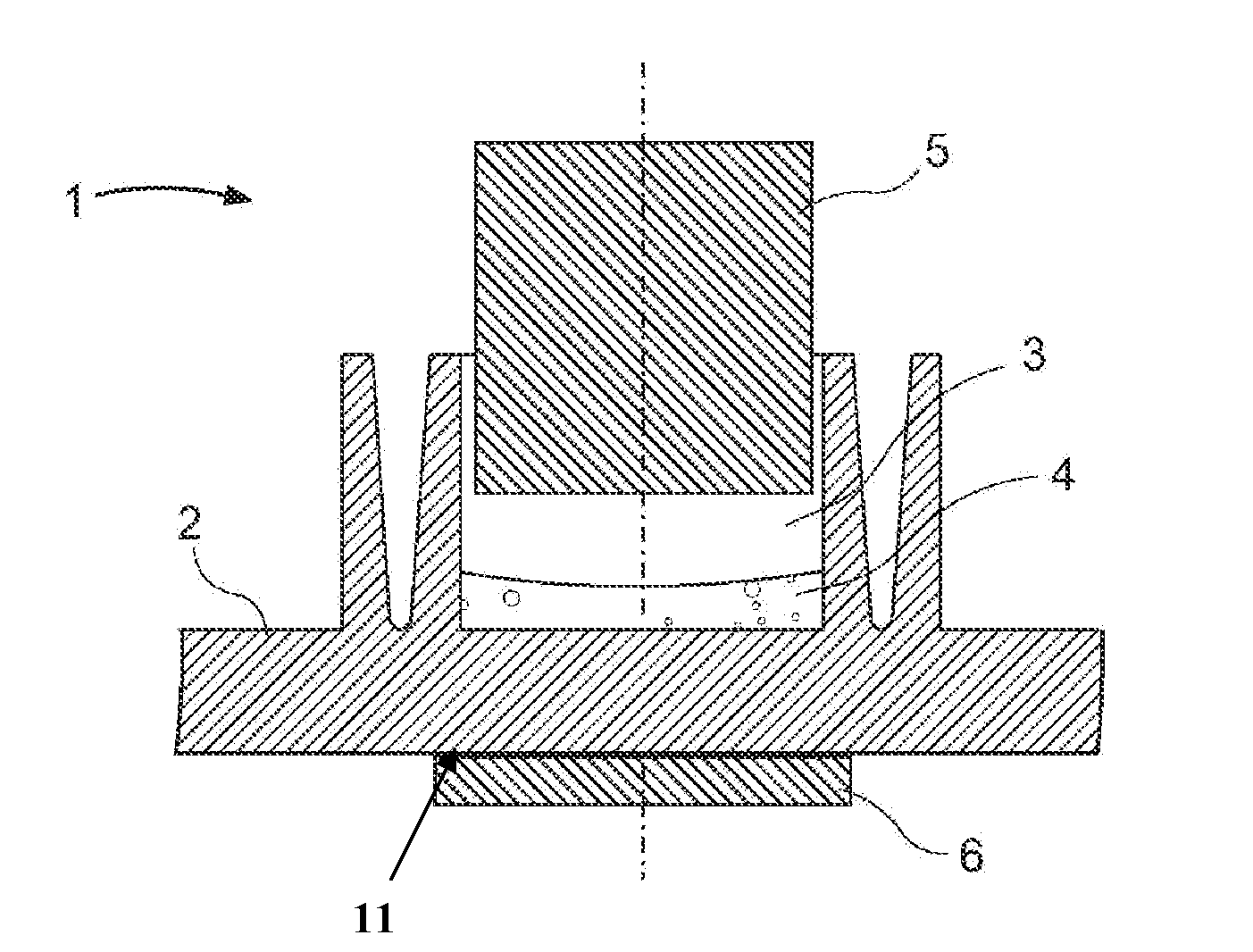
Figure 1 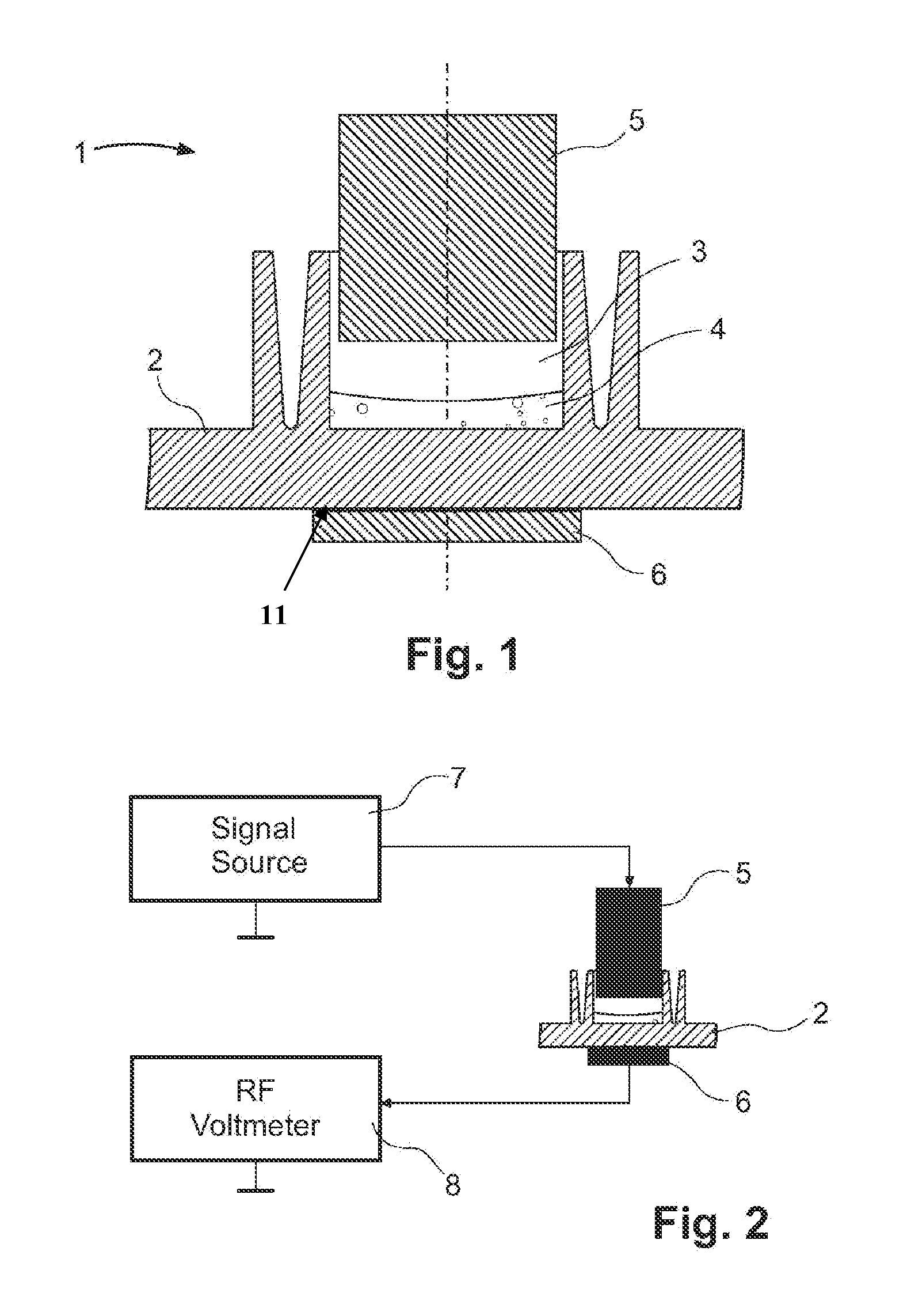
Figure 2 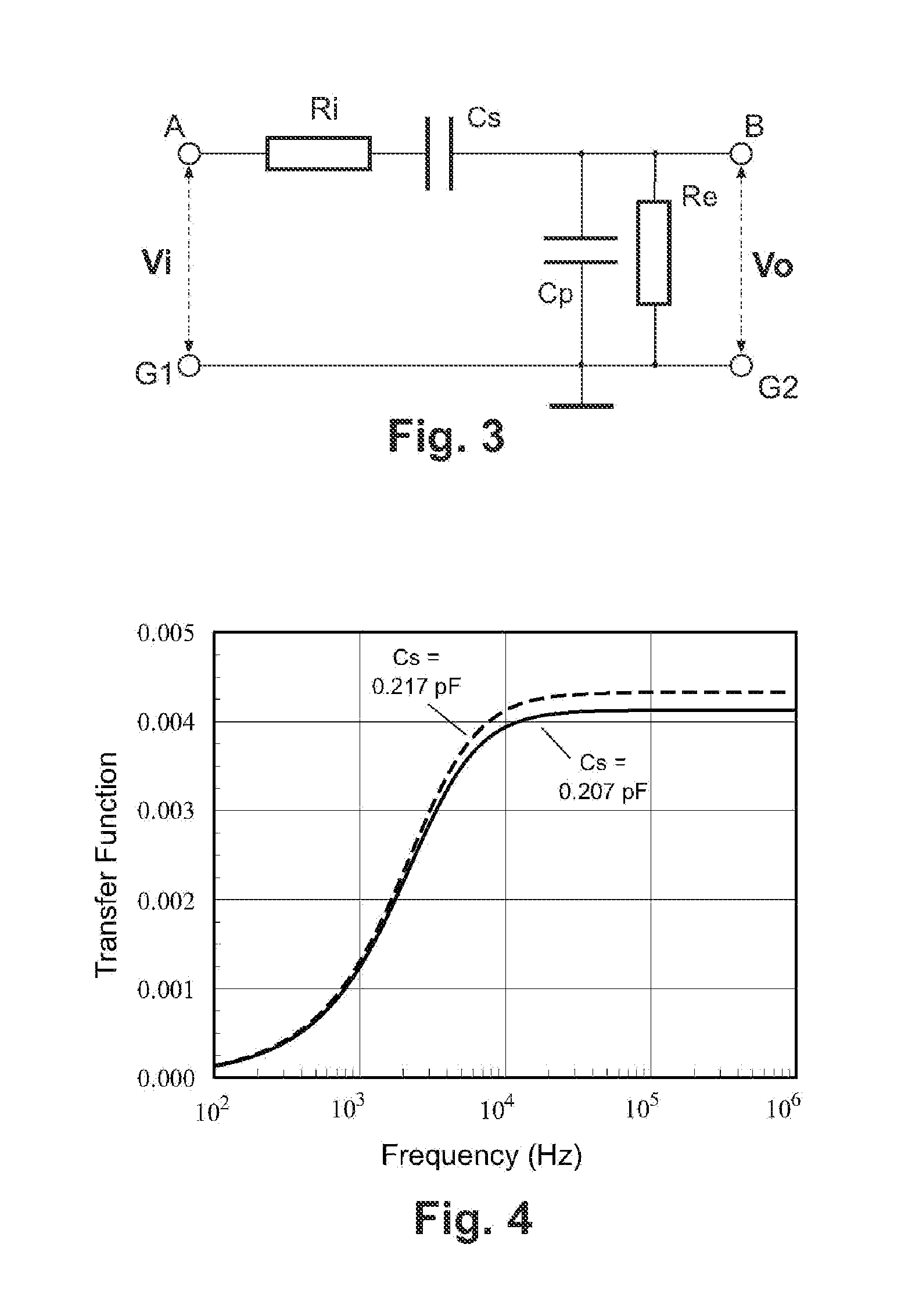
Figure 3
Abstract
Description
FIELD OF THE INVENTION
[0001] The present invention relates to methods and apparatus for accurately dispensing a predetermined small volume of liquid reagents into open containers. In one embodiment, the present invention relates to methods and apparatus for determining the volume of liquid reagents that are dispensed into two-dimensional arrays of open wells.BACKGROUND OF THE INVENTION
[0002] The dispensing of small volume reagent droplets with high accuracy represents an important process step in the production of medical diagnostic assays which are frequently based on using two-dimensional arrays of open wells, such as microtiter plates. Some examples of such dispense systems in use are described in the following references: U.S. Pat. No. 4,107,658, U.S. Pat. No. 4,196,615, U.S. Pat. No. 4,417,473, U.S. Pat. No. 4,818,492, U.S. Pat. No. 5,304,347, U.S. Pat. No. 5,601,980, U.S. Pat. No. 6,029,896, U.S. Pat. No. 6,148,666, U.S. Pat. No. 6,213,354, U.S. Pat. No. 6,551,558, U.S. Pat. No....
Examples
Embodiment Construction
[0048]In needle-based dispensing systems, the targeted amount of liquid leaving the inner needle space is, in many cases, very well controlled, e.g. by the specific motion of a dispensing piston, by utilizing specialized pumps with accurate dosing capability, or by application of piezo-electric devices producing a defined volume displacement. However, the amount of liquid actually reaching the receiving well may vary, because part of the liquid leaving the inner needle space is creeping along the outer diameter of the dispensed needle, therefore forming a small amount of liquid that is lost from the particular dispense act. This occurrence may repeat itself in one or more successive dispense acts and a substantial amount of liquid may, consequently, accumulate on the outer needle diameter. Once a critical amount of liquid accumulates, this liquid will join a dispensed droplet, generating an actual dispensed volume that significantly exceeds the targeted dispensed volume.
[0049]In cer...