
Methods for assembling components of a fabric-covered prosthetic heart valve
a heart valve and fabric-covered technology, applied in the field of medical devices, can solve the problems of increasing the difficulty of the task, labor-intensive and time-consuming, and improving the quality control in the manufacture of heart valves, so as to eliminate a significant source of ergonomic stress and injury, and improve speed and quality
Patent Information
- Authority / Receiving Office
- US · United States
- Patent Type
- Applications(United States)
- Current Assignee / Owner
- Publication Date
- 2010-10-14
Smart Images
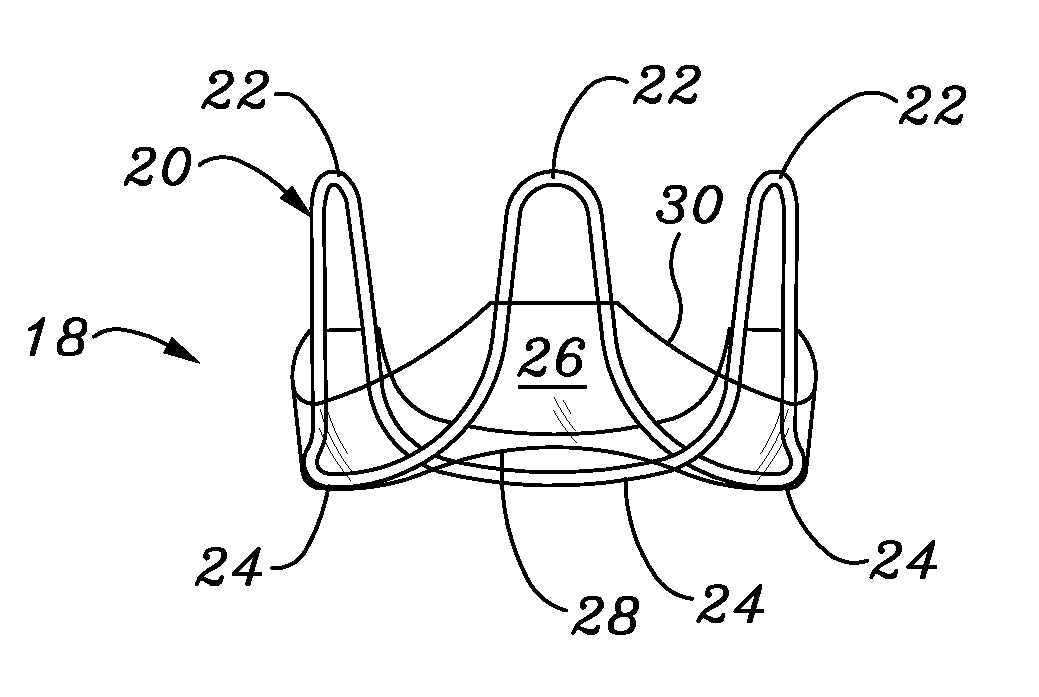
Figure 1 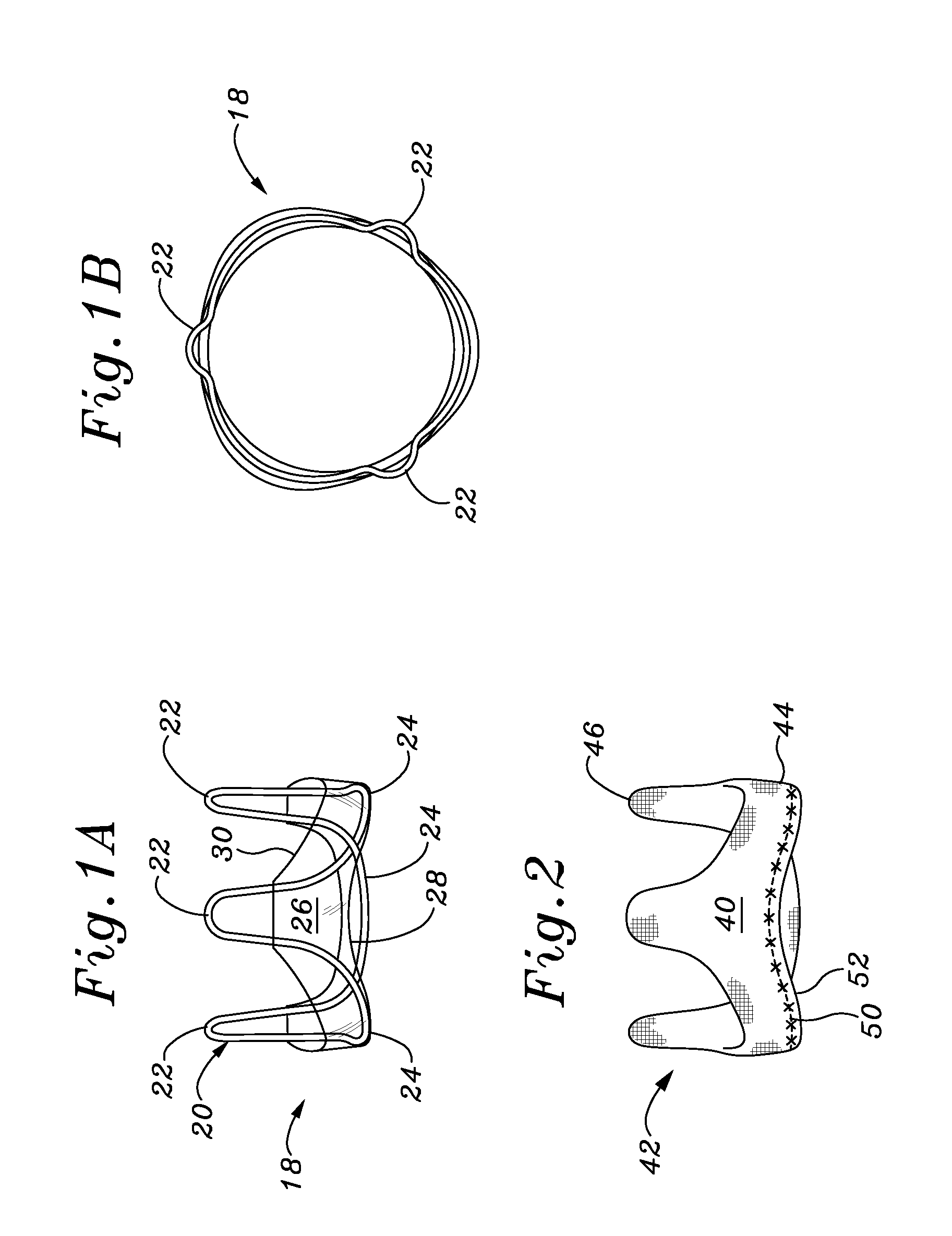
Figure 2 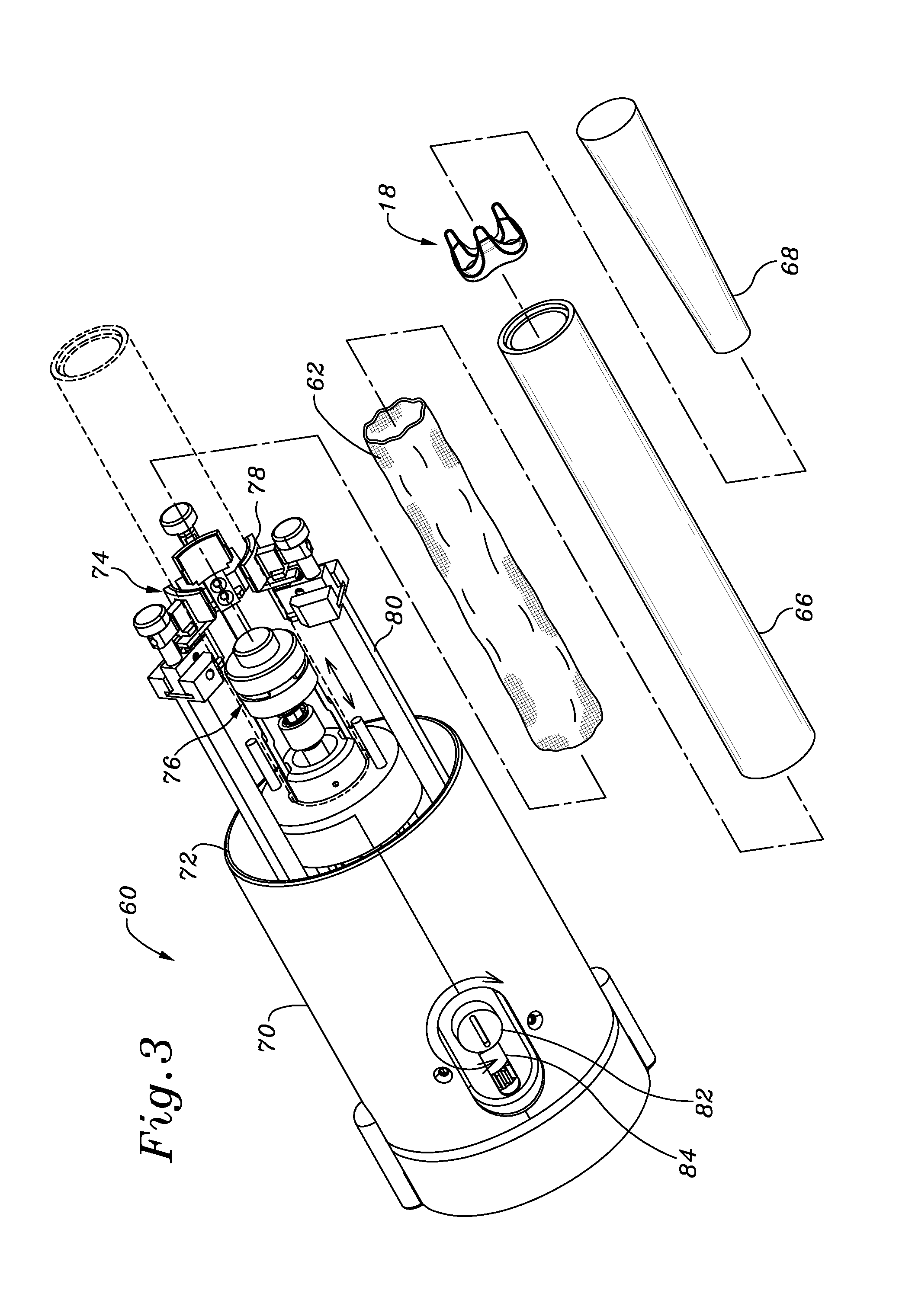
Figure 3
Abstract
Description
RELATED APPLICATIONS
[0001] The present application is a continuation of Ser. No. 11 / 147,797, filed Jun. 7, 2005, now issued as U.S. Pat. No. 7,739,971.FIELD OF THE INVENTION
[0002] The present invention relates generally to medical devices, and more particularly to a system that facilitates the assembly of components of a fabric-covered prosthetic heart valve, and associated methodology.BACKGROUND OF THE INVENTION
[0003] One of the primary classes of artificial heart valves or prostheses is a “tissue-type” or “bioprosthetic” valve having flexible leaflets that function much like those of a natural human heart valve and imitate their natural action to coapt against each other and ensure one-way blood flow. In tissue valves, a whole xenograft valve (e.g., porcine) or a plurality of xenograft leaflets (e.g., bovine pericardium) typically provide fluid occluding surfaces. Synthetic leaflets have been proposed, and thus the term “flexible leaflet valve” refers to both natural and artificial “...
Examples
Embodiment Construction
[0056]The present invention provides a system for automating one or more steps of a prosthetic heart valve fabrication procedure. The steps of the procedure illustrated and described involve stretching and sewing a tubular piece of fabric around a support stent. It should be understood by those of skill in the art that the illustrated support stent is only exemplary, and the present invention can be used to cover various support stents. Furthermore, various aspects of the present invention may be used in other steps of a heart valve fabrication process. For example, mechanisms similar to those shown and described may be used to cover other parts of a prosthetic heart valve with fabric. Up to now, prosthetic heart valve assembly has been an almost entirely manual, labor-intensive process. The present invention therefore represents a pioneering effort to automate at least some of the process of assembling heart valves.
[0057]The present invention involves generally two stages: a first ...