
Model Animal for Pregnancy-induced Hypertension Syndrome, and Treatment Method Therefor
a technology for hypertension syndrome and model animals, applied in the field of model animals, can solve the problems of increased risk of preeclampsia, and inability to improve the pathological condition upon delivery, so as to induce ectopic expression of pigf and improve the symptoms of pregnancy-induced hypertension syndrom
Patent Information
- Authority / Receiving Office
- US · United States
- Current Assignee / Owner
- Publication Date
- 2013-08-01
Smart Images
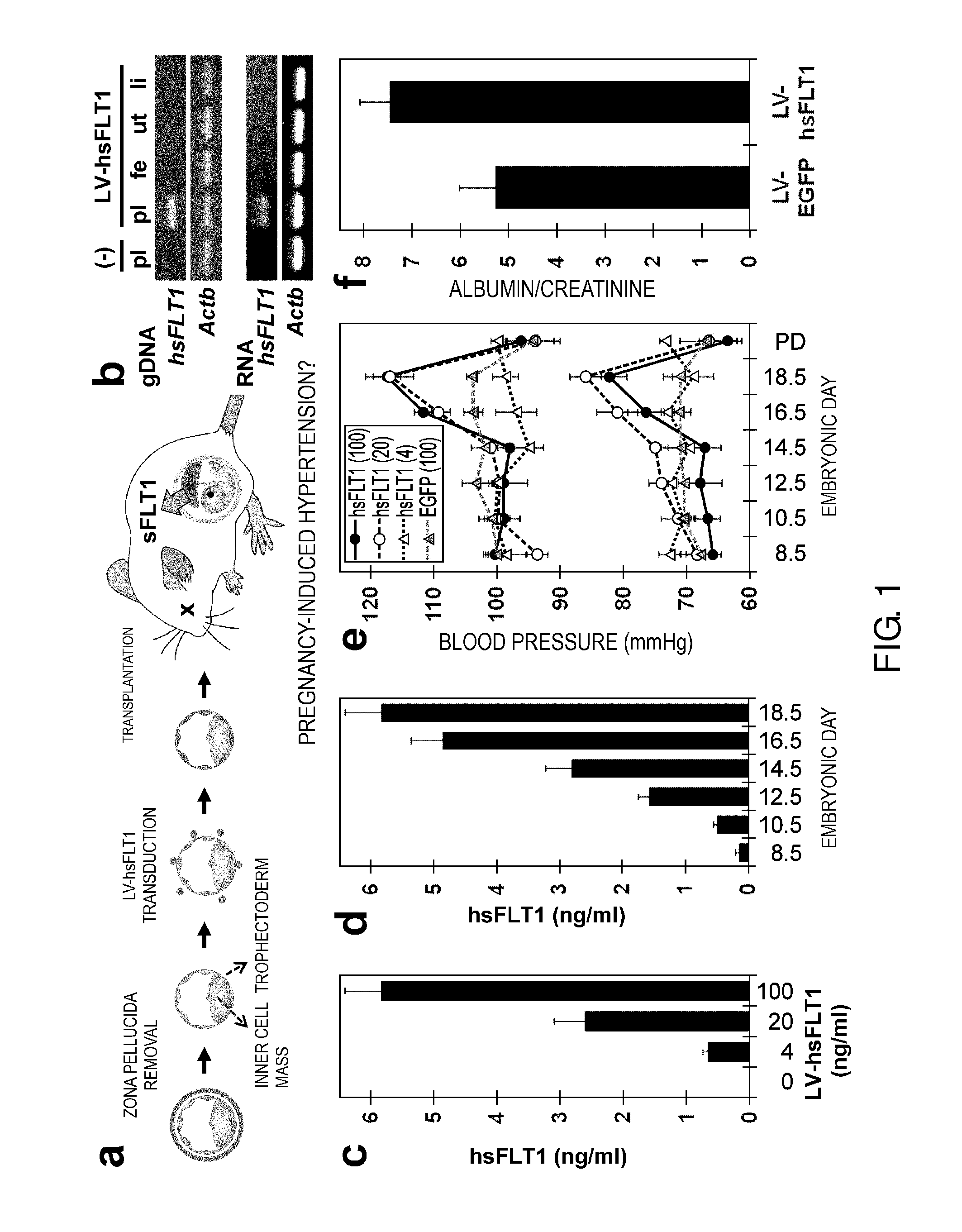
Figure 1 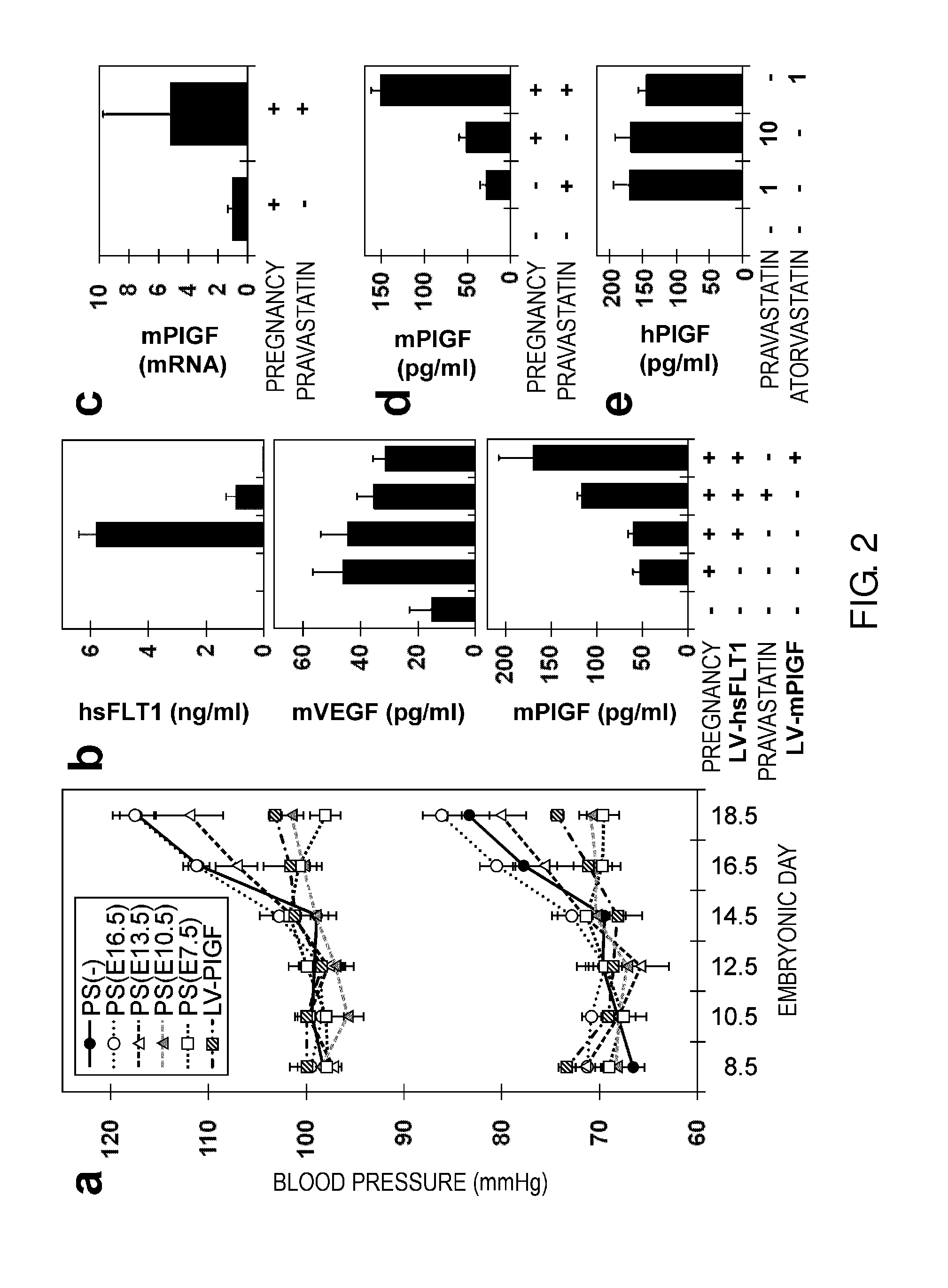
Figure 2 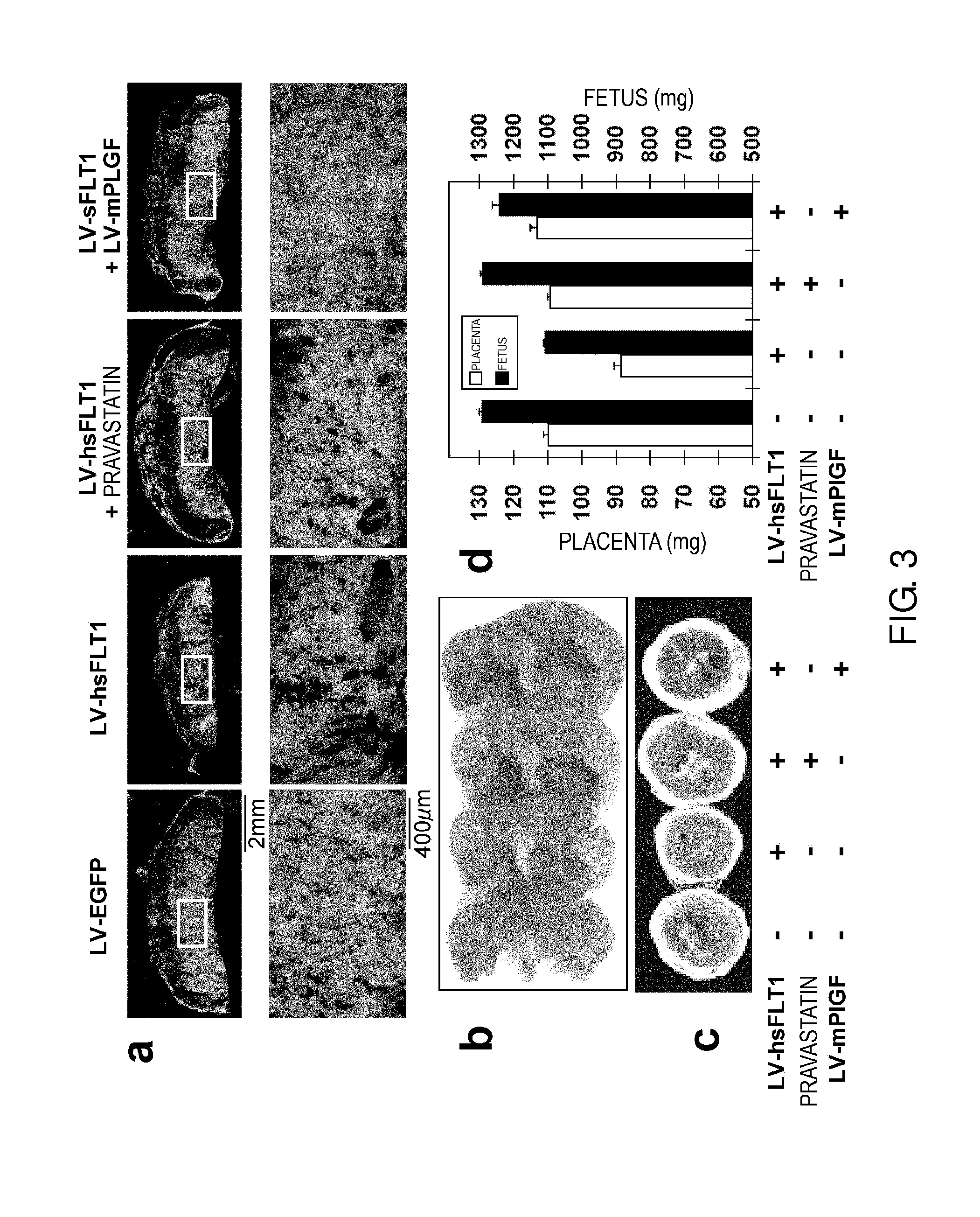
Figure 3
Abstract
Description
TECHNICAL FIELD
[0001] The present invention relates to model animals for diseases such as pregnancy-induced hypertension syndrome that shows placenta-specific expression of sFLT1, and methods for producing the model animals. Furthermore, the present invention relates to methods of screening for candidate compounds as therapeutic agents for diseases such as pregnancy-induced hypertension syndrome and pharmaceutical compositions for treating diseases such as pregnancy-induced hypertension syndrome.BACKGROUND ART
[0002] Pregnancy-induced hypertension syndrome arises from placental insufficiency, and is observed in approximately 5 to 7% of pregnant women (Lancet. 2006 Apr. 1; 367(9516): 1066-74, WHO analysis of causes of maternal death: a systematic review (Non-patent Document 1)). Pregnancy-induced hypertension syndrome is a major cause of maternal and infant morbidity and mortality, and the only established therapy is to terminate pregnancy and remove the placenta. Therefore, generating ...
Examples
examples
[0146]Herein below, the present invention will be specifically described further using the Examples, but the technical scope of the present invention is not to be construed as being limited thereto.
1. Method
Primers and PCR
[0147]The human sFLT1 (hsFLT1) cDNA was amplified by RT-PCR from HUVECs (Kurabo) with primers 5′-aaggatccgccgccatggtcagctactgggac-3′ (SEQ ID NO: 7) and 5′-ttctcgagttaatgttttacattactttgtgtg-3′ (SEQ ID NO: 8). The mouse PIGF (mPIGF) cDNA was amplified by RT-PCR from E13.5 placenta with primers 5′-aagaattcgccaccatgctggtcatgaagctgttc-3′ (SEQ ID NO: 9) and 5′-ttctcgagtcacgggtggggttcctcag-3′ (SEQ ID NO: 10). In FIG. 1b, primers 5′-aagtgtgacgttgacatccg-3′ (SEQ ID NO: 11) and 5′-gatccacatctgctggaagg-3′ (SEQ ID NO: 12) were used for amplification of mActb, and primers 5′-ggctgagcataactaaatctgcc-3′ (SEQ ID NO: 13) and 5′-ggaatgacgagctcccttccttca-3′ (SEQ ID NO: 14) were used for amplification of hsFLT1. In FIG. 2c, primers 5′-catccgtaaagacctctatgccaac-3′ (SEQ ID NO: 15) and 5...