
Method for determining a pitch of a camera installed in a vehicle and method for controling a light emission of at least one headlight of a vehicle.
a technology for determining the pitch of a camera and a vehicle, which is applied in the direction of instruments, television systems, image enhancement, etc., can solve the problem of large error in distance estimation, and achieve the effect of reducing the required data processing capacity, reducing the cost of resource expenditure, and efficiently generating
Patent Information
- Authority / Receiving Office
- US · United States
- Patent Type
- Applications(United States)
- Current Assignee / Owner
- Publication Date
- 2014-08-07
- Estimated Expiration
- Not applicable · inactive patent
Smart Images
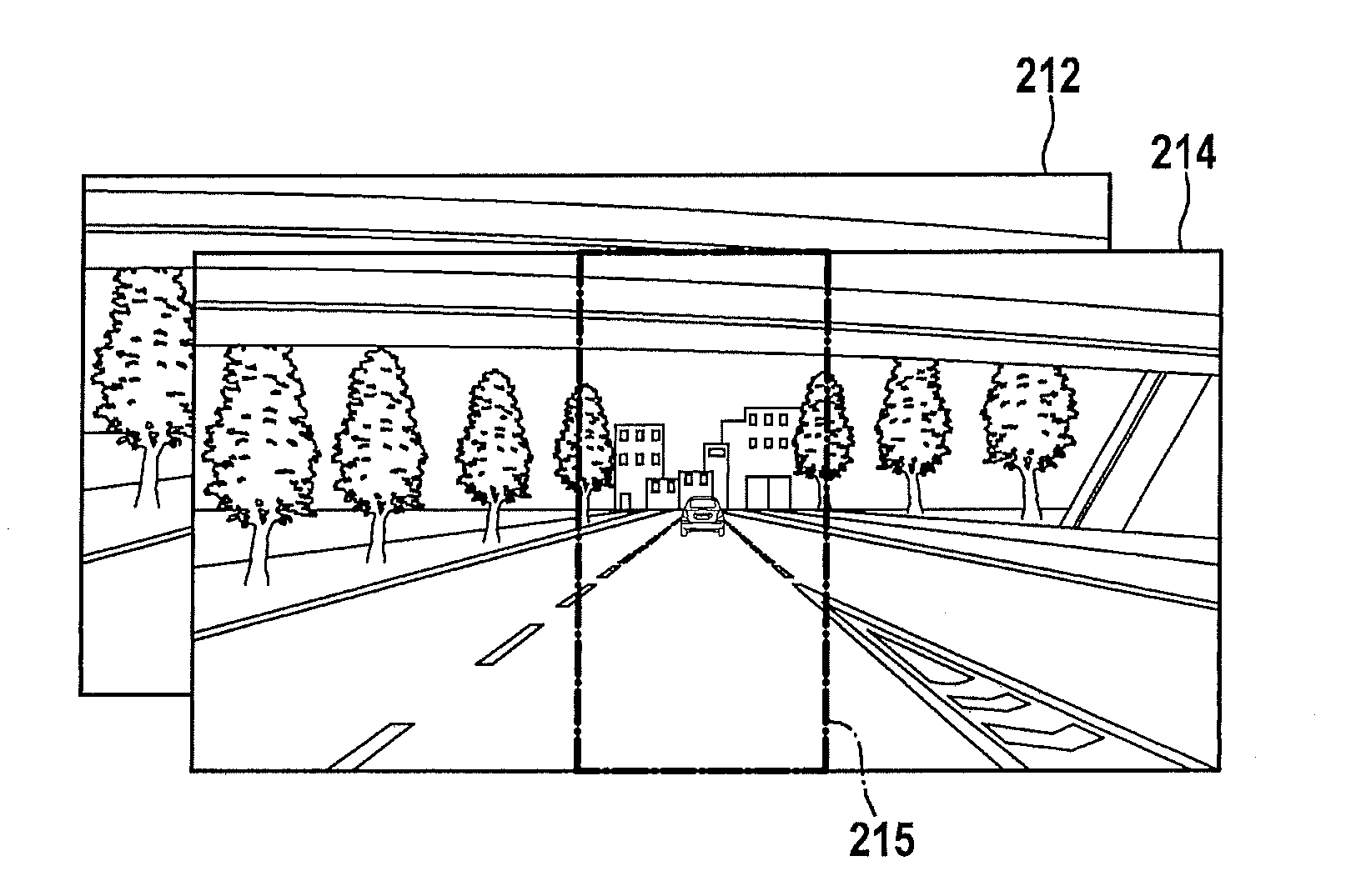
Figure 1 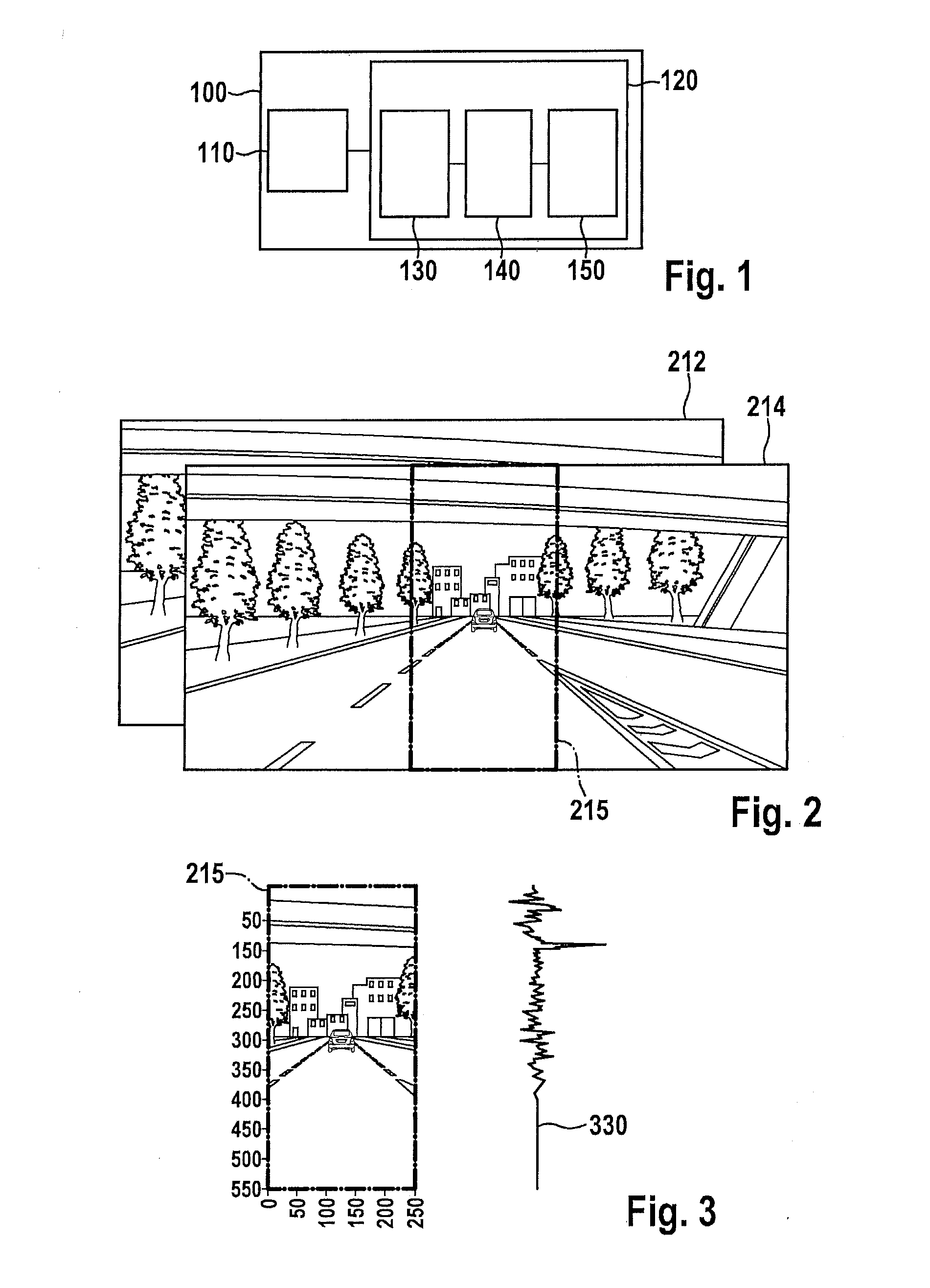
Figure 2 
Figure 3
Abstract
Description
BACKGROUND OF THE INVENTION
[0001] 1. Field of the Invention
[0002] The present invention relates to a method for determining a pitch of a camera installed in a vehicle, to a method for controlling a light emission of at least one headlight of the vehicle, to a device which is designed to carry out the steps of such a method, and to a computer program product having program code which is stored on a machine-readable carrier, for carrying out such a method when the program is executed on a device.
[0003] 2. Description of the Related Art
[0004] One of the most important safety functions which is available in a modern video-based driver assistance system is the tracking and position estimation of the preceding vehicles or obstructions in the travel direction, in order to initiate automatic full braking of the vehicle in the case of dangerously close or shrinking distances. The precision of the tracking and the distance to the vehicle or obstruction are primarily dependent on the egomotion, i....
Examples
Embodiment Construction
[0031]Identical or similar elements may be provided in the figures with identical or similar reference numerals, a repeated description being omitted. It is clear to those skilled in the art that these features may also be considered individually or may be combined into further combinations which are not explicitly described here. Furthermore, the present invention is possibly explained in the following description with the use of different amounts and dimensions, the present invention being understood to not be restricted to these amounts and dimensions. Furthermore, method steps according to the present invention may be executed repeatedly and in a sequence other than that described. If an exemplary embodiment includes an “and / or” link between a first feature / step and a second feature / step, this may be read to mean that the exemplary embodiment has according to one specific embodiment both the first feature / the first step and also the second feature / the second step and has accordi...