

Quality of experience determination for multi-party VOIP conference calls that account for focus degradation effects
a conference call and experience determination technology, applied in the field of conference calls, can solve the problems of conventional approaches that fail to address differences in degradation factors between multiple connections, conventional approaches that fail to take into account negative effects of focus, etc., and achieve the effect of improving the quality of experience and facilitating the exchange of signals
Patent Information
- Authority / Receiving Office
- US · United States
- Current Assignee / Owner
- Publication Date
- 2015-06-04
- Estimated Expiration
- Not applicable · inactive patent
Smart Images
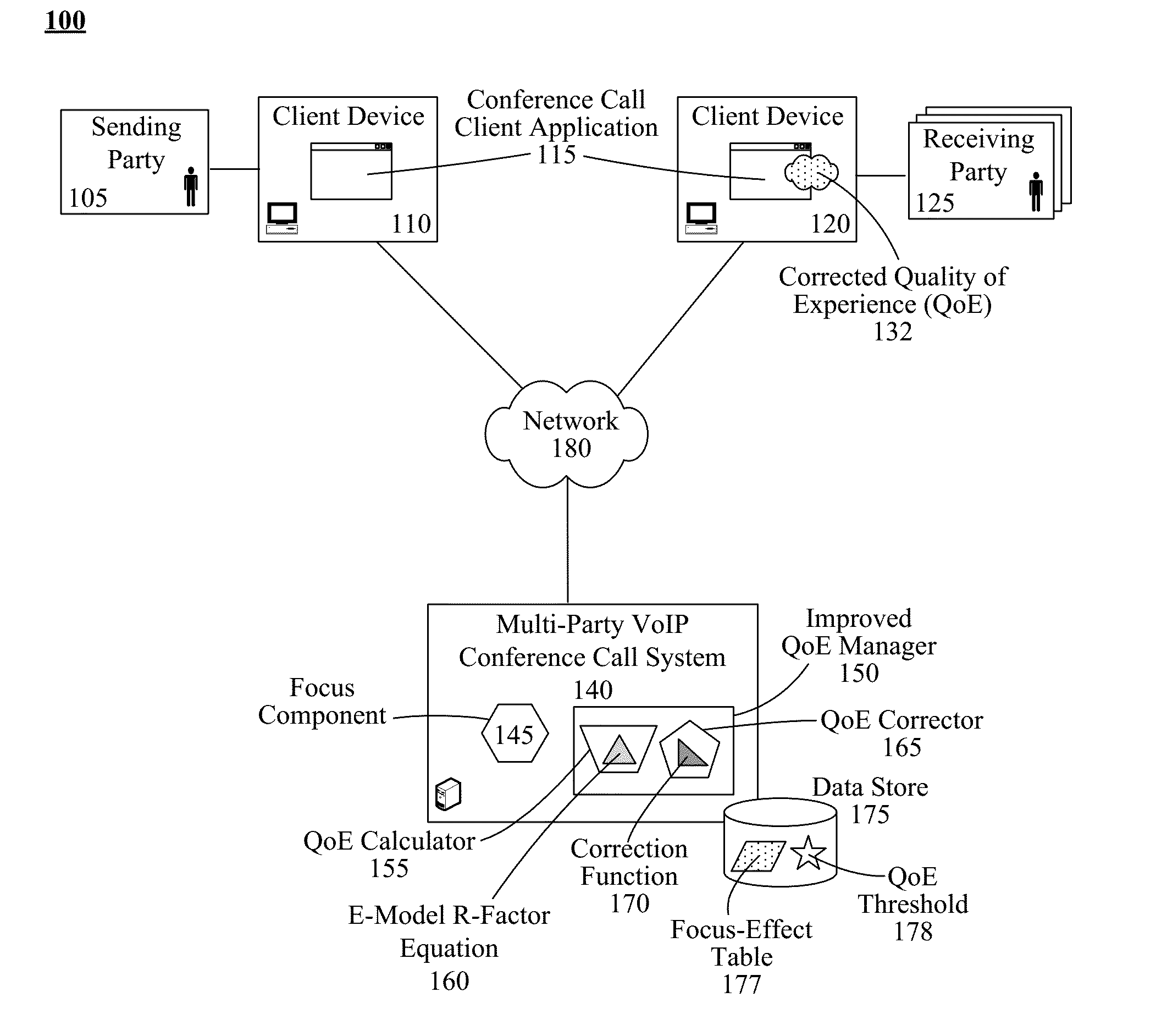
Figure 1 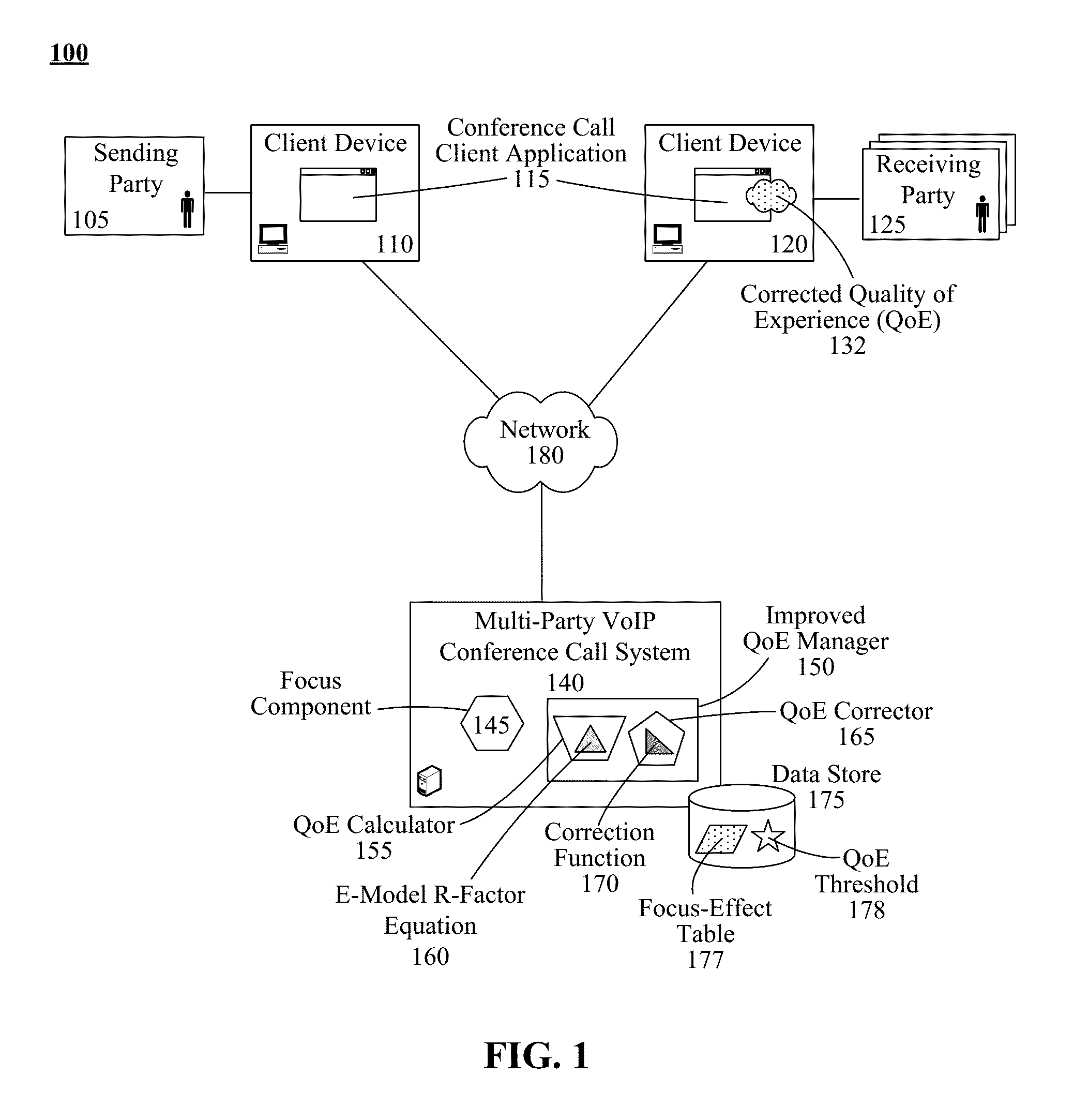
Figure 2 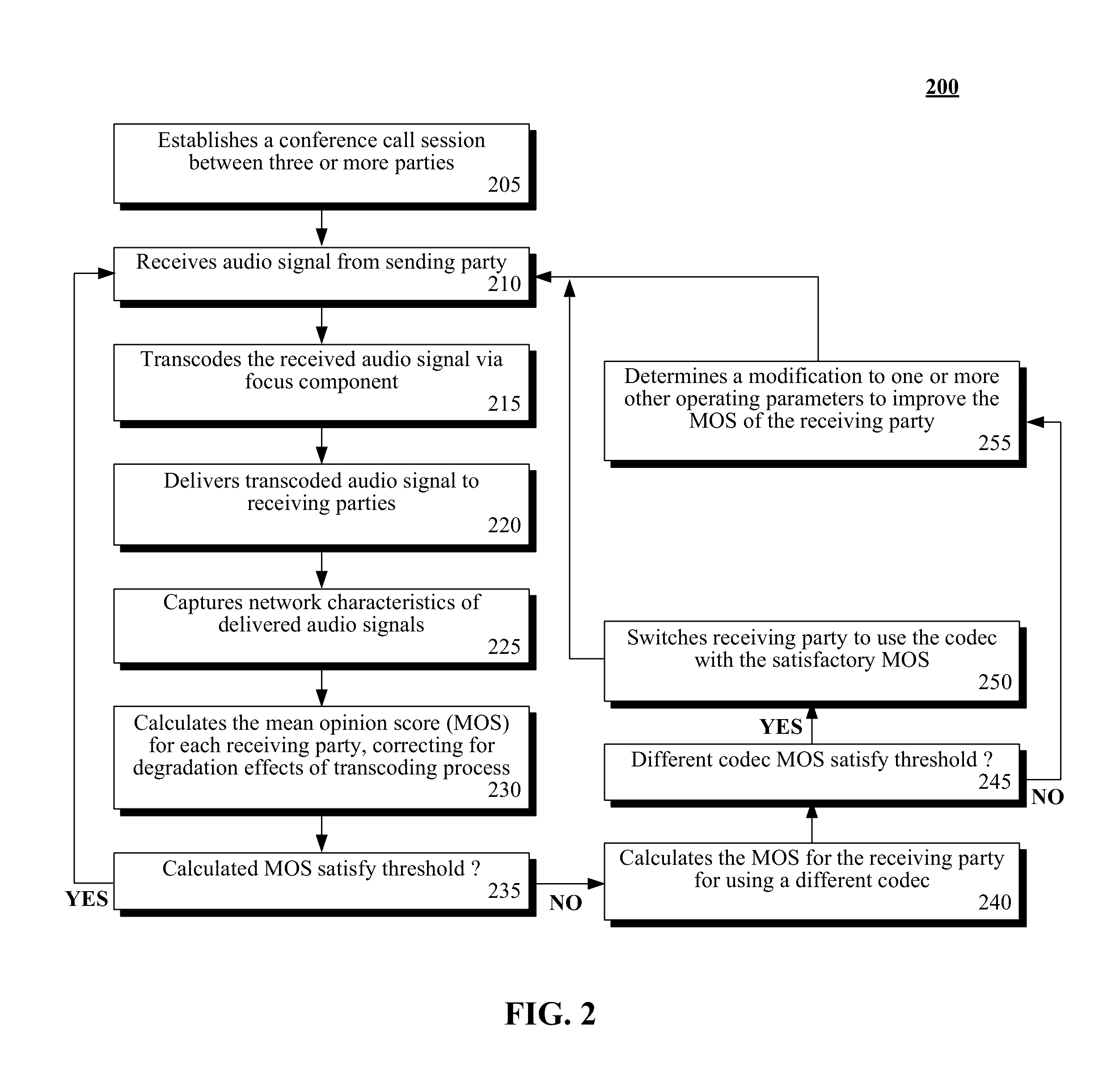
Figure 3
Abstract
Description
CROSS-REFERENCE TO RELATED APPLICATIONS
[0001] This application is a continuation of U.S. patent application Ser. No. 14 / 096,153, filed Dec. 4, 2013 (pending), which is incorporated herein in its entirety.BACKGROUND
[0002] The present invention relates to the field of conference calls and, more particularly, to the quality of experience (QoE) determination for multi-party VoIP conference calls that account for focus degradation effects.
[0003] In recent years, the use of Voice over Internet Protocol (VoIP) for voice communications has proliferated in both the private and corporate sectors. The success achieved by basic two-party VoIP communication, in terms of reliability and cost-savings, has encouraged multi-party (i.e., three or more party) VoIP conferencing products like SKYPE. Maintaining a good quality of experience (QoE) for the participants of the conference call is a priority and a challenge for multi-party VoIP conference call systems, as the QoE is typically directly related to...
Examples
Embodiment Construction
[0012]The present invention discloses a solution for providing a mean opinion score (MOS) for a multi-party conference call that accounts for the degradation effects introduced by the focus component of a multi-party VoIP conference calling system. For each party of the conference call receiving an audio signal, an improved quality of experience (QoE) manager can use the MOS corresponding to an R-value calculated using the E-Model R-Factor equation and a set of predetermined focus-effect coefficients as input to a correction function that produces a corrected MOS that represents the QoE perceived by the receiving party.
[0013]As will be appreciated by one skilled in the art, aspects of the present invention may be embodied as a system, method or computer program product. Accordingly, aspects of the present invention may take the form of an entirely hardware embodiment, an entirely software embodiment (including firmware, resident software, micro-code, etc.) or an embodiment combining...