
Method for producing a structural component
a technology of structural components and components, applied in the direction of basic electric elements, electrical equipment, connections, etc., can solve the problems of significant complexity of production, long duration, and relatively complex methods, and achieve the effect of simple connection, simple cutting of hollow profiles, and facilitation of the process of pulling cables
Patent Information
- Authority / Receiving Office
- US · United States
- Patent Type
- Applications(United States)
- Current Assignee / Owner
- Publication Date
- 2015-07-09
- Estimated Expiration
- Not applicable · inactive patent
Smart Images
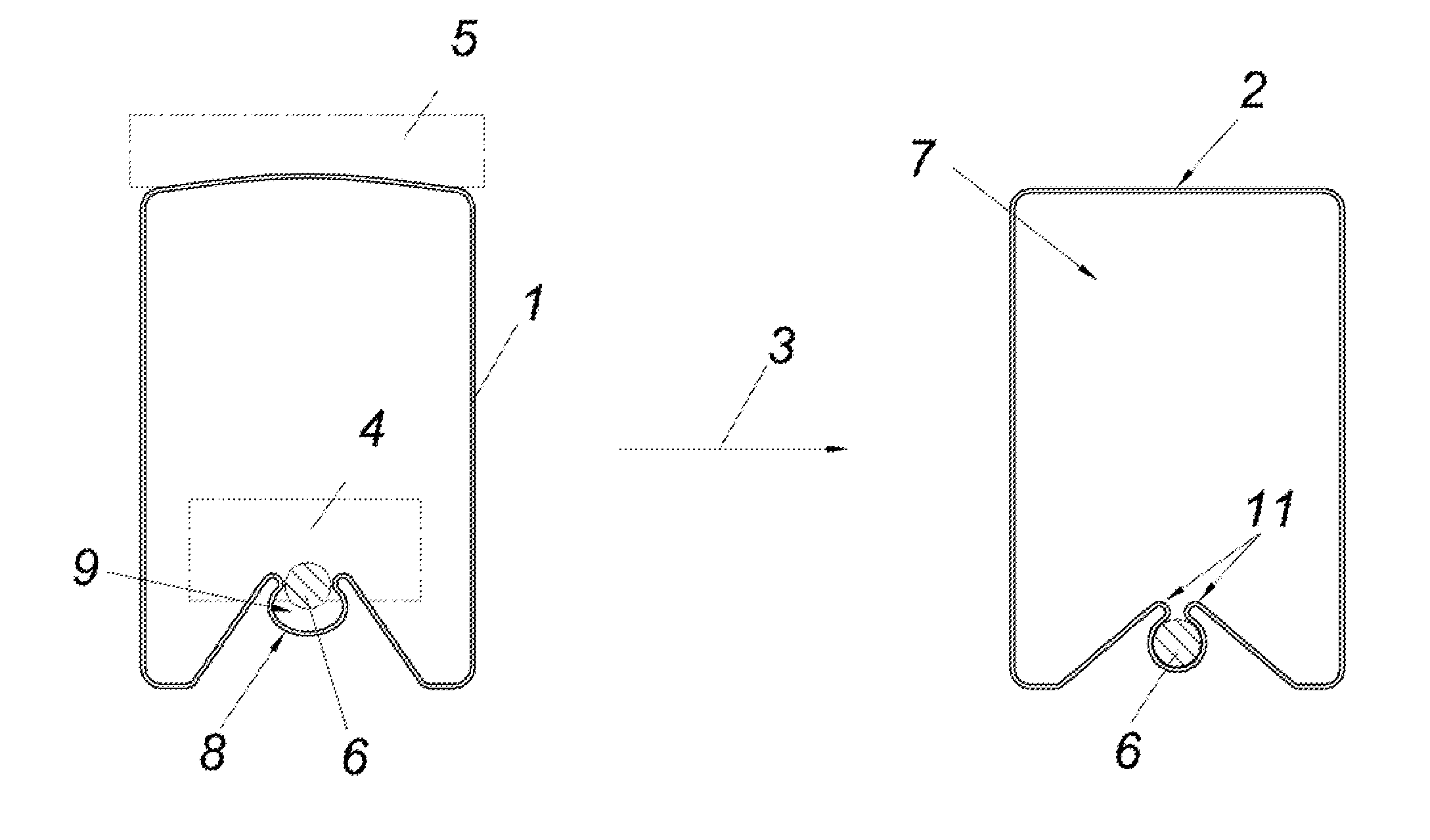
Figure 1 
Figure 2 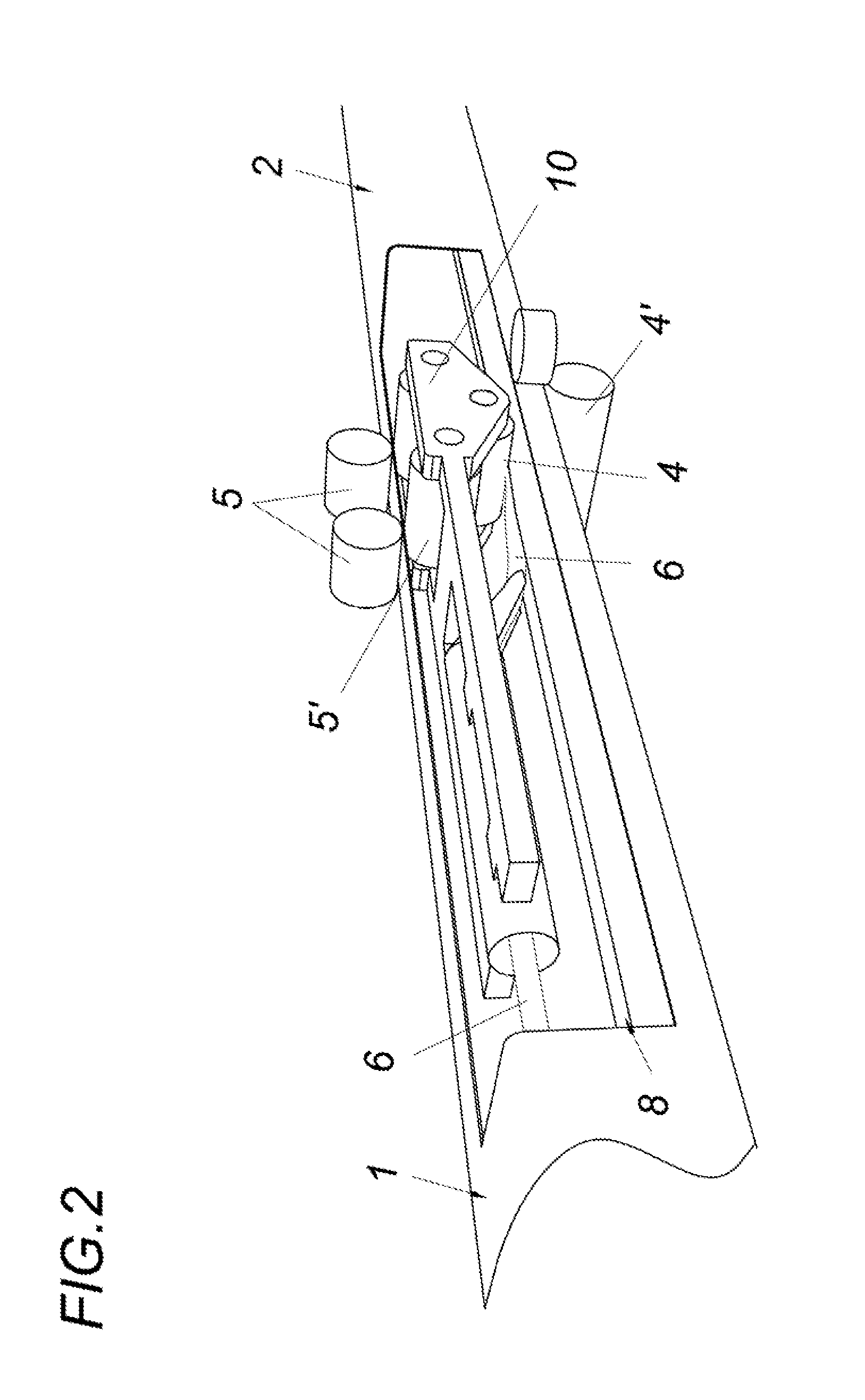
Figure 3
Abstract
Description
FIELD OF THE INVENTION
[0001] The invention relates to a method for producing a structural component, in particular for a vehicle, in which a piece Of sheet metal is shaped into an open or closed, in particular multi-chambered, hollow profile and is provided with at least one electrical cable, which the piece of sheet metal holds at least in some areas.BACKGROUND OF THE INVENTION
[0002] In order to provide a structural component of a vehicle with a cable, it is known to pull it into the cavity of the completely profiled hollow profile. This approach disadvantageously requires an extended duration of the method and also a significant complexity of the production.
[0003] There are a wide variety of known shaping methods for producing a hollow profile from a piece of sheet metal. Among others, is a linear flow splitting, in which hollow profiles with multiple chambers are produced. Most often, at least one of these chambers is provided for holding the cable.
[0004] There are also methods known...
Examples
Embodiment Construction
[0032]FIG. 1 shows an end view of an already partially shaped piece of sheet metal which is finally shaped into a hollow profile 2 with the aid of a roller profiling 3. In order to carry out this continuous bending process, rollers 4, 5 exert a load on the partially shaped piece of sheet metal 1 in order to bring it into the desired final cross-section in accordance with the hollow profile 2. The hollow profile 2 also has a cable 6, which extends in the cavity 7 of the hollow profile or is held by the hollow profile 2. In order to avoid a subsequent pulling of a cable 6 into the completed hollow profile 2, the piece of sheet metal 1 is already provided with the cable 6 before its final shaping—i.e. between two shaping steps, the partial shaping and the final shaping—as shown in FIG. 1. In a shaping step, a guide recess 8 has already been formed into the piece of sheet metal 1, extending along its longitudinal side in order to provide the cable 6 with a chamber 9 in the cavity 7 of t...