
A counterweight arm mechanism
Patent Information
- Authority / Receiving Office
- US · United States
- Current Assignee / Owner
- Publication Date
- 2015-11-05
- Estimated Expiration
- Not applicable · inactive patent
Smart Images
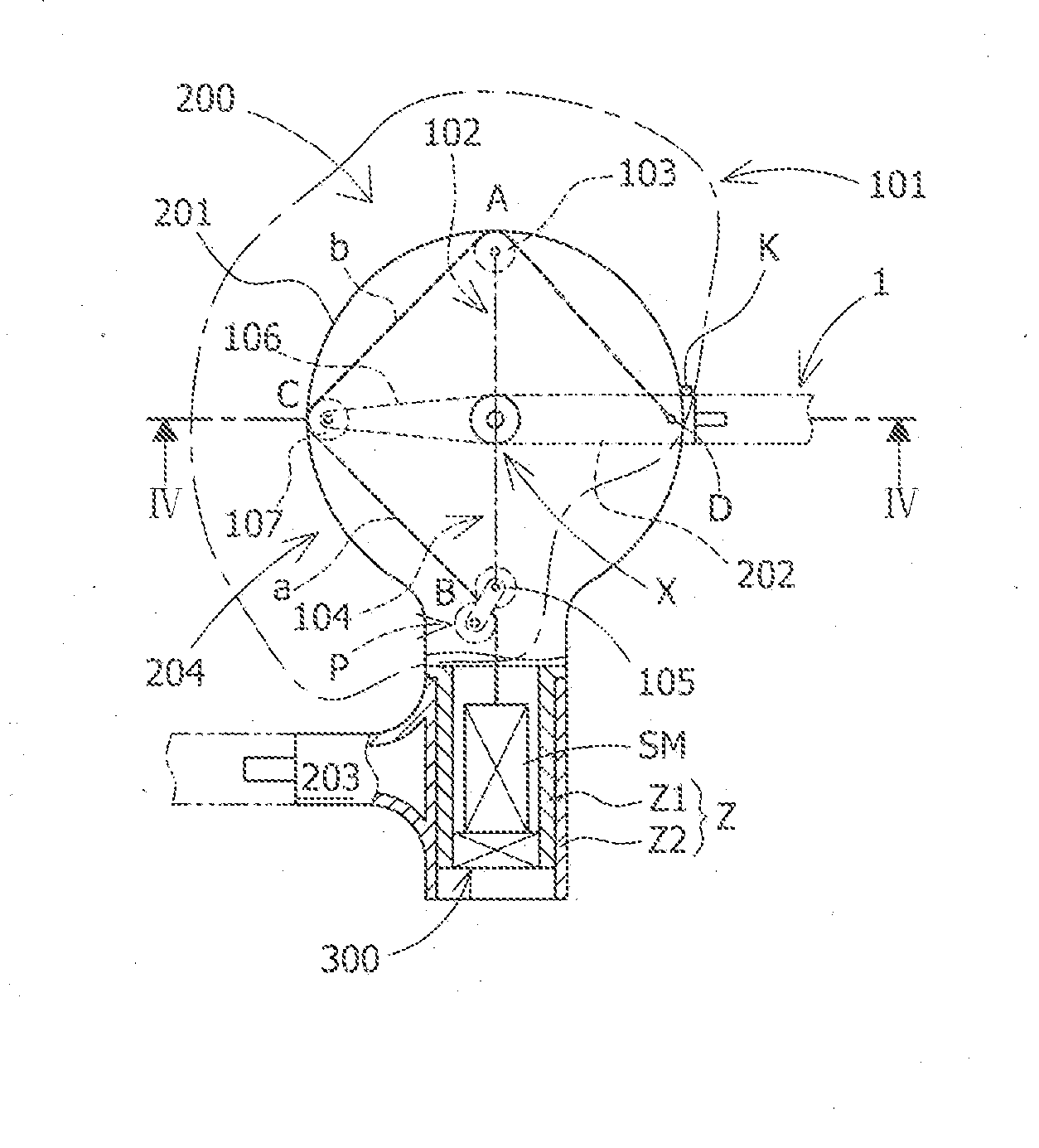
Figure 1 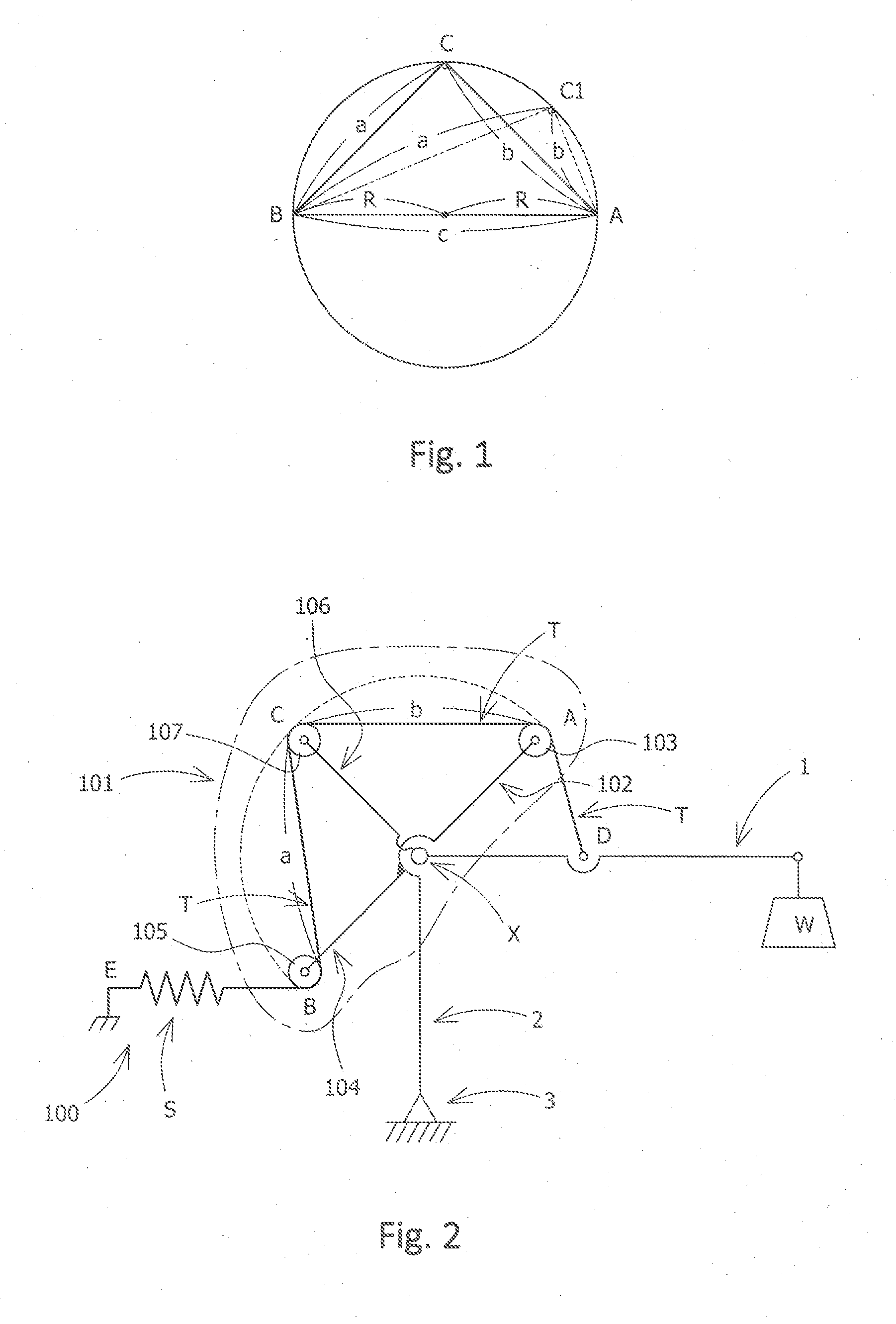
Figure 2 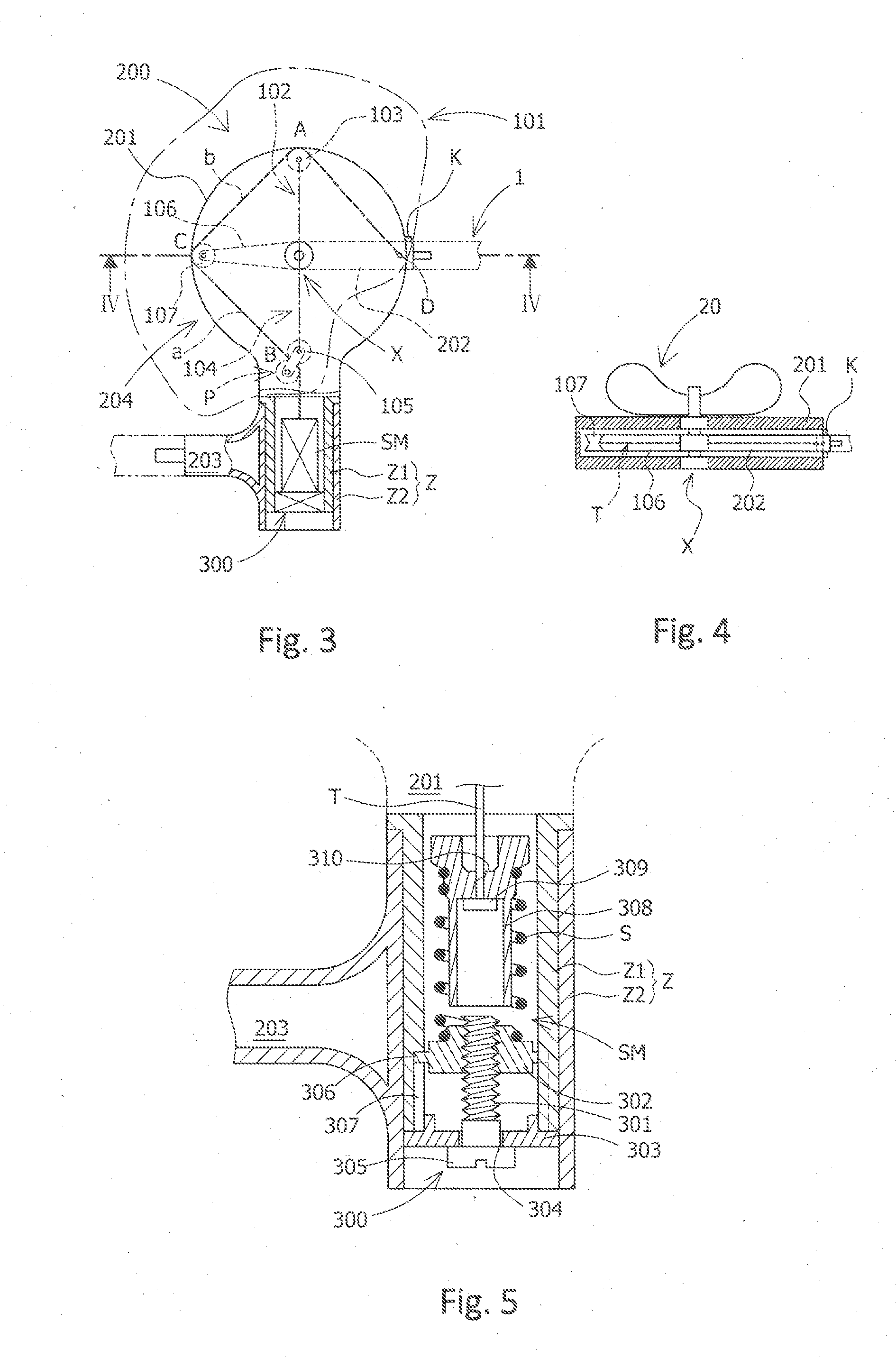
Figure 3
Abstract
Description
BACKGROUND OF INVENTION
[0001] 1. Field of the Invention
[0002] The present invention relates to a counterweight arm mechanism, particularly to a passive counterweight arm mechanism that uses an extension spring to provide tension, and more particularly to a counterweight arm mechanism that can adjust the stretched length of the extension spring to adjust the tension of the tension system. Said tension system refers to a dragline tension system comprising an extension spring and a dragline.
[0003] 2. Description of Related Art
[0004] Counterweight arms are commonly seen mechanical devices with wide applications in, for example, counterweight arm suspenders, medical shadowless lamps, robot arms, counterweight arm lamps etc, wherein, counterweight arm lamps are very common equipment in living and working environments.
[0005] A counterweight arm lamp is a lamp with a foldable and extendable lamp arm for diversified lighting needs.
[0006] Generally, a counterweight arm lamp has a structure similar ...
Examples
Embodiment Construction
[0070]With reference to the accompanied drawings, detailed descriptions of the present invention are provided below including structural features, technical solutions, working principles and application examples.
[0071]FIG. 3 is an illustration of the principle of the present invention, wherein, a, b, and c are respectively sides opposite ∠A, ∠B, ∠C of ΔABC. According to the law of sines, a / sin A=b / sin B=c / sin C=2R, where, R is radium of the circumscribed circle of ΔABC.
[0072]When ∠C is a right angle, ΔABC is a right angle triangle, the side opposite ∠C is hypotenuse c, the length of hypotenuse c is 2R, and a and b are catheti.
[0073]When vertex C of ∠C moves along the arc of the circumscribed circle with radium being R, for example, to the position marked by C1, ΔABC will remain as a right angle triangle.
[0074]According to the law of sines, sum of catheti of a right angle triangle ΔABC a+b=2R(sin A+sin B)=2R(sin A+cos A).
[0075]Moreover, according to the feature that any linear combin...