
Integrated Dehumidification Method and System Combining Boundary Layer Control with Mainstream Disturbance Enhanced Heat Exchange
a dehumidification method and integrated technology, applied in the field of dehumidification and drying, can solve the problems of change in the features of process materials, failure of the corresponding process system, corrosion and malfunction of instruments and parts, etc., to facilitate the flow of fluid, prevent secondary reabsorption of condensate, and enhance the efficiency of air and fluid separation
Patent Information
- Authority / Receiving Office
- US · United States
- Patent Type
- Applications(United States)
- Current Assignee / Owner
- Publication Date
- 2017-03-09
- Estimated Expiration
- Not applicable · inactive patent
Smart Images
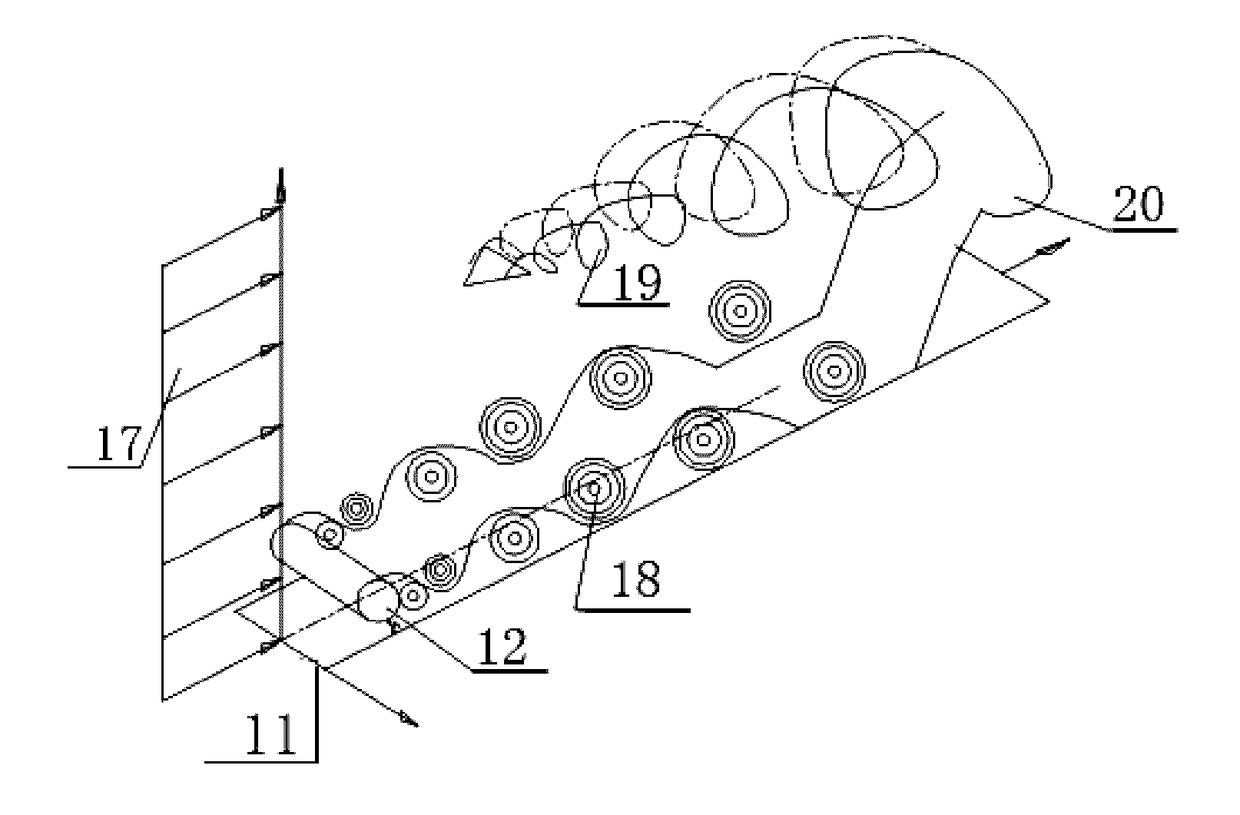
Figure 1 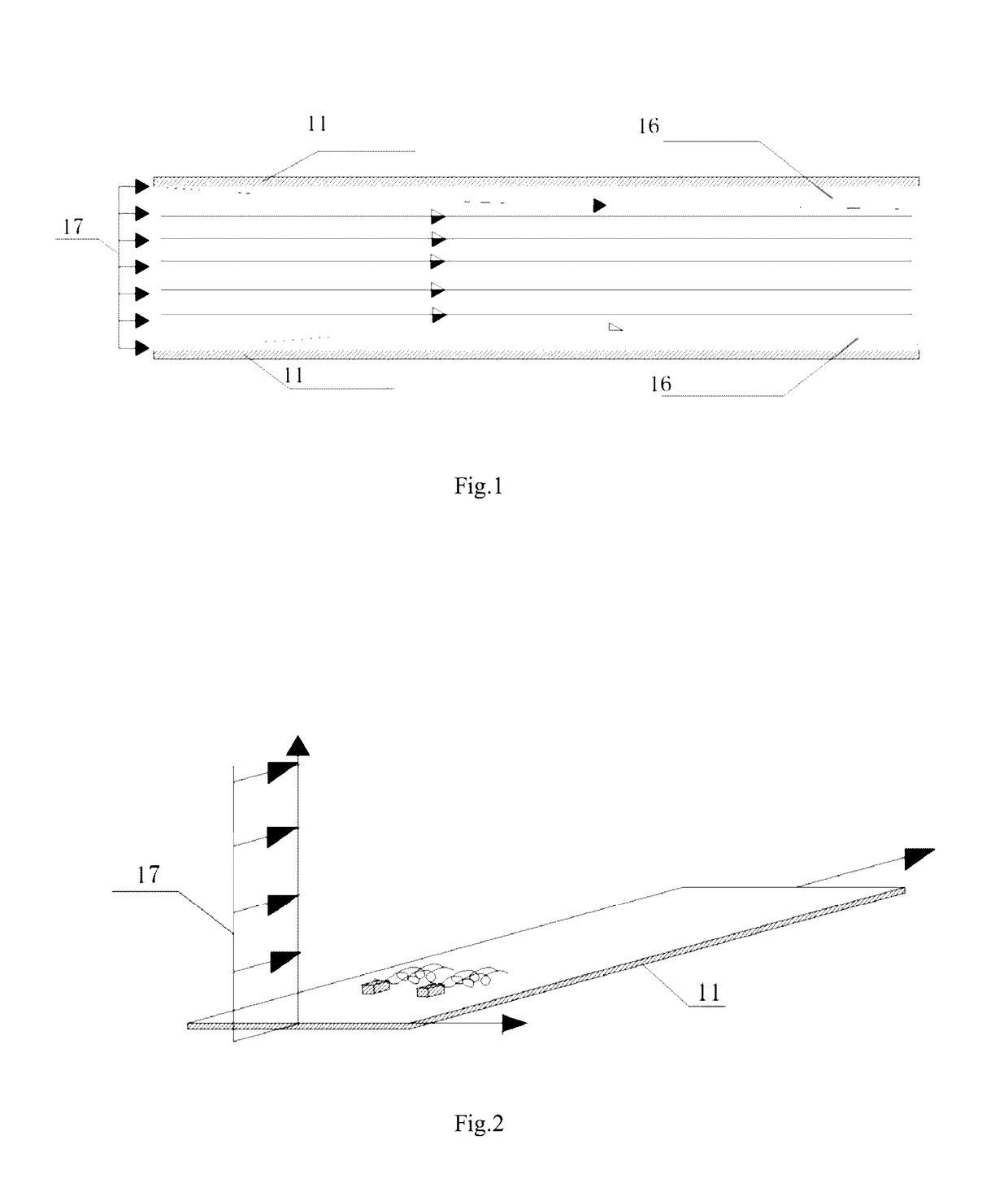
Figure 2 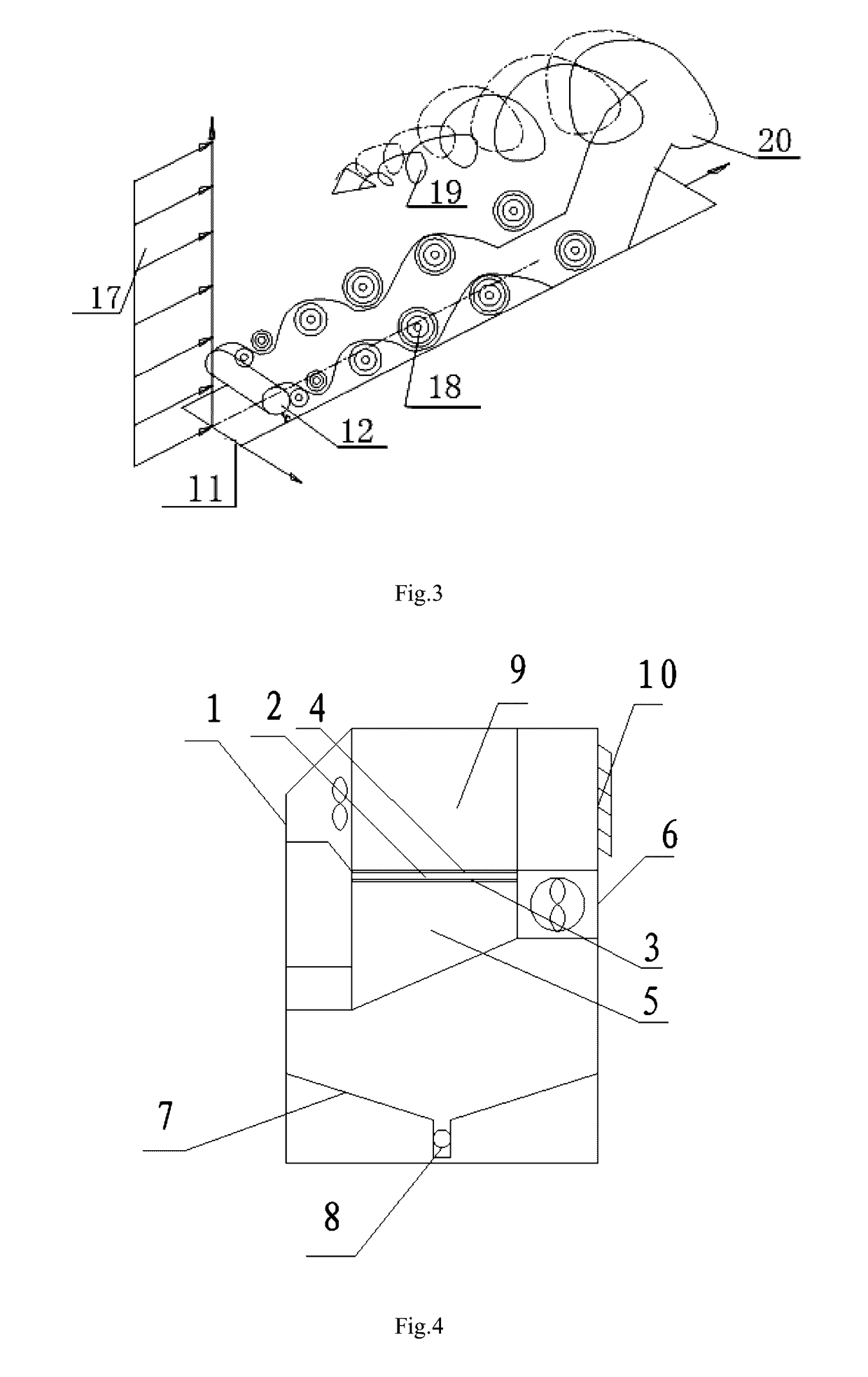
Figure 3
Abstract
Description
CROSS REFERENCE TO RELATED PATENT APPLICATION
[0001] This application is a continuation in part application (CIP) of the U.S. Ser. No. 14 / 112,758 filed Oct. 18, 2013, which is a national stage of PCT / CN2012 / 070727 filed Jan. 28, 2012 claiming the priority of CN201110197093.8 filed Jul. 14, 2011.FIELD OF THE INVENTION
[0002] This invention involves dehumidification and drying, especially a heat transfer enhancement method / system with cold & heat exchange, boundary layer control and mainstream disturbance.BACKGROUND OF THE INVENTION
[0003] Quick dehumidification of humid air or other process gases is an important issue associated with daily life and with numerous industrial applications.
[0004] Due to the increased public demands for the quality of air, food and medicines humidity control in the production and living environments has become increasingly important. In the industrial field, the existence of humid air and condensate may directly result in corrosion and malfunction of instruments...
Examples
embodiment 1
[0049]The integrated dehumidification system combines boundary layer control with mainstream disturbance enhanced heat exchange is shown in FIG. 4, FIG. 5, FIG. 6 and FIG. 8.
[0050]The system comprises an insulating case 1; a semiconductor thermoelectric device 2 in the insulating case 1, consisting of a cold end 3 and a hot end 4; a first vane assembly on a refrigerating terminal 5 connected below to the cold end 3, an upstream side of the first vane assembly is connected with an air inlet; a catchment trough 7 arranged below the first vane assembly, a drain 8 provided below the catchment trough 7; a second vane assembly on a heating terminal 9 above the hot end 4; the first vane assembly comprising at least two vanes 11 arranged longitudinally, each vane of the first vane assembly is provided multiple boundary layer flow control devices 12 longitudinally arranged adjacent to the wall surfaces of the vane respectively, each vane is a heat conductive hollow pipe structure; the second...
embodiment 2
[0051]The integrated dehumidification system combines boundary layer control with mainstream disturbance enhanced heat exchange is shown in FIG. 4, FIG. 7, FIG. 8 and FIG. 9.
[0052]The system comprises an insulating case 1; a semiconductor thermoelectric device 2 in the insulating case 1, consisting of a cold end 3 and a hot end 4; a first vane assembly on a refrigerating terminal 5 connected below to the cold end 3, an upstream side of the first vane assembly is connected with an air inlet; a catchment trough 7 arranged below the first vane assembly, a drain 8 provided below the catchment trough 7; a second vane assembly on a heating terminal 9 above the hot end 4; the first vane assembly comprising at least two vanes 11 arranged longitudinally, each vane of the first vane assembly is provided multiple boundary layer flow control devices 12 longitudinally arranged adjacent to the wall surfaces of the vane respectively, each vane is a heat conductive hollow pipe structure; the second...
embodiment 3
[0053]Specific configurations are stated as follows relevant to different industrial applications of this invention:
[0054]Domestic dehumidification: Domestic dehumidification mainly involves the storage and quick drying of articles in rainy seasons (hanging articles on the heating terminal); furthermore, it is also highly suitable to provide high-quality air at home. With regard to the wet and cold regions in the Yangtze River basin, this invention can supply separate heating and dehumidification to enhance the users environment while ensuring low energy consumption. When compared with various conventional heating approaches, it will inevitably improve air treatment efficiency owing to its characteristics of separate heating and dehumidification.
[0055]Industrial dehumidification: In view of industrial dehumidification, efficient separation with aerosol has a promising prospect. Conventional dehumidification is normally achieved by means of inertia separation, intercepted separation ...