
Electrical cable for an appliance, appliance and method for producing an electrical cable
a technology for electrical cables and appliances, applied in the direction of cables, cable arrangements between relatively moving parts, insulation conductors/cables, etc., can solve the problems of short circuit between the conductors, the vacuum cleaner cannot receive electrical power, and the various insulation layers or sheathing layers of the cable can break, etc., to achieve the effect of reducing the mechanical stability of the cable, facilitating the extrusion of materials, and poor cable performan
Patent Information
- Authority / Receiving Office
- US · United States
- Patent Type
- Applications(United States)
- Current Assignee / Owner
- Publication Date
- 2018-08-23
Smart Images
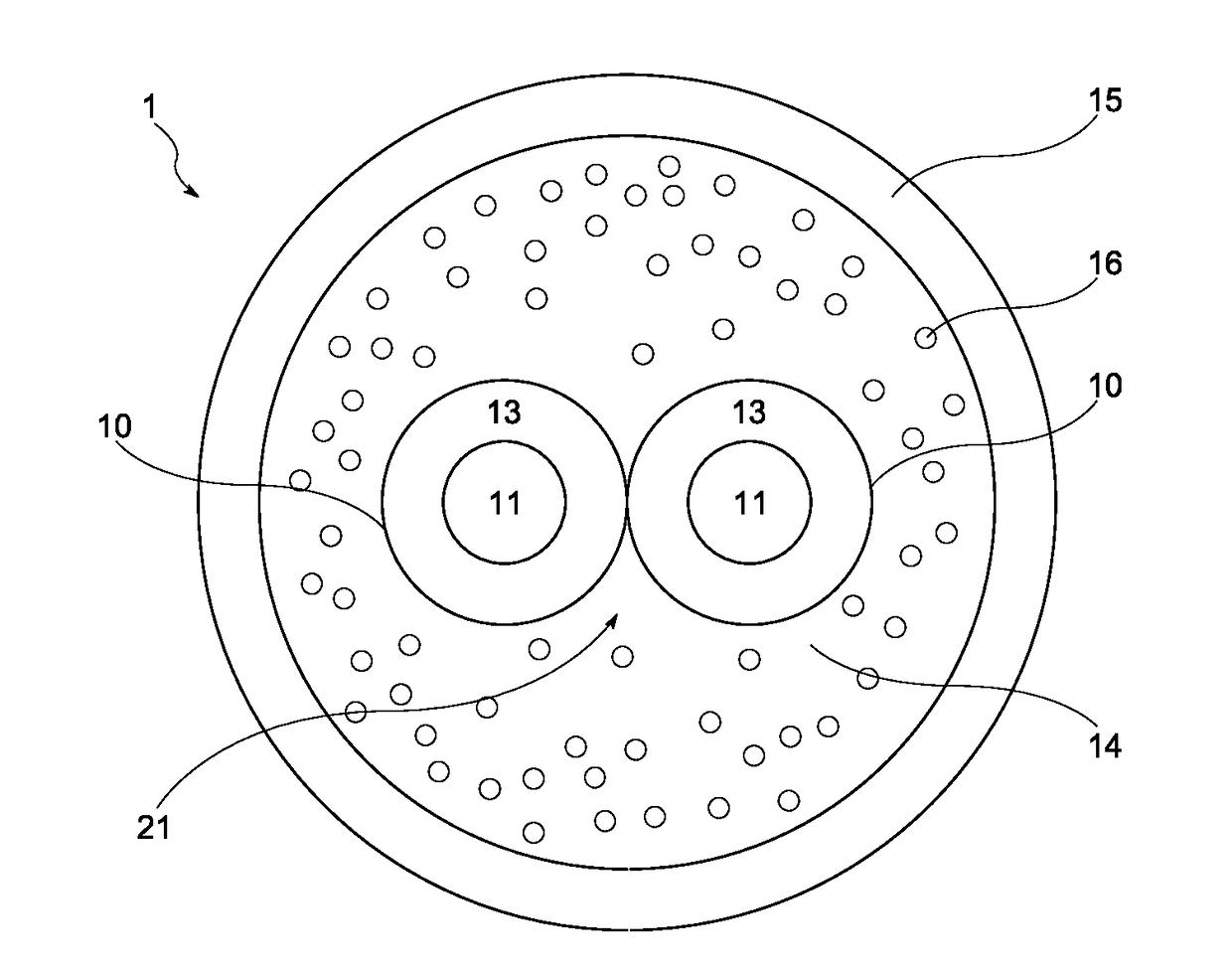
Figure 1 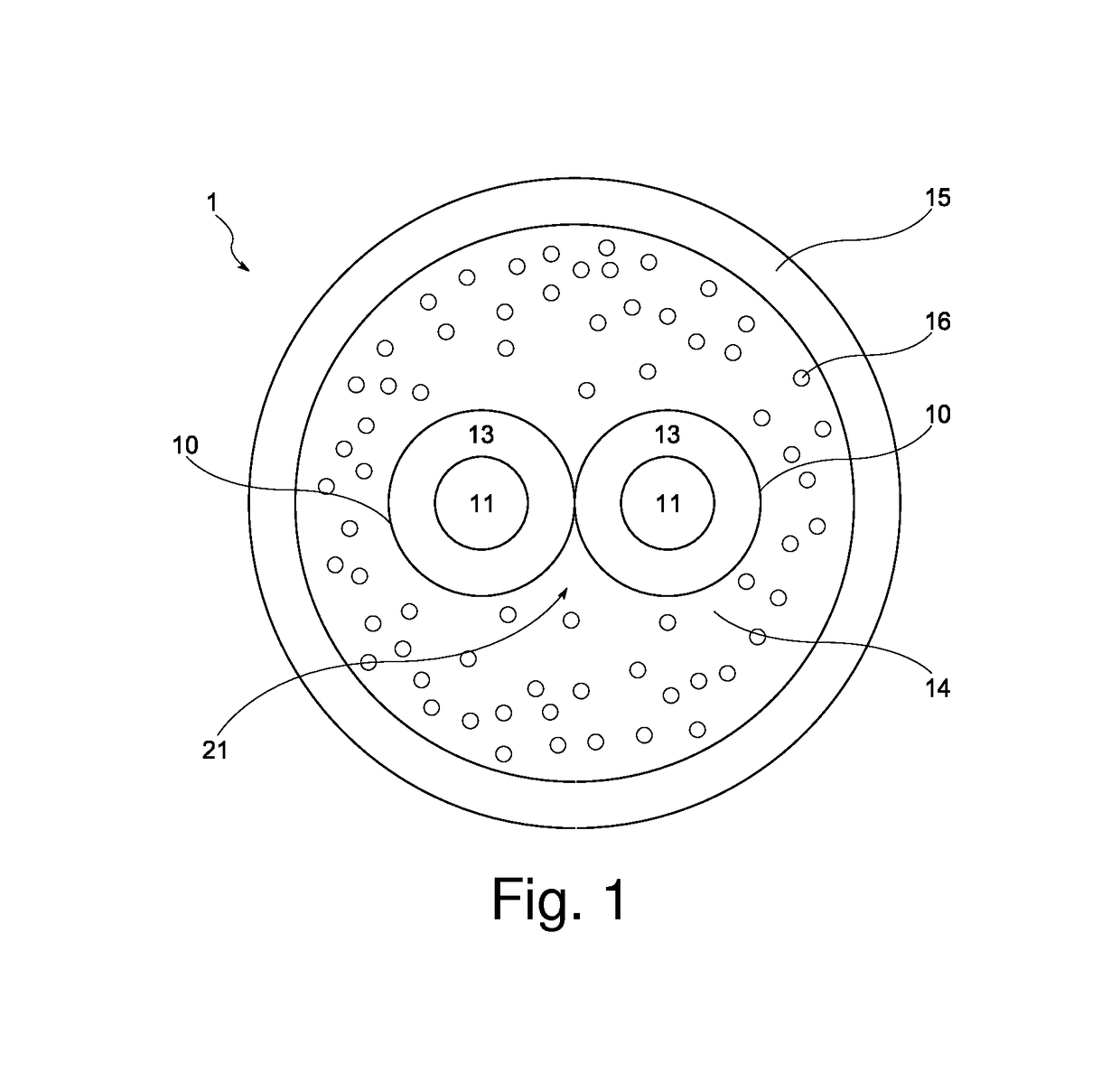
Figure 2 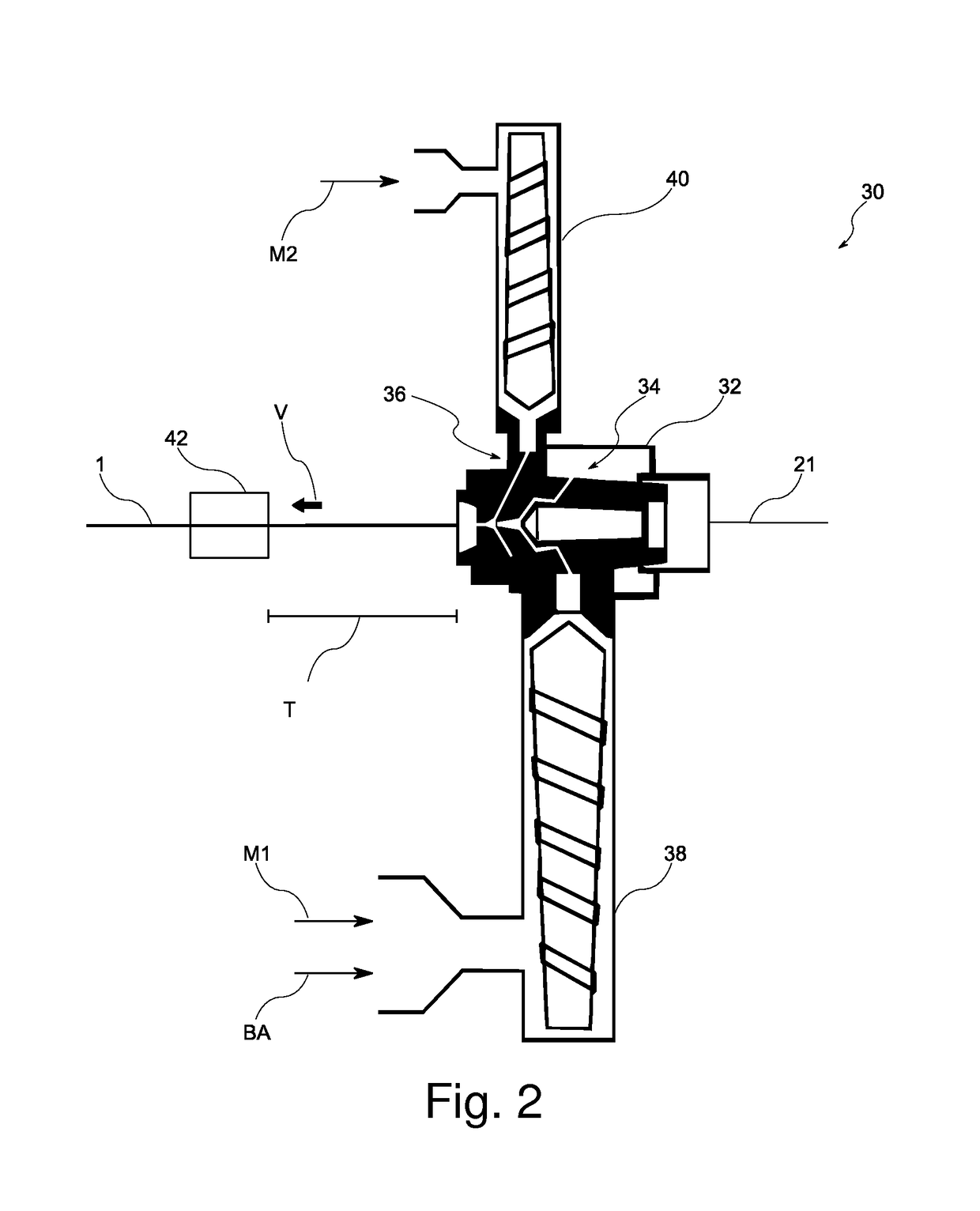
Figure 3
Abstract
Description
BACKGROUND OF THE INVENTION
[0001] The invention concerns an electrical cable for an appliance, such an appliance as well as a method for producing the electrical cable.
[0002] Such a cable is regularly used in various appliances, in particular for a vacuum cleaner, such as a floor vacuum cleaner, and in general for electrical appliances demanding a dynamic cable behavior. Such devices might have automatic or manual cable retrieving devices such as exemplarily described in US 2002 / 0008172 A1. Such a cable retrieving device often comprises a cable drum that allows the user of to store the cable inside the vacuum cleaner, thus avoiding to tangle.
[0003] Each storing or revival operation by the users stretches the electrical cable. This repeating tension can lead to various malfunctions in the cable, such as a breaking of the conductors inside the cable structure, which leads to the case where the vacuum cleaner does not receive electrical power and stops working. Also various insulation lay...
Examples
first example
[0062]A cable with a foamed inner sheath layer was manufactured with an extrusion velocity of V=120 m / min. The concentration of the active component was 0.25 wt. %. The elongation at break of the sheath was 250%, tensile strength at break was 14.5 MPa and the density of the overall sheathing was 1.27 g / cm3. The cell size was from the range 150 to 170 μm and the minimum skin thickness was 245 μm. The resultant cable surface had a smooth appearance without any defects.
second example
[0063]A cable with foamed inner sheath layer was manufactured with an extrusion velocity of V=120 m / min. The concentration of the active component was 0.15 wt. %. The elongation at break of the sheath was 249%, tensile strength at break was 14.7 MPa and the density of the overall sheathing was 1.26 g / cm3. The size of the cells in the inner sheath layer was in the range of 140 to 150 μm and the minimum thickness of the outer sheath layer, i.e. the skin was 228 μm. The resultant cable surface had a smooth appearance without any defects.
third example
[0064]A cable with foamed inner sheath layer was manufactured with an extrusion velocity of V=120 m / min. The concentration of the active component was 0.23 wt. %. The elongation at break of the sheath was 263%, tensile strength at break was 15.1 MPa and the density of the overall sheathing was 1.21 g / cm3. The size of the cells in the inner sheath layer was in the range of 120 to 200 μm and the minimum skin thickness was 228 μm. The resultant cable surface had a smooth appearance without any defects.