
Operational control method in machine tool
a technology of operation control and machine tool, applied in the direction of machine control, process control, program control, etc., can solve the problem that the workpiece cannot be reprocessed, and achieve the effect of improving processing efficiency, reducing labor and recovery time, and small effect on processing
Patent Information
- Authority / Receiving Office
- US · United States
- Patent Type
- Applications(United States)
- Current Assignee / Owner
- Publication Date
- 2018-08-30
Smart Images
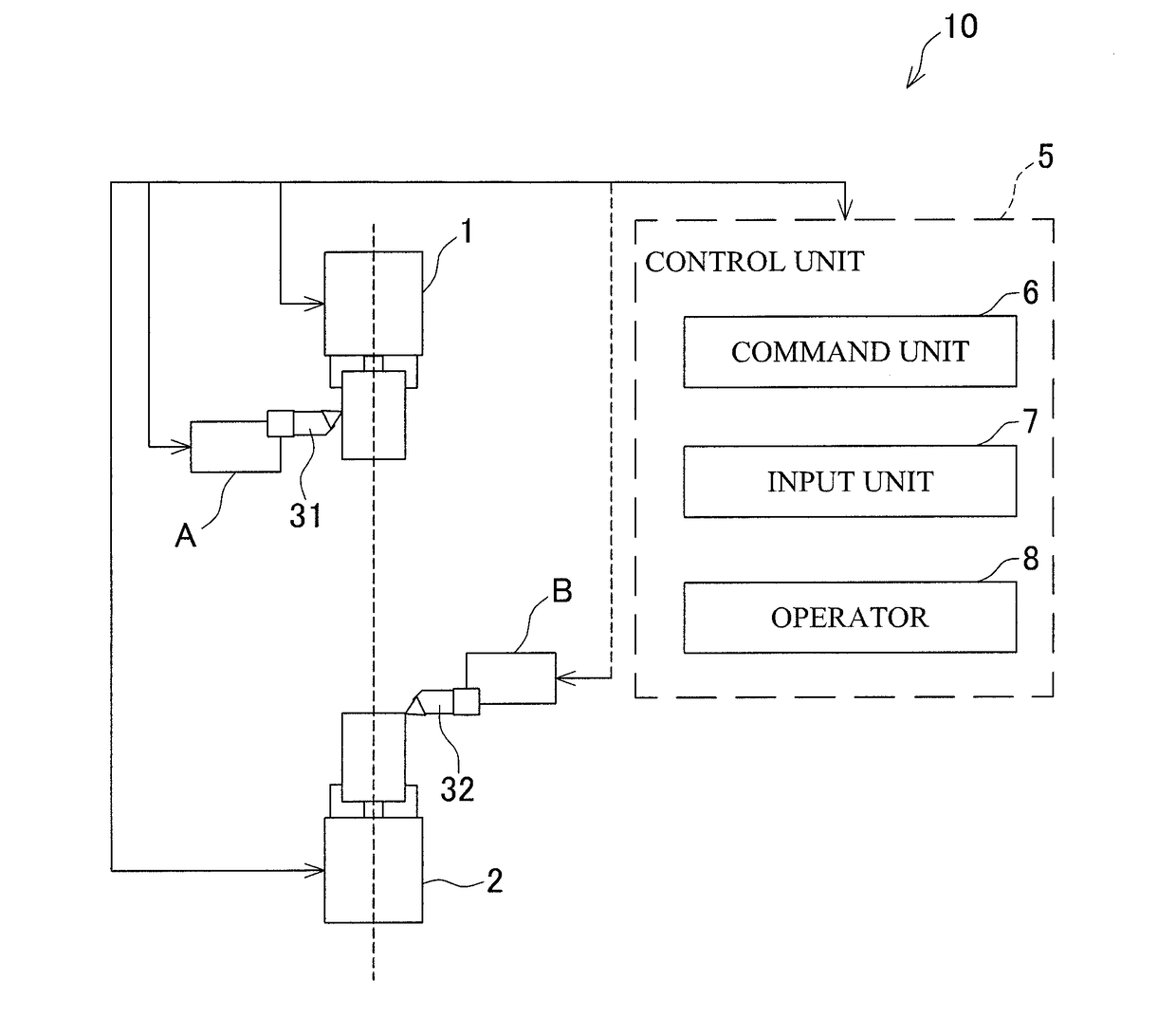
Figure 1 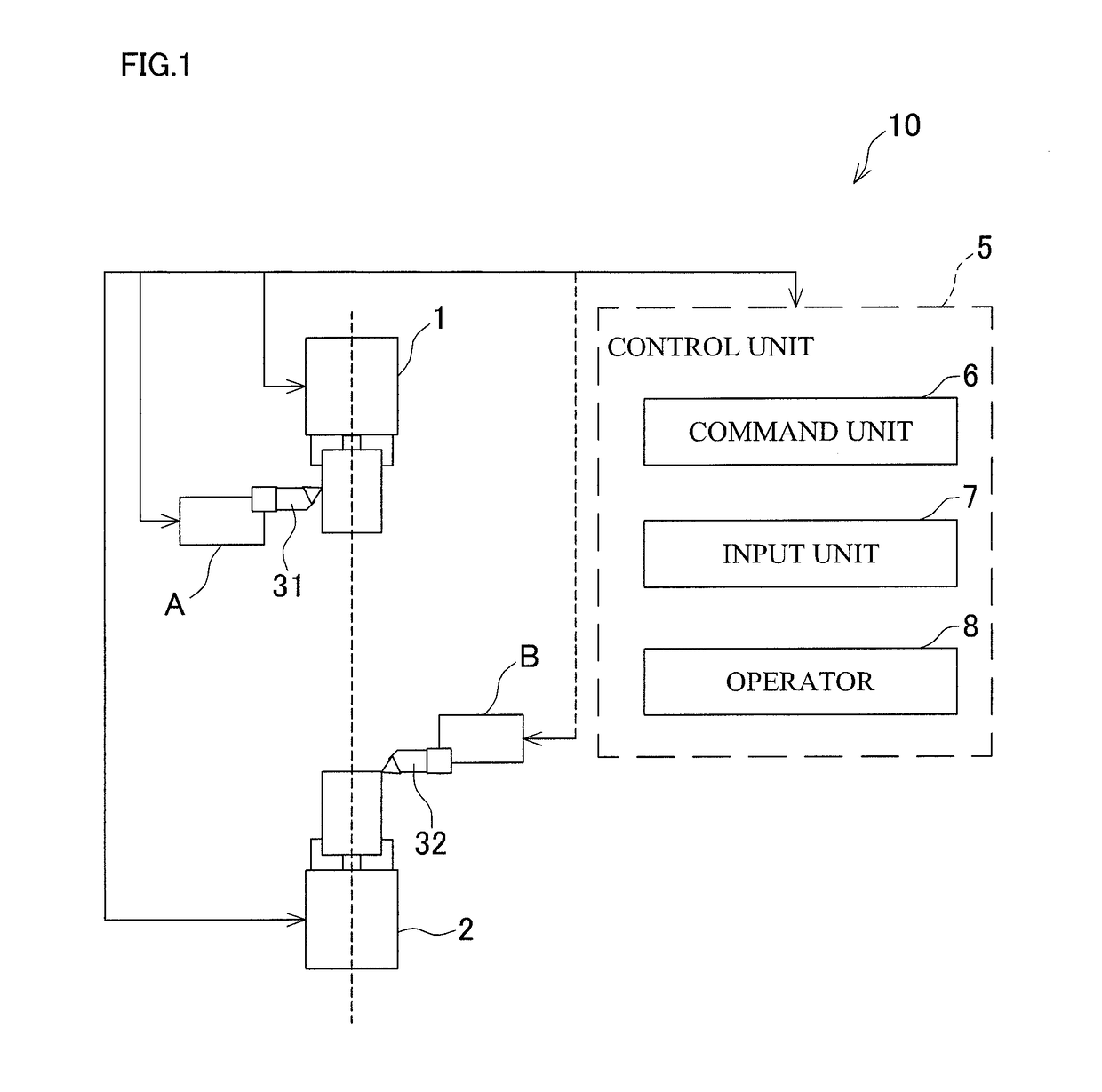
Figure 2 
Figure 3
Abstract
Description
BACKGROUND
[0001] This application claims the benefit of Japanese Patent Application Number 2017-033858 filed on Feb. 24, 2017, the entirety of which is incorporated by reference.Technical Field
[0002] The disclosure relates to an operational control method for, for example, when an abnormality occurs in a cutting-tool during a simultaneous processing where a plurality of tool holders are operated in a machine tool, such as an NC lathe.Related Art
[0003] Conventionally, there has been, what is called, a simultaneous processing, a machining method that performs the processing on one workpiece by operating a plurality of tool holders. The simultaneous processing includes, for example, a method that uses an NC lathe that includes a plurality of tool posts holding cutting tools, simultaneously applies the plurality of cutting tools to one workpiece, and simultaneously performs different processings using the respective cutting tools (illustrated in FIG. 3). With such a simultaneous processing...
Examples
Embodiment Construction
[0020]The following describes an operational control method in an NC lathe 10 as one embodiment of the disclosure in details based on the drawings.
[0021]FIG. 1 is an explanatory view illustrating the NC lathe 10.
[0022]First, a mechanical structure of the NC lathe 10 will be described. The NC lathe 10 includes a main spindle 1 and a sub spindle 2, a tool post A and a tool post B, and a control unit 5. The main spindle 1 and the sub spindle 2 are configured to rotate a chucked workpiece. The tool post A and the tool post B are loaded with cutting-tools 31 and 32, respectively. The control unit 5 controls operations of the main spindle 1 and the sub spindle 2, and the tool post A and the tool post B. The control unit 5 includes an input unit 7, an operator 8, and a command unit 6. The input unit 7 is for an operator to input, for example, a driving command of a motor. The operator 8 is for, for example, interpreting a configured processing program. The command unit 6 is for, for exampl...