
Method and means for evaluating toric contact lens rotational stability
a technology of rotation stability and toric contact lenses, applied in the field of evaluating the rotational stability of toric contact lenses on eye, can solve the problems of individual's vision blurring, optical or refractive defects, and general hyperopia, and achieves the effect of convenient use, high accuracy, and low cos
Patent Information
- Authority / Receiving Office
- US · United States
- Patent Type
- Applications(United States)
- Current Assignee / Owner
- Publication Date
- 2019-04-04
Smart Images
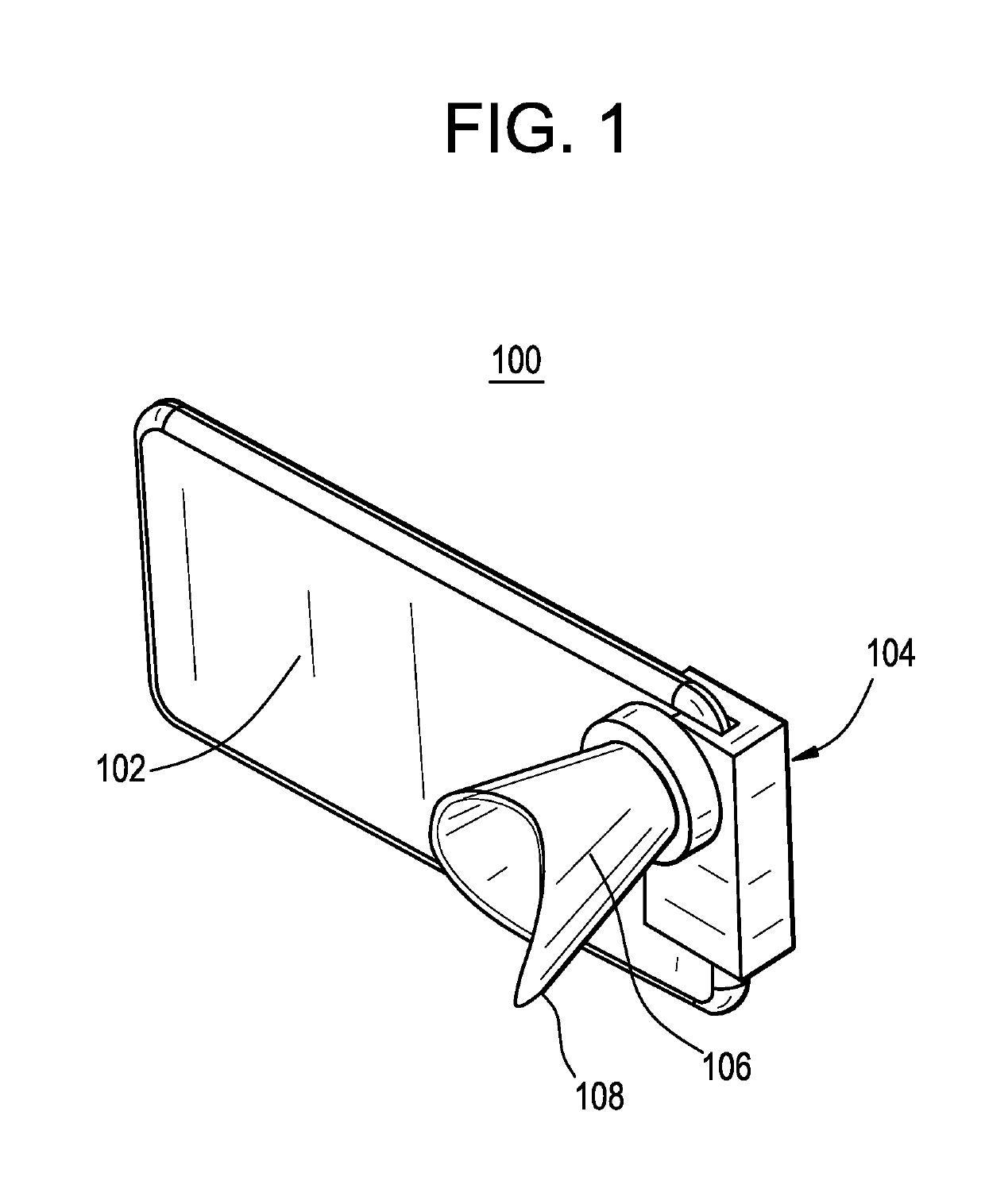
Figure 1 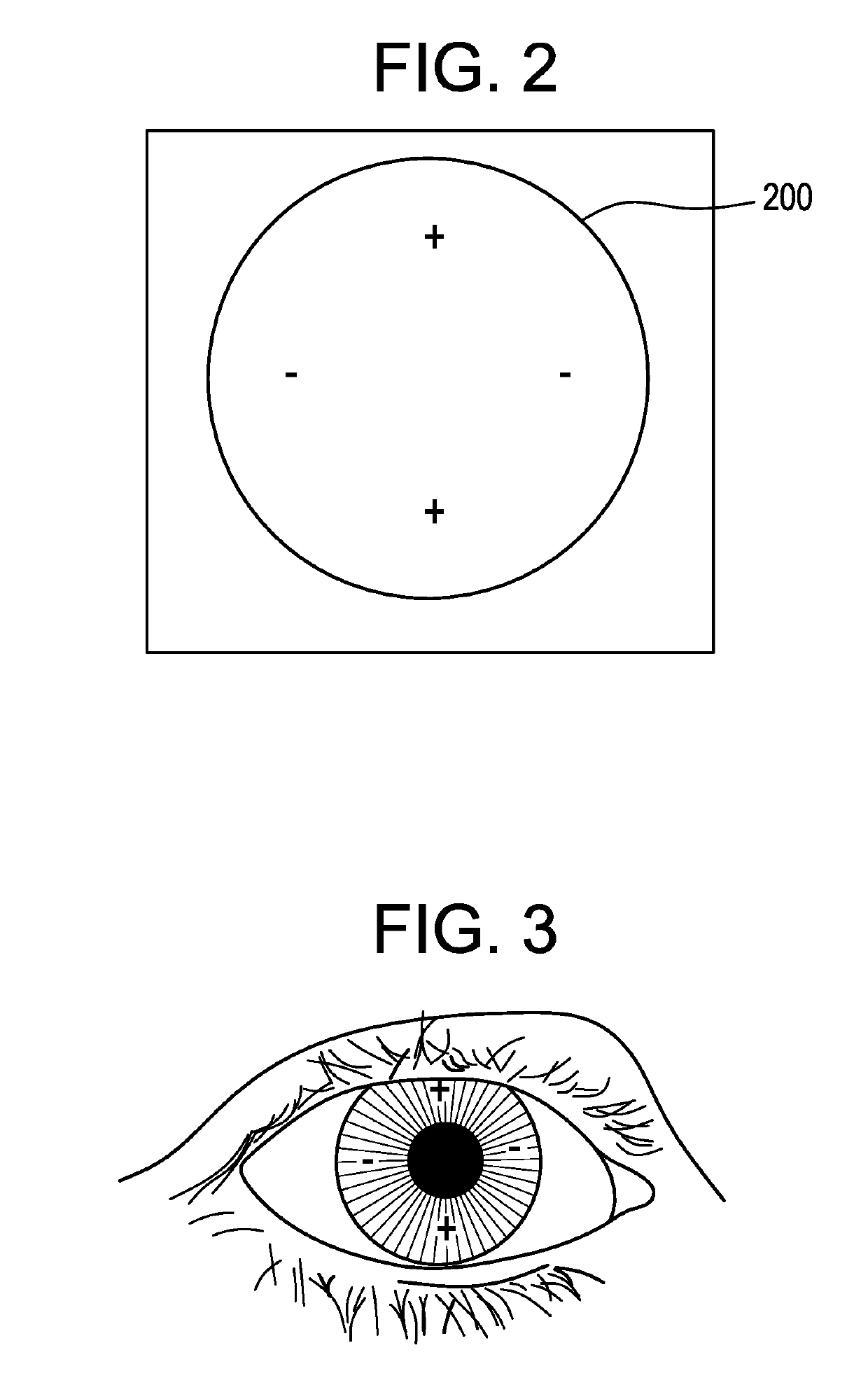
Figure 2 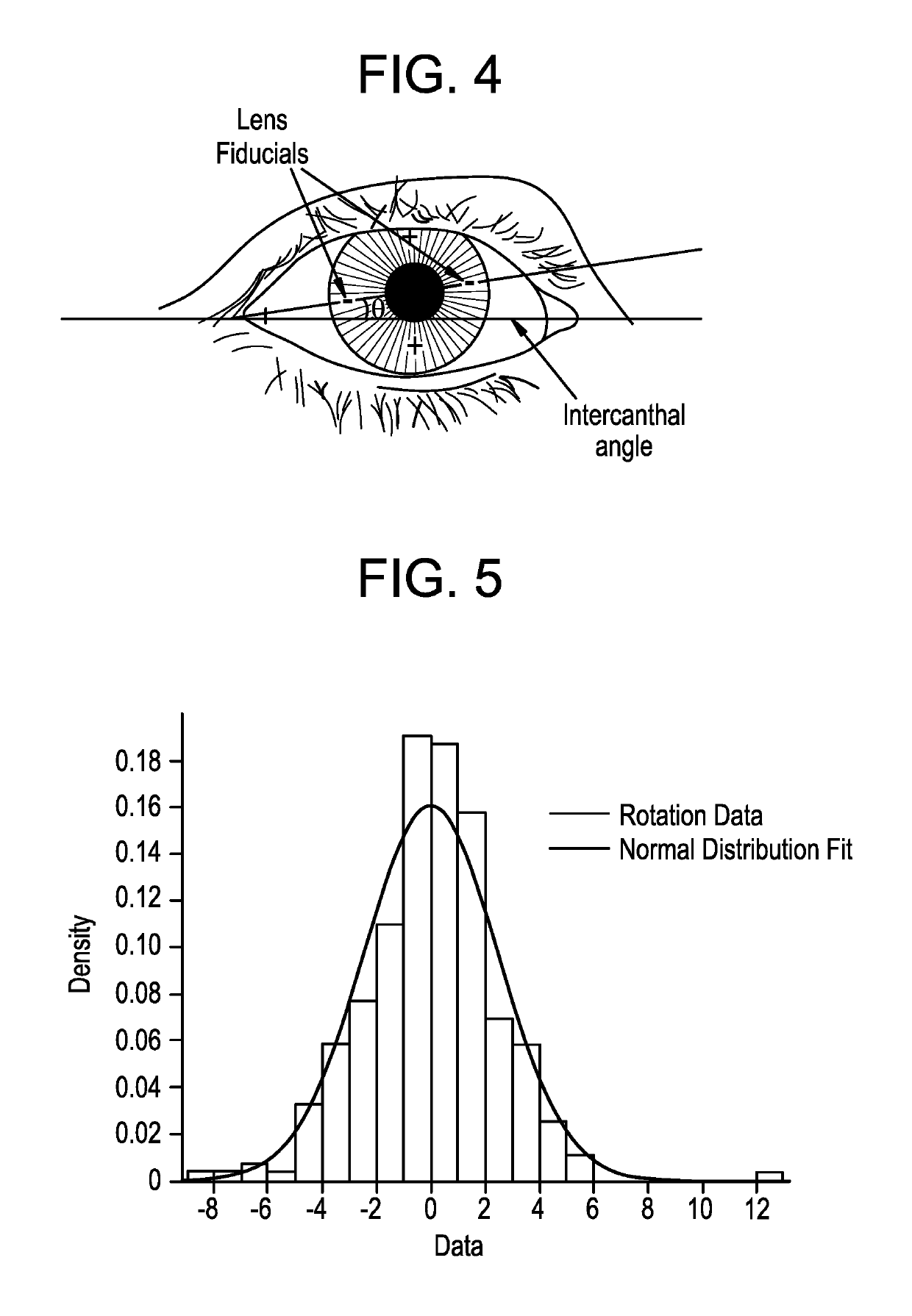
Figure 3
Abstract
Description
CROSS REFERENCE TO RELATED APPLICATIONS
[0001] This patent application claims the benefit of U.S. Provisional Application No. 62 / 565,437 filed Sep. 29, 2017.BACKGROUND OF THE INVENTION1. Field of the Invention
[0002] The present invention is directed to a method for evaluating the rotational stability of toric contact lenses on eye, and more particularly to a method enabling contact lens wearers to photograph their own eyes using an electronic device having a camera with a macro lens and a custom three-dimensional printed eyecup attachment.2. Discussion of the Related Art
[0003] Myopia or nearsightedness is an optical or refractive defect of the eye wherein rays of light from an image focus to a point before they reach the retina. Myopia generally occurs because the eyeball or globe is too long or the dome of the cornea is too steep. A minus powered spherical lens may be utilized to correct myopia. Hyperopia or farsightedness is an optical or refractive defect of the eye wherein rays of l...
Examples
Embodiment Construction
[0020]Contact lenses or contacts are simply lenses placed on the eye. Contact lenses are considered medical devices and may be worn to correct vision and / or for cosmetic or other therapeutic reasons. Contact lenses have been utilized commercially to improve vision since the 1950s. Early contact lenses were made or fabricated from hard materials, were relatively expensive and fragile. In addition, these early contact lenses were fabricated from materials that did not allow sufficient oxygen transmission through the contact lens to the conjunctiva and cornea which potentially could cause a number of adverse clinical effects. Although these contact lenses are still utilized, they are not suitable for all patients due to their poor initial comfort. Later developments in the field gave rise to soft contact lenses, based upon hydrogels, which are extremely popular and widely utilized today. Specifically, silicone hydrogel contact lenses that are available today combine the benefit of sili...