
Shoulder strap for supporting back loads, device for carrying back loads, and in particular buoyancy compensator, or the like
a shoulder strap and back load technology, applied in the field of buoyancy compensator, can solve the problems of pain and harmful effects on the mammary organs, and achieve the effect of avoiding unwelcome and/or harmful stresses on the user's body
Patent Information
- Authority / Receiving Office
- US · United States
- Patent Type
- Applications(United States)
- Current Assignee / Owner
- Publication Date
- 2019-12-19
- Estimated Expiration
- Not applicable · inactive patent
Smart Images
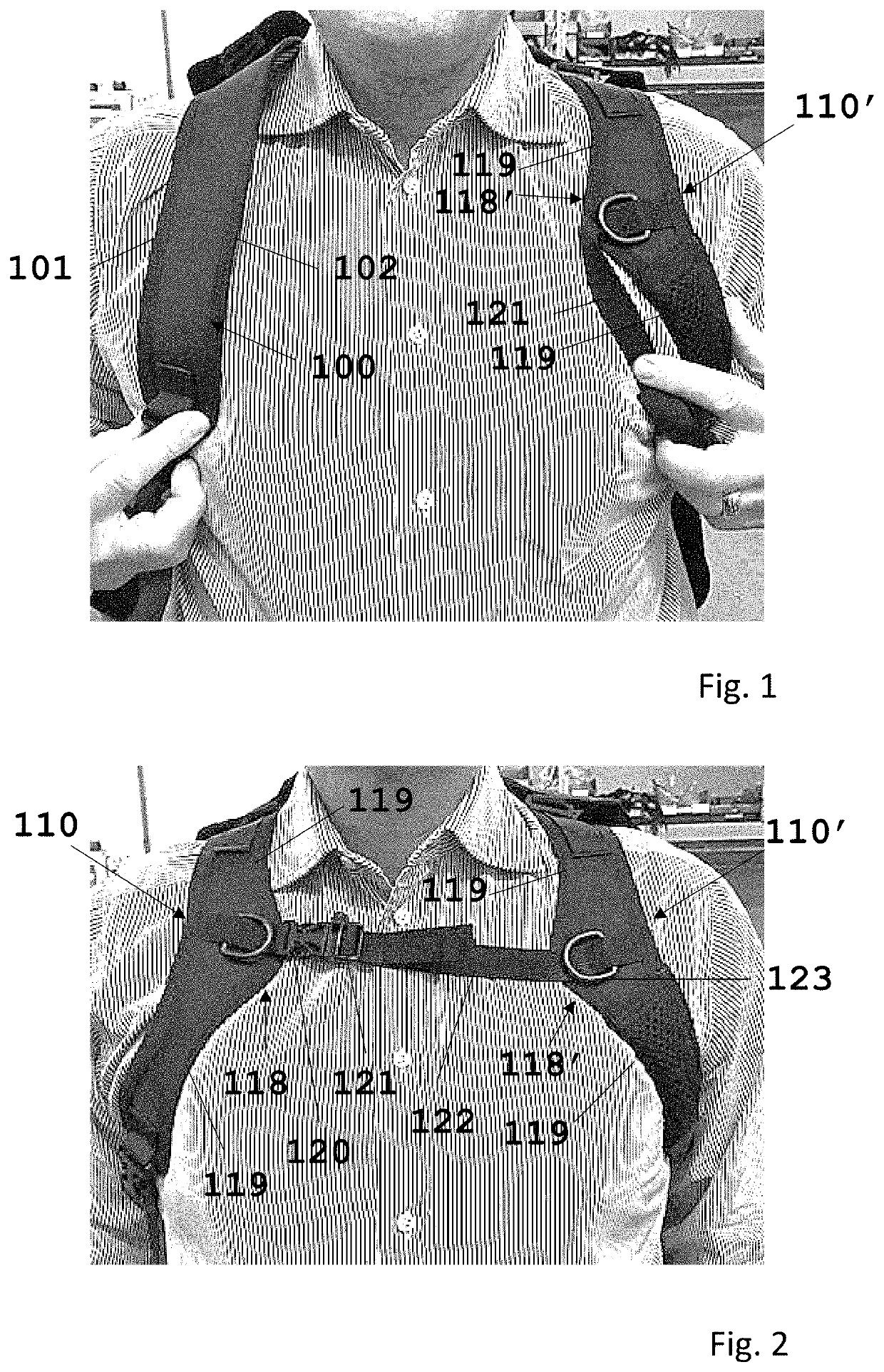
Figure 1 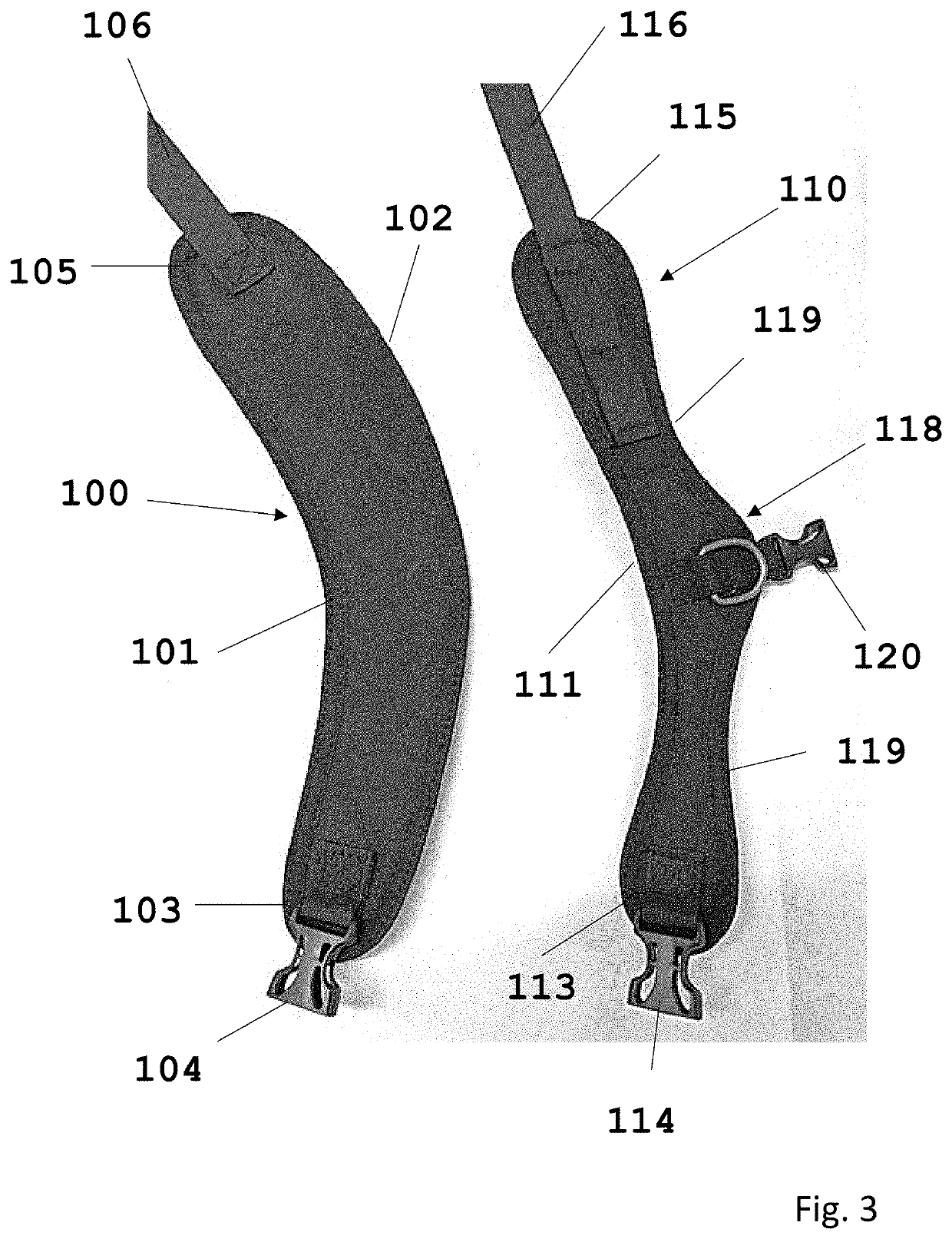
Figure 2 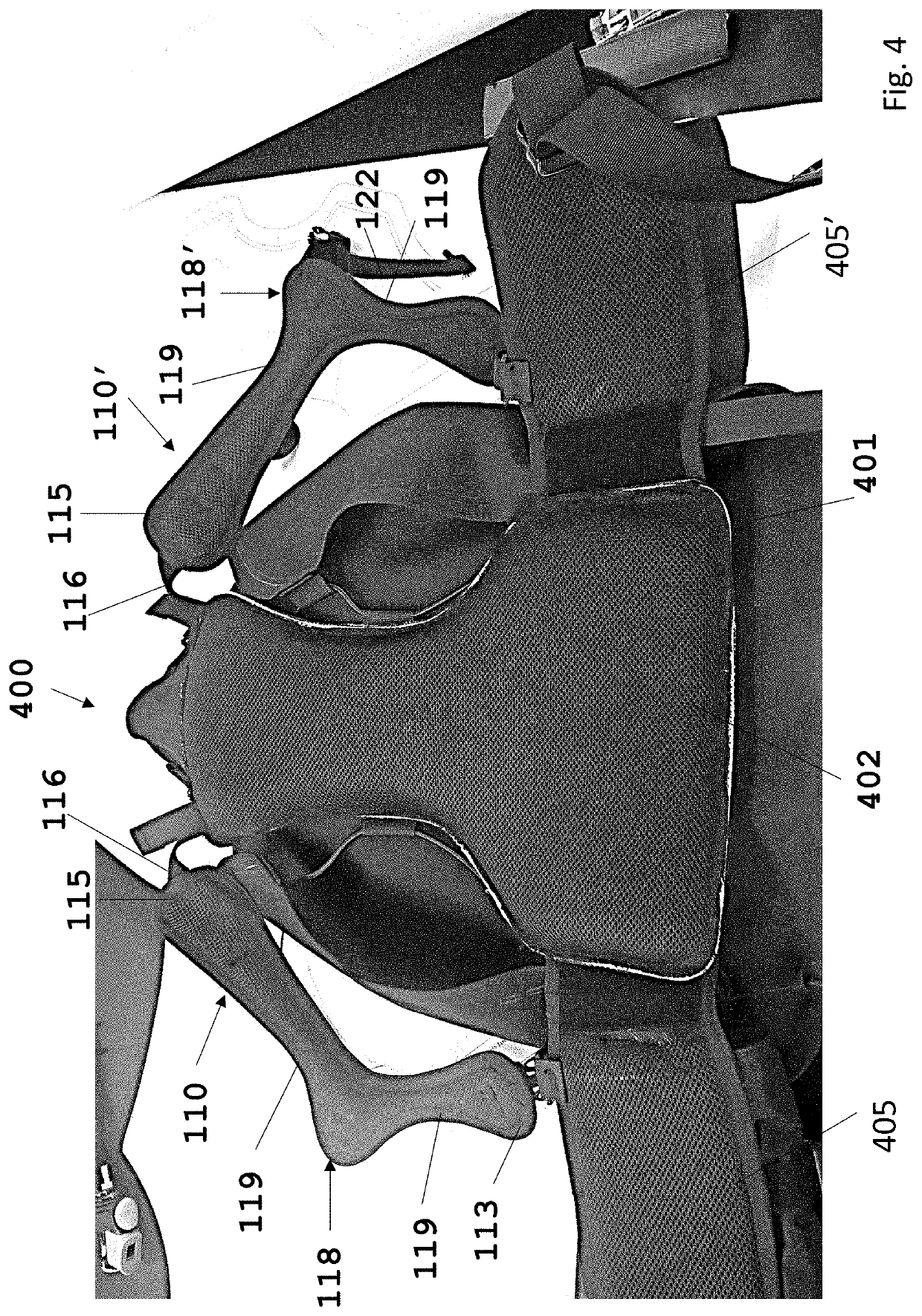
Figure 3
Abstract
Description
FIELD OF THE INVENTION
[0001] The present invention refers to the field related to devices for carrying back loads, i.e. of the type provided with at least one tie element, so-called shoulder strap, intended to be hooked or to pass around a user's shoulder and thanks to which the weight of the load is distributed on at least one part of the torso and is held against the user's torso.
[0002] In particular the invention refers to carrying devices for sports activities, such as backpacks or the like and, after a further specialization in progress, for equipment for underwater use, such as in particular backpack supports of breathing gas cylinders.
[0003] The invention finds its preferred and advantageous application in the field of buoyancy compensator or stabilizers, commonly known also by the acronym G.A.V. or BCD (Buoyancy Control Device) or, by the English term, jacket.BACKGROUND OF THE INVENTION
[0004] In general, carrying devices of backpack type or the like are provided with one or two ...
Examples
Embodiment Construction
[0067]Although the invention is susceptible to various modifications and alternative constructions, two exemplary embodiments are shown in the drawings and described in detail below.
[0068]It must be understood, however, that there is no intention of limiting the invention to the illustrated specific embodiments, but, conversely, the invention intends to cover all modifications, alternative and equivalent constructions that fall within the scope of the invention as defined in the claims.
[0069]The use of “for example”, “etc.”“or” denotes non-limiting and not-exclusive alternatives, unless differently specified.
[0070]The use of “include” means “include, but not limited to”, unless differently specified.
[0071]Indications such as “vertical” and “horizontal”, “upper” and “lower”, “above” and “below”, “right” and “left”—in the absence of different indications—should be read with reference to the operating conditions and referring to the normal terminology used in everyday language, where “...