
Method for authorizing field value of form field by means of third party field
a field value and field technology, applied in the field of form authorization methods, can solve the problems of bringing enormous workload, low efficiency of authorization operation, and inability to authorize users in batches, so as to reduce the possibility of company information leakage, improve form authorization efficiency, and improve the effect of authorization efficiency
Patent Information
- Authority / Receiving Office
- US · United States
- Patent Type
- Applications(United States)
- Current Assignee / Owner
- Publication Date
- 2020-05-07
Smart Images
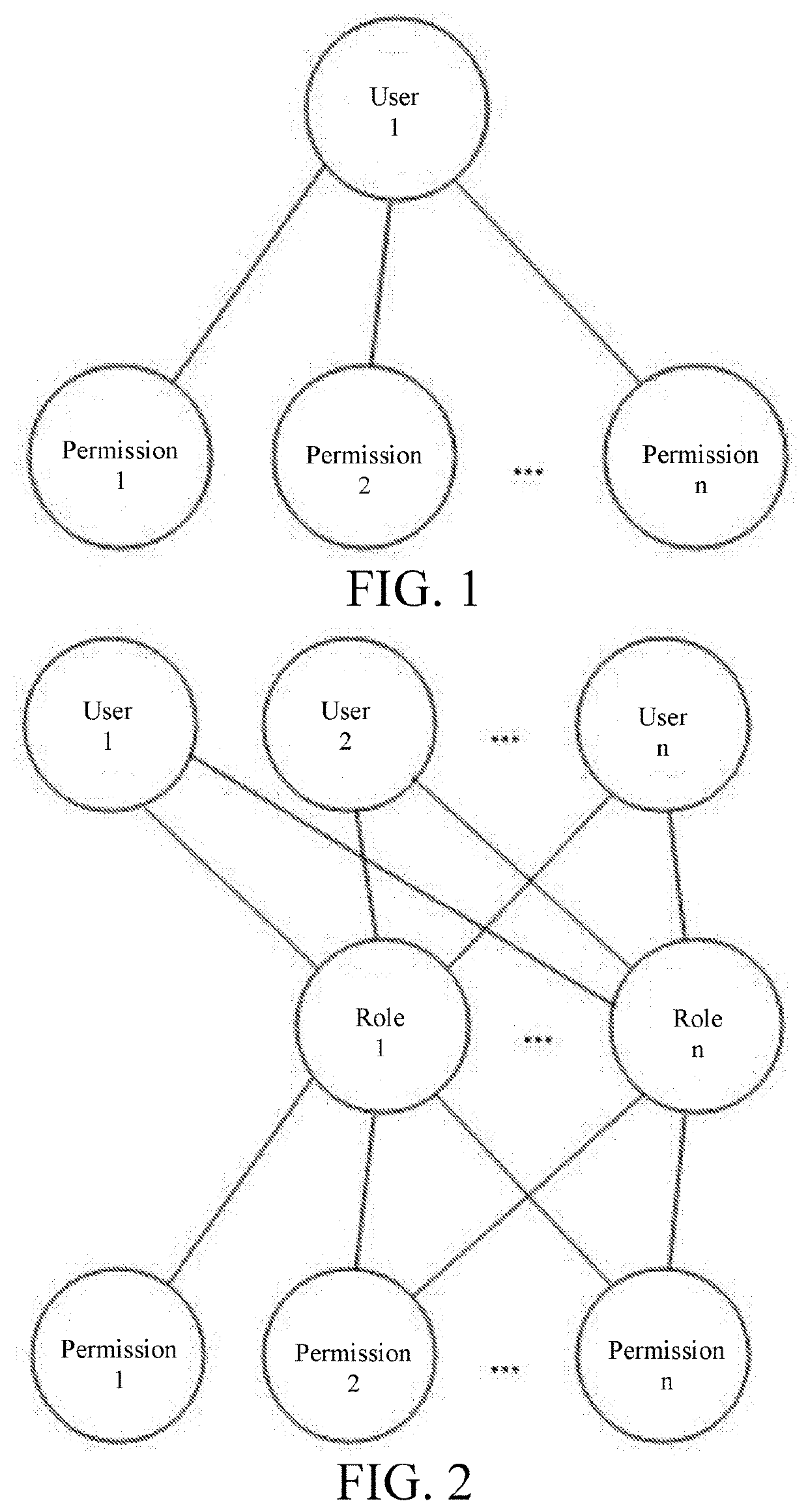
Figure 1 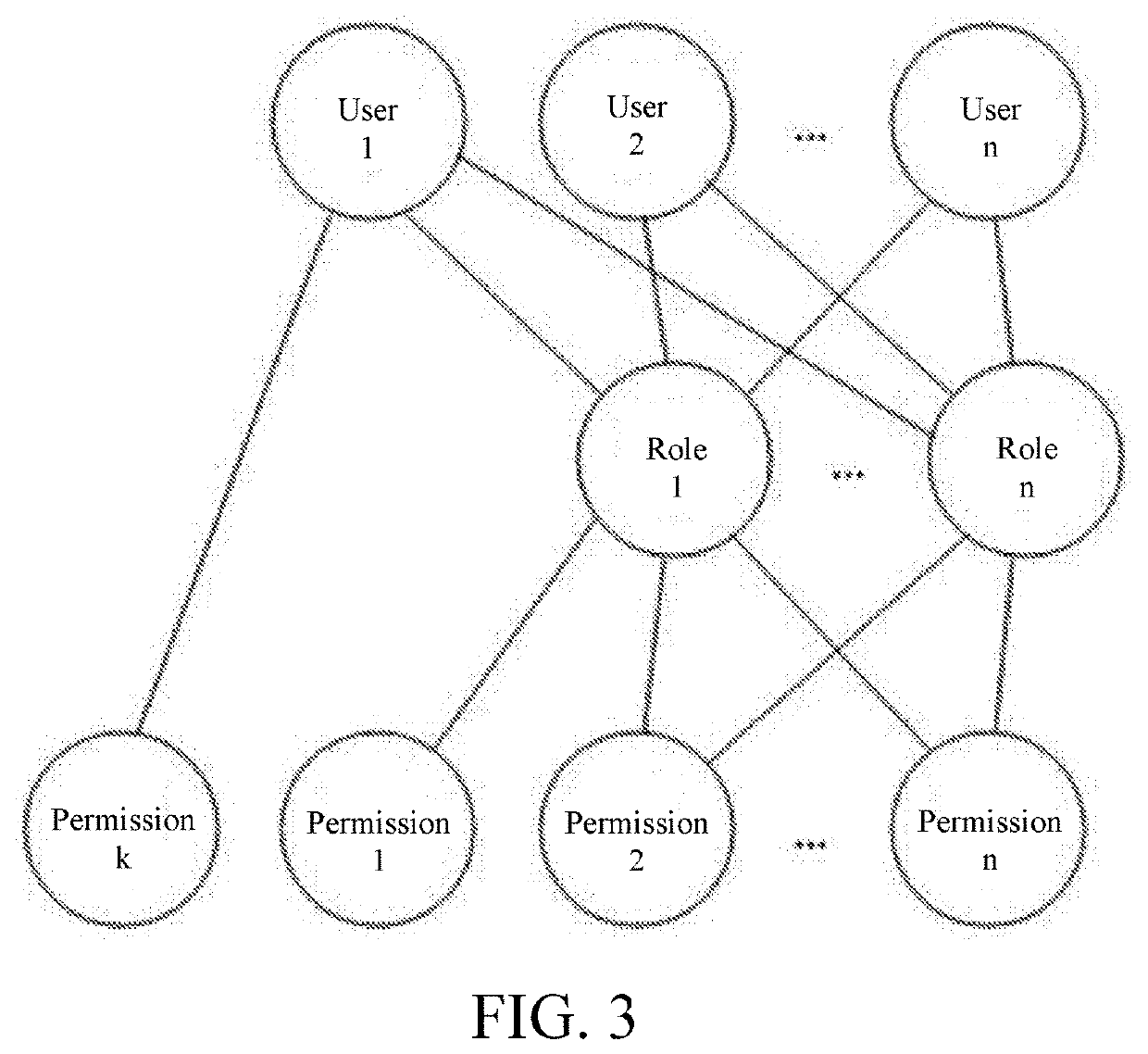
Figure 2 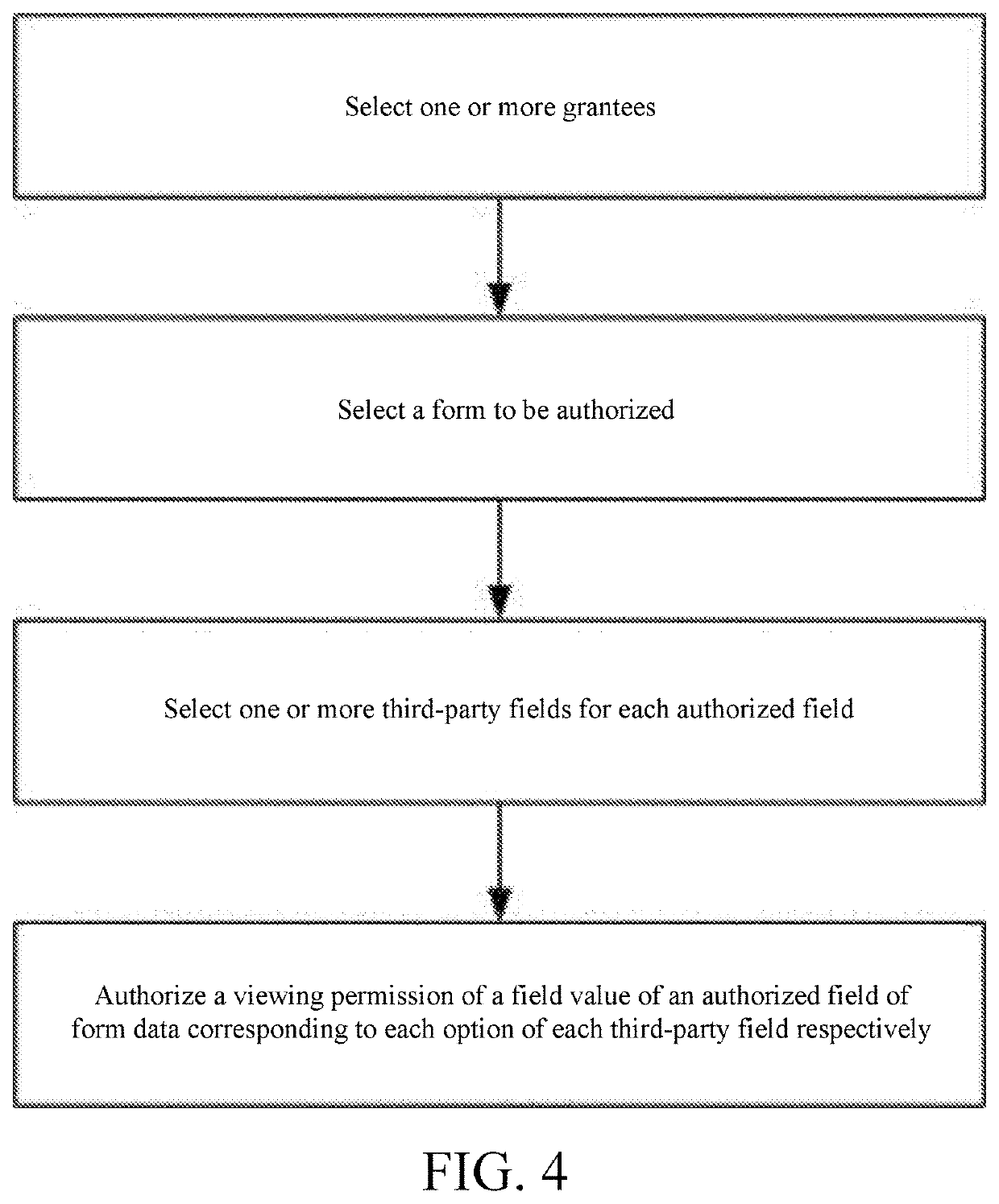
Figure 3
Abstract
Description
BACKGROUNDTechnical Field
[0001] The present invention relates to a form-authorizing method in a management software system such as ERP, and in particular, to a method for authorizing a field value of a form field by means of a third-party field.Related Art
[0002] A conventional management software system such as ERP provides respective authorization to view and modify the permissions of a form based on form field values. For example, for a contract form, the fields in the form include a contract-signing time, a contract signer, a customer name, a customer industry, and the like. The content of fields viewable for a user can be authorized respectively, to allow a user A to view the contract-signing time and the contract signer in the form and not allow the user A to view the customer name and the customer industry, thus keeping the company's information secret and prevent leakage of confidential information. However, such ERP management software can only authorize each user respectively...
Examples
embodiment 1
[0058]As shown in FIG. 4, a method for authorizing a field value of a form field by means of a third-party field includes: selecting one or more grantees. The grantee includes one or more of a person, a user, a group, a class, and a role, the role is an independent individual not a group / class, one role can only be related to a unique user during the same period, and one user is related to one or more roles.
[0059]As shown in FIG. 5, the role belongs to a certain department, and the role is authorized according to the work content of the role; the name of the role is unique under the department, and the number of the role is unique in a system. The user determines (obtains) permissions through its relation to the role, one employee corresponds to one user, and one user corresponds to one employee.
[0060]Definition of a role: A role does not have the nature of a group / a class / a category / a post / a position / a type of work or the like, but has a non-collective nature. The role is unique an...
embodiment 2
[0078]As shown in FIG. 10, a method for authorizing a field value of a form field by means of a third-party field includes: selecting one or more grantees. The grantee includes one or more of a person, a user, a group, a class, and a role, the role is an independent individual not a group / a class, one role can only be related to a unique user during the same period, and one user is related to one or more roles. The role belongs to a certain department, the role is unique under the department, the role is authorized according to the work content of the role, and the user obtains permissions through a related role. During cross-department transfer of the user, the user's relation to the role in the original department is canceled, and the user is related to a role in a new department.
[0079]A form to be authorized is selected, and authorized fields which need to control authorization of the permission to view field values thereof by means of third-party fields in the form are displayed...
embodiment 3
[0087]As shown in FIG. 12, a method for authorizing a field value of a form field by means of a third-party field includes: selecting one or more grantees. The grantee includes one or more types of a person, a user, a group, a class, and a role, the role is an independent individual not a group / a class, one role can only be related to a unique user during the same period, and one user is related to one or more roles. The role belongs to a certain department, the role is unique under the department, the role is authorized according to the work content of the role, and the user obtains permissions through a related role. During cross-department transfer of the user, the user's relation to the role in the original department is canceled, and the user is related to a role in a new department.
[0088]The form to be authorized is selected, and authorized fields which need to control authorization of the permission to modify field values thereof by means of third-party fields in the form are...