
Method and system for acoustic model conditioning on non-phoneme information features
a technology of acoustic model and information feature, applied in the field of automatic speech recognition, can solve the problems of limited speech recognition accuracy, dangerous speech recognition errors, bottlenecks of natural language speech processing, etc., and achieve the effect of improving the accuracy of automatic speech recognition and simple and powerful
Patent Information
- Authority / Receiving Office
- US · United States
- Patent Type
- Applications(United States)
- Current Assignee / Owner
- Publication Date
- 2021-10-28
Smart Images
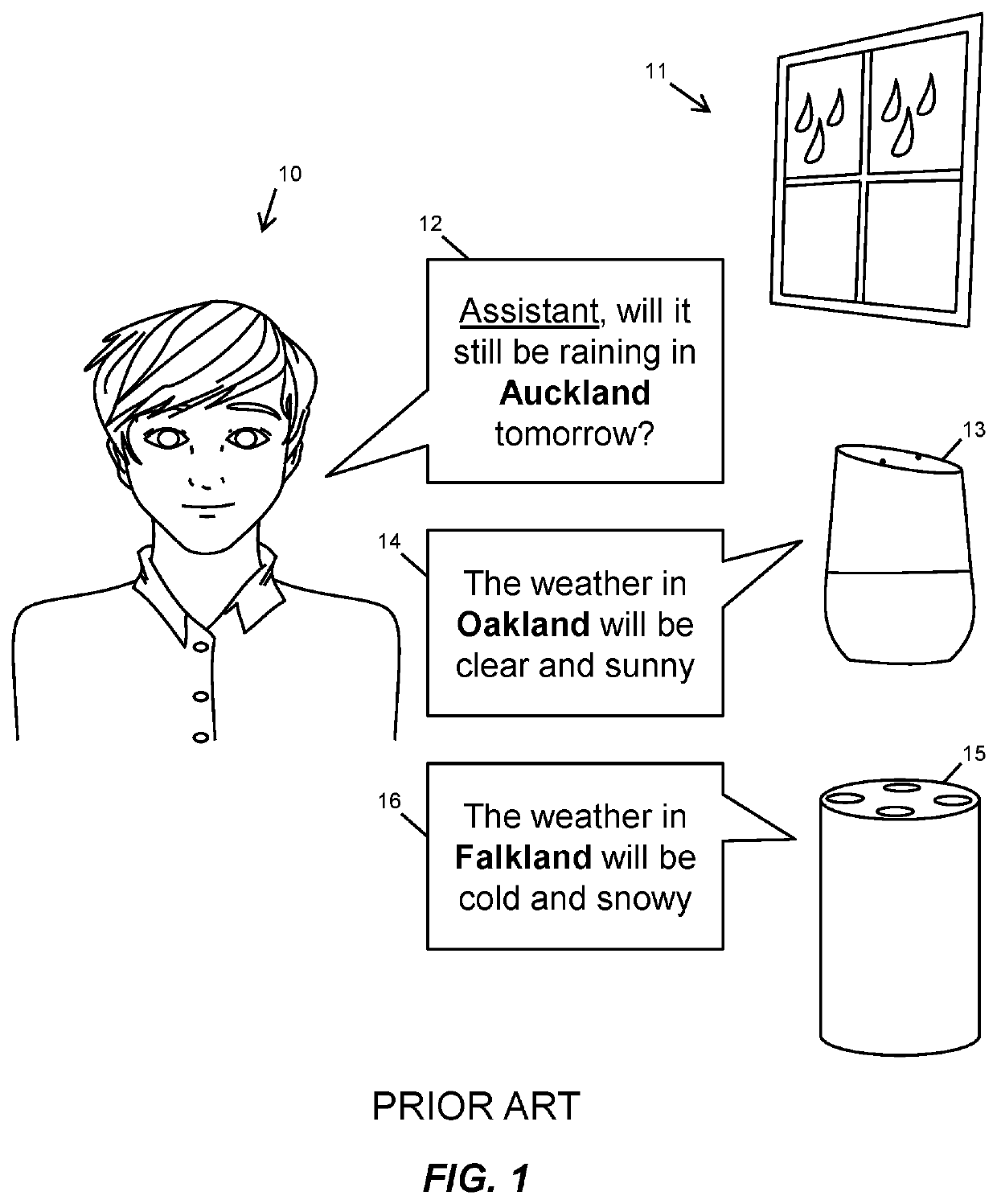
Figure 1 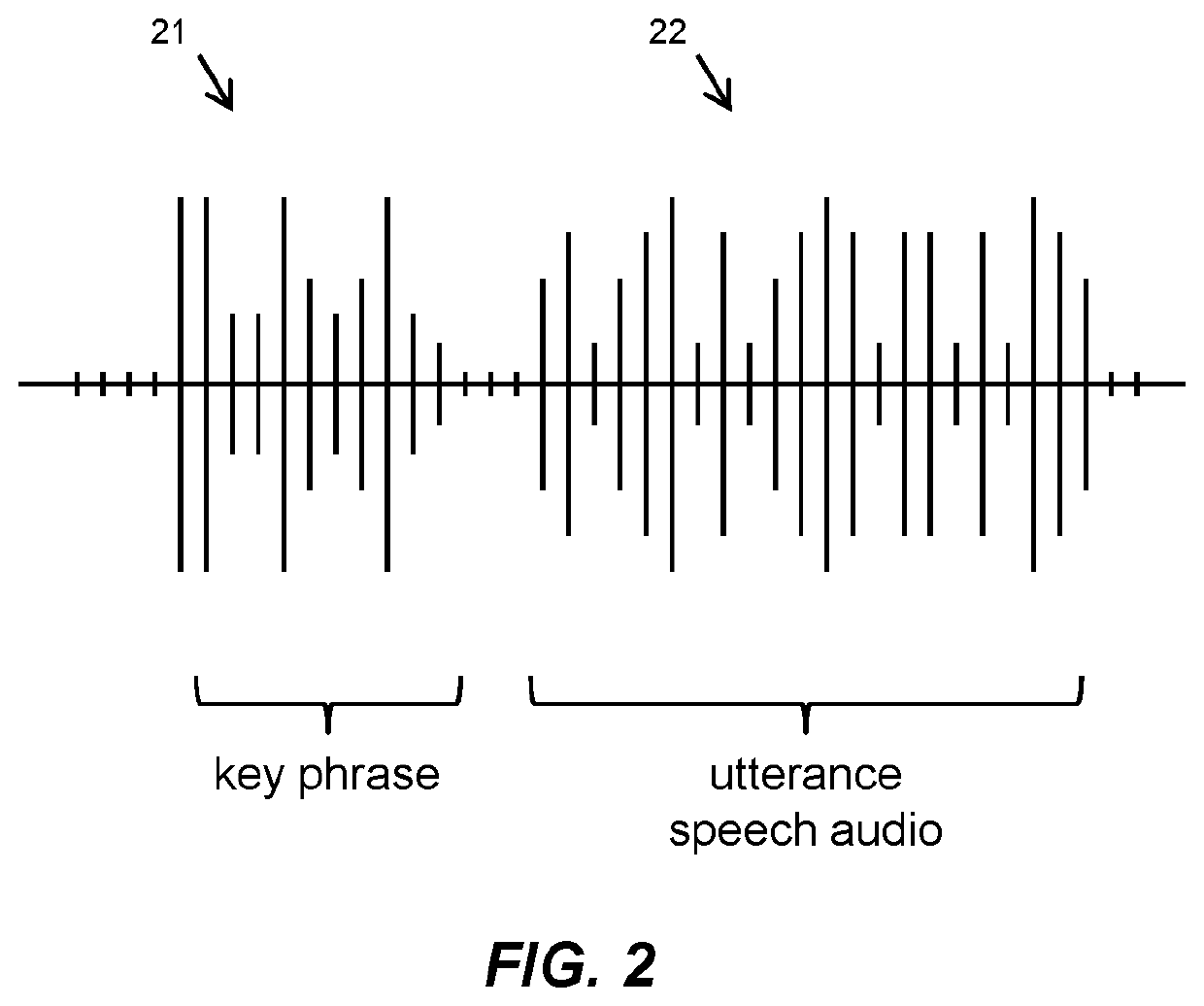
Figure 2 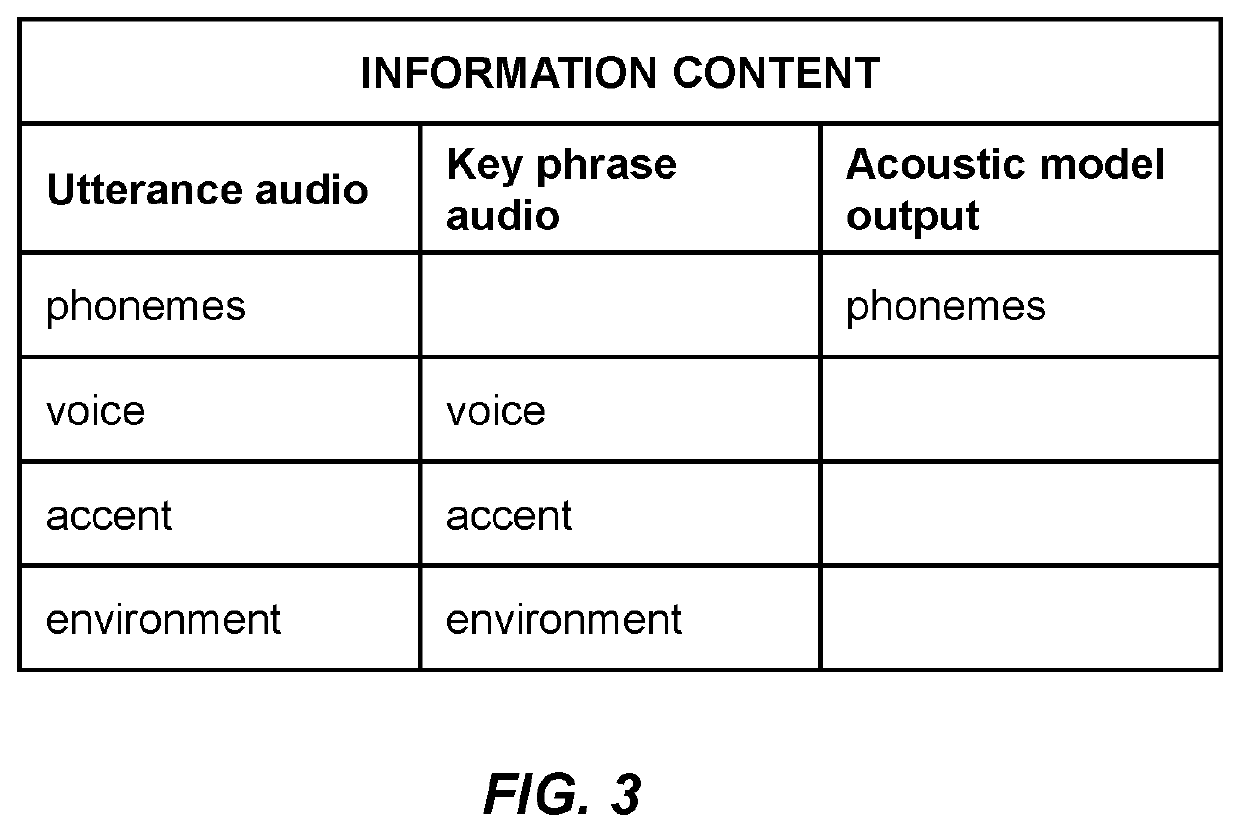
Figure 3
Abstract
Description
CROSS-REFERENCE TO RELATED APPLICATION
[0001] This application claims priority to U.S. Provisional Application No. 62 / 704,202, entitled “Acoustic Model Conditioning on Sound Features” filed on Apr. 27, 2020, the content of which is expressly incorporated by reference herein in its entirety.TECHNICAL FIELD
[0002] The present subject matter is in the field of speech processing and recognition, particularly automatic speech recognition (ASR).BACKGROUND
[0003] Natural language speech interfaces are emerging as a new type of human-machine interface. Such interfaces' application in transcribing speech is expected to replace keyboards as a fast and accurate way to enter text, and their application in supporting natural language commands will replace mice and touch screens to manipulate non-textual controls. In summary, natural language speech interfaces in the context of natural language processing will provide clean, germ-free ways for humans to control machines for work, entertainment, educati...
Examples
Embodiment Construction
[0036]The following text describes various design choices for relevant aspects of conditional acoustic models. Except where noted, design choices for different aspects are independent of each other and work together in any combination.
[0037]Acoustic models for ASR take inputs comprising segments of speech audio and produce outputs of an inferred probability of one or more phonemes. Some models may infer senone probabilities, which are a type of phoneme probability. In some applications, the output of an acoustic model is a SoftMax set of probabilities across a set of recognizable phonemes or senones.
[0038]Some ASR applications run the acoustic model on spectral components computed from frames of audio. The spectral components are, for example, Mel-frequency Cepstral Coefficients (MFCC) computed on a window of 25 milliseconds of audio samples. The acoustic model inference may be repeated at intervals of every 10 milliseconds, for example. Other audio processing procedures, e.g., Shor...