
Film feeding device and an automatic wrapping device
Patent Information
- Authority / Receiving Office
- US · United States
- Current Assignee / Owner
- Publication Date
- 2005-02-08
Smart Images
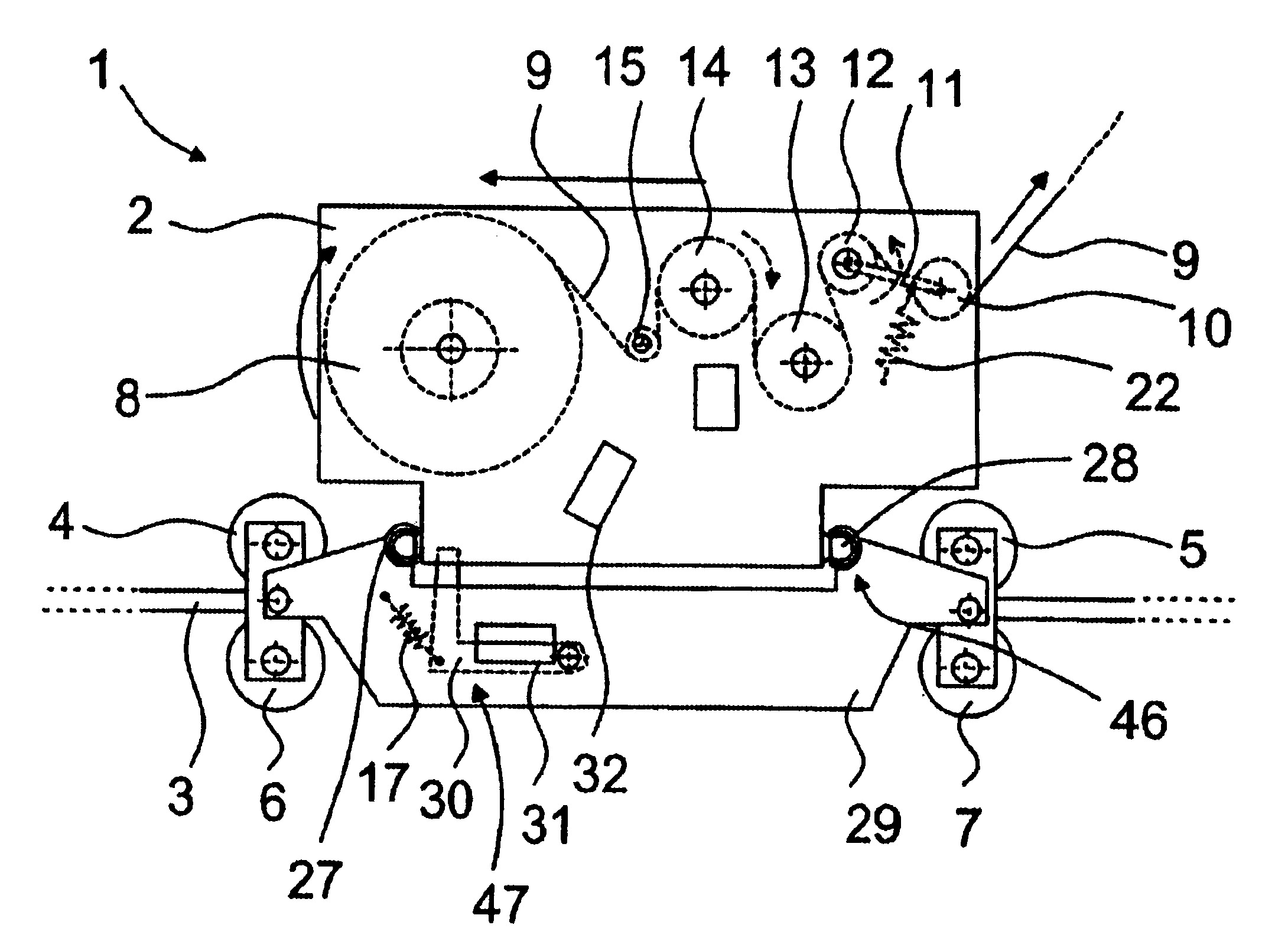
Figure 1 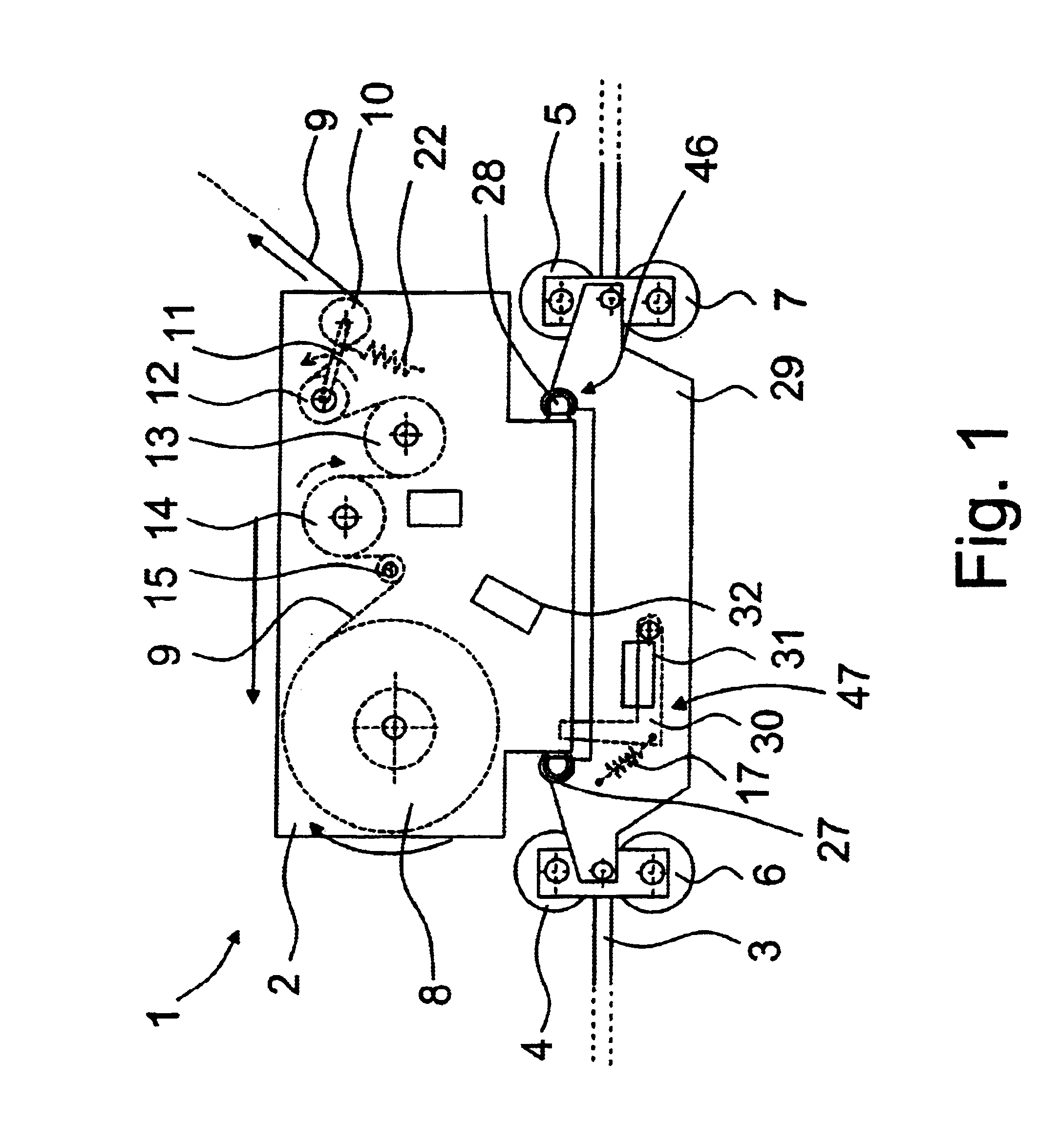
Figure 2 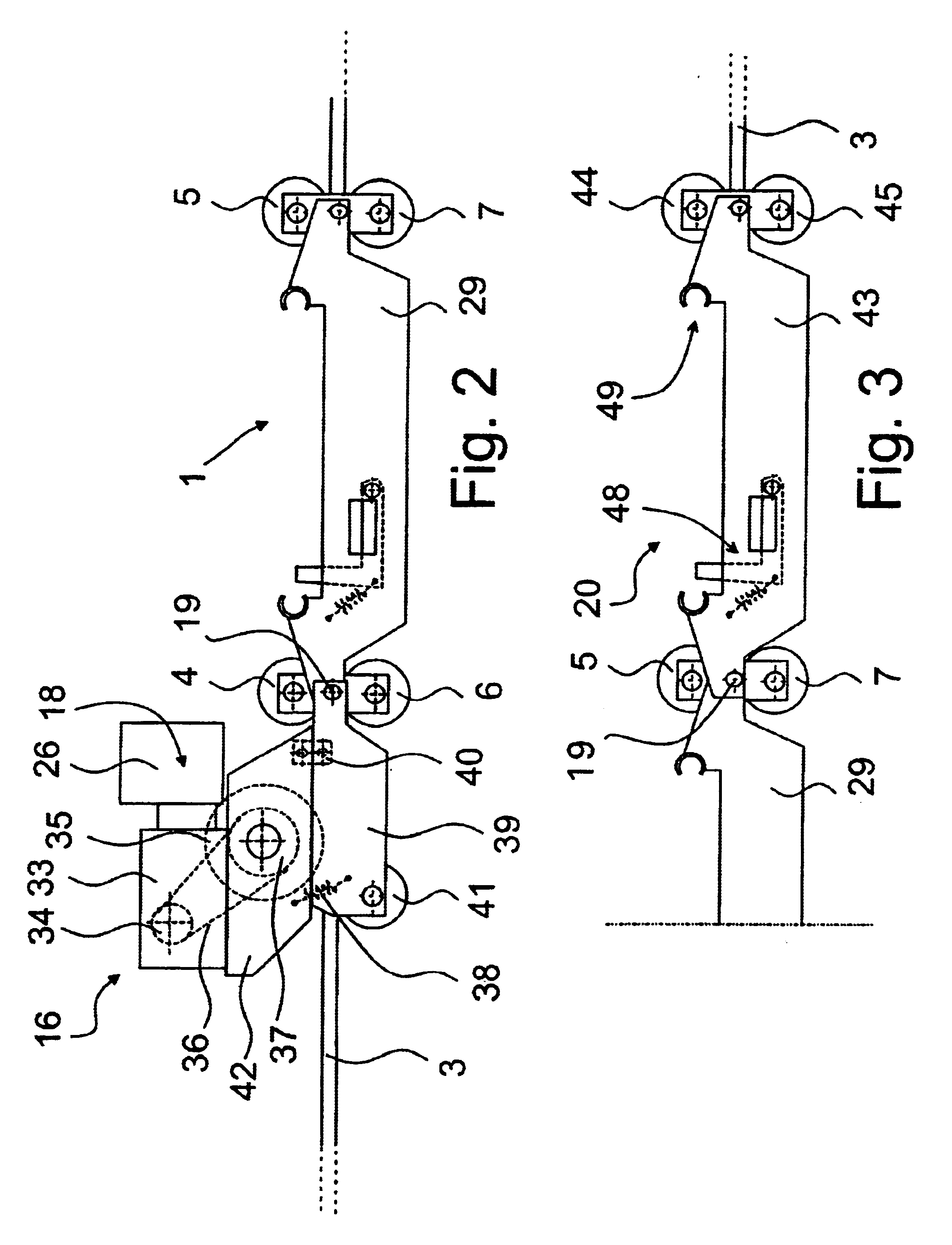
Figure 3
Abstract
Description
FIELD OF THE INVENTIONThe invention relates to a wrapping device. The invention also relates to a film feeding device. The invention also relates to a carriage device for a wrapping device.BACKGROUND OF THE INVENTIONFor the wrapping of various pieces, for example coils, wrapping devices known as such are used to perform the wrapping by means of a wrapping film, preferably a thin and transparent stretch film made of plastic. The film roll is normally fitted in film feeding means, which are further placed in a carriage moving along a circular structure and a track formed therein, either around the whole piece or passing through an opening in the central line of the piece.One wrapping device is disclosed in EP 0 936 142 A2, or corresponding U.S. Pat. No. 6,192,653. If the film is slackened, the film roll can rotate in the opposite direction and the film is rewound on the film roll. Another device is shown in EP 0 936 141 B1, in which the film roll is rotated by means of a motor. One kn...
Examples
Embodiment Construction
FIG. 1 shows the principle of operation of the film feeding device 1, and in this description, the device 1 will also be called a carriage and the feeding means 10, 12, 13, 14, 15 will also be called guide rolls. The carriage 1 and the guide rolls are shown in a reduced schematic view to illustrate the operation. FIG. 1 shows a situation, in which the film 9 to be fed is suitably tense, wherein the tension of the film is given or higher than that, and it is fed from a film roll 8 forward and further around a piece to be wrapped. The end of the film 9 is attached to the piece, wherein when the carriage 1 moves, the film 9 is simultaneously tightened by the effect of the guide rolls and is unwound from the film roll 8.
One phenomenon in the wrapping device is that the quantity of film to be supplied from the film roll varies each time at different locations of the circular tract, because the carriage is not continuously at the same distance from the piece. At some points, the distance ...