
Method and apparatus for location determination of people or objects
a technology for location determination and people or objects, applied in direction finders, direction finders using radio waves, instruments, etc., can solve the problems of reducing tracking accuracy, multiple story buildings posing additional obstacles for tracking, and difficult or even impossible to cover large steel and concrete buildings, etc., to facilitate the portability of transmitter nodes, reliable and accurate location determination, the effect of enhancing the angular geometry of transmission
Patent Information
- Authority / Receiving Office
- US · United States
- Patent Type
- Patents(United States)
- Current Assignee / Owner
- Publication Date
- 2009-12-22
- Estimated Expiration
- Not applicable · inactive patent
Smart Images
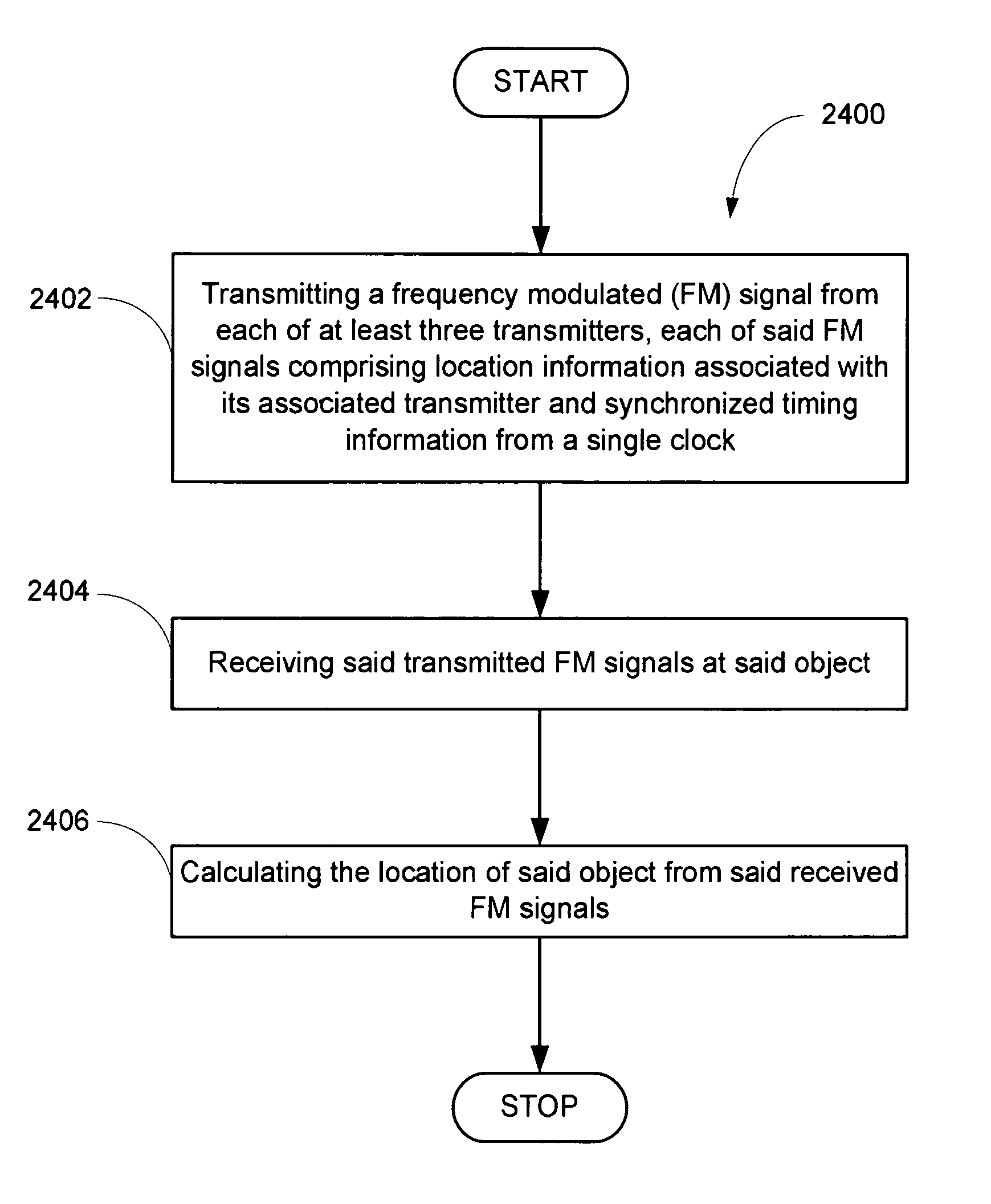
Figure 1 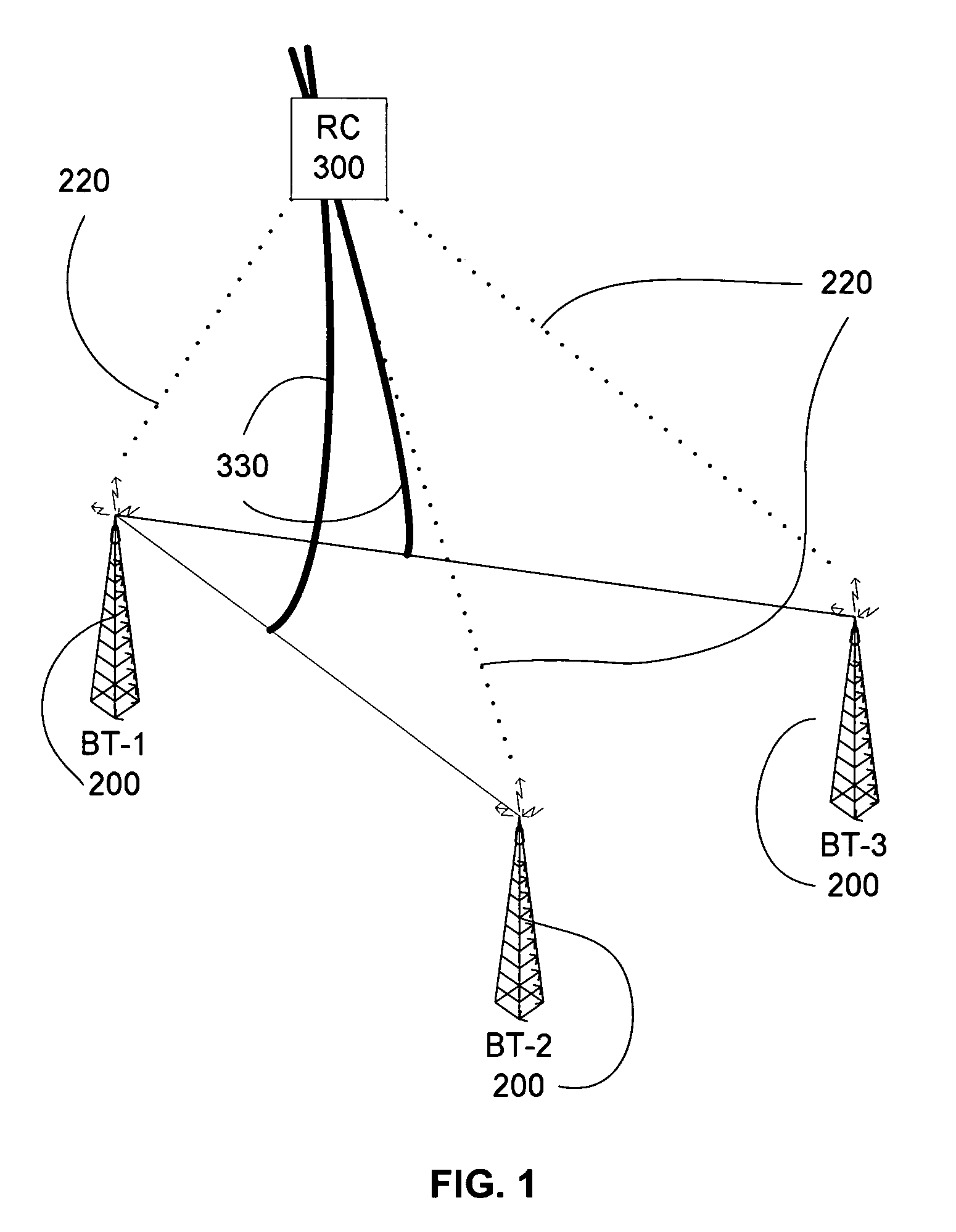
Figure 2 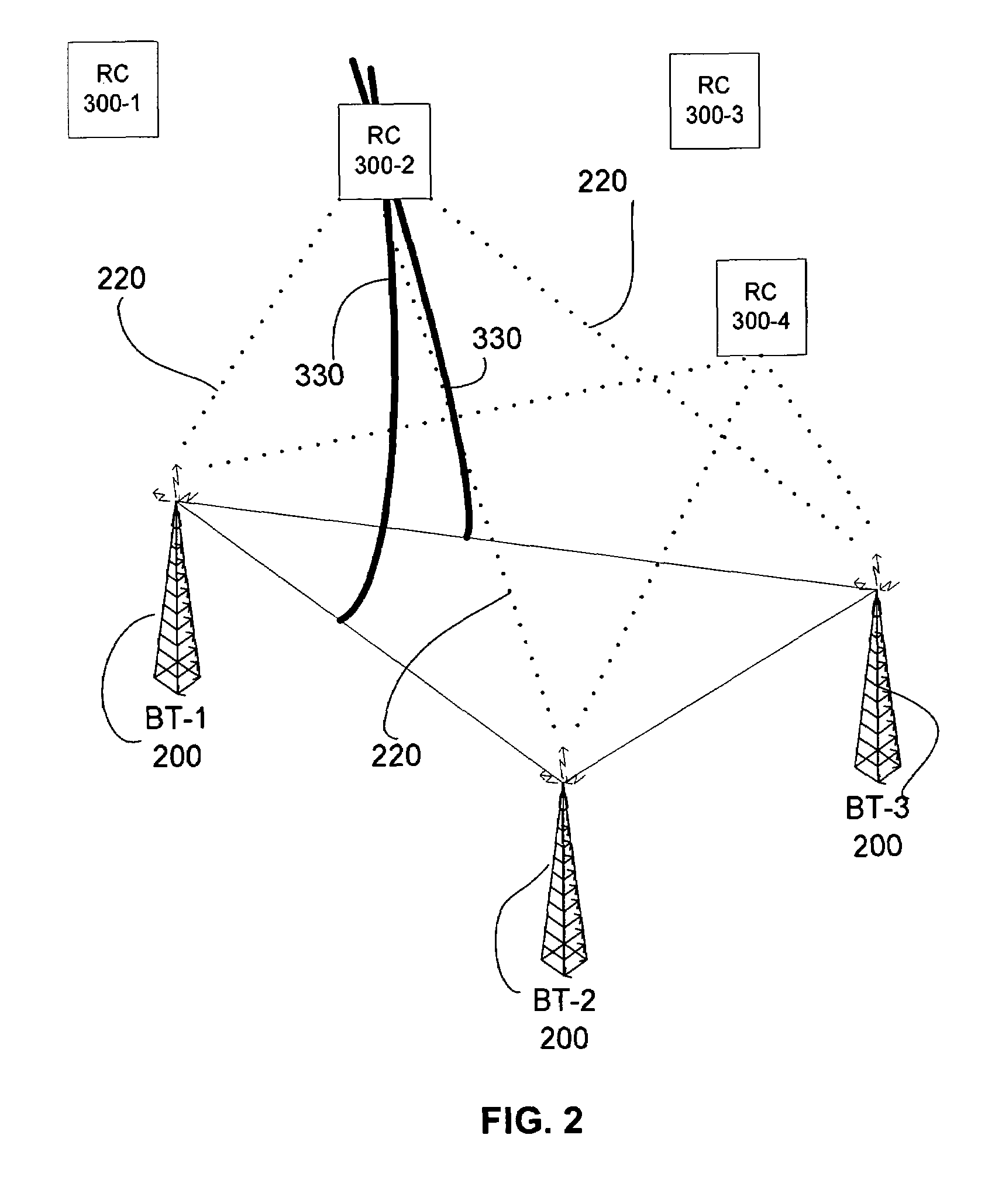
Figure 3
Abstract
Description
CROSS-REFERENCE TO RELATED APPLICATIONS
[0001] This nonprovisional patent application claims benefit and priority under 35 U.S.C. § 119(e) of the filing of U.S. Provisional Patent Application Ser. No. 60 / 680,865, filed May 16, 2005, titled: “Method and apparatus for tracking and reporting the location of people or objects in a local area”, U.S. Provisional Patent Application Ser. No. 60 / 673,025, filed, Apr. 21, 2005, titled: “Method and apparatus for relative location determination of people or objects in a local area” and U.S. Provisional Patent Application Ser. No. 60 / 682,666, filed, May 20, 2005, titled: “Method and apparatus for absolute location determination of people or objects in a defined area” all by the present inventors.BACKGROUND OF THE INVENTION
[0002] 1. Field of the Invention
[0003] This invention relates to location determination of one or more wireless devices.
[0004] 2. Prior Art
[0005] Location determination technology—the ability to identify the location of electronic dev...
Examples
Embodiment Construction
[0051]This present invention may utilize three or more geographically-dispersed transmitter nodes (hereinafter called a “BT node”). Each BT node may consist of an FM transmitter, a high-precision timing source (optional), high-precision location determination device (optional), FM receiver (optional), and computer processor, according to embodiments of the present invention. See FIG. 3 for a block diagram of an embodiment of a BT node.
[0052]The present invention may also include one or more Receiver nodes (hereinafter called “RC” node). Each RC node monitors 3 or more BT channels—the RC node may choose channels according to any specific criteria. Two possible examples of BT selection are: (1) monitoring those channels that exhibit the “strongest” signal, or (2) acquiring signals based upon the locations of their source BT nodes.
[0053]Each RC node (see FIG. 4 for a block diagram of an embodiment of an RC node) calculates the Time Difference of Arrival (TDOA) between each pair of BT s...