
Passive heating assisted recovery methods
a recovery method and passive heating technology, applied in the direction of fluid removal, insulation, borehole/well accessories, etc., can solve problems such as practicality or effectiveness, and achieve the effect of increasing production yield and thermal efficiency, and energy efficiency
Patent Information
- Authority / Receiving Office
- US · United States
- Patent Type
- Patents(United States)
- Current Assignee / Owner
- Publication Date
- 2011-05-03
Smart Images
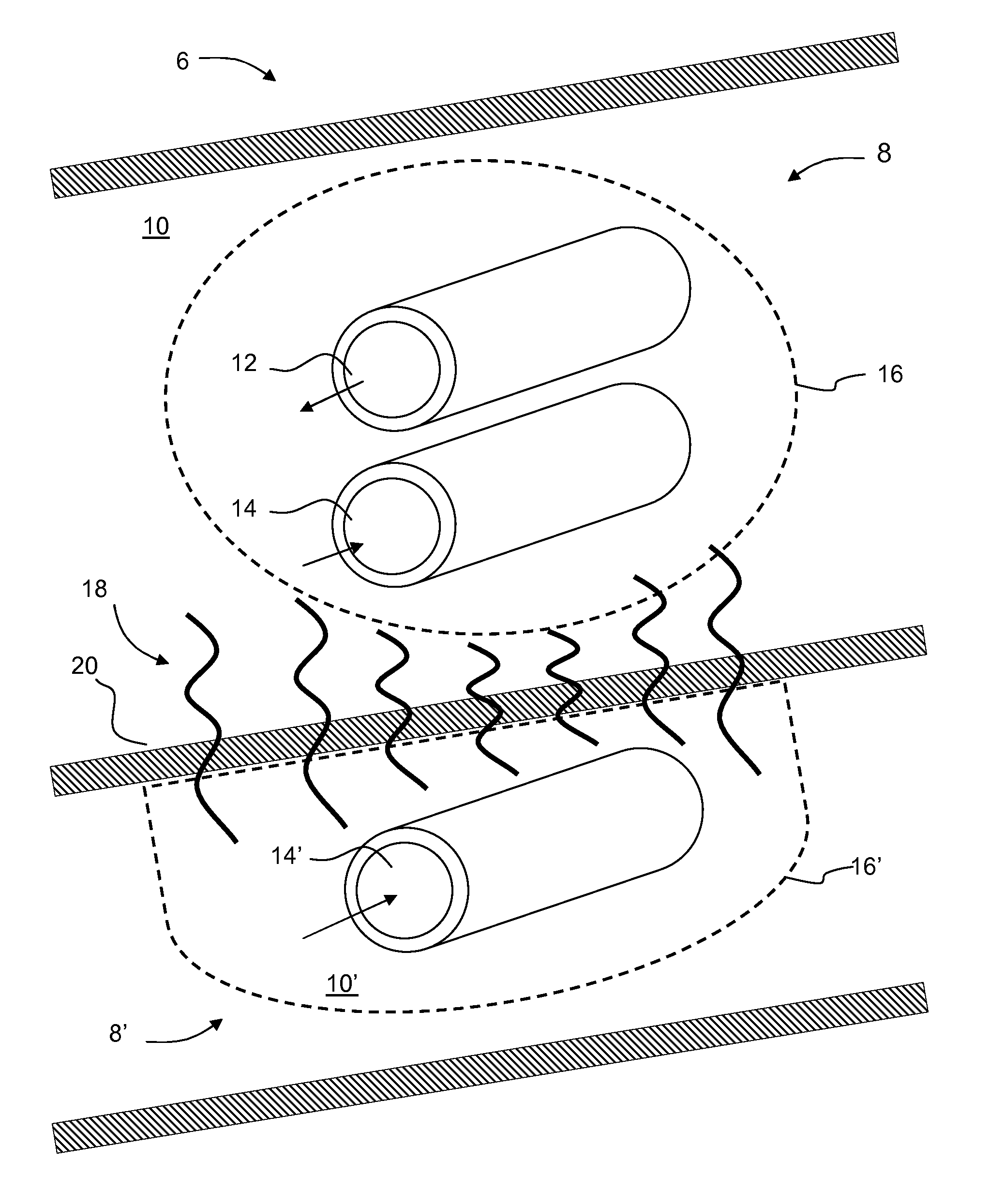
Figure 1 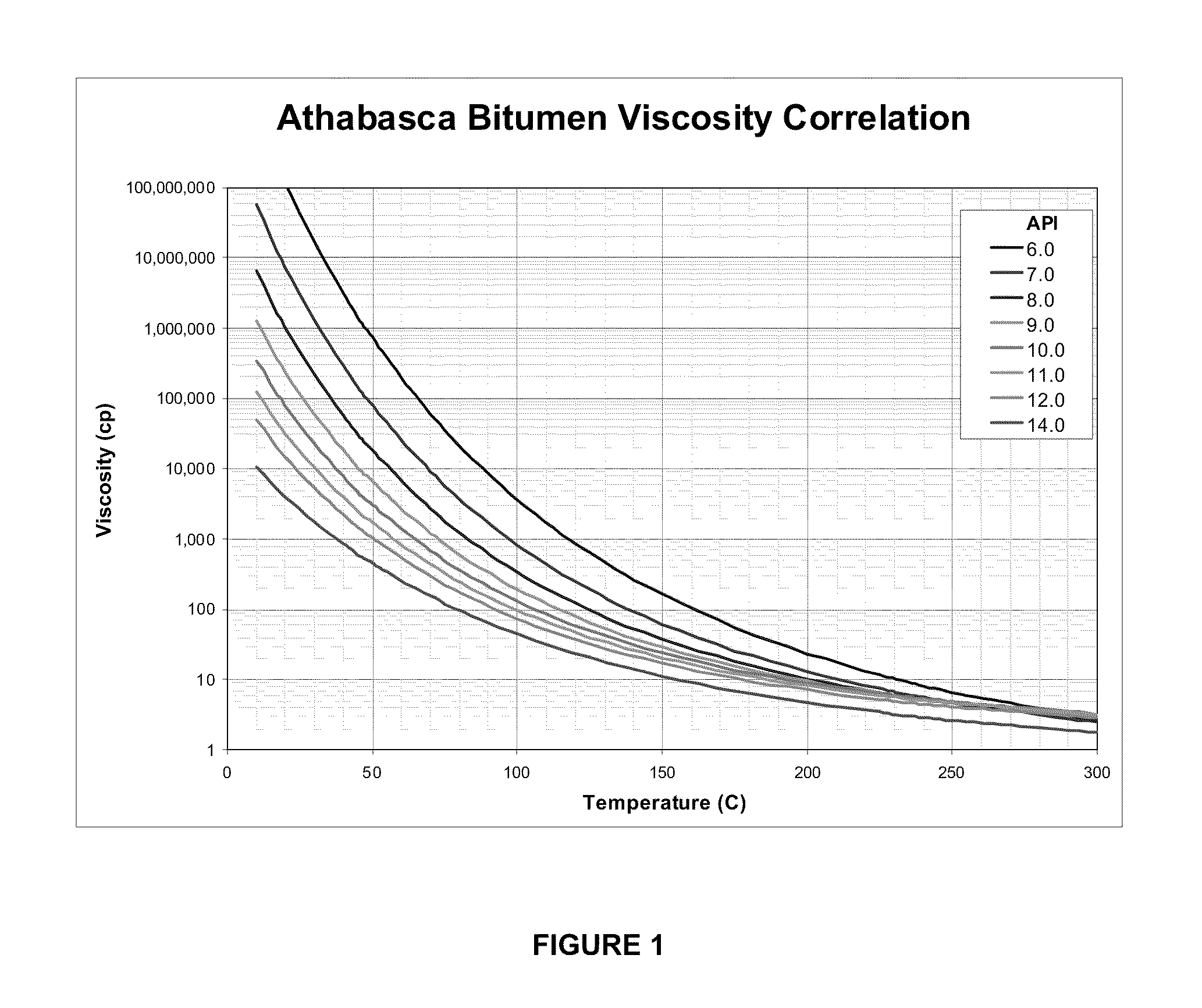
Figure 2 
Figure 3
Abstract
Description
CROSS REFERENCE TO PRIOR APPLICATIONS
[0001] This application claims priority from U.S. application No. 61 / 110,901, filed Nov. 3, 2008, the entire contents of which are incorporated herein by reference.FIELD OF THE INVENTION
[0002] The present invention relates to the production of hydrocarbons from petroleum deposits by in-situ recovery techniques. More specifically, the invention relates to a process employing heat conduction from a first stratum to pre-condition a second stratum containing hydrocarbons such as heavy oil or bitumen, thereby permitting the enhanced recovery of such hydrocarbons.BACKGROUND OF THE INVENTION
[0003] Petroleum deposits of crude oil demonstrate significant variations across in-situ reservoir and fluid properties. Deposits of high viscosity or low API gravity oils (higher density oils) can grade from increasingly difficult to economically produce to being uneconomic to produce under initial reservoir conditions. The limiting physical properties of heavier oils ...
Examples
Embodiment Construction
[0039]For clarity of understanding, the following terms used in the present description will have the definitions as stated below:
[0040]“Reservoir”, “formation”, “deposit”, “stratum”, and “zone” all are synonymous terms referring to a single area within a reservoir that can contain hydrocarbon layers, non-hydrocarbon layers, and any combination thereof;
[0041]“Stacked zones” refers to a type of geological configuration consisting more than one reservoir, or the like, disposed adjacent one another, where said zones are separated by a barrier.
[0042]As used herein, the term “barrier” will be understood to mean a physical formation that separates two or more heavy oil containing strata. A barrier according to the invention may be impermeable, thereby preventing hydraulic flow of the heavy oil present on opposite sides thereof. However, the invention may also be used in cases where the barrier is semi-permeable. That is, the barrier may be sufficiently permeable to allow some degree of re...