
Implantable medical lead designs
a technology of medical leads and implants, applied in the field of medical devices, can solve the problems of affecting the shape of the medical, affecting the ability to adequately anchor the tip of the medical in the tissue, and the removal of the patient is much more traumatic, so as to improve the stiffness of the medical lead, improve the stiffness, and reduce the impact of bending stress
Patent Information
- Authority / Receiving Office
- US · United States
- Patent Type
- Patents(United States)
- Current Assignee / Owner
- Publication Date
- 2011-08-30
- Estimated Expiration
- Not applicable · inactive patent
Smart Images
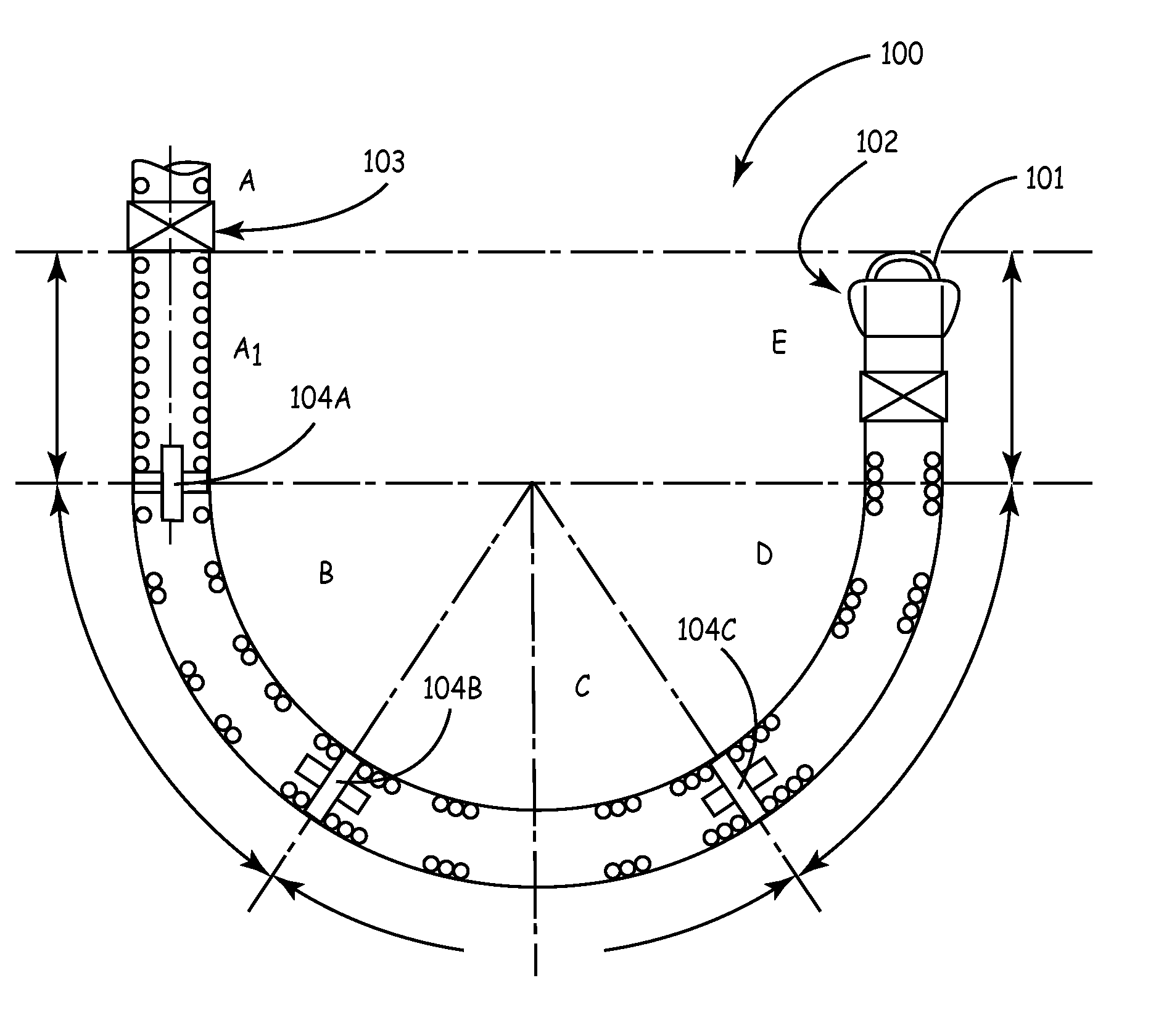
Figure 1 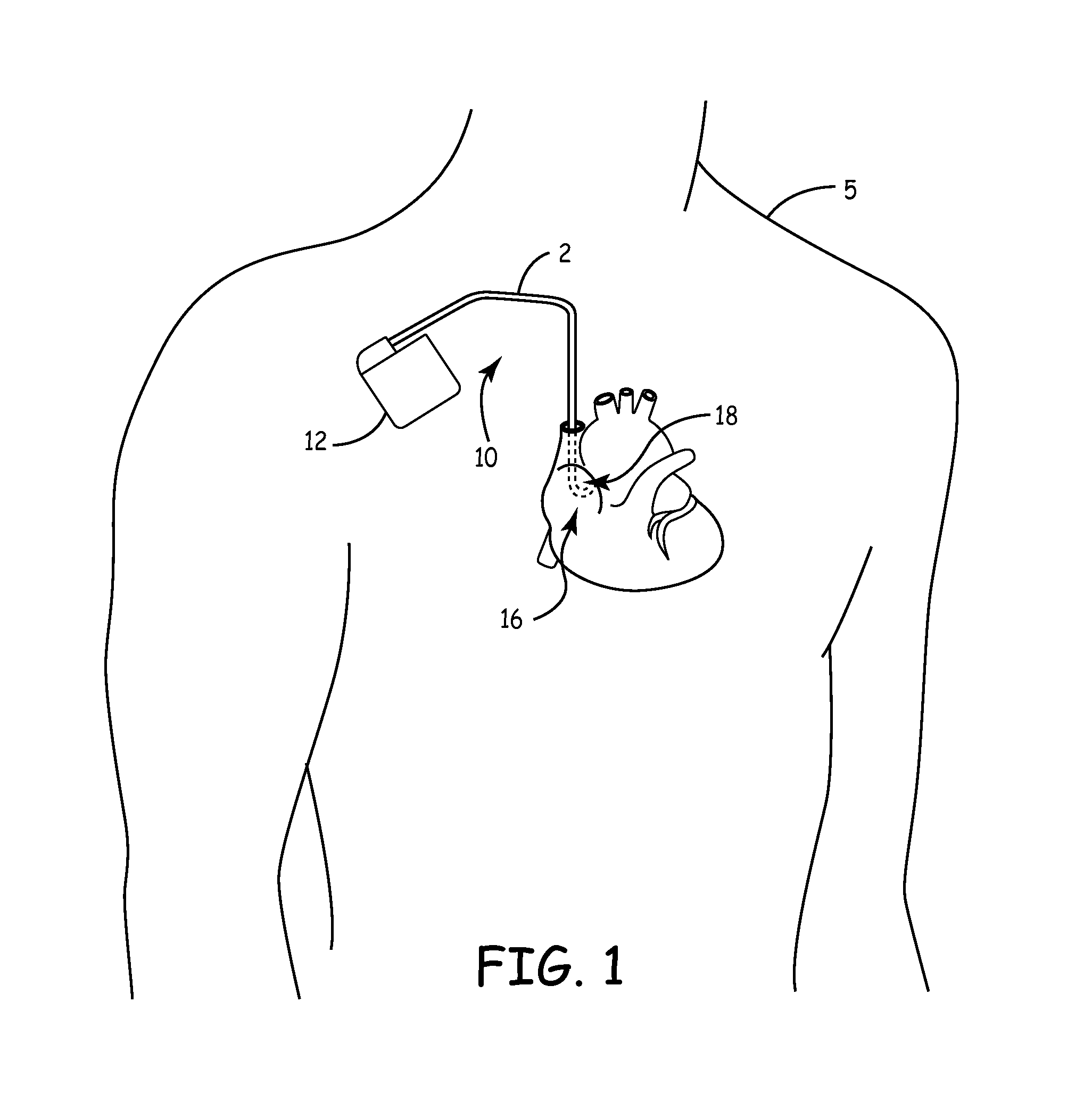
Figure 2 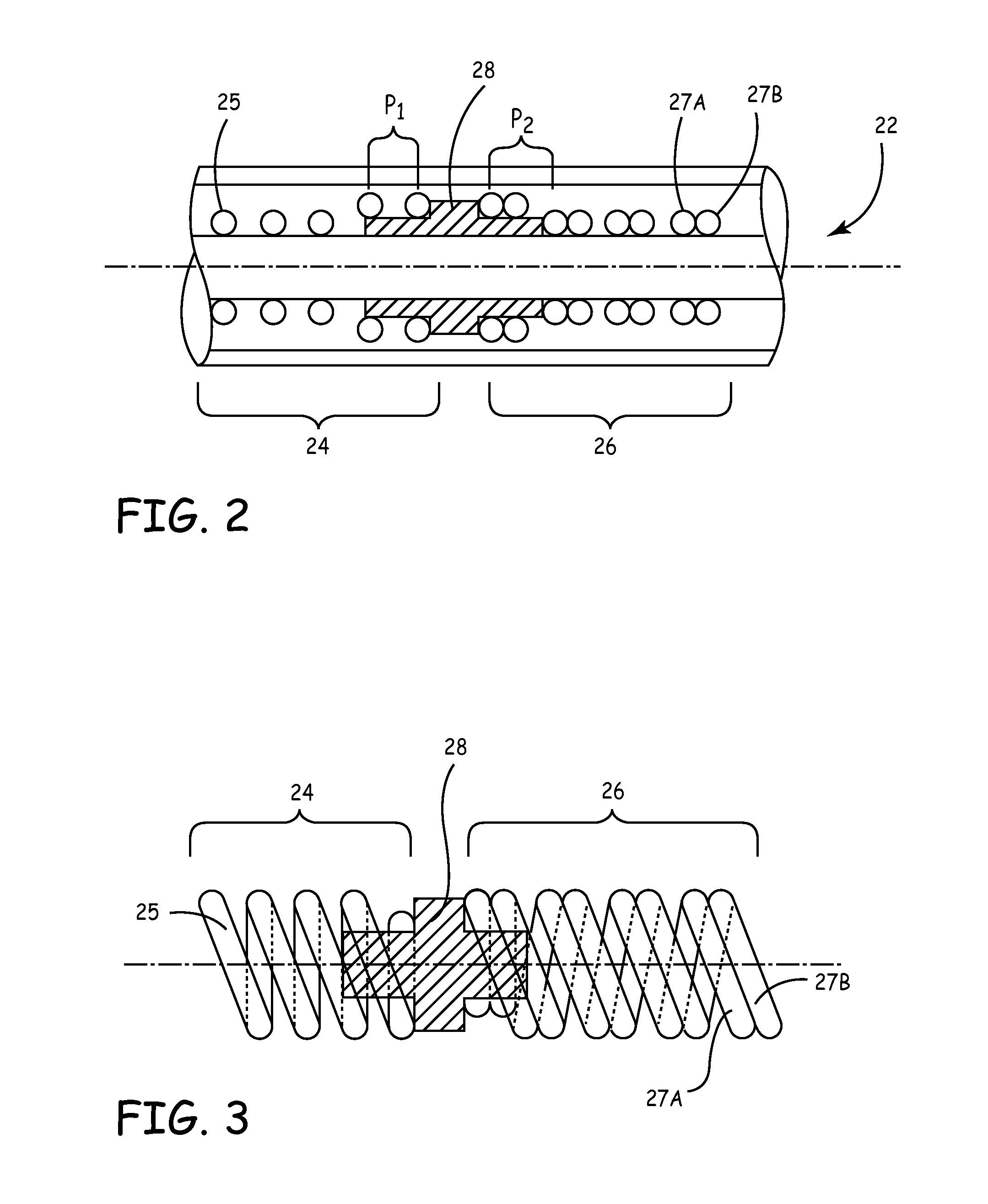
Figure 3
Abstract
Description
[0001] This application claims priority from U.S. Provisional Application Ser. No. 60 / 422,955, filed Oct. 31, 2002, the entire content of which is incorporated herein by reference.FIELD OF THE INVENTION
[0002] The invention relates to medical devices and, more particularly, to implantable medical leads for use with implantable medical devices (IMDs).BACKGROUND OF THE INVENTION
[0003] In the medical field, implantable leads are used with a wide variety of medical devices. For example, implantable leads are commonly used to form part of implantable cardiac pacemakers that provide therapeutic stimulation to the heart by delivering pacing, cardioversion or defibrillation pulses. The pulses can be delivered to the heart via electrodes disposed on the leads, e.g., typically near distal ends of the leads. In that case, the leads may position the electrodes with respect to various cardiac locations so that the pacemaker can deliver pulses to the appropriate locations. Leads are also used for sen...
Examples
Embodiment Construction
[0030]The invention is directed to medical leads for use in implantable medical devices. Various features of medical leads are described, many of which may be useful in a variety of different leads used for a variety of different applications. In one embodiment, the invention provides a medical lead of varying stiffness characteristics. In another embodiment, the invention provides a medical lead having a semi-conical shaped distal tip that becomes wider at more distal tip locations. In other words, the distal tip tapers radially outward. The distal tip may be semi-concial in that it takes a form that corresponds to a portion of a cone. These and other embodiments described herein may be used to improve medical leads for a wide variety of applications. Such applications may include specific applications in which a distal end of the lead is implanted in the roof of a patient's right atrium. When implantation in the right atrium is desired, the lead may be formed into a J-shape at a d...