
Component and a gas turbine engine comprising the component
a gas turbine engine and component technology, applied in the direction of machines/engines, cosmonautic vehicles, couplings, etc., can solve the problems of friction joints that require large clamping forces, parts that are unique and generally not replaceable, and the machining operation may be complex, so as to eliminate the problem of tolerance series or the elimination of the problem of tolerance chains. , the effect of eliminating the problem of tolerance series
Patent Information
- Authority / Receiving Office
- US · United States
- Patent Type
- Patents(United States)
- Current Assignee / Owner
- Publication Date
- 2014-06-24
Smart Images
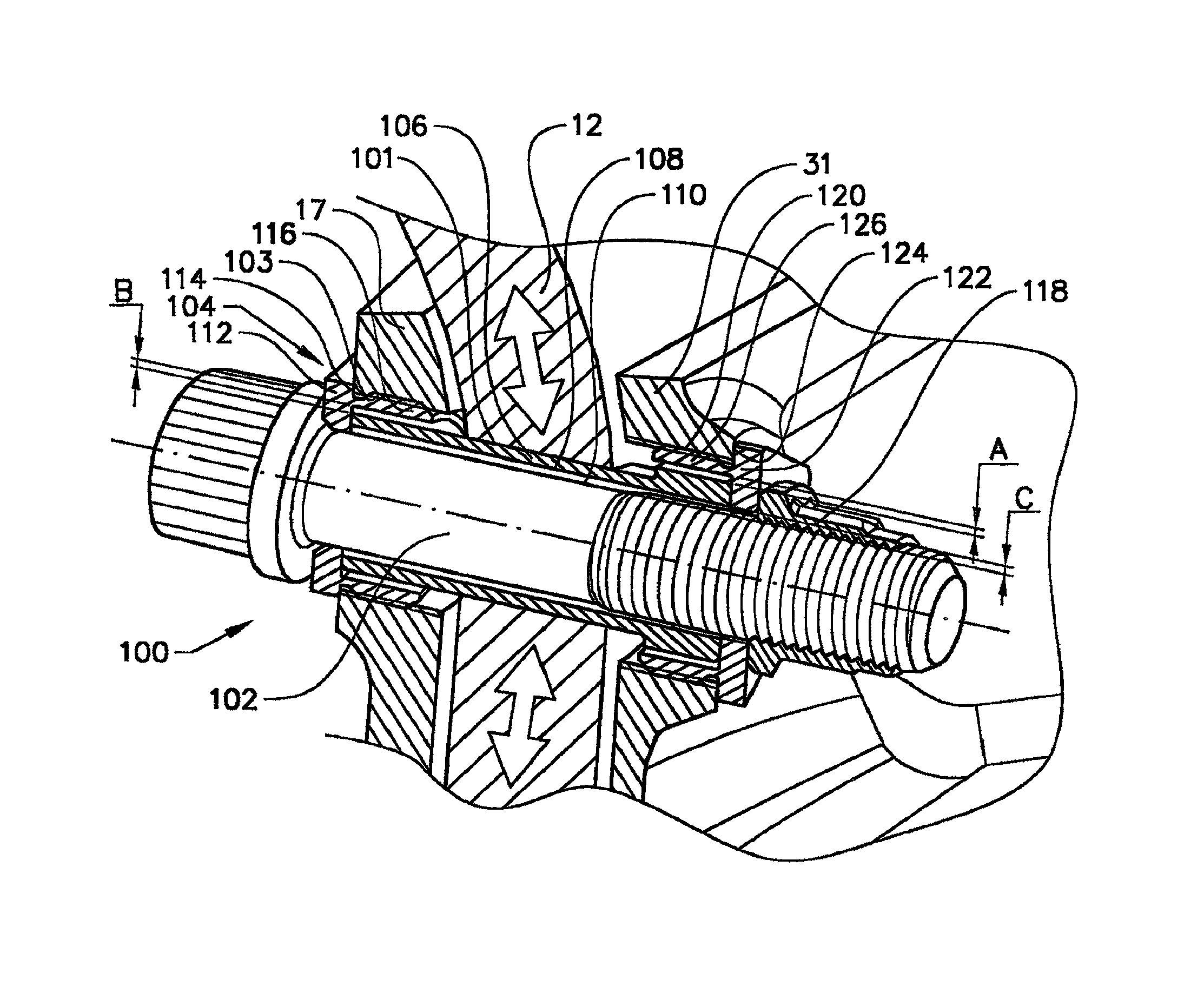
Figure 1 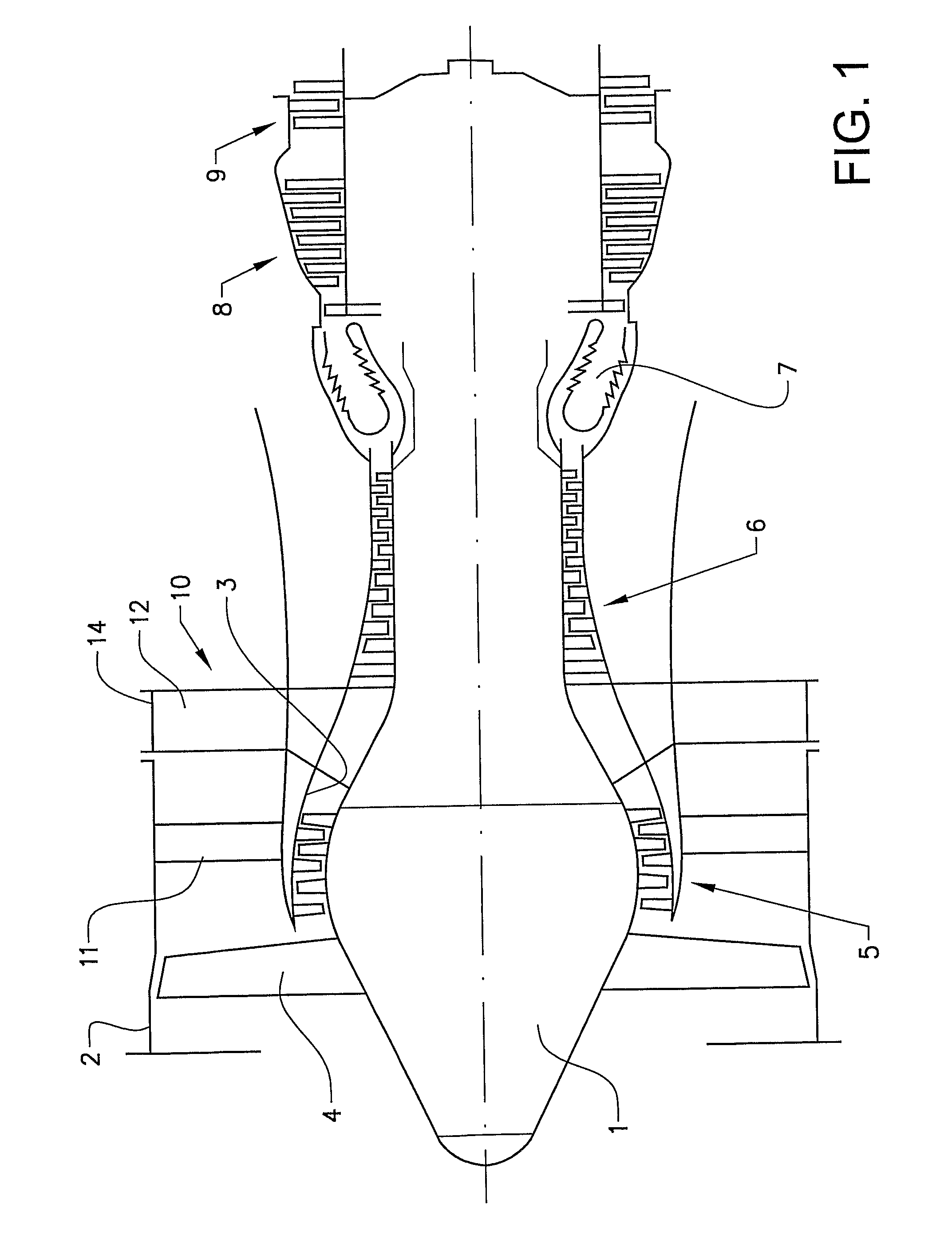
Figure 2 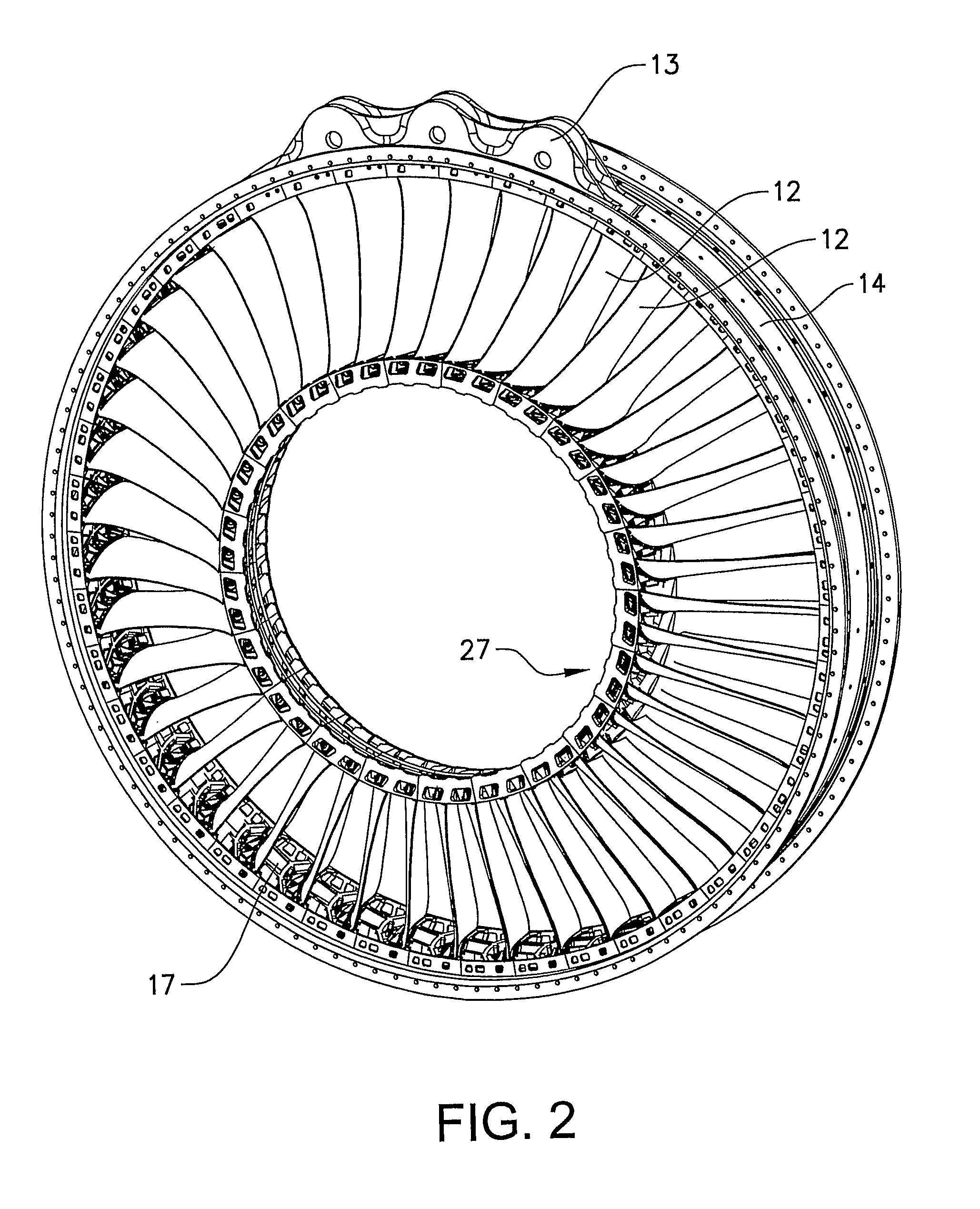
Figure 3
Abstract
Description
BACKGROUND AND SUMMARY
[0001] The present invention relates to a component comprising a first member, a second member and a device for fastening the first member to the second member, wherein a first hole extends through a portion of the first member and a second hole extends through a portion of the second member, wherein the first member and the second member are positioned such that the first hole and the second hole coincide, wherein the fastening device comprises an elongated fastening element arranged in said coinciding holes and a bushing arrangement arranged around the fastening element and adapted to establish a load transmission path between the first member and the second member.
[0002] The inventive component is particularly suitable for application in a gas turbine engine. Especially, the gas turbine component is configured for a static application in the gas turbine engine. In such a gas turbine component, the first member forms a radially extending arm, or vane and the se...
Examples
Embodiment Construction
[0023]FIG. 1 shows a turbojet engine. The turbojet engine comprises a central body 1, an annular outer casing 2 (fan casing), an annular inner casing 3 (engine casing), a fan or blower 4, a low pressure compressor 5, a high pressure compressor 6, a combustion chamber 7, a high pressure turbine 8 and a low pressure turbine 9. It further comprises a set of arms 10 extending in a radial direction from the inner casing 3 to the outer casing 2. The arms 10 comprise aerodynamic vanes 11 primarily provided to act as guide vanes for air passing through the annular channel between the inner casing 3 and the outer casing 2 in an axial direction, i.e. a longitudinal direction, of the engine. The arms 10 further comprise structural arms or load carrying vanes 12 primarily provided to guarantee a certain mechanical strength of the construction. Here, the aerodynamic vanes 11 and the load carrying vanes 12 are arranged in axially separated sets of arms. However, they could as well be arranged in ...